Fixing a Clogged Printer Cartridge for Good

Toner Tips by James Cai

If your printer suddenly starts streaking, printing faded colors, or spitting out blank pages, there’s a good chance you’re dealing with a clogged printer cartridge. This issue affects nearly every inkjet printer owner at some point—and in an industry worth more than $19 billion, it’s one of the most common frustrations.

The good news? A clogged cartridge usually leaves very obvious clues, and once you know what to look for (and how to fix it), you can get your printer running smoothly again.


Step 1: Confirm the Problem With a Nozzle Check

Before you start manually cleaning anything, you need to be sure the problem is actually a clog. The easiest way is to run your printer’s built-in diagnostic test.

  • Epson printers: Go to Setup → Maintenance → Nozzle Check.

  • HP printers: Open the HP Smart App → Tools → Print Quality Report.

  • Canon printers: Use Maintenance → Print Nozzle Check Pattern.

This test prints a pattern of thin lines for each ink color.
If you see gaps, broken lines, missing colors, or streaking, it’s almost always a clog.


What Your Printouts Are Really Telling You

Below is a quick guide to match what you see on paper with what’s happening inside your printer.

Common Symptoms & Their Likely Causes

Symptom Cause What to Do First
Horizontal White Lines One or more completely blocked nozzles Run a Nozzle Check, then cleaning
Faded or Wrong Colors Partial clog in a specific ink color Print a quality report & identify the color
Blank Pages Severe clog or dried-up printhead Check ink levels, then perform Head Cleaning
Blurry or Shadowed Text Misalignment or uneven spray pattern Run Printhead Alignment, then re-test

These clues help you diagnose the problem before wasting time and ink on the wrong fix.


Cartridge Clog vs. Printhead Clog: Know the Difference

Not all printers work the same way—and where the clog forms determines how you fix it.

1. Cartridge With a Built-In Printhead (HP, Canon, Lexmark)

These cartridges have the printhead attached.
If the clog is stubborn, replacing the cartridge usually solves everything.
Examples: HP 63, 65, 67 series

2. Separate, Permanent Printhead (Epson, Brother)

Ink cartridges are just ink tanks, and the printhead lives inside the printer.
These require manual printhead cleaning, which is more delicate.
Example: Epson EcoTank printers

Before cleaning anything, check what type of system your printer uses.


How to Fix a Clogged Printer Cartridge

Once you’ve confirmed a clog, start with the gentlest method and work your way up.


Method 1: Use Your Printer’s Built-In Cleaning Cycle

Every inkjet printer has a “Clean Printhead” or “Head Cleaning” function that forces ink through the nozzles.

How to Do It Correctly

  1. Print a Nozzle Check test page.

  2. Run Head Cleaning once.

  3. Print another Nozzle Check.

  4. If it improves, you may run one more cycle—but stop after two.

Important: Printhead cleaning uses a lot of ink. Repeating it 4–5 times wastes ink without helping a severe clog.

If the problem persists after two cycles, move to manual cleaning.


Method 2: The Gentle Blotting Technique (For Light Clogs)

This easy method works great when a color looks faint or has small gaps.

How to Do It

  1. Dampen a lint-free cloth with warm distilled water.

  2. Gently press the nozzle plate (the metallic strip) onto the cloth.

  3. Hold for 2–3 seconds.

  4. Repeat on a clean section of the cloth until all colors appear.

You should see clear, sharp ink blots. If not, move to a deeper cleaning method.


Method 3: The Soaking Method (For Stubborn Clogs)

This approach removes hardened ink that’s been sitting for months.

Steps

  1. Pour ½ inch of warm distilled water into a shallow dish.

  2. Place only the nozzle plate of the cartridge into the water—never the copper contacts.

  3. Soak for 3–8 hours (overnight for severe clogs).

  4. Pat dry with a clean, lint-free cloth.

  5. Reinstall & run one cleaning cycle.

Pro Tips

  • Never use boiling water—it can warp components.

  • Do NOT scrub the nozzles.

  • Avoid tap water; minerals can create new clogs.

If the cartridge still won’t print properly, it may be damaged beyond repair.


How to Prevent Printer Cartridges From Clogging

Preventing clogs is far easier than fixing them.

1. Print a Small Page Weekly

Ink dries when it sits. A simple color page once a week keeps nozzles flowing.

2. Choose High-Quality OEM Cartridges

Cheap third-party inks often use formulas that dry faster and clog more easily.

Research by SpencerLab found up to 58% of remanufactured cartridges fail during normal use—often because of poor ink quality.

3. Power Down the Printer Correctly

Always use the power button, not the wall plug.
This parks the printhead in a sealed position to prevent drying.

4. Avoid Extreme Temperatures

Heat, dryness, and sunlight accelerate ink evaporation.


When to Stop Trying and Replace the Cartridge

Sometimes a cartridge is too far gone. Replace it when:

  • The nozzle plate has visible scratches or damage

  • You’ve soaked and cleaned it but still see missing colors

  • The printer repeatedly gives a “Cartridge Not Recognized” error

  • You’ve spent more time cleaning than the cartridge is worth

Consider whether your time is more valuable than a $15–$30 cartridge.


Image Suggestions for This Blog Post

To enhance clarity and engagement, include:

  1. Nozzle check pattern examples

  2. Photo of clogged vs. clean nozzle plate

  3. Diagram showing cartridge vs. printhead designs

  4. Step-by-step cleaning method photos

  5. Infographic of common symptoms & causes

These visuals help readers identify problems instantly.


FAQs About Clogged Printer Cartridges

1. How often should I run a head cleaning cycle?

Only when print quality noticeably declines.
Running it too often wastes ink.

2. Is it okay to use tap water?

No. Use distilled or deionized water to avoid mineral buildup.

3. Will shaking a cartridge clear a clog?

Not really—and it can cause leaks inside your printer.

4. Can clogged printheads cause permanent damage?

If left untreated for long periods, yes. Ink can harden inside the printhead.


Have Old or Unused OEM Cartridges? Toner Connect Can Help

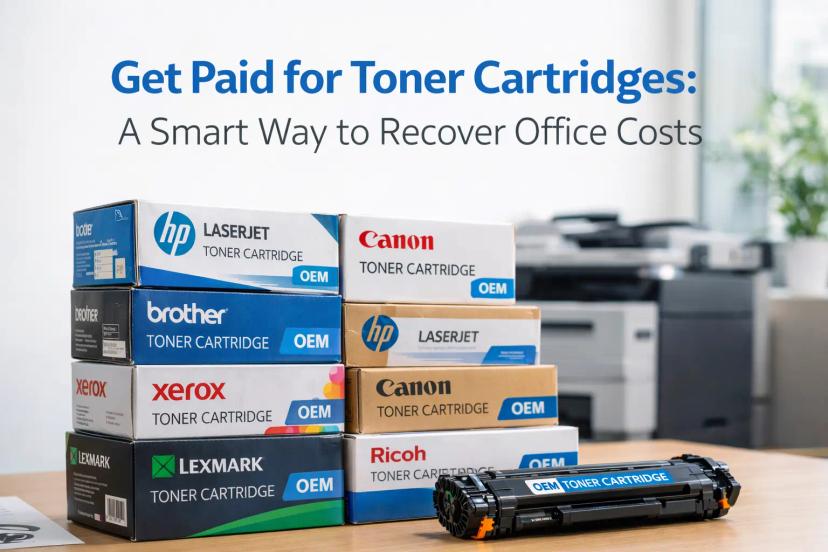
If a cartridge is beyond saving—or your office has extra unused OEM printer supplies—Toner Connect LLC can buy them.

Visit https://tonerconnect.net for a fast quote and turn unused inventory into cash.

Leave a Reply

Your email address will not be published. Required fields are marked *

Skip to toolbar