
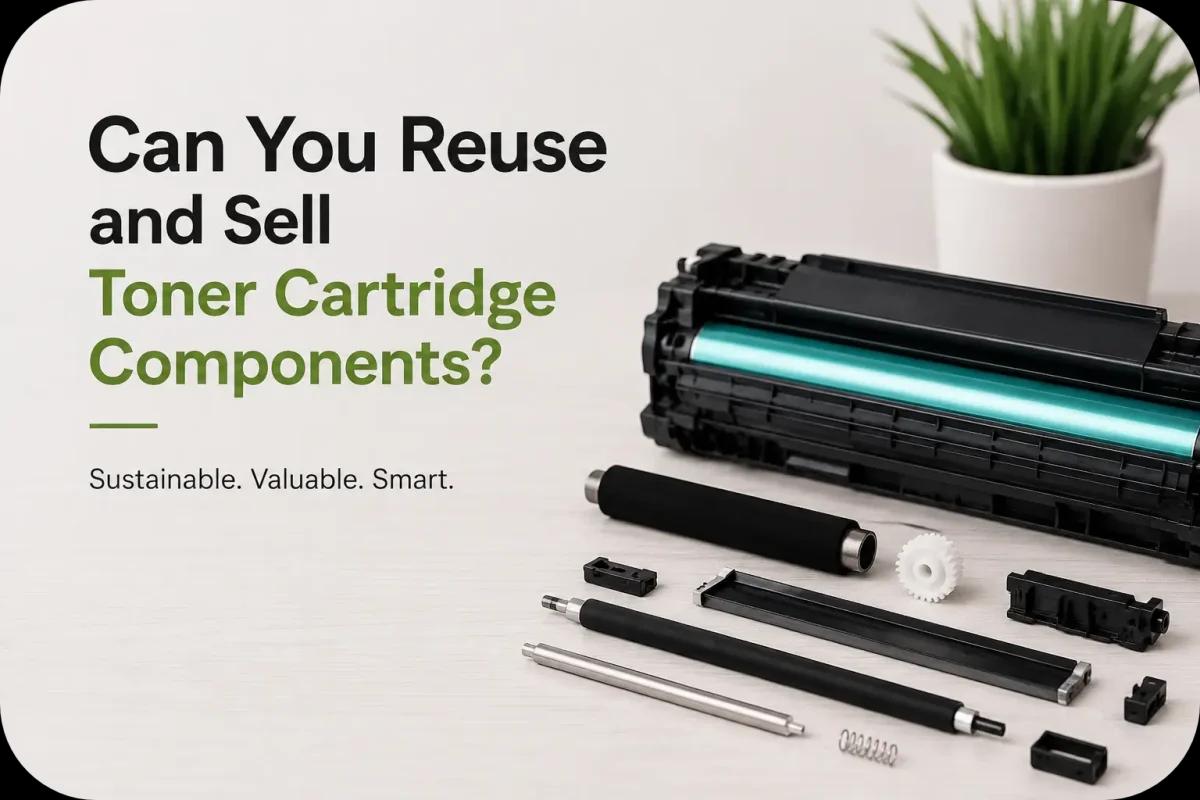
Can You Reuse and Sell Toner Cartridge Components?
Toner cartridges may seem like ordinary office supplies, but they contain many useful parts. Even after the toner runs out, several toner cartridge components can still be reused, rebuilt, or sold.
So, can you reuse and sell toner cartridge components? Yes, you can. In fact, many recycling companies and cartridge rebuilders depend on used toner parts to make remanufactured cartridges.
This process helps reduce waste, saves money, and keeps useful materials out of landfills. It also gives businesses and individuals a simple way to handle old printer supplies more responsibly.
What Are Toner Cartridge Components?
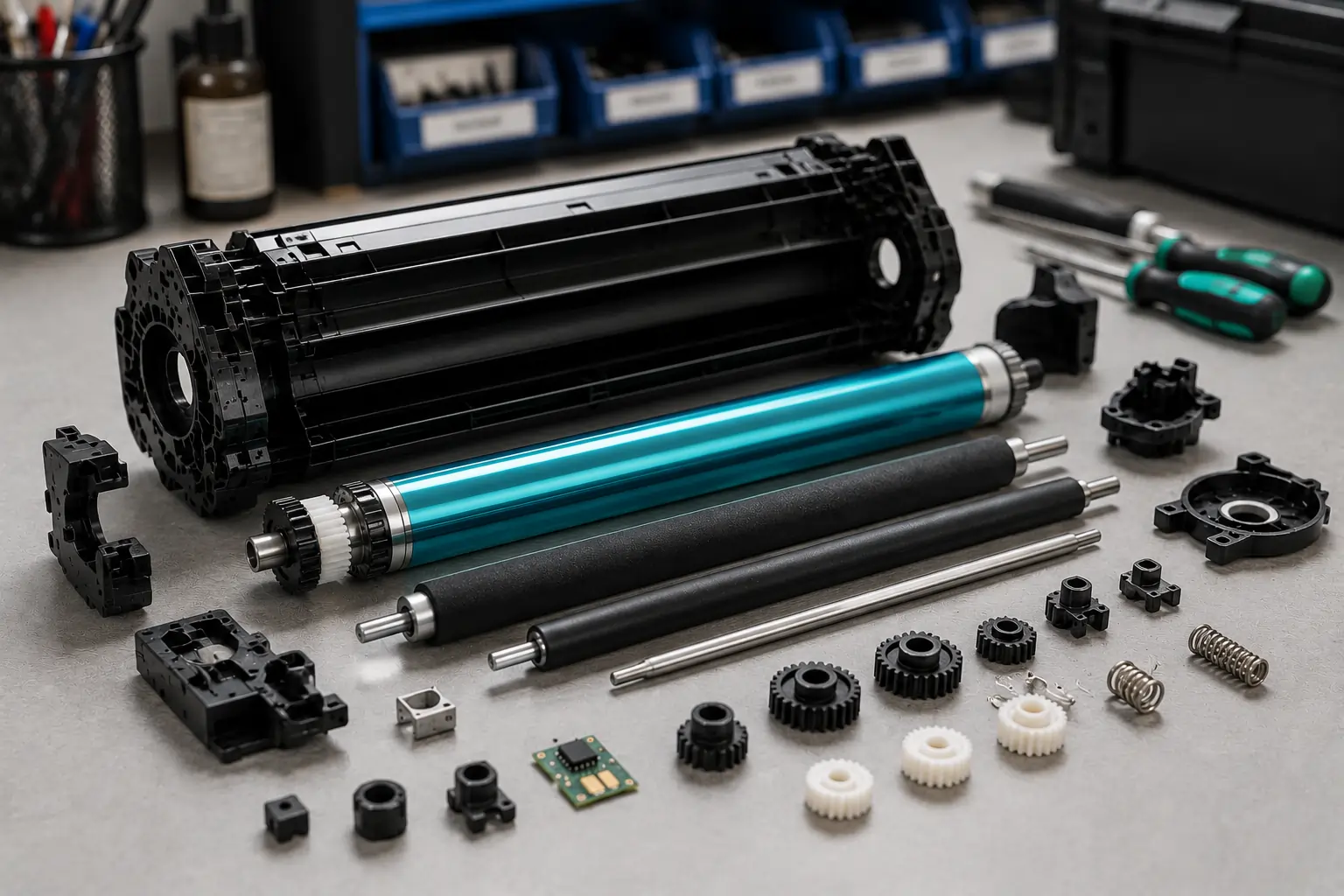
A toner cartridge has several small parts that work together to print clean text and images. While the toner powder gets used up, many of the parts inside may still work well.
Common Toner Cartridge Parts
Some reusable toner cartridge components include:
- OPC drums
- Magnetic rollers
- Wiper blades
- Doctor blades
- Gears
- Springs
- Cartridge shells
- Primary charge rollers
- Smart chips
Each part has a job. For example, rollers help move toner, while gears help the cartridge turn smoothly inside the printer.
Because these parts are often durable, rebuilders may clean and test them instead of throwing them away.
Learn more about printer supply options from Toner Connect.
Why Reusing Toner Cartridge Components Matters?
Toner cartridges contain plastic, metal, rubber, and leftover toner powder. When people throw them away, those materials can sit in landfills for a long time.
However, reuse gives these parts a second life.
It Reduces Waste
Reusing toner cartridge components keeps more plastic and metal out of the trash. As a result, fewer new materials are needed to make replacement cartridges.
It Saves Money
Remanufactured cartridges often cost less than brand-new ones. Since rebuilders can reuse certain parts, they do not always need to start from scratch.
It Supports Greener Printing
Recycling and reuse make office printing more eco-friendly. For many businesses, this is an easy step toward better waste management.
The EPA offers helpful recycling guidance here.
Which Toner Cartridge Components Can You Sell?
Not every toner part has resale value. Still, many used cartridges contain parts that buyers want.
Parts With Resale Potential
The most useful parts often include:
- Empty OEM cartridge shells
- Gears and side panels
- OPC drums in good condition
- Rollers
- Springs and small hardware
- Electronic chips
- Unused or lightly used cartridges
OEM cartridges usually have the best resale value. That is because original parts often fit better and last longer than low-cost copies.
For example, a clean empty HP, Canon, Brother, Xerox, or Lexmark cartridge may be useful to a remanufacturer.
Browse toner-related options at Toner Connect if you want to compare cartridge types.
How the Toner Cartridge Reuse Process Works?
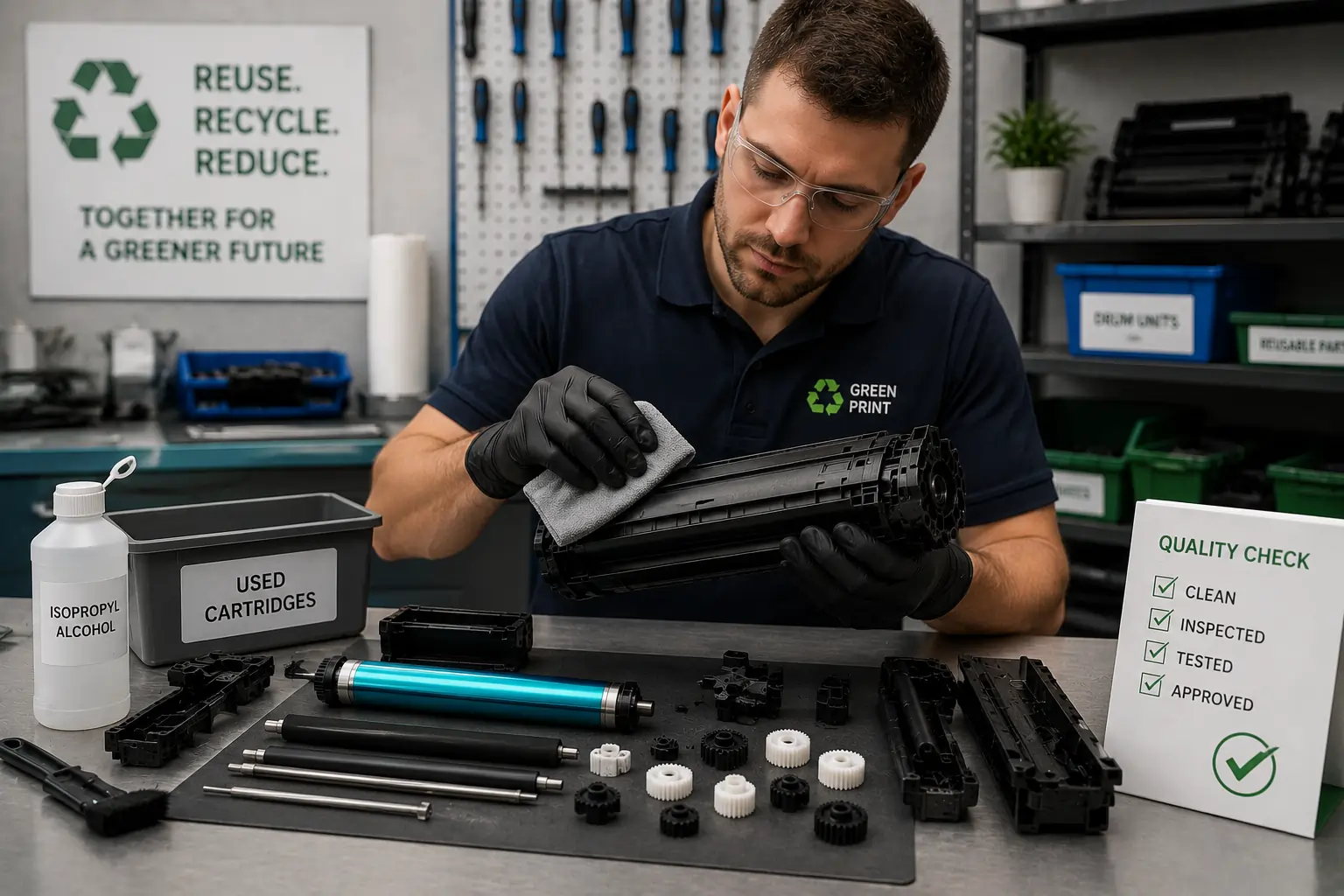
Reusing toner cartridge components is not the same as simply adding more toner powder. A proper rebuild takes several careful steps.
Step 1: Collection
First, used cartridges are collected from offices, homes, recycling centers, or buyback programs.
Step 2: Sorting
Next, workers sort cartridges by brand, model, and condition. This step matters because not all cartridges can be reused.
Step 3: Cleaning
Then, technicians remove leftover toner and dust. They use special tools because toner powder can be messy and hard to clean safely.
Step 4: Inspection
After cleaning, each part gets checked. Good parts may stay in the cartridge, while worn parts get replaced.
Step 5: Rebuilding
Finally, the cartridge is rebuilt, refilled, tested, and packed for resale.
This process helps keep print quality strong while reducing waste.
Can Individuals Sell Used Toner Cartridge Components?
Yes, individuals can sell used toner cartridges or parts. However, it is usually easier to sell whole empty cartridges instead of taking them apart.
Where You Can Sell Them?
You may be able to sell used cartridges through:
- Recycling programs
- Office supply return programs
- Cartridge buyback companies
- Local recyclers
- Online marketplaces
- Remanufacturing businesses
Before you sell, check the cartridge model number. Buyers often pay more for popular OEM models.
Also, avoid opening cartridges unless you know how to handle toner safely. Loose toner can spill, stain surfaces, and create a mess.
Are There Rules for Selling Toner Cartridge Parts?
In most cases, you can legally sell used toner cartridges and reusable parts. However, sellers should stay honest about what they are offering.
Do Not Call Used Parts New
If a cartridge or part has been used, label it clearly. For example, use terms like “used,” “empty,” “recycled,” or “remanufactured.”
Watch for Patented Designs
Some cartridge designs include patented parts. Because of this, professional rebuilders must follow the law when they reuse or replace certain components.
Avoid Counterfeit Claims
Never sell a rebuilt cartridge as a new OEM product. Instead, describe it accurately so buyers know what they are getting.
The International Imaging Technology Council shares industry information here.
Challenges With Reusing Toner Cartridge Components
Reusing toner cartridge components has many benefits. Still, it also comes with a few challenges.
Some Parts Wear Out
Rollers, blades, and drums can wear down after heavy use. When that happens, rebuilders need to replace them.
Smart Chips Can Limit Reuse
Many modern cartridges include chips. These chips may track toner levels or printer use. As a result, some cartridges need new chips before they work again.
Quality Can Vary
Not all reused parts perform the same way. That is why testing matters. A trusted supplier checks products before selling them.
For reliable toner supply options, visit Toner Connect.
Tips Before Selling Toner Cartridge Components
A little care can help you get better value from used cartridges.
Store Cartridges Properly
Keep cartridges in a dry, cool place. Also, keep them away from direct sunlight and moisture.
Keep the Model Number Visible
Buyers need the model number to know if the cartridge has value. So, do not remove labels unless necessary.
Do Not Damage the Shell
The cartridge shell is one of the most useful parts. Therefore, handle cartridges gently and avoid cracks.
Sell in Bulk When Possible
Many buyers prefer bulk lots. If you run an office, save empty cartridges together before contacting a buyer.
The Future of Toner Cartridge Recycling
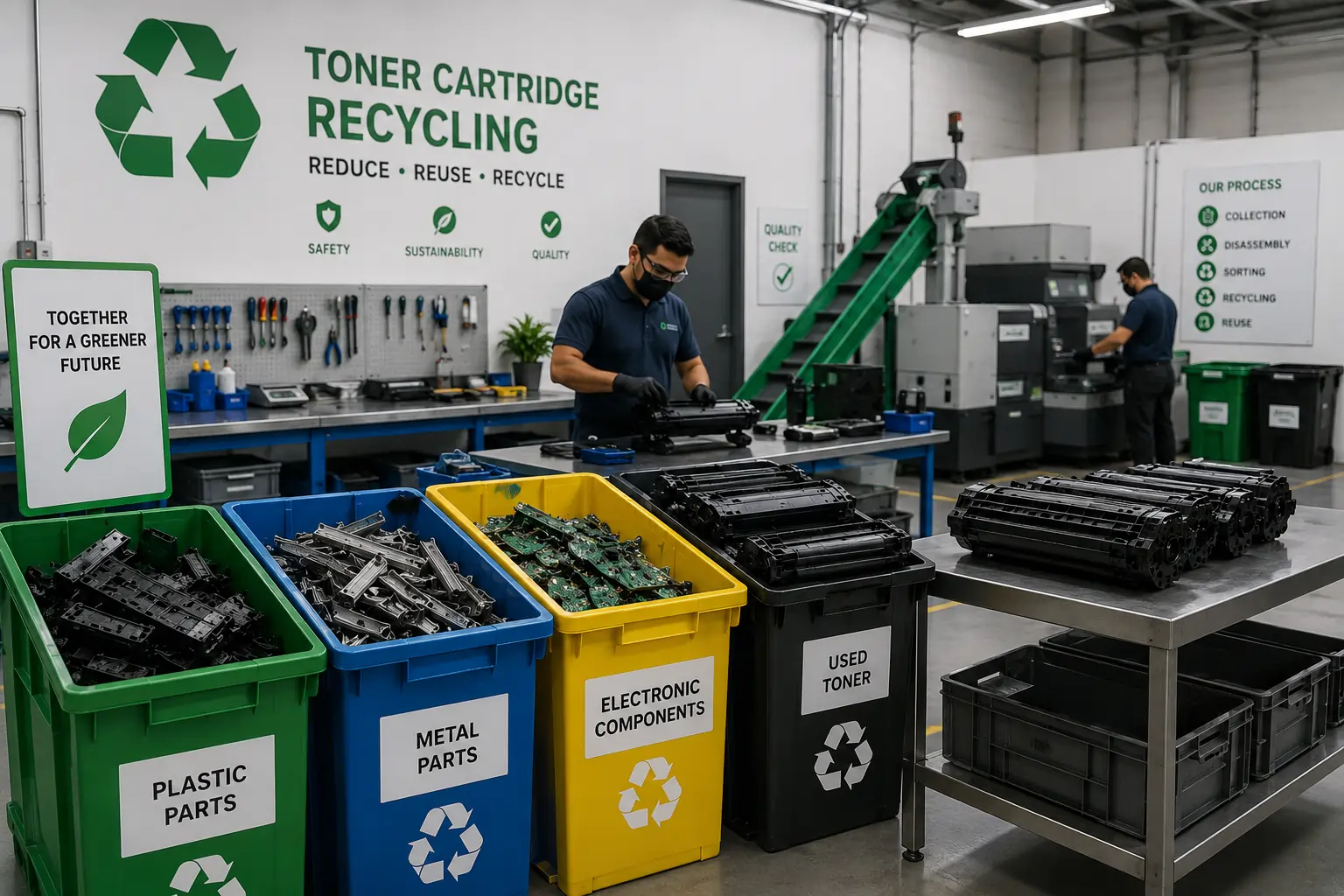
The toner industry continues to move toward reuse and recycling. More companies now want printing supplies that cost less and create less waste.
At the same time, better testing tools help rebuilders reuse parts more safely. Because of this, toner cartridge components may become even more valuable in the future.
Consumers also play a role. When people recycle cartridges or buy remanufactured toner, they support a cleaner and more practical printing cycle.
ENERGY STAR also shares useful information about efficient office equipment.
Conclusion
You can reuse and sell toner cartridge components, especially when the parts are clean, undamaged, and from popular OEM cartridges. This practice reduces waste, lowers costs, and supports a smarter printing supply chain.
For businesses and home offices, recycling used cartridges is a simple habit with real benefits. With proper handling and honest selling, old toner cartridges can still have plenty of value after the toner runs out.