That forgotten stash of Canon ink cartridges in the supply closet isn’t just clutter—it’s a real asset waiting to be claimed. This guide goes beyond basic eco-friendly disposal to show you exactly how a smart strategy for recycling Canon ink cartridges can directly boost your bottom line. We’ll walk through how turning those unopened, genuine Canon cartridges into cash is a simple, effective way to beef up your sustainability efforts and recover operational costs.
Why Smart Cartridge Recycling Is a Win for Your Business
Let’s talk about that dusty shelf in the supply room, the one filled with surplus printer ink. For most businesses, it’s just a minor annoyance, but it’s actually a hidden opportunity. Especially for small and mid-sized companies, those unopened Canon boxes represent locked-up cash. It happens all the time: a printer gets upgraded, or someone orders the wrong model, and those cartridges get shoved aside, eventually becoming e-waste.
A strategic approach flips this common scenario from a loss into a gain. Instead of letting valuable supplies expire on a shelf, you can work with a buyback service to convert them back into working capital. For example, a graphic design studio might have ten boxes of genuine Canon CLI-42 ink left over after switching to a new large-format printer. Instead of letting them expire, they can sell them and recoup a portion of the original cost. The process is surprisingly straightforward and offers a fantastic dual benefit: you clear out unwanted inventory and get paid for it at the same time.
The Financial and Environmental Payoff
The advantages of a smart recycling plan go way beyond just decluttering. Financially, it’s a direct method for recovering sunk costs. Picture a small marketing firm that just upgraded its fleet of Canon PIXMA printers, leaving them with 20 boxes of unused PGI-280 XL ink. Instead of just writing them off, they can sell them and get a check that can be put toward new equipment or other immediate needs.
The real power here is in the simplicity. You’re turning what would eventually become waste into a tangible asset, directly contributing to a circular economy while improving your company’s financial footing.
And this isn’t just a niche practice; it’s part of a huge global shift. The ink cartridge recycling market is on track to grow from $1.7 billion in 2025 to $2.5 billion by 2028, which shows just how strong the demand for sustainable business practices has become. North America alone is projected to see its market nearly double to $1.5 billion by 2035, largely driven by corporate responsibility goals. You can learn more about the explosive growth of the ink recycling market and what it means for businesses.
More Than Just a Transaction
Effectively managing your surplus supplies also sends a powerful message about your company’s values. It shows a real commitment to reducing waste and operating responsibly. For businesses and resellers looking to get their inventory under control, this creates a clear path to both financial recovery and better corporate citizenship.
If you happen to be a dealer with a warehouse full of surplus stock, exploring a buyback partnership can be an incredibly effective strategy. Learn more about how we can help at https://tonerconnect.net/learn-more-dealers. At the end of the day, the simple act of reselling your unused Canon ink cartridges is a clear win for both your balance sheet and the planet.
Getting Your Canon Cartridges Ready for a New Life
So, you’ve got a pile of Canon ink cartridges and you’re not sure what to do with them. Before you can figure out whether they’re worth some cash or just need to be responsibly recycled, you need to do a little sorting. Taking a few minutes to get organized now will save you a ton of hassle later and make sure everything ends up in the right place.
The first and most important question is a simple one: is the cartridge brand new in an unopened box, or is it used? That one detail decides its fate. Unused, genuine Canon cartridges often have resale value. Everything else—used, opened, or non-genuine—belongs in the recycling pile.
This little chart breaks down the decision process perfectly.
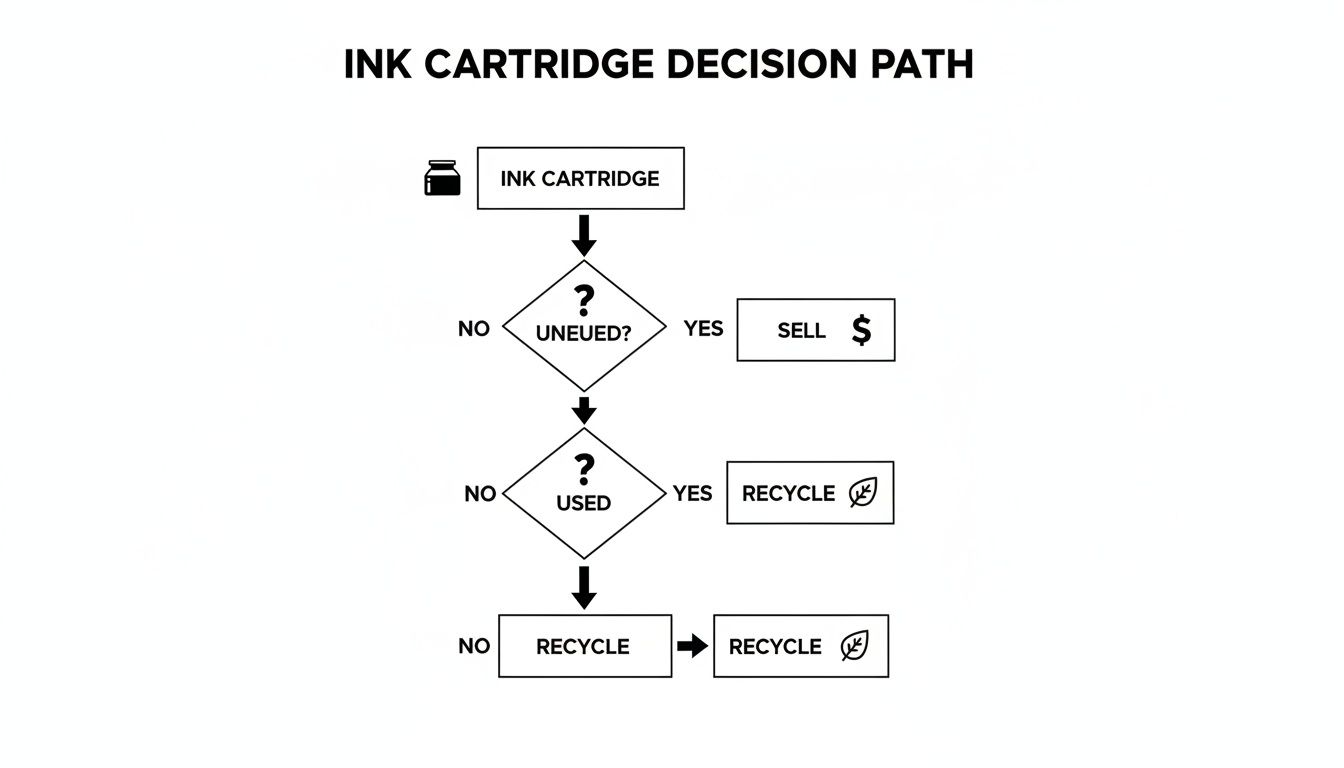
Think of it this way: a brand new cartridge can make you money, while a used one can still make a difference for the planet through recycling.
First Things First: What Kind of Cartridge Do You Have?
Not all cartridges are the same, and it’s crucial to know what you’re holding. When it comes to selling, only OEM (Original Equipment Manufacturer) cartridges—the ones made by Canon itself—are going to be accepted by buyback companies.
Here’s how to tell them apart:
- OEM Cartridges: These are the real deal. The box will have the official Canon logo and look like it came straight from a major retailer. The packaging is high-quality and factory-sealed, with familiar model numbers like PG-245, CL-246, or PGI-280.
- Remanufactured Cartridges: These are basically recycled OEM cartridges. A third-party company took an empty Canon cartridge, cleaned it, refilled it, and put it in their own box. It might say “remanufactured” or carry a store brand like Staples. These can’t be resold.
- Compatible Cartridges: These are knock-offs. A third-party company manufactured them from scratch to fit a Canon printer. They’re sold under a completely different brand name and are also not eligible for buyback programs.
Spread your cartridges out and start sorting. Make a pile for the pristine, Canon-branded boxes and another for anything that looks generic, has a different company’s logo, or is marked “remanufactured.” Only that first pile has a shot at being sold.
The Make-or-Break Detail: The Expiration Date
For inkjet cartridges, nothing is more important than the expiration date. This is the detail that buyback programs care about most. We, like most buyers, typically require at least one year of life left before the printed expiration date. You can usually find this date stamped clearly on the side or bottom of the box.
A cartridge expiring in six months, even if it’s a popular model and in perfect condition, will almost certainly be rejected for resale. Always check the date before you do anything else.
If a cartridge is already expired or getting close, its journey ends here—it’s destined for a standard recycling program, not for sale.
To help you quickly sort through your stash, here’s a handy checklist. It’s a great way to see at a glance whether you’re holding cash or just something to recycle.
Canon Ink Cartridge Eligibility Checklist
| Check | What to Look For | Action If It Qualifies for Sale | Action If It’s for Recycling Only |
|---|---|---|---|
| Manufacturer | The official Canon logo is clearly visible on a factory-sealed box. | Keep it in the “sell” pile. | Set it aside for recycling. |
| Condition | The box is unopened, clean, and has no major dents, tears, or writing. | Perfect. This is what buyers want. | Minor damage? Ask the buyer. Major damage? Recycle it. |
| Expiration Date | The date printed on the box is at least one year away. | Add it to your quote list. | If it’s expired or close to expiring, recycle it. |
| Type | It is a genuine OEM cartridge, not “remanufactured” or “compatible.” | This is eligible for sale. | All non-OEM cartridges go to recycling. |
Once you’ve used this checklist to build your “sell” pile, give the boxes a quick wipe-down to get rid of any dust. A clean, professional look really does matter, especially when you’re sending photos to get a price quote.
For more tips on getting the best photos, check out our guide on how to submit images of your unused supplies. A little prep goes a long way toward getting a fast and accurate offer.
Where to Recycle Your Used Canon Cartridges
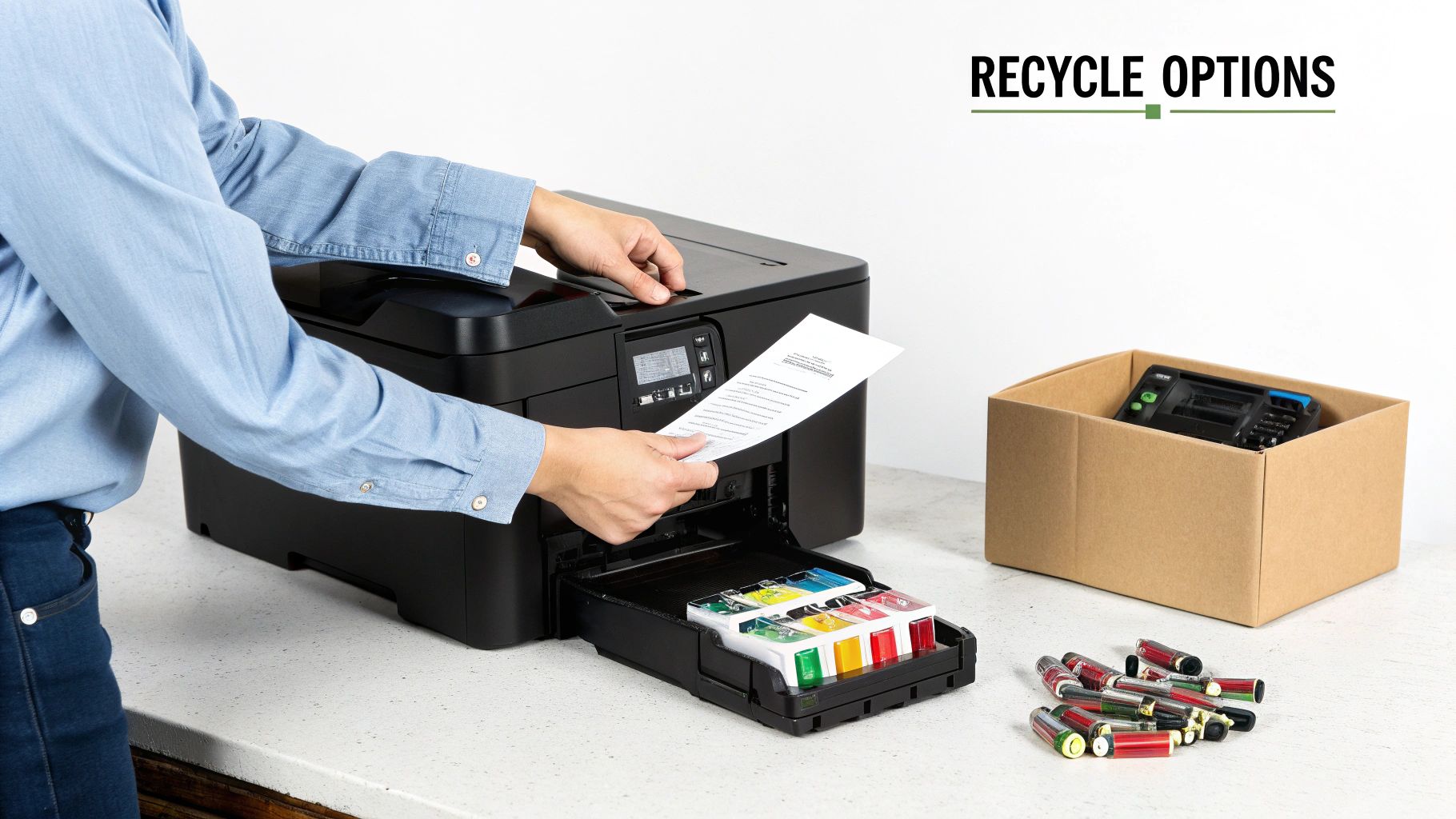
So you’ve gathered your empty cartridges. Now what? The good news is you have plenty of options to keep them out of the landfill, where they can sit for centuries. Which path you take really just depends on how many empties you have and what fits your schedule.
For a no-fuss, direct route, Canon’s own recycling program is a great place to start. It’s perfect for home users or small offices that only have a handful of cartridges at a time. For instance, if you’re a freelancer working from home and you go through one black and one color cartridge every few months, you can simply request a label online and send them back. All you have to do is hop on their website, find your cartridge model, and they’ll let you print a postage-paid shipping label for free. It’s a simple way to send your empties straight back to the source.
If you’re sending them off, make sure they’re packed securely. Using sturdy postal boxes is a must to prevent any leftover ink from leaking or the cartridges from getting crushed on their way. A little bit of care in packaging goes a long way.
In-Store Drop-Offs for Quick and Easy Recycling
Don’t want to deal with shipping? Your local office supply store is probably your best bet. Big retailers like Staples and Office Depot have had ink and toner recycling programs for years, and they make it incredibly convenient. Just walk in and drop your empty Canon cartridges at the service desk or in a designated bin.
The real draw here is the rewards. Many of these stores will give you $2 in store credit for every eligible cartridge, though they usually cap it at a certain number per month. For example, you might bring in five empty cartridges and get $10 in rewards, which you can then use to buy a new ream of paper on your next visit. It’s a fantastic way to turn your recycling efforts into a discount on paper, pens, or your next set of ink. Just make sure to double-check the rules, as some require you to make a minimum purchase before you can use the credit.
What About Bulk Recycling?
If you’re running a business or a school, you’re likely dealing with a mountain of cartridges, not just a few. Mailing them individually or making a dozen trips to Office Depot isn’t exactly a good use of your time.
When you’ve got a large volume, look into your local municipal e-waste facility. These centers are set up specifically to process large amounts of electronic waste, including printer cartridges. For example, a school district’s IT department might collect all the empty cartridges from its schools at the end of the year and make a single trip to the county e-waste center. Just do a quick search for “e-waste recycling near me” to find your closest drop-off point. It’s the most sensible and efficient option for any organization going through a high volume of ink.
It’s worth noting that responsible e-waste disposal is a massive global effort. In North America alone, the ink cartridge recycling market is expected to skyrocket from $780 million in 2024 to $1.5 billion by 2035. This growth is fueled by consumer demand for sustainability and stronger manufacturer take-back laws.
Turning Surplus Canon Ink into Cash
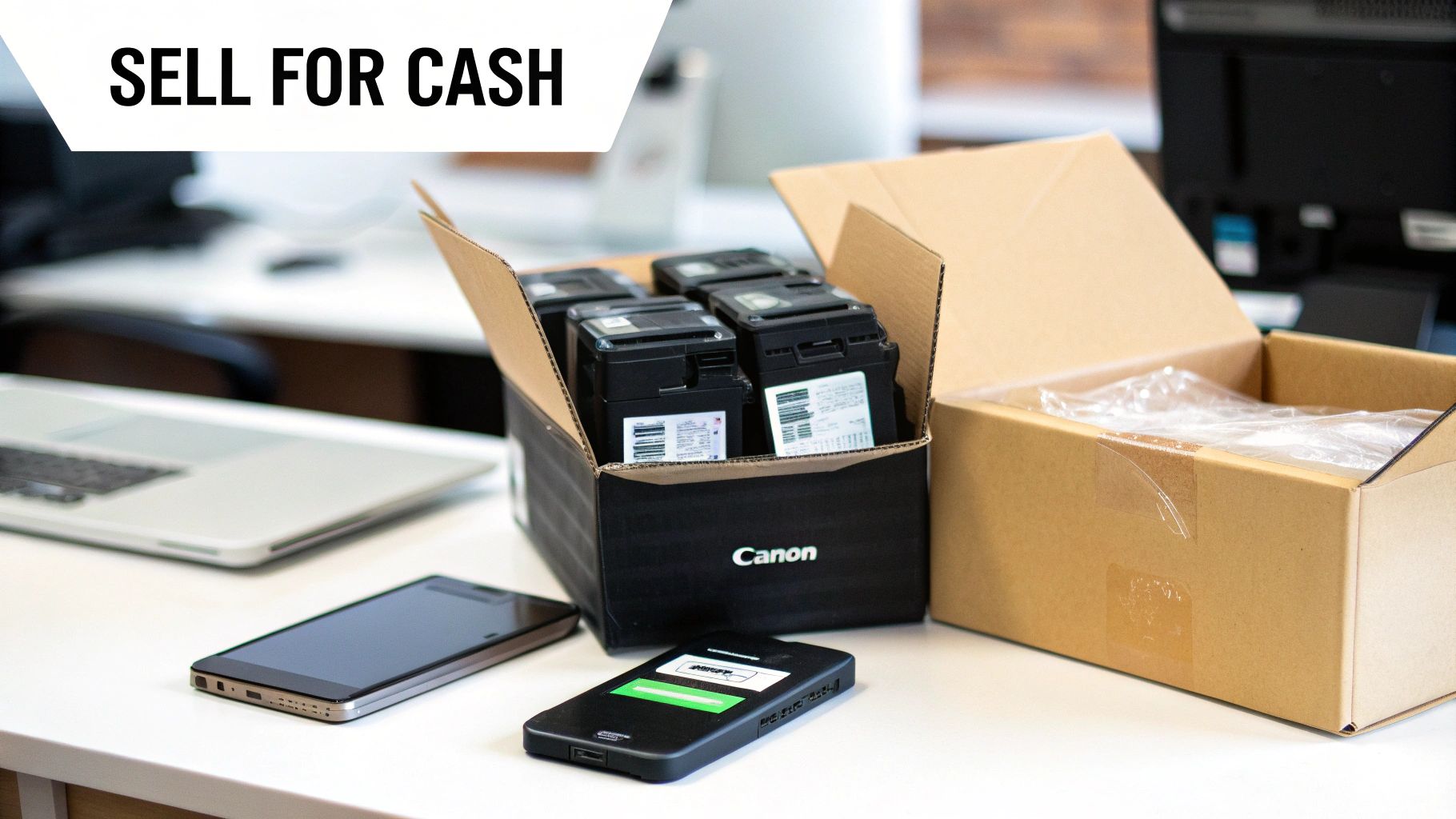
This is where all that careful sorting pays off. Once you’ve separated your pristine, unopened OEM cartridges, you can turn that pile of surplus supplies into real money. Working with a reliable buyback partner makes this incredibly straightforward, transforming office clutter into cash with almost no effort.
The whole process is designed to be fast and transparent, so you know exactly what’s happening from the moment you ask for a quote to when the payment lands in your account. Let’s walk through how it works.
Getting Your No-Obligation Quote
First things first: find out what your cartridges are actually worth. A good buyer will never make you guess. They’ll provide a quick, free quote based on exactly what you have, with zero strings attached. You don’t need a perfectly formatted spreadsheet to get started, either.
Most buyback partners give you a few easy ways to send over your list:
- Just a List: Simply type out the model numbers (like Canon CL-241XL), how many you have, and their expiration dates.
- Photos: This is often the fastest way. Just lay the boxes out so the model numbers and expiration dates are clearly visible and snap a few pictures with your phone.
- Spreadsheet: If you’re already organized and have an inventory list, you can usually just upload the file directly.
You should get a clear, itemized offer back within a couple of business hours. This quote will reflect the current market demand for each specific cartridge, giving you a transparent breakdown of its value.
A key sign of a trustworthy partner is the upfront quote. It lets you make an informed decision without any pressure. If a company is cagey about giving you clear pricing before you ship, that’s a major red flag.
The Shipping Process, Demystified
Once you’ve accepted the offer, the logistics are taken care of for you. Forget about trying to calculate postage or worrying about packages getting lost. The best buyback services handle all of that by providing free, prepaid, and insured shipping labels.
This is a critical detail. Insured shipping means your inventory is protected against loss or damage from the moment it leaves your office until it arrives for inspection. It completely removes the risk from your end, ensuring you get paid. All you have to do is box everything up, stick the label on, and drop it off with the carrier.
Think about a marketing agency with 30 leftover Canon CL-241XL cartridges after upgrading its printers. They get a quote, accept it, and receive a prepaid FedEx label in their email. They pack the cartridges into a sturdy box, tape on the label, and schedule a pickup. The whole thing takes maybe 15 minutes of their time.
From Inspection to Fast Payment
The final stage is just as quick. As soon as your shipment arrives, the team gets to work inspecting the cartridges. They’ll confirm the items match your list, check the expiration dates, and make sure the boxes are in the condition you described.
This inspection is usually wrapped up the very same business day the package is delivered. A commitment to same-day processing is a hallmark of a professional operation that respects your time.
Once it all checks out, your payment is sent immediately. Reputable buyback programs offer a variety of fast and convenient ways to get paid:
- Zelle: An instant transfer right to your bank account.
- Digital Check: A secure check sent directly to your email.
- Paper Check: The traditional option, sent via mail if you prefer.
For certain deals, you might even have access to a PayPal Prepay option, where you get paid before your items even ship. This kind of flexibility ensures the process ends smoothly and securely. You can start this journey right now by getting a fast quote for your surplus Canon cartridges today.
The Real Impact of Smart Cartridge Management
Deciding to sell or recycle your extra Canon ink might feel like just another small office task, but the ripple effects are bigger than you’d think. On a purely financial level, it’s an easy way to get cash back for assets that are just sitting on a shelf, losing value. For instance, a real estate office that sells five unused high-capacity ink cartridges could earn enough to cover the cost of a team lunch. This simple move frees up precious storage space, cuts down on waste, and can even pump a little extra money back into your budget.
But this isn’t just about a one-off sale. It’s about creating a smarter, more sustainable habit for how your business handles supplies. When you actively manage your printing inventory, you’re plugging into the circular economy. You’re making sure perfectly good products get a second life, which eases the demand for new manufacturing and all the resources that go with it.
A Compelling Case for Corporate Responsibility
The environmental argument for recycling Canon ink cartridges is hard to ignore. Each cartridge is made of industrial-grade plastics and holds trace amounts of ink—materials that can stick around in a landfill for centuries. A solid recycling or resale program tackles this problem head-on, turning what could be an environmental liability into a genuinely positive action.
If you’re wondering how small steps like this fit into the bigger picture, it’s worth checking out this ultimate guide to ESG strategies. These practical habits are the bedrock of a real environmental policy that both customers and your own team can get behind.
Globally, these small actions add up to a huge impact. The market for recycling ink and toner cartridges is expected to jump from $2,164.2 million in 2025 to a staggering $4,000 million by 2035. That growth signals a massive shift in how businesses are thinking about e-waste.
Think about the scale of it: recycling just one million ink cartridges keeps 1,200 tons of plastic out of landfills. It also saves 3,200 barrels of oil and prevents 18,000 tons of CO2 from hitting the atmosphere.
From Clutter to Contribution
At the end of the day, every single cartridge you keep out of the trash helps build those impressive numbers. Take a nonprofit, for example. By collecting donated cartridges from their supporters, they can set up a reliable fundraising source throughout the year. They’re literally turning community e-waste into fuel for their mission, proving they’re committed to being both financially and environmentally savvy.
When you work with a trusted buyback partner, you’re doing a lot more than just offloading extra supplies. You’re making a smart business decision that helps your bottom line, supports a more sustainable planet, and shows your organization is serious about operating responsibly.
Got Questions About Recycling Your Canon Ink? We’ve Got Answers.
When you’re looking to recycle or sell your old Canon ink cartridges for the first time, it’s natural to have a few questions. Let’s walk through some of the most common things people ask, so you can feel confident you’re making the right move.
What if the Cartridge Boxes Aren’t Perfect?
This is a big one. Most buyback companies are looking for cartridges in their original, factory-sealed packaging. A minor ding on the corner or some writing on the box? That’s often okay, though it might reduce the offer slightly. For instance, if you have a perfect box worth $15, one with a crushed corner might be offered $12.
But if that factory seal is broken or the box is really torn up, it probably can’t be resold. Don’t toss it, though! Those cartridges are perfect candidates for standard recycling Canon ink cartridges programs. You can use Canon’s own take-back service or just drop them in a collection bin at a local office supply store.
How Can I Be Sure I’m Getting a Fair Price?
Transparency is everything. A trustworthy buyback partner won’t make you guess; they’ll give you a quick, no-strings-attached quote based on the real market demand for your specific cartridge model and its expiration date. This way, you know exactly what you’re getting before you agree to anything.
When you’re weighing different offers, remember to look at the whole picture, not just the price per cartridge. Things like free insured shipping and a choice of fast payment methods are huge. These little perks are what make the entire process smooth, secure, and completely risk-free for you.
Is It Really Worth the Hassle for Just a Couple of Cartridges?
You bet it is. Many buyback programs, including ours, don’t have a minimum quantity. This makes it easy to sell even if you only have one or two cartridges to offload. Since professional buyers cover the shipping costs, it costs you zero dollars to send them in.
You might be surprised by how much a couple of genuine, in-demand OEM cartridges can fetch. For example, two unopened Canon PG-245XL black ink cartridges could get you enough cash to buy lunch. It’s a super simple way to declutter your supply closet and get some cash back for items you weren’t using anyway.
How Long Does This Whole Thing Take?
The process is designed to be fast and painless. Getting a quote usually takes just a few business hours after you send over a list or some photos of your cartridges.
Once you ship everything with the prepaid label, it takes about 2-5 days to arrive. We inspect the items the same day we get them and send your payment right away. You can choose how you get paid—Zelle, digital check, or even PayPal for some transactions.
Ready to find out what your unused Canon ink is worth? At Toner Connect LLC, we make it easy to get a fast, fair quote for your surplus supplies. Get your free offer today!