
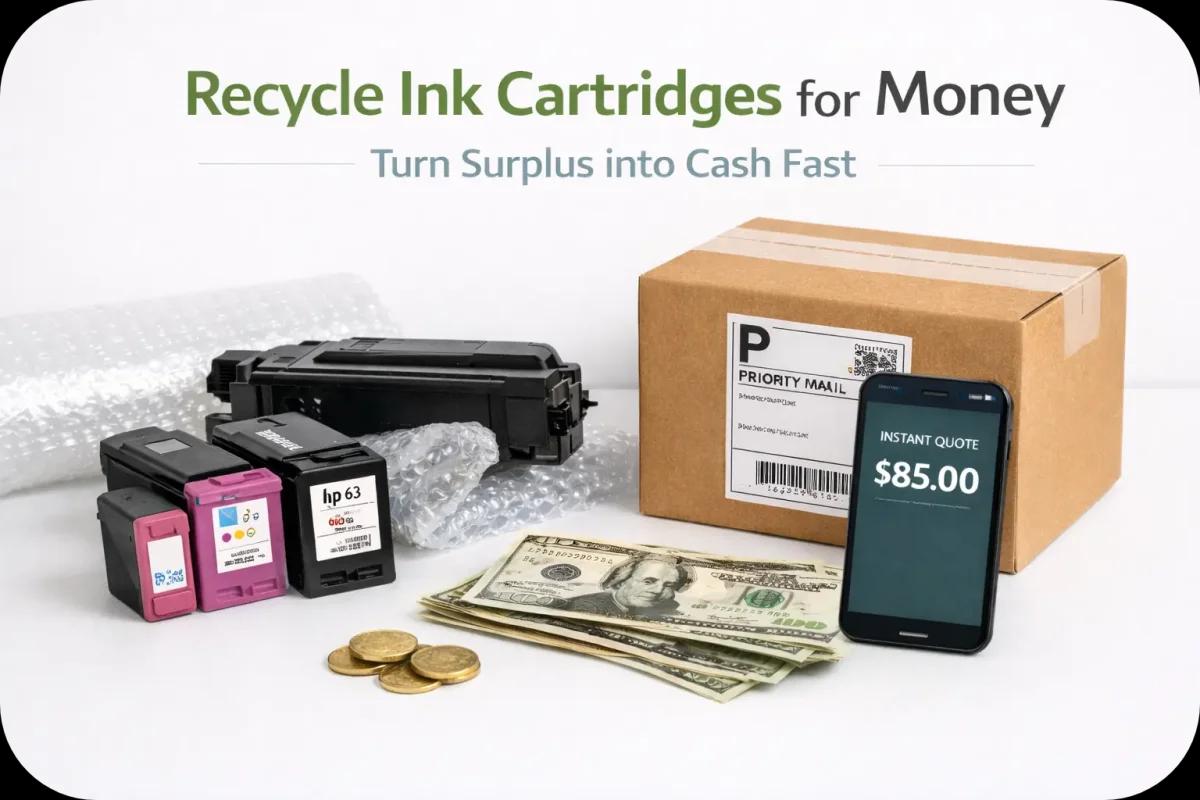
Yes, you can absolutely get paid for recycling ink cartridges, especially if they’re new, unused OEM supplies. Buyback programs are always looking for surplus cartridges from businesses and resellers, offering a great way to turn old inventory into a new revenue stream.
If you have boxes of unused toner collecting dust, this guide will show you exactly how to turn them into cash.
Turn Your Surplus Ink Into a Revenue Stream
That closet full of surplus ink and toner isn’t just clutter, it’s untapped cash. So many businesses write off these supplies as a loss after upgrading their printers, but a smart liquidation strategy can bring in a surprising financial return. The focus here is on monetizing those new, unused OEM (Original Equipment Manufacturer) cartridges.
For office managers and IT teams, this is a win-win. You clear out valuable storage space while boosting your department’s bottom line. For example, an IT manager at a mid-sized marketing firm might discover 50 surplus HP toner cartridges after a company-wide printer upgrade. Instead of letting them expire, they can sell them for a few thousand dollars, money that can then be used for new software or equipment.
From Obsolete Stock to Real Capital
Picture this: your office is moving, and you uncover a pallet of cartridges for printers you replaced years ago. Your first instinct might be to just toss them, but that’s like throwing money in the trash. By working with a reputable buyback company, you could get a check for hundreds or even thousands of dollars.
This isn’t just a hypothetical. A recent client, a law firm, found three boxes of genuine Canon toner cartridges from a retired copier. We provided a quote for over $800, turning what they considered junk into a significant budget boost.
This guide lays out a clear path for turning those forgotten supplies into a simple, profitable transaction. Getting started is often as easy as taking a few pictures of your inventory. If you’re ready to see what your surplus toner is worth, you can jump right in by submitting your items for a quick quote at https://tonerconnect.net/sell-unused-toners/submit-form.
Beyond the cash, it’s worth understanding the importance of recycling printers and ink cartridges. This is more than just good business; it’s a responsible practice that supports a circular economy by keeping valuable materials out of landfills. With over 375 million cartridges discarded annually in the U.S. alone, every single unit you keep in circulation makes a difference.
Figuring Out Which Cartridges Are Worth Money
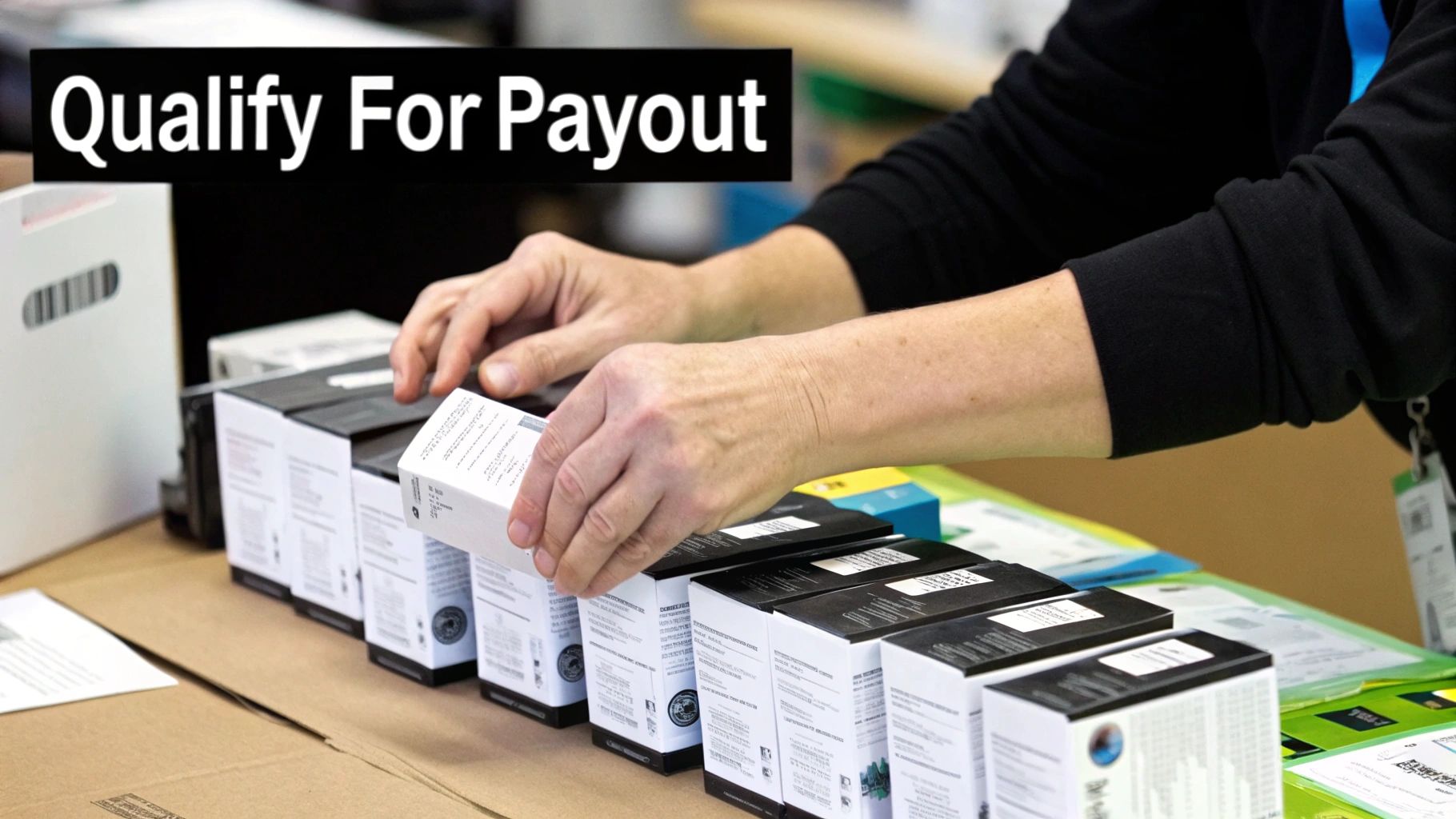
Before you start boxing everything up, it’s crucial to understand that not every cartridge gathering dust in your supply closet has resale value. Taking a few minutes to learn what buyback companies look for is the single most important step.
Getting this right from the start saves a ton of time, sets realistic expectations, and ultimately ensures you get the best possible payout. The logic is pretty straightforward: buyback programs are looking for supplies they can confidently resell. That means the cartridges have to be in a condition that any new buyer would be happy with.
Let’s dig into the specifics that separate valuable inventory from the stuff that won’t make the cut.
Stick to the Originals: OEM is Key
This is the big one. Reputable buyback programs almost exclusively purchase new, unopened OEM (Original Equipment Manufacturer) cartridges. We’re talking about the genuine products made by the printer brands themselves, HP, Brother, Canon, Epson, and so on.
Here’s what they will not accept:
- Remanufactured Cartridges: These are original cartridges that have been used once, returned, cleaned, and refilled. They have their place, but they aren’t eligible for these cash buyback programs.
- Compatible or Generic Cartridges: These are the third-party, off-brand cartridges made to fit popular printers. For example, a cartridge from a brand like “E-Z Ink” or “LD Products” that is designed to work in an HP printer is considered generic and won’t be accepted.
- Used or Opened Cartridges: If the seal is broken or the cartridge has been installed in a printer (even for a second), it’s out. It can’t be sold as new.
The golden rule is to stick with genuine, factory-sealed OEM products. Pulling these out first will make the rest of your inventory process a breeze.
Box Condition and Expiration Dates Are a Big Deal
Put yourself in a retail buyer’s shoes, would you buy a product in a beat-up box? Probably not. The condition of the packaging directly impacts a cartridge’s resale value, and a pristine box will always fetch the top price.
Keep an eye out for damage that will almost certainly get a cartridge rejected:
- Major dents, crushed corners, or deep creases.
- Any tears, rips, or punctures in the cardboard.
- Writing, old shipping labels, or heavy ink marks on the box.
For inkjet cartridges, the expiration date is a hard and fast rule. Most programs require at least one year of shelf life remaining before the date printed on the box. Toner cartridges generally don’t have expiration dates, but their box condition is just as important.
The business sense behind this is solid. While the push for paperless offices might be shrinking the market for new cartridges, the printer cartridge recycling and resale market is booming. It’s projected to grow 6.8% annually, hitting nearly $4.8 billion by 2032. This shift puts more economic value on recovering and reselling surplus supplies, making the condition of your inventory more critical than ever. You can learn more about these trends from this detailed industry analysis.
For example, imagine you found a stack of HP inkjet cartridges. The first thing you’d do is confirm they’re genuine HP, not generics. Then, you’d inspect each box for rips or writing. One might have “Office Use Only” written in marker, that one’s out. Finally, you’d check the expiration date on every single one, setting aside any that expire in less than a year. This simple sorting process gives you an accurate inventory list to submit for a quote.
To make it even easier, here’s a quick checklist to help you sort your cartridges.
Quick Eligibility Checklist for Your Cartridges
Use this table to quickly determine if your ink and toner cartridges are likely to be accepted for a cash payout.
| Criteria | What Qualifies | What Doesn’t Qualify |
|---|---|---|
| Manufacturer | Genuine OEM (HP, Canon, Brother, etc.) | Remanufactured, compatible, or generic brands |
| Condition | Brand new, never used, factory-sealed | Opened, used, refilled, or unsealed items |
| Box Quality | Clean, retail-ready box with minimal shelf wear | Damaged, torn, written-on, or heavily labeled boxes |
| Expiration (Inkjets) | At least 1 year of shelf life remaining | Expired or expiring within the next 12 months |
| Expiration (Toner) | No expiration date, but box must be in good shape | N/A (focus is on box condition) |
Following this checklist will give you a very clear picture of what you have and what it might be worth, saving you from shipping items that will just be rejected later.
Getting an Accurate Quote for Your Supplies
Alright, so you’ve sorted through your supplies and figured out which cartridges are the moneymakers. Now for the most important part: getting a fair offer. Any reputable buyback company will make this process completely transparent, giving you a clear quote before you even think about putting anything in a box.
The whole point is to give them enough information to make a quick, accurate assessment. It’s not complicated, and you definitely don’t need to be a spreadsheet guru. Most companies offer a few different ways to send over your inventory details. It really just comes down to what’s easiest for you and how many cartridges you have.
Choose Your Quoting Method
Generally, you’ll have three main options: an online form, photos, or an inventory list. Each works great in different situations. If you only have a handful of cartridges, snapping a few pictures is probably the fastest way to get a quote and recycle your ink cartridges for money.
But if you’re looking at a much larger collection, a simple list will be far more efficient for everyone involved. Here’s how they usually break down:
- Online Quote Form: This is the go-to if you already know your model numbers. For example, you’d enter “HP 952XL” in the model field and “12” in the quantity field. The system can often spit back an offer almost instantly.
- Photo Submission: Got a small or medium-sized pile of boxes? This is perfect. Just lay them all out so the part numbers and box conditions are easy to see, take a few clear photos, and email them over.
- Inventory List: For big liquidations, this is the gold standard. A simple spreadsheet with columns for the Brand (like HP), Model Number (like 950XL), and Quantity is all you need.
Tips for a Flawless Submission
Whichever route you take, accuracy is everything. The more precise your information is upfront, the less likely you are to see adjustments to your quote after the final inspection. Being honest about box condition and quantities builds a smooth runway for the whole deal.
Here’s a real-world tip for taking pictures: don’t just toss the cartridges in a heap and snap a photo. I’ve seen that countless times, and it just slows things down.
Instead, line them up on a shelf or the floor like books, with the model numbers facing out. This lets the buyer see everything they need in just one or two clean shots. For some great visual examples of what works best, you can find a helpful guide with detailed instructions on submitting images for a quote.
A clear, well-documented submission does more than just get you a fast quote, it builds trust. When a buyback company sees you’ve taken the time to present your inventory accurately, it signals a professional and reliable partnership.
This little bit of effort really does pay off. When a submission is clear and accurate, you can often expect a quote back within a few business hours. From there, you’re just a few steps away from getting paid.
Getting Your Cartridges Shipped and Getting Paid
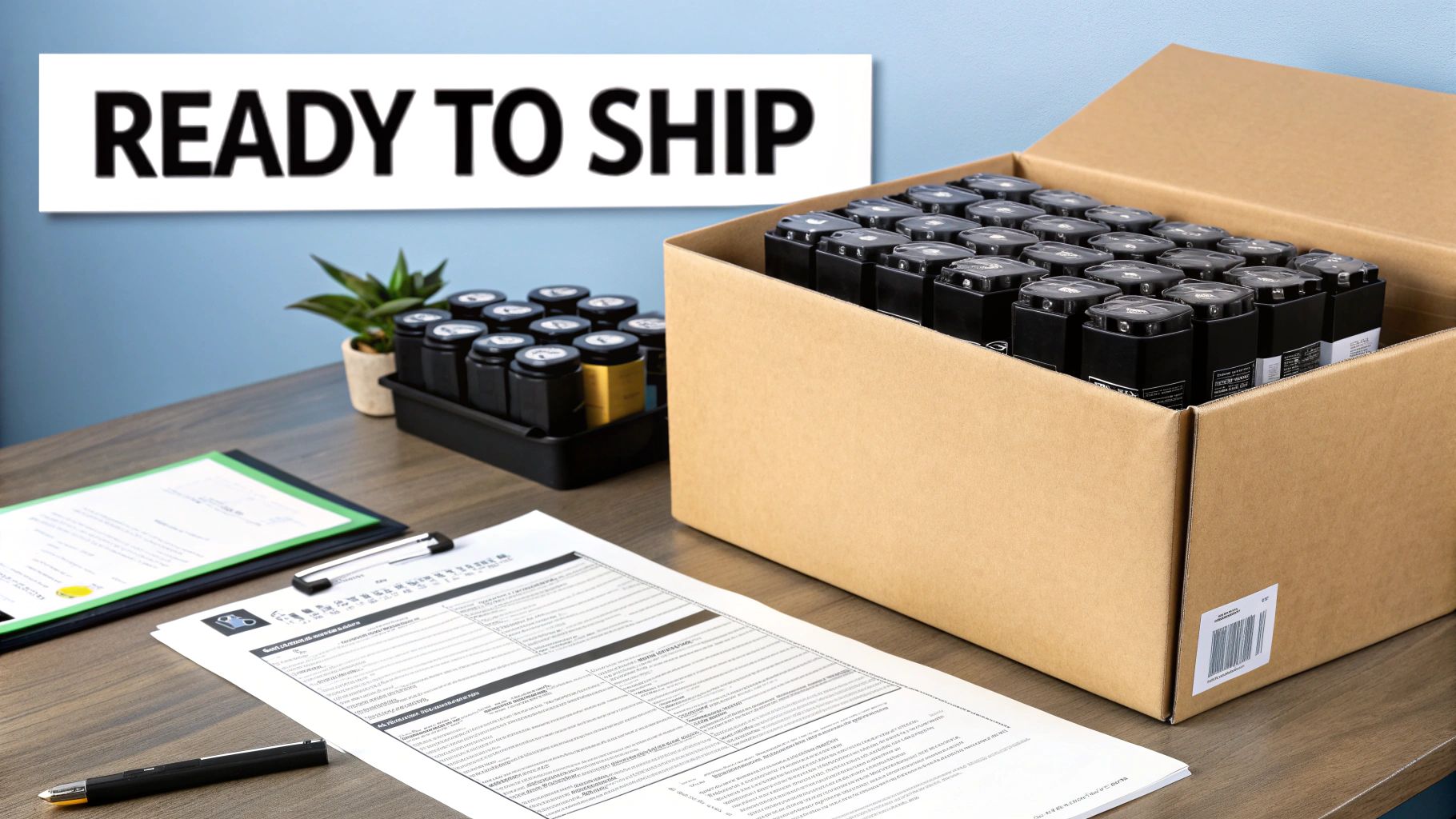
You’ve accepted a great offer, and now it’s time for the final, most rewarding part: packing up your cartridges and collecting your cash. The best buyback companies make this part a breeze by providing free, insured shipping labels. That means you have zero out-of-pocket costs to worry about, taking all the financial risk off your shoulders.
Your only real job here is to pack the cartridges securely. Remember, the original packaging is where the value lies, so protecting it during transit is key. A crushed or torn box will almost certainly lower your final payout. A little bit of care at this stage directly protects your profit.
Pack Like a Pro to Protect Your Payout
I can’t stress this enough: how you pack really matters. Just tossing cartridges into a flimsy old box is a recipe for damaged goods. For instance, putting heavy toner cartridges on top of smaller, fragile ink cartridges will crush the boxes below. They’ll shift, dent, and tear on their way, and you’ll be the one who pays the price.
Follow these simple rules to make sure your cartridges arrive in the exact same condition they left in:
- Get a solid box. Start with a new or gently used corrugated cardboard box that can easily handle the weight without buckling. A box from an old Amazon delivery is fine, as long as it’s sturdy.
- Fill the gaps. Use bubble wrap, packing peanuts, or even crumpled paper to fill any empty space. This is crucial for stopping the cartridge boxes from sliding around and banging into each other.
- Tape it up tight. Securely tape all the seams, top and bottom, to make sure the box doesn’t pop open on the truck.
These small steps are non-negotiable if you want to get the full amount you were quoted. For bigger or more complicated shipments, it’s worth taking a moment to https://tonerconnect.net/learn-more-shippers. And while most reputable programs cover shipping costs, it never hurts to understand how couriers work and how to accurately calculate shipping charges for your own reference.
What to Expect: The Inspection and Payment Cycle
Once your shipment lands at the warehouse, it moves into a quick but thorough inspection. The receiving team will check that the models, quantities, and conditions of the cartridges match what was on your quote. As long as everything lines up, your payment is processed right away.
This whole process is part of a massive, multi-billion-dollar industry. The global printer cartridge recycling market hit about USD 2.5 billion in 2023 and is on track to reach nearly USD 4.8 billion by 2032. That growth is fueled by companies like yours turning surplus inventory into real cash.
The inspection isn’t there to trip you up, it’s just a verification step to keep things transparent for everyone. If you provide accurate info upfront, you’ll almost always have a smooth, surprise-free transaction.
After your items get the green light, you get paid. The best companies offer quick and flexible payment methods to fit your business needs.
You can usually choose from options like:
- PayPal: Often available as a prepay option, so you get paid before your box even leaves.
- Zelle: A fast and easy digital transfer straight to your bank account.
- Digital or Paper Checks: Typically issued the very same day your items pass inspection.
This speedy turnaround means your surplus supplies become working capital in just a few days, finishing off a simple and profitable process.
Insider Tips to Maximize Your Payout

Getting a quote is easy, but getting the best price requires a little strategy. A few smart moves can make a real difference in your final payout and help you build a solid relationship with your buyback partner. It all comes down to avoiding the common mistakes that can quietly shrink your offer.
Think about the little things. Even how you store the cartridges matters. For example, a toner box used as a coffee coaster gets a ring stain, immediately dropping its value. Dents, stray marks from a pen, or old shipping labels can turn a premium item into a discounted one in an instant. Your goal is to present your inventory in the best condition possible.
Avoid These Common Payout Pitfalls
One of the most common issues we see is misidentifying cartridges. People often confuse a standard-yield cartridge with its high-yield version, think HP 950 versus the 950XL. This simple mix-up will lead to a quote adjustment, so it pays to double-check every model number before you hit send.
Another classic mistake is not mentioning minor box damage upfront. It’s always better to be transparent about a small crease or tear. This builds trust and makes sure the quote you get is accurate. Nobody likes surprises, especially when they cause payment delays.
Here are a few other mistakes to sidestep:
- Waiting Too Long: Printer models get discontinued, and the value of their cartridges drops over time. For example, a toner for a 10-year-old printer model might be worth $50 today, but only $10 next year when that printer model becomes obsolete. Liquidate it sooner rather than later.
- Poor Storage: Keep your cartridges in a dry, climate-controlled spot. A box stored in a damp basement might develop mold or water stains, making it worthless.
- Inaccurate Counts: It sounds simple, but miscounts happen. Always do a final tally of your physical items against your inventory list right before you seal the box.
The sellers who get the best results are proactive. They treat their surplus supplies like any other valuable asset, accurately cataloged, properly stored, and honestly represented.
The Power of Consolidation and Scale
Want a pro tip that can seriously boost your return? Consolidate your inventory. If you oversee multiple office locations or work with other resellers, combine all your qualifying cartridges into one large shipment.
Bigger deals almost always get better pricing and more logistical support from the buyer. For example, selling ten individual toner cartridges might get you $30 each. But if you consolidate inventory from three offices and sell 50 cartridges at once, the buyer might offer you $35 each because the shipping and processing are more efficient for them. A box of 20 cartridges is fine, but a pallet of 200 is where you start to see real value.
Selling your unused OEM supplies this way is also a huge environmental win. The global market for printer cartridge recycling is expected to hit around $4.8 billion by 2032, which means there’s a massive demand for high-value cartridges like yours. By bundling your inventory, a mid-sized company can tap into significant cash value while making a measurable dent in its waste. You can find more details on the growth of the cartridge remanufacturing market to see just how big this opportunity is.
Follow this advice, and you won’t just recycle ink cartridges for money, you’ll ensure a smooth, profitable, and hassle-free experience every single time.
Got Questions About Selling Your Ink Cartridges? We’ve Got Answers.
If you’re new to selling your extra ink and toner, it’s totally normal to have a few questions. You want to know how it all works, from getting your quote to seeing the money hit your account. Let’s walk through the most common questions we get from sellers every day.
We’ll clear up any confusion about what happens after you ship your items and how long it really takes to get paid.
What Happens If My Quote Changes After Inspection?
This is probably the number one question we hear, and it’s a fair one. The good news is that if you’ve sent over accurate details, your quote shouldn’t change. When an offer is adjusted, it’s almost always because the items we receive in the mail don’t quite match the initial description.
Here are the usual culprits for a revised quote:
- Box Damage: A perfect, factory-sealed box is what gets you the top dollar. If a box shows up with writing, rips, or serious dents that weren’t mentioned or visible in your photos, we have to adjust its value.
- Model Mix-Ups: It’s an easy mistake to make! For example, listing a standard HP 58A cartridge as its high-yield cousin, the 58X. When we catch this during inspection, we simply correct the price to match the actual model received.
- Quantity Mismatches: Sometimes the count is just off. If your list says you sent ten cartridges but we only find nine in the box, the final payout will naturally be adjusted to reflect the actual quantity.
Any reputable buyer will be upfront about this. If there’s an issue, we’ll let you know exactly what we found and why the offer changed before sending any payment. Being thorough and honest when you submit your list is the best way to make sure the first quote is the final quote.
The whole point of the inspection is just to confirm that what’s in the box is what you told us was in the box. It’s a simple verification step that keeps the process fair for everyone.
How Long Does the Whole Process Take?
One of the best things about turning your surplus cartridges into cash is how fast it all happens. There can be small variations based on shipping times from your location, but most sellers follow a pretty standard timeline.
Here’s a realistic breakdown of what to expect:
- Getting Your Quote: Once you send us your list or photos, you’ll typically have a firm offer in your inbox within a few business hours.
- Shipping: As soon as you give the green light, we’ll email you prepaid shipping labels. From there, it usually takes about 2-5 business days for your package to make its way to our warehouse.
- Inspection & Payment: This is the fastest part. We pride ourselves on inspecting your shipment and sending your payment on the very same business day we receive it.
All in all, you can go from quote to cash in about a week. A recent seller from California, for example, shipped their items on a Monday. The box arrived at our facility on Thursday morning, and they had a Zelle payment in their account by Thursday afternoon. It’s a quick and painless way to liquidate that old inventory without the headaches of selling on your own.
Ready to clear out that supply closet and unlock the hidden value in your surplus cartridges? Toner Connect LLC makes it simple, fast, and profitable. With free insured shipping, same-day payments, and thousands of satisfied sellers, we offer the most reliable way to monetize your unused OEM ink and toner. Don’t let those valuable supplies go to waste, get your free, no-obligation quote today.