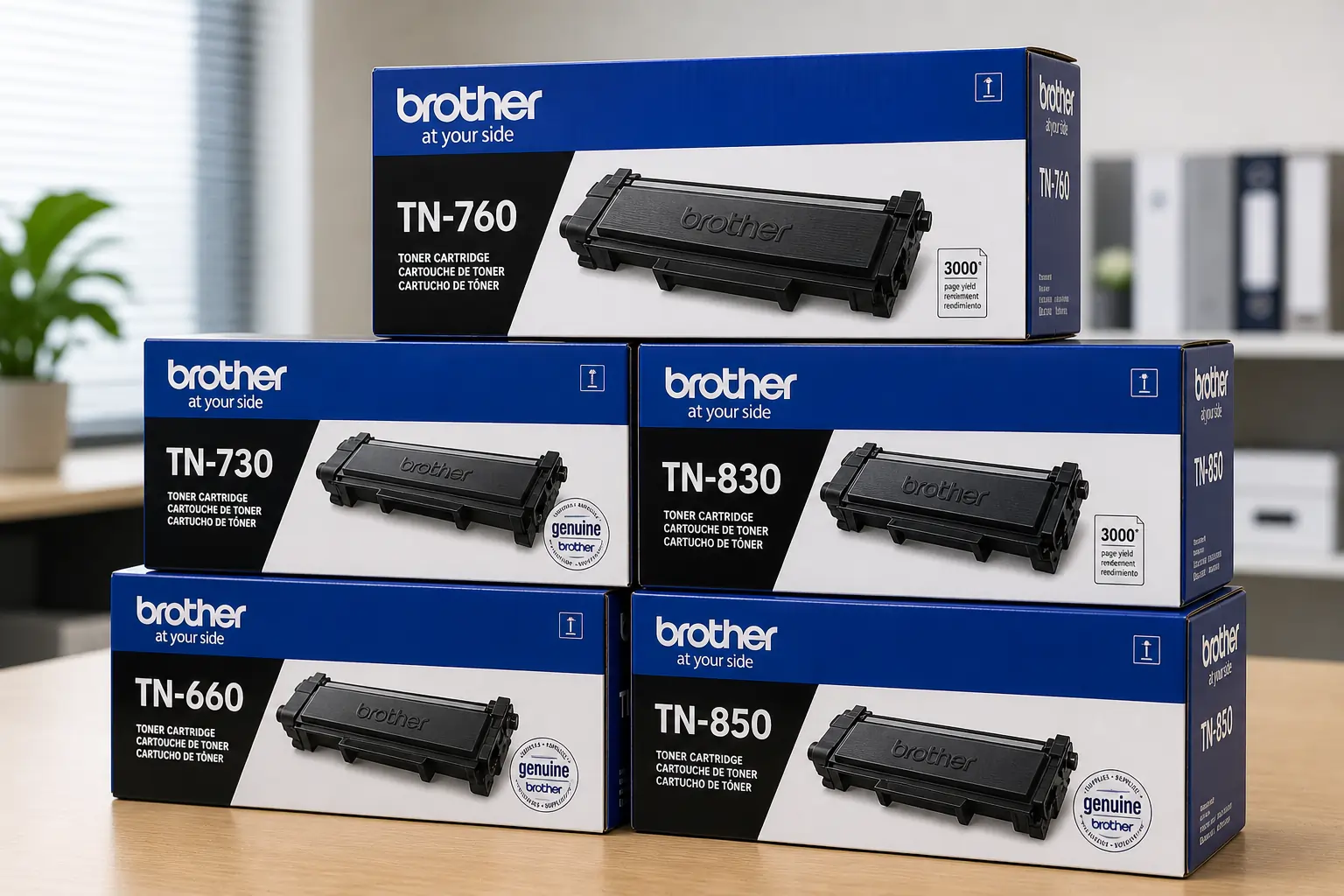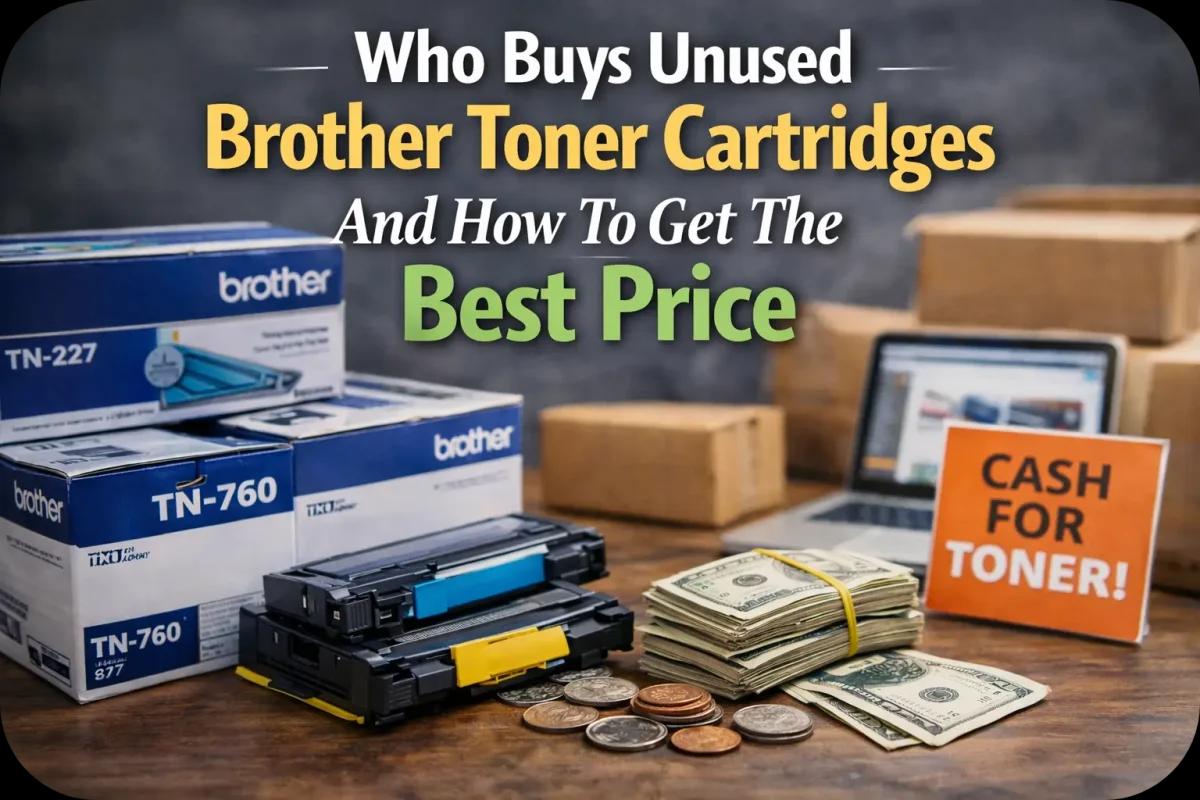
If your office has a closet full of unused Brother toner, you're not sitting on clutter—you're sitting on cash. The short answer to who buys unused Brother toner cartridges is a whole network of specialized buyback companies, other small businesses looking for a deal, and even large corporations managing their inventory. These buyers don't see your surplus as waste; they see it as a valuable commodity.

That stack of extra Brother toner cartridges—maybe left over from a printer upgrade or a mistaken order—represents a genuine financial asset. Too many businesses just write these supplies off as a loss, letting them gather dust until they expire. This is a huge missed opportunity, especially since a robust secondary market exists specifically for these items. For example, an architectural firm might have 20 extra Brother TN-880 cartridges after switching to a new printer model. Instead of becoming waste, those cartridges could be worth over $1,000.
Recognizing your surplus toner as a hidden asset is just smart resource management. For more on these principles, you can find some great facility management insights. Thinking this way turns what could be a simple office clean-out into a strategic financial recovery effort.
Understanding who the buyers are is the first step in unlocking this value. Each group has its own reasons for purchasing your unused toner, which directly impacts how much they're willing to pay and what they're looking for.
The key takeaway is simple: your unused, factory-sealed Brother toner is in demand. The challenge isn't finding if someone will buy it, but finding the right buyer who will offer the best price and smoothest process.
To give you a clear snapshot of the market, here’s a quick breakdown of the primary players.
This table breaks down the main categories of buyers, what drives them to purchase, and what they look like in the real world. Think of it as your field guide to turning that surplus supply into a new revenue stream.
| Buyer Category | Primary Motivation | Example |
|---|---|---|
| Toner Buyback Companies | To acquire inventory for resale by offering cash and handling all logistics. | A nationwide company like Toner Connect purchasing pallets of surplus Brother TN-760 cartridges from businesses that have closed offices. |
| Small Businesses (SMBs) | To reduce operational costs by acquiring genuine OEM toner below retail price. | A local accounting firm buying a dozen discounted Brother TN-450 cartridges for its office printers to save money during tax season. |
| Large Corporations | To ensure supply chain stability and achieve cost savings at a large scale. | A national insurance company standardizing its printer fleet by purchasing 500 surplus Brother TN-850 cartridges to guarantee supply for all its branches. |
As you can see, from specialized resellers to the business next door, there's a strong and varied demand for your extra toner. The next step is figuring out which of these buyers is the best fit for you.
When you have extra Brother toner, small and medium-sized businesses (SMBs) are your most likely customers. For them, every dollar matters, and keeping a close eye on operational costs like printing is a constant battle. Your surplus toner is the perfect solution to their problem.
Think about a local accounting firm or a small marketing agency. Printing is a huge part of their budget. For instance, a small law firm that prints hundreds of pages of client documents daily can save a significant amount by purchasing surplus supplies. By buying your unused, factory-sealed OEM Brother cartridges, they can get the professional quality they need for as much as 40-60% less than what they'd pay at a big box store. That’s not just pocket change; it's a smart financial decision that directly impacts their profitability.
Picture this: a small law practice upgrades its printers, leaving them with a stack of a dozen TN-850 cartridges that won't fit the new machines. Instead of letting them collect dust, they sell them to a buyback company. In doing so, they get some of their money back and also help another small business—perhaps a local real estate office—get the affordable supplies it needs to keep running smoothly.
Your surplus directly fuels another company's cost-saving efforts. It’s a classic win-win: you turn idle assets into cash, and another business gets the genuine supplies it needs without paying the high costs of brand-new retail products.
This cycle is what makes the secondary market for toner so strong and sustainable. The consistent demand from SMBs is a huge reason your unused Brother toner is worth real money. In fact, many dealers and resellers have built their entire business around connecting people like you with these eager buyers. You can explore how these specialized dealer programs work to see how this ecosystem functions.
This constant push for savings is what powers the entire toner resale industry. In the world of office supply management, small businesses are the primary buyers, always looking for ways to cut down on rising operational costs.
Market analysis shows the global toner cartridge recycling market hit USD 2.5 billion in 2023 and is expected to reach USD 4.8 billion by 2032. SMBs are a massive part of that, making up roughly 45% of the transactions in buyback programs for major brands like Brother.
This huge market share shows just how important small businesses are. Their steady demand for discounted, genuine toner creates a reliable marketplace for your surplus supplies. They need authentic products to avoid damaging their printers and to maintain print quality, which makes your genuine Brother cartridges a hot commodity. This preference for OEM quality over risky third-party knockoffs is what keeps the value of your unused cartridges strong.
When a small business buys surplus toner, it's usually about saving money on the next purchase. But for large corporations and enterprise-level offices, the game is entirely different. They're playing for scale, thinking about supply chain security, and looking for massive cost reductions across their entire fleet of printers.
An enterprise with hundreds of Brother printers scattered across different states can't afford to have a single office shut down because they ran out of toner. A supply chain hiccup that stops one location from printing critical documents can cost thousands in lost productivity. For example, a healthcare network might buy surplus toner in bulk to ensure its patient registration desks never run out. That's exactly why they often partner with toner buyback companies to secure large quantities of genuine OEM cartridges. It's a strategic hedge against downtime.
By buying surplus toner in bulk, big companies ensure every printer in their fleet gets the same, reliable supply. Sticking with genuine Brother cartridges protects their expensive equipment, sidesteps the risks of aftermarket supplies that could void warranties, and eliminates compatibility headaches. Think of it as a form of operational insurance.
For a large corporation, buying 2,000 surplus Brother TN-760 cartridges isn't just a transaction. It's a strategic play that standardizes supplies, creates huge savings over retail prices, and turns another company's overstock into their own on-demand asset.
This approach is incredibly common in big corporate environments. Enterprises are the heavyweights here, focused on bulk acquisitions to keep their massive printer fleets consistent. The printing toners market is forecasted to reach $6.55 billion by 2029, with these large companies being a major driver. In fact, they account for 35% of recycled cartridge volume, partly because standardized Brother printers are a fixture in an estimated 60% of Fortune 500 mailrooms. You can discover more about this growing market's dynamics to see just how much enterprise demand shapes the industry.
Beyond just keeping the printers running, the financial and environmental wins are too big to ignore. A 10% discount on one cartridge is a nice little victory for a small shop. For a corporation buying thousands of them, that same percentage adds up to tens of thousands of dollars in annual savings. This turns sourcing unused OEM toner into a powerful tool for managing costs.
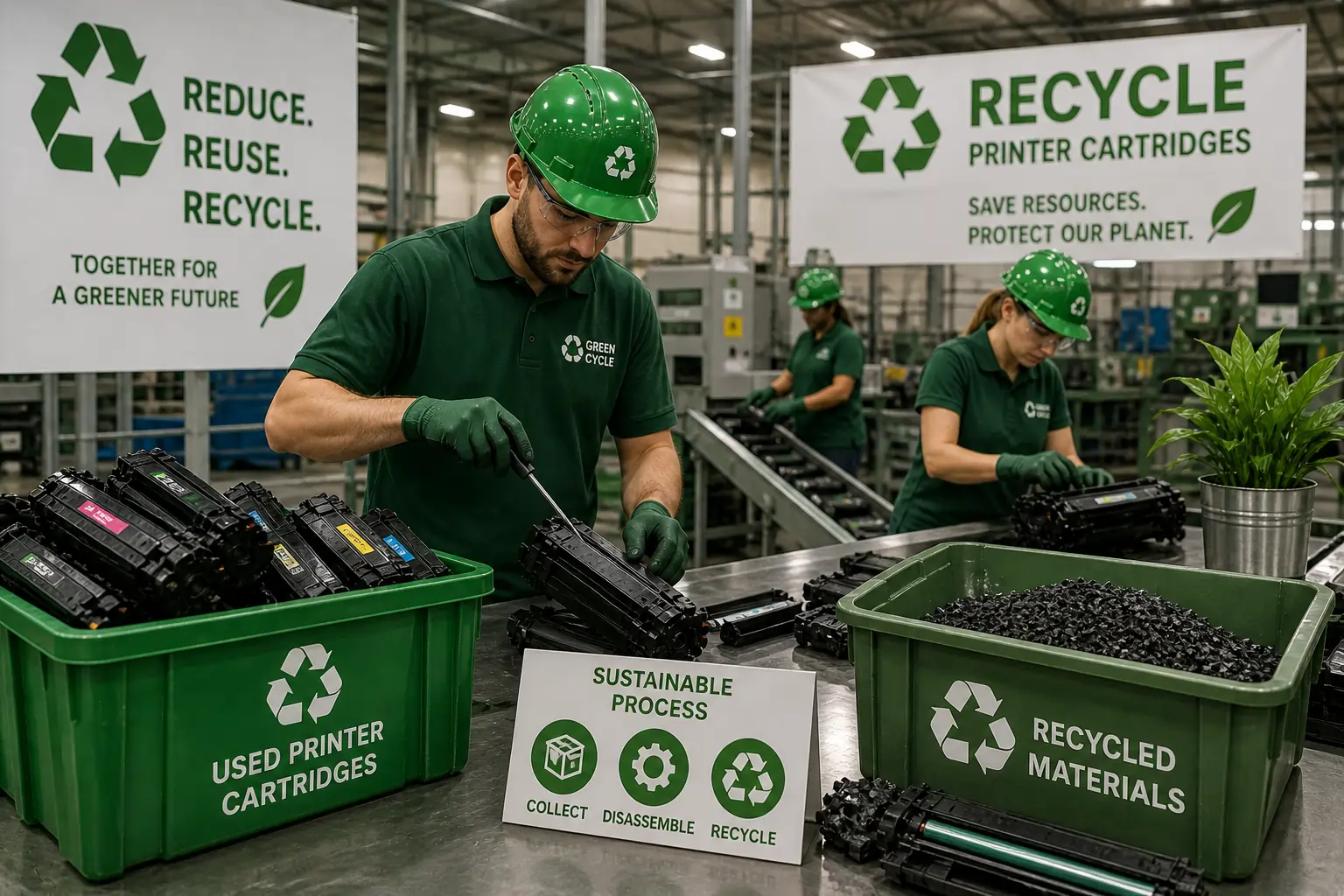
Plus, it lines up perfectly with corporate sustainability goals. When these organizations buy surplus toner, they are:
This one-two punch of saving money and being environmentally responsible makes buying unused Brother toner a smart and increasingly common corporate strategy. For businesses looking to sell toner in bulk, these corporate buyers are a huge opportunity, though they often work through specialized distributors. If you're curious about the mechanics of this supply chain, you can find out more about toner distributor networks and see how these large-scale deals come together.
If businesses and big corporations are the ones using the toner, then toner buyback companies are the crucial middlemen making the whole system click. Think of them as the market makers. They’ve created a simple, efficient, and reliable answer for anyone asking, "who buys unused Brother toner cartridges?" Essentially, they take all the hassle out of finding a buyer yourself.
You can picture them as specialized wholesalers for office supplies. Their entire business is built around buying surplus toner from thousands of companies, inspecting it, warehousing it, and then reselling it to other businesses who need genuine products without paying top dollar.
The whole process is designed to be as painless as possible for you, the seller. These companies have their operations down to a science, handling every step from your first email to the final payment.
Let’s walk through a real-world example:
Toner buyback companies provide immediate liquidity for your surplus assets. They connect the dots between sellers who have toner they don't need and buyers who do, creating value out of what would otherwise be dust-collecting clutter.
This business model thrives on volume and efficiency. While you might only have a handful of cartridges to sell, a buyback company is gathering inventory from hundreds of sources just like you. This scale allows them to fill large orders for corporate buyers and consistently supply small businesses across the country. They are the central hub of the surplus toner market.
Sure, you could try listing your cartridges one by one on a marketplace, but buyback companies offer a clean, professional, all-in-one solution. They are experts in valuation, logistics, and payment, which saves you a massive amount of time and effort.
Instead of juggling multiple buyers, filtering out lowball offers, and dealing with shipping headaches, you work with a single, trusted partner. For example, rather than trying to sell ten individual cartridges on eBay and making ten separate trips to the post office, you can ship them all in one box for free. That reliability is exactly why they’ve become the go-to choice for businesses that want a fast, secure, and profitable way to offload their surplus supplies.
If you want to get the most cash back for your unused Brother toner, you need to think like a buyer. In the surplus market, not all cartridges are valued the same—some are worth top dollar, while others might not be worth anything at all. The price you get really boils down to a few key factors that every buyback company looks at.
It's a lot like selling a used car. A collector's model in mint condition will always command a higher price than a daily driver with dings and scratches. Your toner cartridges are no different. The most important details are their authenticity, the condition of the box, the expiration date, and how much demand there is for that specific model.
This diagram shows how a buyback company acts as the middleman, turning your office's surplus supplies into cash and getting those cartridges to a new business that needs them.

This simple process is what allows you to unlock the value from an asset that would otherwise just be collecting dust on a shelf.
Before you even ask for a quote, it helps to assess your cartridges from a buyer's point of view. This sets realistic expectations and helps you present your inventory in the best light. Here are the four factors that really drive the value of your toner.
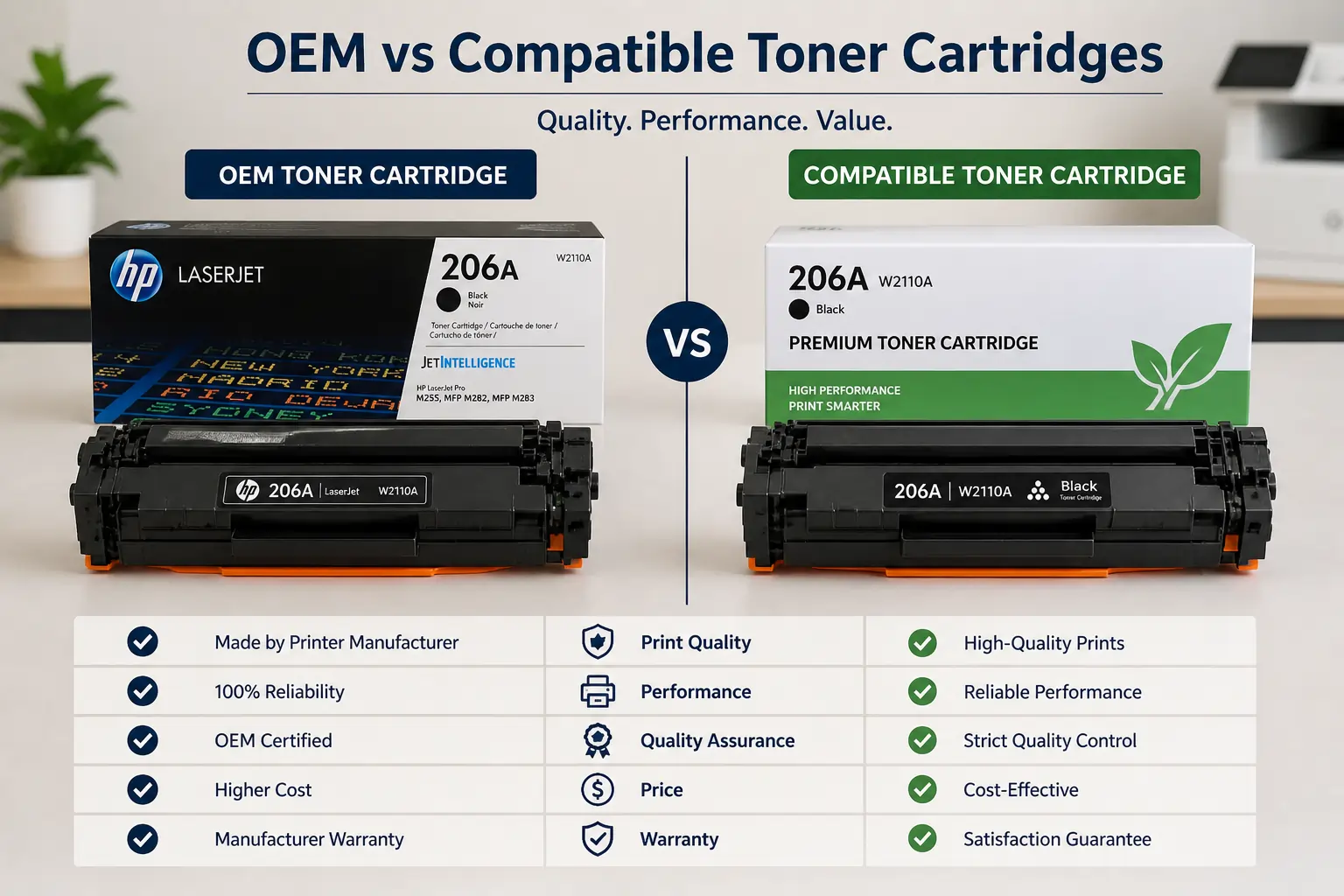
Genuine OEM Status: The first thing any buyer looks for is Original Equipment Manufacturer (OEM) status. They want genuine Brother products, still in their original packaging. Third-party compatible or remanufactured cartridges, unfortunately, have little to no resale value in this market. For example, a genuine Brother TN-850 cartridge is valuable, while a "compatible with TN-850" cartridge from an unknown brand likely isn't.
Box Condition: A perfect, factory-sealed box is the gold standard. Any damage—dents, tears, shipping labels, or even writing on the box—will lower the offer significantly. The box is the first impression, and pristine packaging tells the next buyer the product inside is brand new and safe to use. A permanent marker line through the barcode can drop the value by 20%.
Expiration Date: Yes, toner has a shelf life. The further out the expiration date, the more the cartridge is worth. Most buyback companies won't even make an offer on toner that’s already expired or is very close to expiring. A cartridge expiring in 2026 will be worth more than the exact same model expiring in 2024.
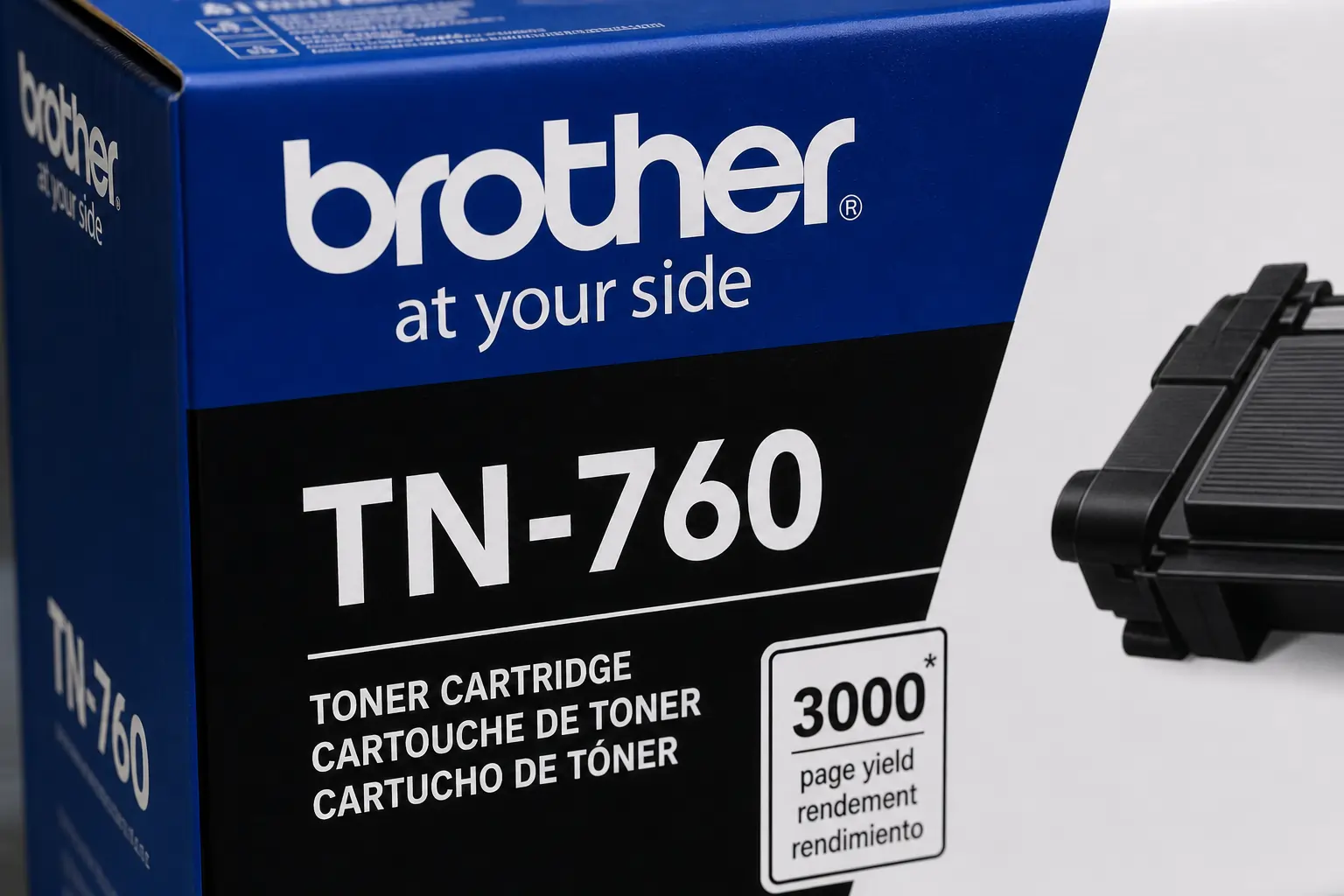
Model Demand: Simple supply and demand is always at play. A high-yield toner for a popular, modern Brother printer will always fetch a better price than a cartridge for an obscure or discontinued machine. For instance, the Brother TN-760 fits dozens of popular current models and is in high demand, while a TN-350 for an older printer has a much smaller market.
Think about it this way: a brand-new, in-date Brother TN-850 cartridge in a perfect box might get you $75 from a buyback service. The very same cartridge in a box with old shipping labels and a few dents could drop to $45. If that same cartridge is past its expiration date, its value plummets to zero.
To make this clearer, let's look at how these factors affect the payout for a cartridge that retails for $150.
| Cartridge Condition | Example Description | Estimated Buyback Offer |
|---|---|---|
| Pristine (A-Grade) | Factory-sealed box, no marks, labels, or dents. A long expiration date. | $70 – $85 |
| Good (B-Grade) | Minor cosmetic flaws like a removed label or small crease. Still sealed. | $45 – $60 |
| Damaged (C-Grade) | Obvious dents, tears, or writing on the box. May still be sealed. | $15 – $30 |
| Unsellable | Box is opened, cartridge is expired, or it's a non-OEM product. | $0 |
As you can see, the difference between a pristine box and one with just a few flaws can cut your offer in half.
Let’s put this all together with a real-world scenario. Imagine you have two different Brother toner cartridges you want to sell.
Cartridge A: A Brother TN-760 high-yield cartridge. The box is flawless, it’s factory-sealed, and the expiration date is two years from now. Since the TN-760 is a very common model for current printers, this cartridge checks every box. You can expect a top-tier offer.
Cartridge B: A Brother TN-360 for an older, less common printer. The box has been opened (though the inner foil bag is sealed), and there's a visible coffee stain on the side. This one is a tough sell. The combination of an opened box, cosmetic damage, and lower demand means you'll get a much lower offer—if you get one at all.
Understanding these distinctions is the absolute key to getting a fair price. When you take a moment to assess your inventory honestly before reaching out, you'll know what to expect and can ensure the whole process goes smoothly.

Turning that stack of unused Brother toner into cash should be a simple, rewarding process. If you follow a clear roadmap, you can sidestep the usual headaches and ensure the whole deal goes smoothly from start to finish. We’ve broken it all down into five easy, actionable steps.
Think of it like shipping something valuable. You wouldn't just toss it in any old box and hope it arrives in one piece, right? A little bit of care upfront ensures you get the best price and a stress-free experience.
Follow these steps in order, and you'll turn that surplus toner into cash without any fuss. Each part of the process is designed to protect your assets and get you the most money back.
Take a Detailed Inventory: First things first, figure out exactly what you have. Make a list with the Brother model number (like TN-850), how many you have of each, and the condition of the boxes. A practical example would be a spreadsheet with columns for "Model Number," "Quantity," and "Box Condition" (e.g., A-Grade, B-Grade). Be upfront about any dings, tears, or leftover shipping labels—total honesty here gets you a much more accurate quote.
Choose a Reputable Buyer: Do a little digging on toner buyback companies. You're looking for businesses with a solid online footprint, easy-to-understand terms, and a history of positive customer reviews. A legitimate buyer is always transparent about how they operate.
Submit for a Quote: Head to the buyer’s website and use their online form to send in your inventory list. Most professional outfits get back to you quickly with a clear, itemized offer. If you're ready to see what your cartridges are worth, you can submit your toner list for a fast offer right now.
Pack Your Cartridges Securely: Once you’ve accepted an offer, it’s time to box everything up. Use a sturdy box and don't be shy with the packing material—bubble wrap or even crumpled paper works great to keep the toner boxes from sliding around and getting damaged on their way. For example, place heavier cartridges at the bottom and lighter ones on top, with padding between each item.
Ship and Get Paid: The buyback company should provide a prepaid shipping label, so all you have to do is send it off. Once they get the shipment and give it a quick inspection, they’ll send your payment. Make sure you've confirmed how you want to be paid, whether it's through PayPal, Zelle, or a good old-fashioned check.
Watch out for red flags. If a buyer wants you to pay for shipping or is super vague about when you'll get paid, that's a bad sign. A professional company takes care of the logistics and pays you on time. Following these steps helps you navigate the process with confidence and get a fair price for your items.
If you're looking to sell your unused Brother toner cartridges for the first time, you've probably got a few questions. That's completely normal. Here are some straightforward answers to the questions we get asked most often.
Yes, in most cases you absolutely can, but the condition of the box will impact your payout. Buyback companies pay top dollar for cartridges in perfect, factory-sealed boxes because those are the easiest to turn around and resell.
That said, plenty of buyers will still take cartridges in boxes with a little wear and tear—think minor dents, small rips, or even some writing on the outside. The key is that the inner foil bag must be perfectly intact and sealed. Just be upfront about the box's condition when you ask for a quote, and you'll get an honest offer. A box with a crushed corner, for instance, might fetch an offer 30-50% lower than one in mint condition.
Absolutely. We get this question a lot, and the answer is a firm "yes." It all comes down to a legal principle called the First-Sale Doctrine. Once you've legally bought a product, you have the right to resell it, give it away, or do whatever you want with it.
As the rightful owner of the Brother toner, you are completely free to sell your surplus inventory to anyone who wants to buy it. You don't need to ask for permission from the manufacturer to offload your own property. For instance, if your business bought a case of toner, that toner is now your asset to manage or sell as you see fit.
When you're dealing with a large quantity, a good buyback company will handle the heavy lifting for you. They should provide prepaid freight shipping labels and can often schedule a pallet pickup right from your office, warehouse, or storage unit.
Your main job is just to pack everything up safely so it arrives in one piece.
Keeping your buyer in the loop about the shipment’s size and weight will make sure the whole process goes off without a hitch.
Ready to turn that pile of extra toner into cash? Toner Connect LLC offers great prices, free prepaid shipping, and quick, dependable payments. Find out what your cartridges are worth by visiting us at TonerConnect.net today.