
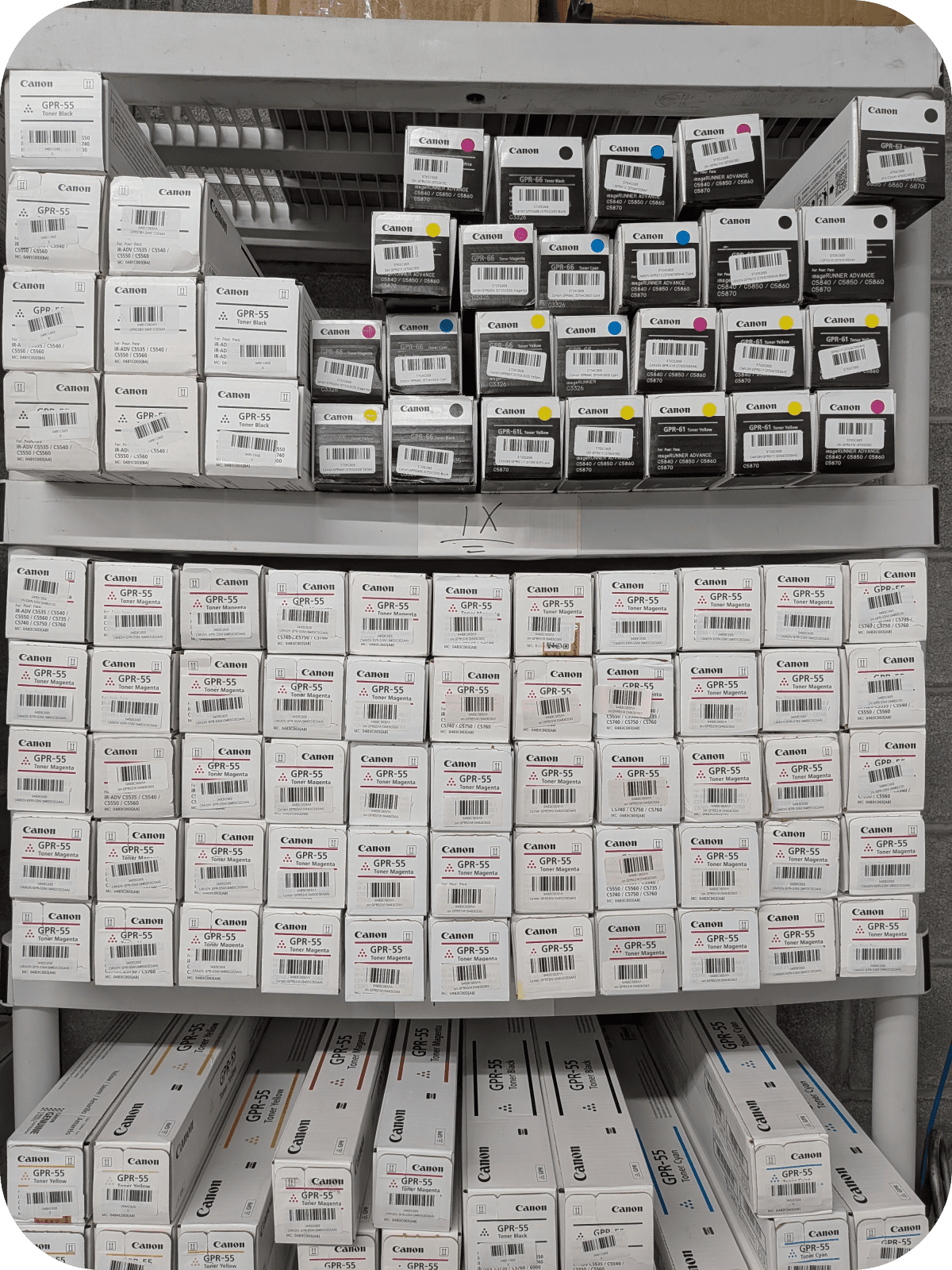
A reliable toner cartridge supplier can usually be found through the printer manufacturer’s store, an authorized dealer, an established office-supply retailer, or a managed print provider. The right choice depends on whether you need occasional cartridges, recurring business deliveries, contract pricing, or support for several printer brands.
Where Should You Start Your Search?
Start with the printer manufacturer’s website or authorized reseller directory.
Manufacturers typically provide direct purchasing options, local retailer information, or tools that match cartridges to specific printer models. HP, for example, directs customers to the HP Store, local retailers, and authorized service or support providers for replacement toner.
Beginning with an official source reduces the risk of ordering the wrong model or receiving a product that has been misrepresented. It also provides a useful reference price before comparing other suppliers.
Record the following information before shopping:
- Printer manufacturer
- Complete printer model
- Cartridge number
- Manufacturer part number
- Required color
- Standard or high-yield capacity
- Expected monthly usage
- Number of cartridges needed
- OEM or compatible preference
The cartridge number is especially important. Printers within the same product family may use different supplies depending on their model, region, or configuration.
Which Types of Toner Suppliers Are Available?
The main supplier options include manufacturers, authorized dealers, office-supply retailers, managed print providers, and online marketplaces.
| Supplier Type | Best For | Important Consideration |
|---|---|---|
| Manufacturer store | Genuine OEM toner and accurate compatibility | Pricing may be higher than some third-party sources |
| Authorized dealer | Product guidance and business purchasing | Confirm that the dealer is authorized for the required brand |
| Office-supply retailer | Convenient individual or small-volume orders | Availability can vary by location and model |
| Managed print provider | Recurring business needs and multiple printers | Review contract terms and minimum commitments |
| Independent online supplier | Broader inventory and competitive pricing | Verify reputation, authenticity, and return policies |
| Online marketplace | Hard-to-find or discontinued models | Carefully identify the actual seller and product condition |
No single source is ideal for every customer. A home office purchasing one cartridge has different needs from a school, hospital, government office, or corporation managing hundreds of printers.
How Can You Tell Whether a Toner Supplier Is Reliable?
A reliable supplier provides verifiable business details, accurate product descriptions, clear policies, and responsive support.
Look for these signs before placing an order:
Clear Product Identification
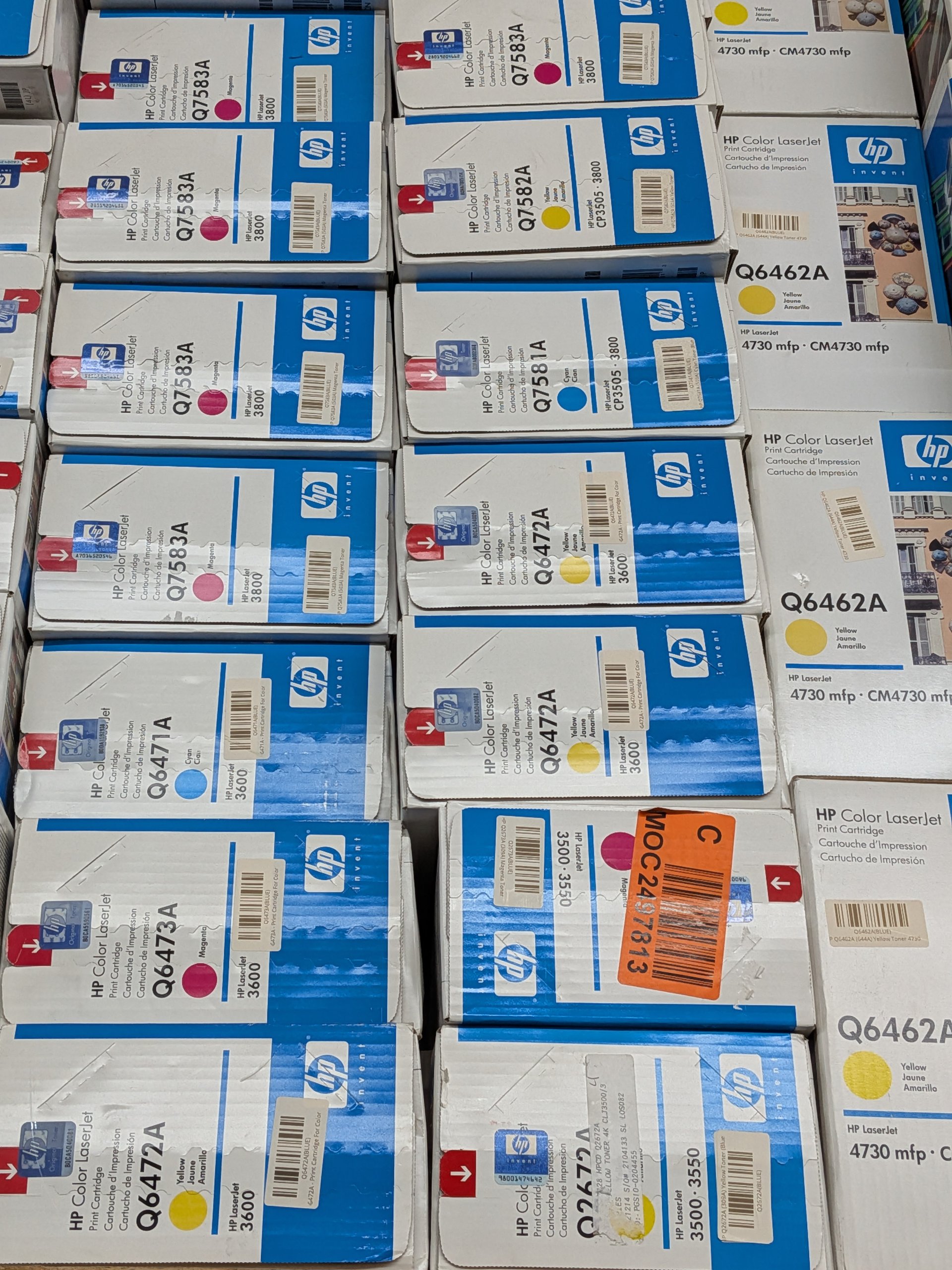
Each listing should display the cartridge model, part number, color, yield category, condition, and compatible printer series.
Descriptions such as “fits most HP printers” are not specific enough. Toner is not universally interchangeable, even when two cartridges appear similar.
Transparent Product Type
The supplier should clearly state whether the cartridge is:
- Original equipment manufacturer toner
- Remanufactured toner
- Compatible third-party toner
- Refilled toner
- Open-box inventory
These categories are not equivalent. A listing should never imply that a compatible cartridge is an original manufacturer product.
Accessible Contact Information
A trustworthy supplier should provide a working phone number, email address, physical business information, or customer-service channel.
Contact the company before a large purchase. Ask a specific compatibility or shipping question and assess whether the response is clear and useful.
Written Return and Warranty Policies
Review what happens if the cartridge is defective, damaged, counterfeit, or incompatible with the printer.
Check the permitted return period, restocking fees, shipping responsibility, and whether opened packaging can be returned after a compatibility problem. Save a copy of the policy and order confirmation.
Secure Payment Methods
Use a payment method that provides a record of the transaction and appropriate buyer protections. Be cautious if an unfamiliar seller insists on an irreversible payment method or requests payment outside its normal checkout system.
How Do You Verify Genuine OEM Toner?
Verify OEM toner by inspecting the packaging, security label, product number, seller, and purchase documentation.

Manufacturer security features differ by brand. HP advises buyers to purchase from trusted vendors, avoid suspiciously low prices, and accept products in unopened original packaging. HP also provides holographic-label and QR-code checks for Original HP supplies.
When reviewing a cartridge, check for:
- An intact manufacturer box
- Factory seals without signs of tampering
- A readable model and part number
- Consistent logos, colors, and print quality
- An intact security or authentication label
- A serial number or QR code when applicable
- Packaging appropriate for the manufacturer
- A receipt identifying the seller and product
A security label alone does not prove authenticity because packaging can be imitated. Consider the entire transaction, including the seller’s identity, price, packaging, and product documentation.
Canon similarly recommends buying genuine consumables from its online store or authorized dealers and warns customers to examine marketplace sellers and unusually inexpensive offers carefully. Choice?
The cheapest supplier is not necessarily the best choice because price is only one part of the total purchasing cost.
A low-priced cartridge becomes expensive if it arrives late, does not fit the printer, produces poor results, or cannot be returned. Businesses should also consider the administrative cost of resolving incorrect orders and printer downtime.
Compare suppliers using the full order value:
- Cartridge price
- Shipping charges
- Delivery time
- Minimum order requirement
- Volume discounts
- Return costs
- Warranty coverage
- Customer support
- Product authenticity
- Payment terms
Extremely low prices on supposedly new OEM toner deserve additional scrutiny. Ask why the price differs so much from established sellers and confirm whether the item is sealed, open-box, old stock, or sold by an independent marketplace merchant.
What Should Businesses Ask Before Choosing a Supplier?
Businesses should ask about inventory, fulfillment, account support, pricing, and problem resolution before choosing a supplier.
Useful questions include:
- Are you authorized to sell this manufacturer’s products?
- Are the cartridges genuine OEM, compatible, or remanufactured?
- Can you verify the exact part numbers before shipment?
- Are products factory sealed in their original boxes?
- Where will the order ship from?
- Is the inventory currently in stock?
- What is the typical processing time?
- Do you offer business or volume pricing?
- Can you support purchase orders or tax-exempt accounts?
- What happens if a cartridge is damaged or incompatible?
- Is a dedicated account representative available?
- Can you supply multiple printer brands?
Request a small trial order before committing to a large recurring purchase. This provides an opportunity to evaluate packaging, order accuracy, delivery speed, and customer service.
When Does a Managed Print Provider Make Sense?
A managed print provider makes sense when an organization operates many printers and wants recurring supply management rather than individual cartridge orders.
These providers may monitor toner levels, schedule replenishment, maintain equipment, and consolidate supply purchasing. This can reduce the time employees spend checking inventory and placing separate orders.
However, organizations should review:
- Contract length
- Minimum monthly charges
- Cartridge ownership
- Automatic shipment rules
- Equipment restrictions
- Early termination terms
- Service response times
- Treatment of unused inventory
Automatic replenishment can create excess stock when printers are replaced, offices close, or printing volume declines. Keep supply records connected to active printer models so cartridges are not ordered for equipment that is no longer in service.
How Can You Avoid Ordering the Wrong Cartridge?
You can avoid ordering the wrong cartridge by matching the complete printer model and manufacturer part number before purchasing.
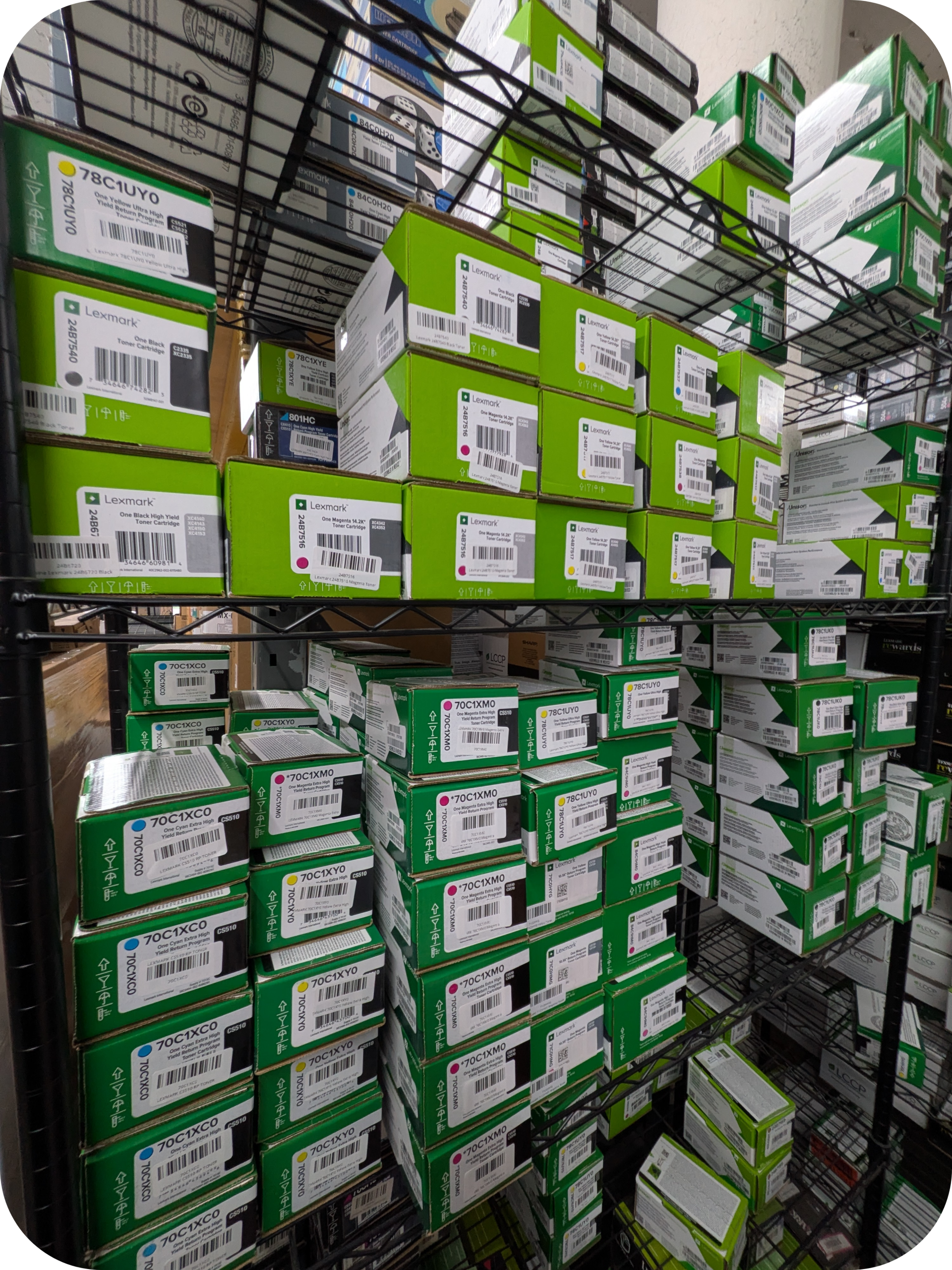
Do not rely only on the cartridge’s appearance. Similar-looking toner cartridges may have different chips, yields, or regional compatibility.
Use this short verification process:
- Open the printer’s supply menu or check the existing cartridge.
- Record the complete cartridge number and part number.
- Compare both numbers with the supplier’s listing.
- Confirm the required color and yield.
- Ask the supplier to verify compatibility in writing.
- Review the return policy before opening the package.
For a large order, compare the cartridge list against an updated printer inventory. Remove supplies associated with retired, transferred, or scheduled-for-replacement equipment.
What Should You Do With Toner You No Longer Need?
Unused toner should first be checked against the retailer’s return policy, then considered for resale if it cannot be returned.
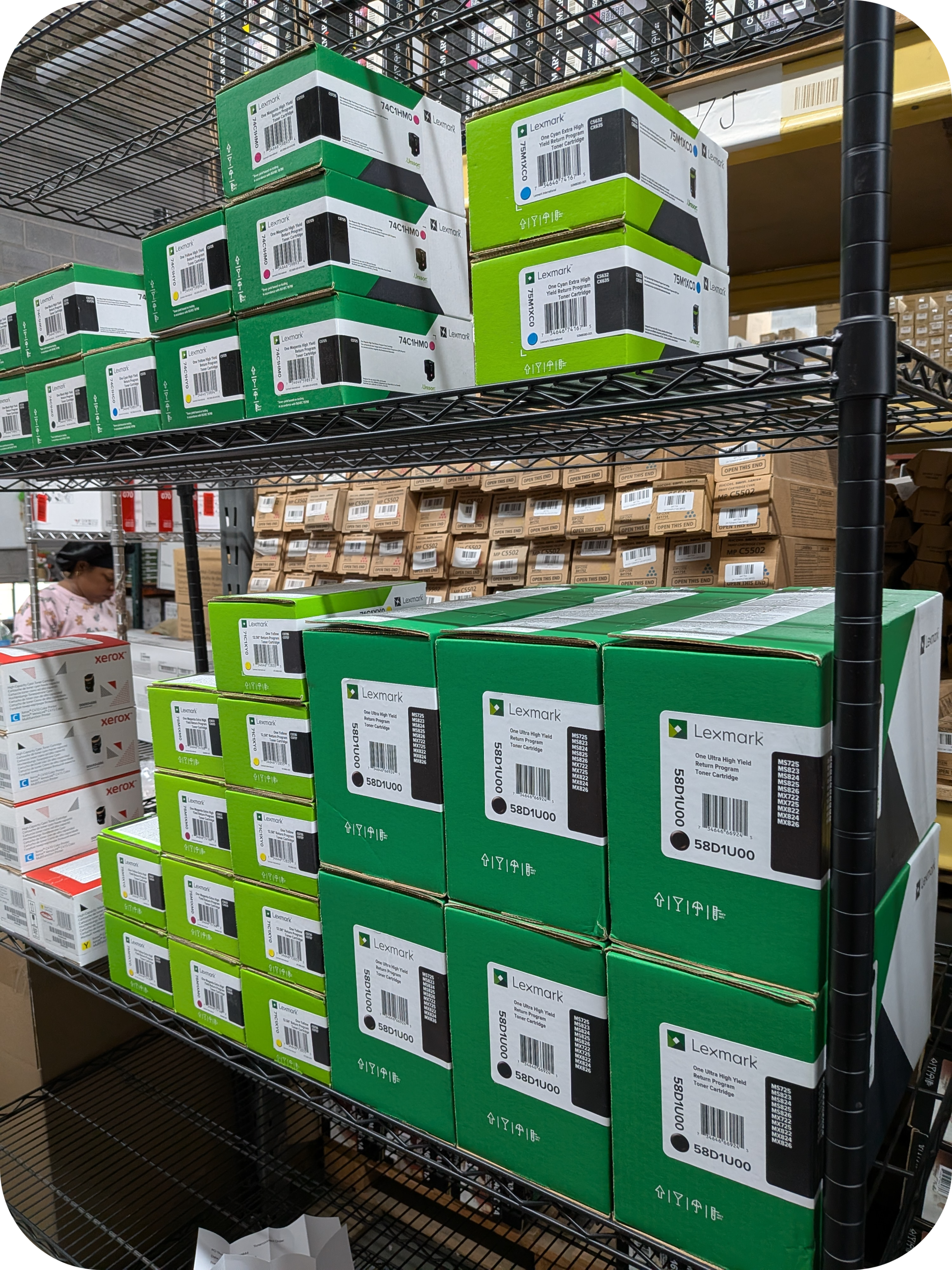
Businesses often accumulate extra cartridges after changing printers, consolidating offices, ending a service contract, or purchasing too much inventory. Genuine cartridges may retain resale value when they remain sealed in their original manufacturer boxes.
We purchase eligible OEM toner from major manufacturers, including HP, Canon, Brother, Lexmark, Xerox, Ricoh, and others. Opened, used, refilled, remanufactured, and compatible cartridges do not qualify.
If a supplier change leaves you with excess stock, you can submit your unused toner inventory for a quote. Include the brand, model numbers, quantities, box condition, and clear photographs so each item can be evaluated accurately.
Build a Supplier Relationship You Can Verify
A dependable toner supplier should make ordering easier, not create uncertainty about compatibility, authenticity, or delivery.
Start with manufacturers and authorized dealers, compare the total purchasing cost, test unfamiliar suppliers with a small order, and keep written records of product claims and policies. For recurring business purchases, review supplier performance regularly instead of relying on price alone.