
Surplus Toner: What to Do With Unused Toner Cartridges
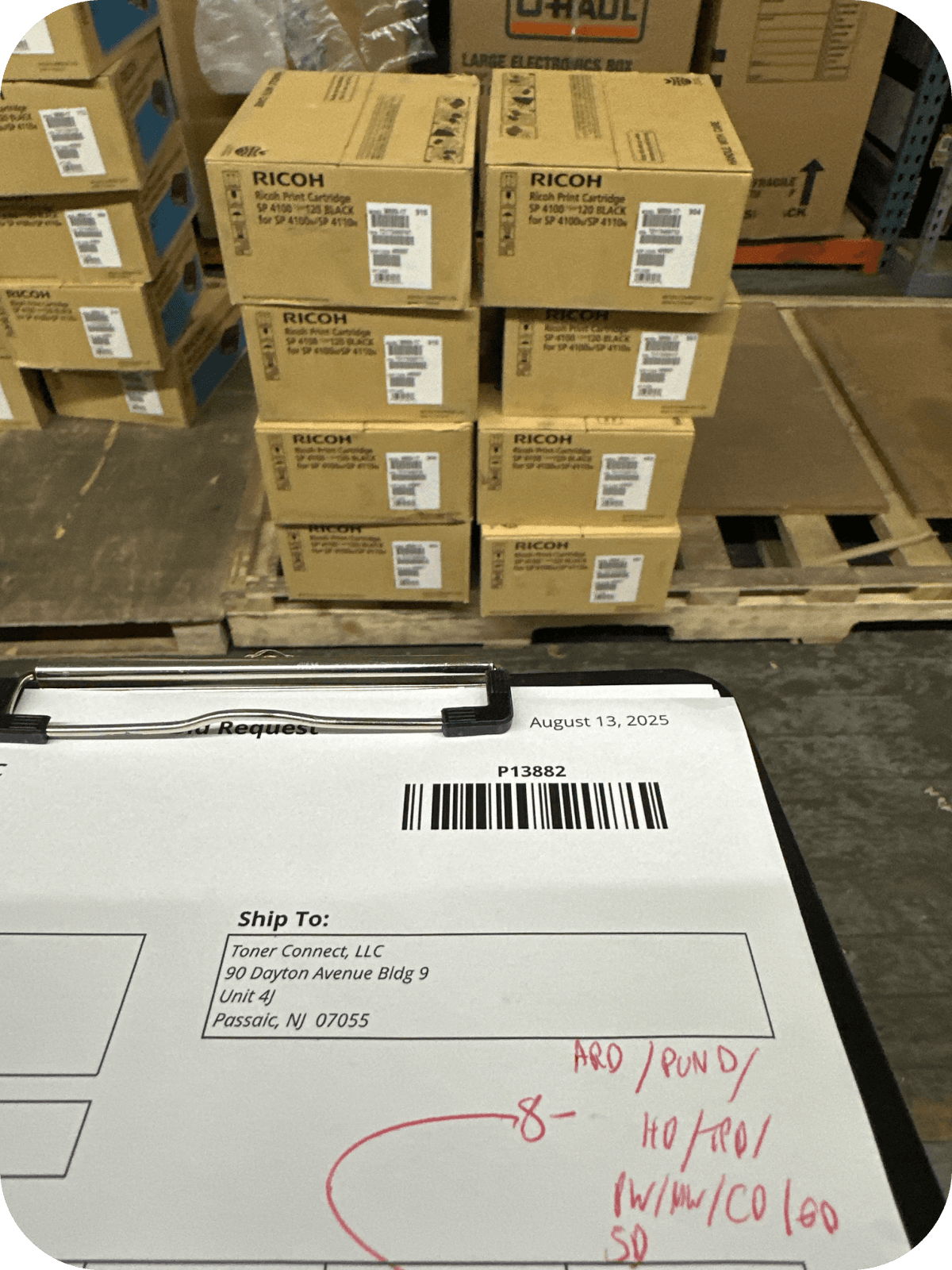
Surplus toner should first be inventoried, checked for compatibility, and kept sealed. Usable cartridges can be reassigned within an organization. Factory-sealed OEM toner may qualify for resale. Cartridges without resale or reuse potential can be directed to manufacturer take-back, remanufacturing, or appropriate recycling programs instead of remaining forgotten in storage.
What Is Surplus Toner?
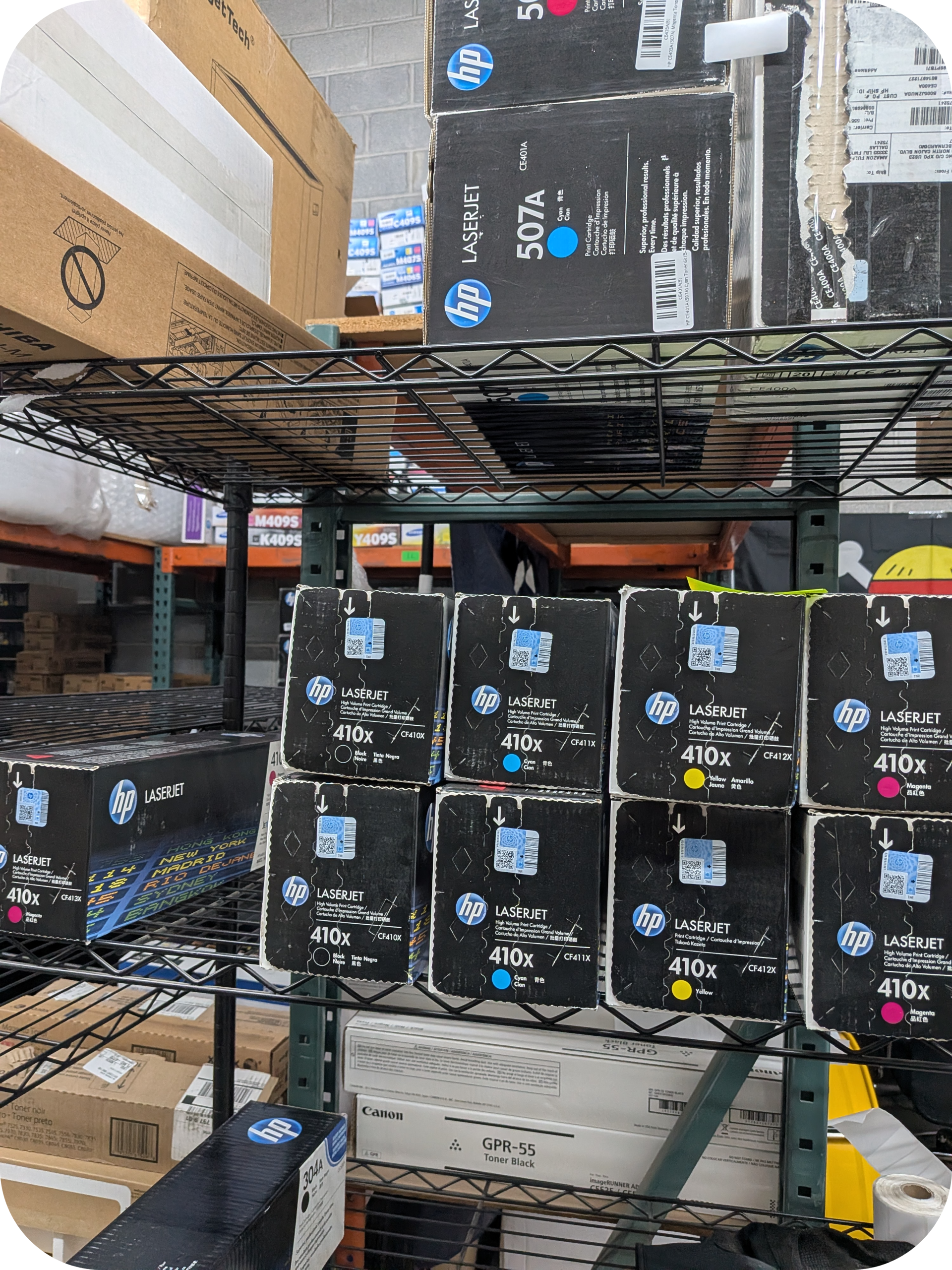
Surplus toner is usable toner inventory that an individual or organization owns but no longer expects to use.
Surplus toner is different from an empty cartridge. It often remains new and unopened. Printer upgrades, excess purchasing, office consolidations, and changing print needs can create surplus inventory.
Useful definitions:
- Surplus toner: Toner that exceeds current printing needs.
- OEM toner: Toner made or branded by the original printer manufacturer.
- Factory-sealed toner: Toner that remains unopened in its original manufacturer packaging.
- Compatible toner: A new third-party cartridge designed for another manufacturer’s printer.
- Remanufactured toner: A previously used cartridge that has been rebuilt and refilled.
- Spent toner: A cartridge that has already been used.
The distinction matters because resale and recycling serve different purposes. Toner buyers generally seek usable inventory with resale demand.
Why Do Businesses End Up With Surplus Toner?
Businesses commonly accumulate surplus toner after printer upgrades, over-ordering, relocations, office closures, and changes to their printer fleet.
A printer replacement can make perfectly usable cartridges incompatible overnight. Toner Connect also identifies consolidation and purchasing changes as common reasons unused cartridges accumulate.
Common causes include:
- Printer or copier upgrades.
- Bulk purchasing.
- Incorrect toner orders.
- Reduced printing.
- Office relocation.
- Department consolidation.
- Office closure.
- Switching printer brands or vendors.
Surplus does not automatically mean obsolete or worthless.
A sealed cartridge may still be useful to another compatible printer owner.
What Should You Do First With Unused Toner Cartridges?
Start by creating an inventory before deciding whether to reuse, sell, transfer, or recycle your unused toner.
An accurate inventory makes it easier to identify compatible printers and request resale quotes. Toner Connect‘s August 24, 2026 preparation guide recommends recording the exact brand, model, quantity, OEM status, factory seal, and packaging condition.
Use a simple spreadsheet like this:
| Brand | Model/SKU | Quantity | OEM? | Factory Sealed? | Box Condition |
|---|---|---|---|---|---|
| HP | Exact SKU | 4 | Yes | Yes | Good |
| Brother | Exact SKU | 2 | Yes | Yes | Good |
| Canon | Exact SKU | 6 | Yes | Yes | Minor wear |
Do not open a sealed cartridge merely to inspect the toner.
The factory seal itself can matter to a buyer.
Should You Use Surplus Toner Before Trying to Sell It?
Yes, using compatible surplus toner internally is often the simplest option when your organization still operates printers that accept it.
Internal redistribution avoids buying another cartridge while an identical one sits in storage. This is particularly useful when supplies are scattered across departments or locations.
Check the exact cartridge model against your active printer fleet.
Move usable cartridges to the departments that can consume them.
This approach turns surplus inventory back into working inventory without requiring a transaction.
Can Surplus Toner Be Sold for Cash?
Yes, some unused toner can be sold when it meets a buyer’s condition, brand, model, and market-demand requirements.
Factory-sealed OEM toner generally has stronger resale potential. Toner Connect says quotes can depend on the brand, exact model, condition, quantity, and current demand.
Common selling channels include:
- Specialized toner buyback companies.
- Online marketplaces.
- Local office-equipment resellers.
- Business liquidators.
- Local classified marketplaces.
Toner Connect‘s August 13, 2026 guide identifies each of these as possible channels for unused toner.
There is no universal resale price.
What Makes Surplus Toner More Likely to Have Resale Value?
Surplus toner generally has stronger resale potential when it is genuine OEM inventory, factory sealed, correctly identified, undamaged, and still in demand.
Original retail price does not determine today’s resale price. Toner Connect identifies brand, exact model, packaging condition, quantity, and demand as relevant quote factors.
Check these five factors:
- OEM status: Is it an original manufacturer product?
- Factory seal: Has the cartridge remained unopened?
- Model number: Can the exact SKU be verified?
- Box condition: Is the packaging clean and intact?
- Demand: Are compatible printers still in use?
A rare cartridge is not automatically a valuable cartridge.
Low market demand can reduce resale interest even when a cartridge originally cost a lot.
How Much Can Surplus Toner Be Worth in 2026?
There is no standard 2026 value for surplus toner because offers vary by cartridge model, condition, quantity, and current demand.
Toner Connect currently advertises potential payments ranging from $10 to $300 per unused toner cartridge. That figure is Toner Connect‘s marketing range rather than an industry-wide average or guaranteed offer.
A quote should therefore be treated as cartridge-specific.
Do not estimate resale value solely from the cartridge’s original retail price.
How Can You Prepare Surplus Toner for Resale?
Keep surplus toner sealed, record exact model numbers, photograph the boxes, and disclose packaging damage before requesting a quote.
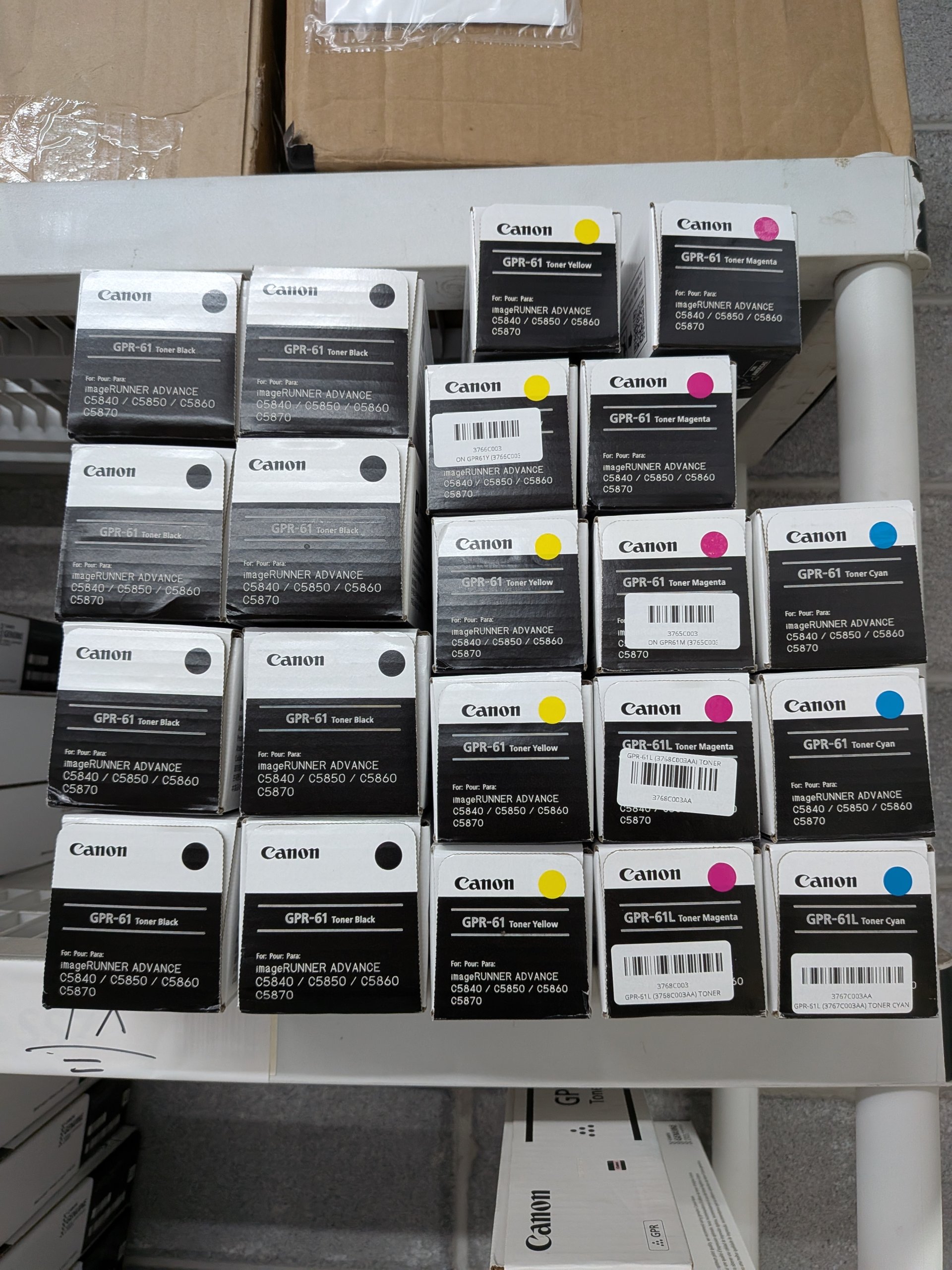
Toner Connect’s August 2026 preparation guide recommends identifying the exact model and documenting the cartridge condition.
A practical preparation checklist is:
- Group identical cartridges together.
- Record every exact model or SKU.
- Confirm whether each cartridge is OEM.
- Check the manufacturer seals.
- Count each model.
- Photograph labels clearly.
- Photograph damaged packaging.
- Keep cartridges indoors.
- Request a quote before shipping.
Accurate information reduces unnecessary back-and-forth with potential buyers.
Should You Open Surplus Toner to Check Its Condition?
No, you generally should not break a factory seal merely to inspect an unused cartridge you hope to resell.
Factory-sealed condition helps a buyer verify that a cartridge has not been used. Toner Connect identifies intact seals as an important factor when preparing toner for resale.
Inspect the exterior instead.
Look for water stains, crushed areas, missing labels, mold, or heat damage.
Photograph any visible damage rather than opening the box.
Where Can You Sell Surplus Toner Online or Locally?
Surplus toner can be offered to specialized online buyers, marketplaces, local resellers, or business liquidators.
Online buyers can provide wider geographic reach. Local selling may avoid shipping but depends more heavily on demand in your area.
For businesses with multiple cartridges, a specialized buyer can reduce the work of creating separate consumer listings.
TonerConnect provides an online buyback option for qualifying factory-sealed OEM toner. Its process involves identifying the cartridges, submitting inventory, reviewing an offer, and following shipping instructions for accepted inventory.
Buyer policies differ.
Toner Connect currently does not treat compatible, generic, remanufactured, refilled, used, or open-box products the same as qualifying factory-sealed OEM inventory.
What Should Offices Do With Large Surplus Toner Inventories?
Offices with large inventories should consolidate cartridges into one audited list before contacting potential buyers.
A large office cleanout may contain dozens or hundreds of boxes across many SKUs. Toner Connect identifies bulk buyers as a practical option for office managers and liquidation workflows.

What Should IT Departments Do After a Printer Upgrade?
IT departments should audit toner storage before or immediately after retiring old printer models.
Printer standardization can leave unused cartridges that no longer fit the active fleet. Toner Connect identifies equipment replacement as a common source of surplus toner.
Record the old printer model alongside each remaining cartridge.
This can help determine whether the toner should be transferred, sold, or recycled.
What Should Small Businesses Do With a Few Extra Cartridges?
Small businesses should compare internal reuse, specialized buyers, marketplaces, and local resale based on convenience and net value.
A business with three cartridges has a different selling task from a corporation clearing hundreds of boxes. Marketplaces provide more control over individual listings, while specialized buyers can reduce seller involvement.
Compare shipping costs and selling fees before choosing a channel.
The highest advertised price may not produce the highest net return.
What Should Offices Do With Toner After a Closure or Relocation?
Closure and relocation teams should search every supply area and consolidate toner before equipment and records are removed.
Surplus cartridges can remain scattered across cabinets, IT rooms, copier areas, and storage spaces. Toner Connect identifies closures and relocations as situations that can produce unused toner inventories.
Inventorying early also makes cartridge ownership and condition easier to document.
What Should Schools Do With Surplus Toner?
Schools should inventory surplus toner and follow district rules before transferring, selling, or recycling institution-owned supplies.
Schools can accumulate toner through centralized purchasing, equipment upgrades, grant cycles, and annual supply planning. TonerConnect’s January 5, 2026 public-institution guide discusses these causes. (Toner Connect)
A school inventory can record:
Brand → Model → Quantity → Seal Status → Box Condition → Compatible Printer
Public schools should not assume they can sell supplies using the same process as a private individual.
Local procurement and surplus-property rules may apply.
What Should Government Offices Do With Surplus Toner?
Government offices should confirm their asset-disposal and procurement requirements before selling institution-owned toner.
Government organizations may require authorization or documentation before surplus property can leave their control. Toner Connect recommends clear procedures for public institutions handling surplus toner.
Requirements vary by agency and jurisdiction.
Documenting model numbers, quantities, approvals, and final disposition can support an audit trail.
Does Location Matter When Selling Surplus Toner?
Yes, location can affect access to local buyers, while online buyers can expand the geographic market for qualifying cartridges.
A seller in a major metropolitan area may have several office-equipment resellers nearby. A rural seller may have fewer local options. Toner Connect notes that online buyers can reduce this geographic limitation.
Search locally using phrases such as:
- toner buyers near me
- office equipment reseller
- surplus toner buyer
- printer supply buyer
- business liquidator
Contact a local business before transporting toner.
Not every office-supply store buys surplus inventory.
Should Surplus Toner Be Sold or Recycled?
Usable toner should generally be evaluated for continued use or resale before recycling, while used or non-resellable cartridges may need a return or recycling pathway.

A toner buyer and a toner recycler perform different functions. A buyer purchases qualifying usable inventory, while recycling handles supplies that may no longer have resale potential.
Use this simple decision path:
Still compatible? → Use it.
Unused + sealed + unwanted? → Check resale eligibility.
Unused but not resellable? → Check donation, manufacturer, or recycling options.
Used or empty? → Check manufacturer return, remanufacturing, or recycling.
Do not send empty toner to a company expecting unused resale inventory.
Why Does Reuse Matter Before Toner Becomes Waste?
Keeping usable products in circulation can prevent them from entering a waste stream before their useful life is exhausted.
The Global E-waste Monitor 2024 reported that the world generated 62 billion kilograms of e-waste in 2022. Only 22.3% was documented as formally collected and recycled in an environmentally sound manner.
Those figures cover global electronic waste broadly.
They are not toner-cartridge-specific statistics.
They still provide useful context for why organizations increasingly pay attention to reuse and circular-economy practices.
What Mistakes Can Reduce the Value of Surplus Toner?
Opening sealed cartridges, guessing model numbers, hiding damage, and storing toner poorly can make resale evaluation harder.
Toner Connect recommends accurate identification and clear condition documentation before requesting an offer.
Avoid these common mistakes:
- Opening a sealed cartridge unnecessarily.
- Writing across manufacturer labels.
- Guessing the model from the printer name.
- Mixing used and unused cartridges.
- Hiding water or box damage.
- Throwing away original packaging.
- Shipping toner without an accepted quote.
- Assuming every buyer accepts every brand.
A few minutes of organization can make a large inventory much easier to evaluate.
How Can Businesses Prevent Surplus Toner From Building Up Again?
Businesses can reduce future surplus toner by matching purchasing to actual usage and coordinating printer changes with supply inventory.
Bulk purchasing can create excess toner when forecast demand later changes. Printer replacements can also strand supplies for retired equipment.
A simple prevention plan can include:
- Maintain a printer-to-cartridge inventory.
- Track toner consumption by model.
- Centralize purchasing.
- Set minimum and maximum stock levels.
- Check inventory before placing bulk orders.
- Review toner before replacing printers.
- Transfer compatible toner between departments.
- Audit storage every six months.
Inventory visibility is often more useful than simply ordering fewer cartridges.
What Questions Do People Ask About Surplus Toner?
The most common questions concern resale eligibility, cartridge condition, OEM status, storage, and what to do when toner cannot be sold.
These questions matter because surplus toner is not one uniform category. Buyer acceptance and market demand vary.
Can Old Surplus Toner Still Be Sold?
Yes, some older toner may still be sellable when it remains factory sealed, correctly identified, and in demand.
Age alone does not establish resale value. Toner Connect states that model, condition, quantity, and current demand can affect an offer.
Request a current quote rather than assuming an older cartridge is worthless.
Can Opened Surplus Toner Be Sold?
Acceptance of opened toner depends on the buyer, but factory-sealed toner generally has stronger resale potential.
Toner Connect currently focuses its buyback service on qualifying factory-sealed OEM supplies.
Another buyer may use different criteria.
Check before shipping anything.
Can Compatible or Remanufactured Surplus Toner Be Sold?
Some markets may exist, but acceptance varies substantially between buyers.
Toner Connect currently says it does not accept compatible, generic, remanufactured, or refilled products through its qualifying factory-sealed OEM buyback service.
That is Toner Connect’s policy.
It should not be treated as an industry-wide rule.
Can One Surplus Toner Cartridge Be Sold?
A single cartridge may be sellable if a buyer wants that exact product.
Large inventories are not required for every selling channel. Toner Connect’s selling guidance covers individuals as well as organizations with larger inventories.
Eligibility still depends on the individual cartridge.
What Is the Best Next Step for Surplus Toner?
Inventory the toner first, reuse compatible cartridges where practical, evaluate eligible unused toner for resale, and find an appropriate recycling or return route for supplies that cannot be reused.
The key distinction is between surplus toner and spent toner. Surplus toner can still be a usable product.
If your inventory includes factory-sealed OEM cartridges that your organization no longer needs, you can check TonerConnect for buyback eligibility. TonerConnect currently evaluates qualifying surplus toner using factors such as brand, model, condition, quantity, and demand.
For offices, schools, IT departments, and organizations with larger inventories, the process begins the same way: know exactly what is sitting on the shelf before deciding what should happen to it.