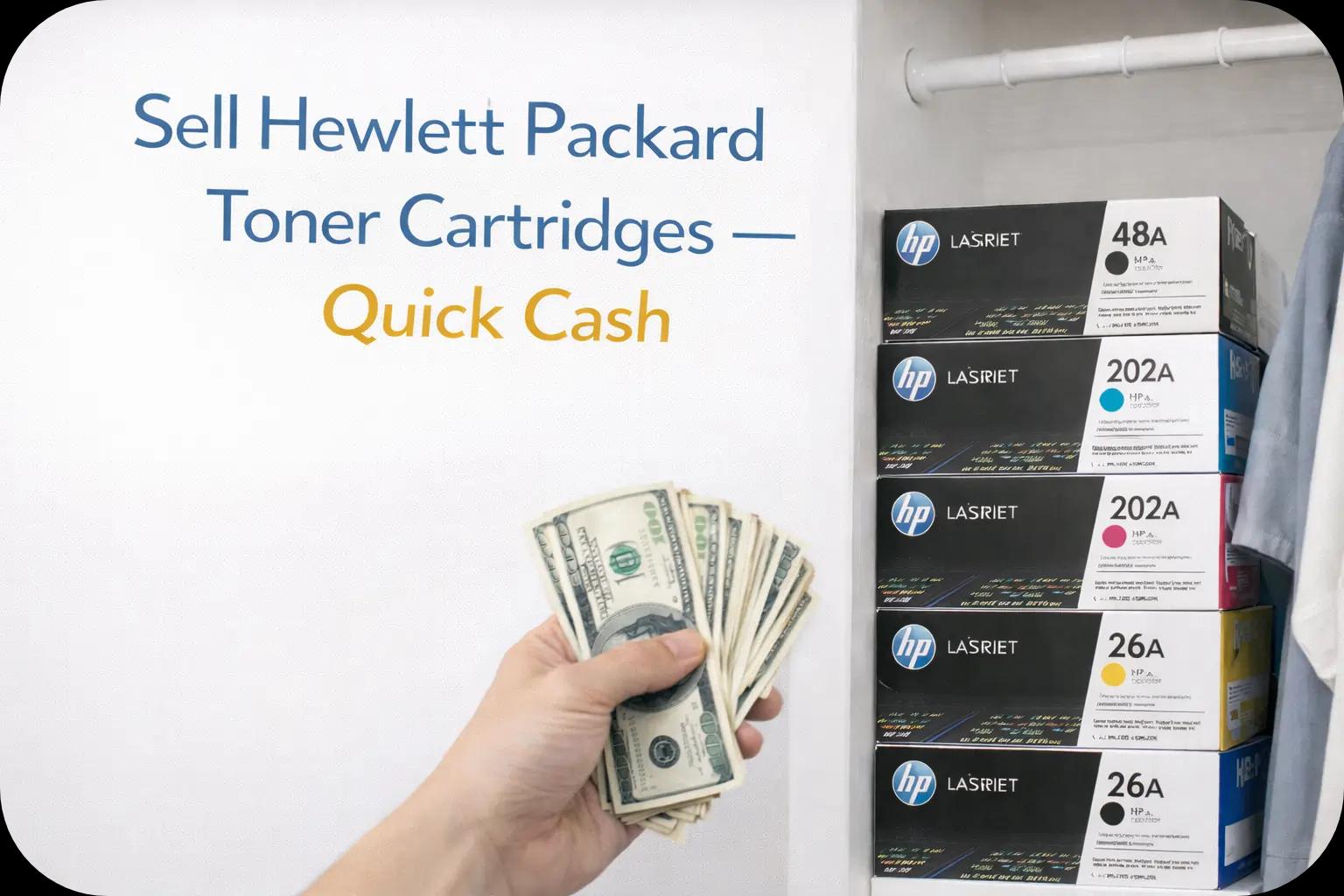
Sell Hewlett Packard Toner Cartridges — Quick Cash In
That closet full of unused HP toner cartridges? It’s not just taking up space—it’s a hidden cash asset for your business.
The smartest way to sell HP toner cartridges is to work with a reputable buyback company. These services offer instant quotes, cover all shipping costs, and pay you quickly for new, unopened, and genuine HP supplies. It’s a simple process that turns clutter into cash, letting you recover value from inventory you’re no longer using.
Where Does All This Surplus Toner Come From?
If you’ve got stacks of unopened Hewlett Packard toner gathering dust, you’re in good company. Most businesses find themselves with excess inventory for perfectly normal reasons. These forgotten cartridges are a real financial opportunity just waiting to be tapped. Instead of letting them expire on a shelf, you can easily convert them back into working capital.
Think of this guide as your roadmap to selling those Hewlett Packard toner cartridges. It’s about turning a logistical headache into a smart move for your finances and the environment.
Common Scenarios That Create Surplus Stock
Most of the time, surplus inventory isn’t a sign of bad planning. It’s just a natural side effect of a business growing and changing. Recognizing how it happens can help you spot these opportunities in your own company.
- Printer Fleet Upgrades: You finally upgrade the office LaserJet printers. Suddenly, you’re left with a dozen boxes of perfectly good, sealed cartridges that don’t fit the new machines. For example, a law firm might replace all its HP LaserJet M402 printers with newer M404 models, leaving them with a surplus of HP 26X cartridges.
- Misjudging a Bulk Order: To snag a volume discount, you ordered a full case of HP 414X cartridges. But then a department switched to a managed print service, leaving half the case unused.
- Office Moves or Closures: A branch office shuts down. During the cleanout, someone finds a supply cabinet filled with various models of new HP toner. For instance, a retail store closing down might uncover 15 boxes of HP 83A toner that were purchased for a printer that broke months ago.
These situations are completely normal, but the leftover toner doesn’t have to be a write-off. The secondary market for these genuine products is surprisingly strong.
The global toner cartridge market was valued at USD 5.2 billion in 2024 and is expected to hit USD 8.4 billion by 2034, growing at a steady 4.8% each year. This growth proves there’s consistent, high demand for authentic OEM products. You can read the full research on the toner cartridge market to see just how big the opportunity is.
This healthy market means there are buyers ready to pay for your extra stock. With just a few simple steps, you can sell your unused toner, clear out valuable storage space, and give your bottom line a nice little boost all at the same time.
Getting Your HP Cartridges Ready for a Top-Dollar Offer
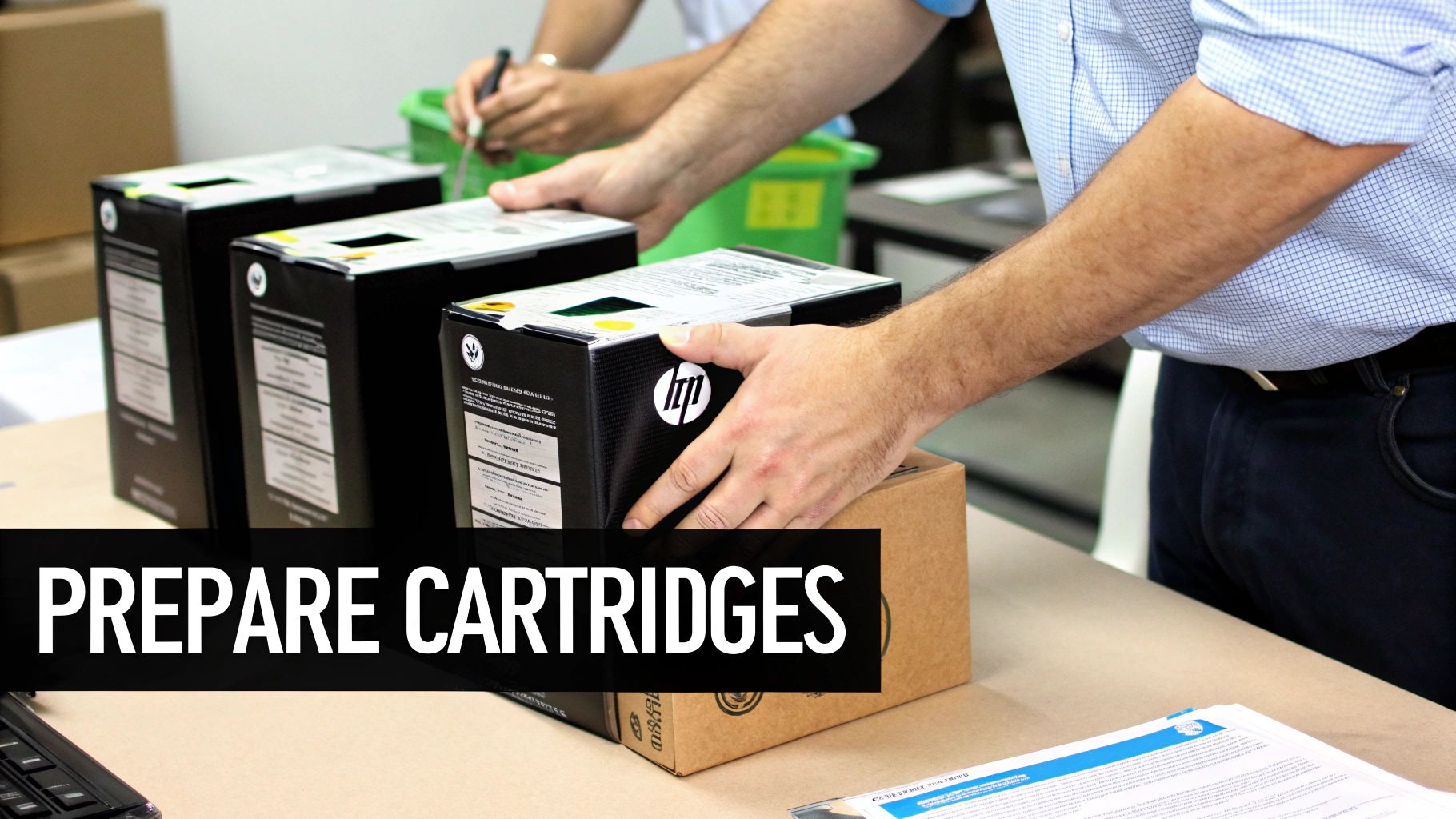
If you want to get the best price when you sell your HP toner, it all starts with a clear and accurate inventory. This is, without a doubt, the most important step. When a buyer knows exactly what you have, there’s no guesswork involved, which means you get a fast and fair quote.
The golden rule is pretty simple: buyback companies are looking for new, unopened, and genuine OEM (Original Equipment Manufacturer) cartridges. Anything with a broken factory seal, along with refilled or third-party “compatible” cartridges, unfortunately, won’t have any resale value. So, the first thing you’ll want to do is gather all your surplus Hewlett Packard toner and give each box a quick once-over. Make sure it’s a real HP product and that the original seal hasn’t been tampered with.
There’s a good reason for this strict focus on OEM products. HP is a giant in the printer world, holding an estimated 20-22% share of the global consumables market. On top of that, around 58% of businesses with HP printers stick with original OEM cartridges to get the best performance and keep their warranties intact. This built-in demand is what makes your genuine, unopened supplies so valuable.
Putting Together Your Inventory List
Once you’ve separated out the good stuff—the genuine, sealed cartridges—it’s time to make a list. This doesn’t need to be fancy. A simple spreadsheet or even a clear, handwritten note will do the trick.
For each type of cartridge, you just need to jot down three key things:
- Model Number: This is the most crucial detail. You’re looking for codes like HP 87A (CF287A) or HP 414X (W2020X), which are usually printed right on the front of the box.
- Quantity: Just a quick count of how many units you have of that specific model.
- Box Condition: Be honest here—it helps ensure your quote is accurate from the get-go. Make a note if the box is in mint condition or if it has dings, old shipping labels, writing, or torn plastic.
Here’s a real-world example of what that looks like: “HP 87A – 5 boxes. 3 are pristine, 1 has a dented corner, and 1 has ‘Marketing Dept’ written on the side.”
Why Clear Photos Are Your Best Friend
A detailed list is your ticket to a solid offer, but photos can make the process even smoother. Snapping a few quick group shots that clearly show the model numbers and the general condition of the boxes can help a buyer assess your inventory almost instantly.
This little bit of prep work up front makes a huge difference. When a buyer can see exactly what you’ve got, right down to a dented corner on one of the boxes, they can give you a firm offer that won’t suddenly change when they receive the shipment.
For a little more guidance, we’ve put together some simple instructions on how to submit images of your toner. Taking these extra few minutes is the best way to make sure you get the maximum value for your surplus Hewlett Packard toner.
Getting a Fast and Accurate Quote for Your Toner
Once you have your inventory organized, it’s time to turn that pile of boxes into a cash offer. The whole point of a quote is to be quick and straightforward—we know you’re busy. Any good buyback company will give you a couple of easy options to submit your list when you decide to sell HP toner cartridges.
What’s the best way to do it? Honestly, it just depends on how much toner you have.
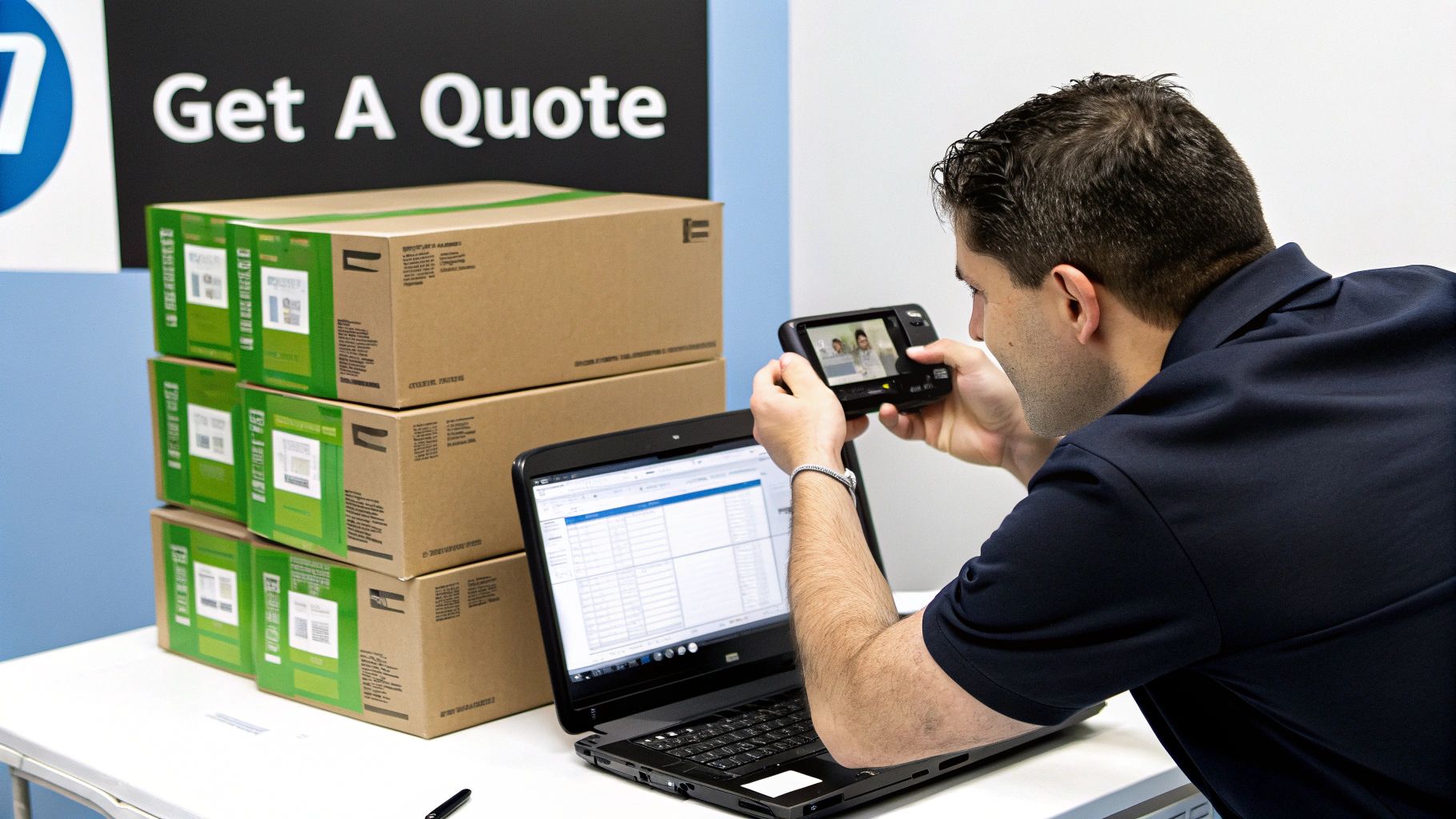
If you’re an office manager with just a few extra cartridges sitting around—maybe three HP 414X and a couple of HP 87A boxes—the fastest way is usually just to grab your phone. Snap a few clear pictures and email them over. This lets a buyer see the exact model numbers and the condition of the boxes instantly, which means you’ll get a quote back in no time.
Submitting Your List for a Quote
Now, if you’re dealing with a larger surplus, photos can get messy. Imagine a school district clearing out old supplies from ten different closets. A simple spreadsheet is your best friend here. It doesn’t need to be fancy.
To get a solid offer, all a buyer really needs from you is:
- The HP Model Number: Be specific, like HP 58X (CF258X).
- The Quantity: How many of each model do you have?
- Box Condition: A quick note like “pristine,” “minor shelf wear,” or “dented corner” is perfect.
Providing these details removes all the guesswork. The offer you get back will be precise and firm, which is exactly what you want. After you send your list, you should expect a response from a professional buyer within a few business hours.
A good quote isn’t just a number. It’s a sign that the buyer trusts the information you gave them. The more accurate your list, the faster and more reliable your offer will be.
From Inventory List to Cash Offer
The whole idea here is to move from having a list of toner to knowing its exact cash value, fast. When you send over a clean, organized list, you make the buyer’s job easy, and that works in your favor. They can quickly check market demand for each cartridge model and give you the best possible price.
For instance, a list showing 15 units of HP 26X in mint condition will command a premium price. On the other hand, noting you have five units of HP 83A with beat-up boxes means they’ll be priced accordingly. This transparency prevents any frustrating surprises down the line.
Once you have your inventory ready, you can submit your list for a fast toner quote and find out what that surplus is actually worth. It’s a simple, direct way to turn those unused Hewlett Packard toner cartridges from dust-collecting assets into real revenue.
Packaging and Shipping Your Cartridges Securely

You’ve accepted the offer—now for the final piece of the puzzle: getting the toner from your hands to the buyer’s warehouse. How you pack those HP cartridges is more critical than you might think. It’s what stands between you and the full payment you were quoted.
Let me be blunt: damage during shipping is the #1 reason a payout gets reduced after inspection. A flimsy box or cartridges rattling around inside can turn a mint-condition product into a damaged one in a heartbeat. Crushed corners and broken seals are completely avoidable. When you sell Hewlett Packard toner cartridges, proper packing is non-negotiable.
Choosing the Right Box and Cushioning
Your mission here is simple: zero movement. If the cartridges can shift inside the box, they can get damaged. Period.
Start by finding a sturdy, corrugated cardboard box that’s just a little bit bigger than your toner cartridges. If you’re sending multiple items, arrange them like a game of Tetris to fill the space efficiently. Once they’re in, your job is to fill every last inch of empty space.
- Bubble Wrap: Your best friend. Ideal for wrapping individual boxes and filling smaller voids.
- Kraft Paper: Crumple it up tightly. It’s perfect for bracing items so they can’t budge.
- Air Pillows: Great for filling large gaps, but make sure you pack them in so snugly that the toner can’t just sink to the bottom of the box.
Whatever you choose, please don’t use things like old newspapers or plastic grocery bags. They offer virtually no protection against the realities of shipping.
Practical Example: Say you’re shipping three HP 87X toner cartridges. Instead of just tossing them in a large box, find one where they fit side-by-side with only an inch or two of wiggle room. Wrap each one in a single layer of bubble wrap, place them inside, and then stuff every gap with crumpled paper until nothing moves when you shake the box. That’s how you ship with confidence.
The Power of Prepaid and Insured Shipping
Here’s where working with a reputable buyer really shines. A professional outfit will provide you with a prepaid and insured shipping label from a major carrier like FedEx or UPS. This is a huge advantage, as it takes two big headaches off your plate: cost and risk.
Shipping heavy toner on your own dime can get surprisingly pricey, often running $20 to $50 or more. That cost eats directly into your profits. Worse, if an uninsured package is lost or damaged, you lose everything. You’re just out of luck.
With a prepaid, insured label, those problems disappear. The shipping is free to you, and your inventory is protected the entire way. Beyond the physical packing, it’s also smart to understand the paperwork involved, particularly for larger or international shipments. You can prepare necessary shipping documents for smooth customs clearance to avoid any potential snags.
Once your box is packed tight, seal it up with strong packing tape. Slap that prepaid shipping label on the largest, flatter side of the box, ensuring the barcode is crisp and scannable. All that’s left is to drop it off at the carrier’s location.
Cashing In: The Final Steps from Inspection to Payment
Your part of the job is done—the boxes are packed and shipped. So, what happens when your toner cartridges arrive at our facility? This is where a professional buyback partner really shines, moving your surplus inventory from our loading dock to your bank account without any fuss.
Once we receive your package, our team gets right to work. Every single cartridge is carefully unpacked and inspected against the quote you received. We’re looking at three main things: authenticity, the factory seal, and the box condition. It’s a critical step that protects both of us—it guarantees we’re getting exactly what we agreed to buy, and it ensures you get paid the full value you were promised.
A Look Inside a Professional Inspection
Our receiving team has this down to a science. Most inspections are wrapped up the very same day your shipment lands.
- Authenticity Check: First, we confirm every cartridge is a genuine OEM product. Our inspectors are pros at spotting the holographic security seals and other unique packaging details that scream “authentic Hewlett Packard.”
- Seal Verification: Next, we check the factory seal on each box. For a cartridge to be considered new, that seal has to be perfectly intact and show no signs of tampering.
- Condition Matching: Finally, we line up the physical condition of each box with the notes you provided. If you told us a box had “minor shelf wear” or a “dented corner,” we’re just confirming that our assessment matches yours.
This isn’t just busywork. It’s about maintaining trust in a massive market. The North American ink cartridge printer market hit a staggering USD 6 billion in 2023, with HP as a dominant player. That value creates a huge demand for genuine, unused HP supplies, which is exactly why your surplus cartridges are worth money. You can dive deeper into the robust printer consumables market on gminsights.com.
Here’s a quick example: Imagine you sent us five boxes of HP 414X toner. Our inspection team would verify the HP security seal on all five, make sure none of the pull-tabs have been touched, and confirm that the two boxes you called “like-new” and the three with “minor scuffs” look just like you described.
Getting Paid: Fast and Flexible
As soon as our inspection is complete and everything checks out, we issue your payment. Right away. We know that getting your money quickly is a huge part of good service, so we offer several options to fit your needs.
Whether you’re a business that needs a paper trail for accounting or an individual just looking for quick cash, we’ve got you covered. For businesses managing their own sales, knowing how to securely accept credit card payments by phone can be an incredibly useful skill for handling incoming revenue streams.
To help you decide, here’s a quick breakdown of the most common ways you can get paid.
Comparing Common Payment Options for Your Toner
This table breaks down the typical payment methods available after your HP toner cartridges pass inspection, helping you choose the best fit.
| Payment Method | Payment Speed | Best For |
|---|---|---|
| Digital Payments | Same Day / Instant | Individuals or businesses wanting the fastest possible access to their funds. |
| Paper Check | 3-5 Business Days | Businesses or individuals who need a physical record for accounting or prefer traditional banking. |
| PayPal | Same Day / Instant | Anyone looking for a flexible and widely accepted digital wallet. Great for online transactions. |
Ultimately, we make it easy. We process most payments on the same business day the inspection is completed, whether it’s sending a digital transfer or dropping a check in the mail.
This last step completes the process, turning those extra Hewlett Packard toner cartridges from dust-collecting clutter into real cash. A clear, straightforward journey from inspection to payment is what you should expect from any reliable buyback partner.
The Bigger Picture: Environmental and Business Wins
Getting paid for your extra toner is obviously the main draw, but the benefits don’t stop when the money hits your account. When you choose to sell Hewlett Packard toner cartridges that are just gathering dust, you’re making a smart move that pays dividends for your business operations and the planet. This is more than a quick transaction; it’s a better, more sustainable way of doing business.
Think about it: every cartridge you sell is one less piece of e-waste destined for a landfill. This simple act is a perfect example of the circular economy in action, where we focus on reusing and regenerating items instead of just throwing them away. It’s a real, tangible way to cut down on waste and show that your company is serious about corporate responsibility.
Streamlining Operations and Unlocking Value
From a practical business standpoint, the advantages are just as compelling. All that shelf space taken up by old toner isn’t just space—it’s valuable real estate. You could be using it for inventory you actually need. Clearing out those surplus supplies instantly frees up room and makes life easier for whoever manages your inventory.
You’re also turning a depreciating item into cash. A toner cartridge sitting on a shelf is slowly losing its value, especially as older printer models are phased out. By selling it, you turn that forgotten asset back into working capital you can put towards something more important. For example, a construction company could sell a pallet of unused toner and use the cash to buy a new set of high-visibility safety vests for its crew.
This process is more than just cleaning out a closet. It’s an act of resource optimization—turning potential waste into a tangible asset, improving your bottom line, and making a positive environmental impact all at once.
The Cumulative Effect of Smart Decisions
It might seem like a small thing. One office sells a dozen extra cartridges, keeping them out of the trash. But what happens when you multiply that by thousands of businesses across the country making that same smart choice? Suddenly, you have a massive reduction in landfill-bound waste and a powerful example of sustainable commerce at work.
For any business trying to be more efficient and eco-friendly, it’s these small, impactful changes that add up. For more ideas on improving your office practices, feel free to explore additional business insights on our blog at https://tonerconnect.net/blog.
Ultimately, selling your surplus HP toner isn’t just about getting a check. You’re adopting a forward-thinking strategy that helps your finances, your facility, and the environment. It’s a true win-win.
Ready to transform your surplus toner from clutter into cash? At Toner Connect LLC, we’ve helped over 7,000 businesses unlock the hidden value in their unused supplies. Get a fast, no-obligation quote today and discover just how easy it is to monetize your excess inventory. Visit us at https://tonerconnect.net.