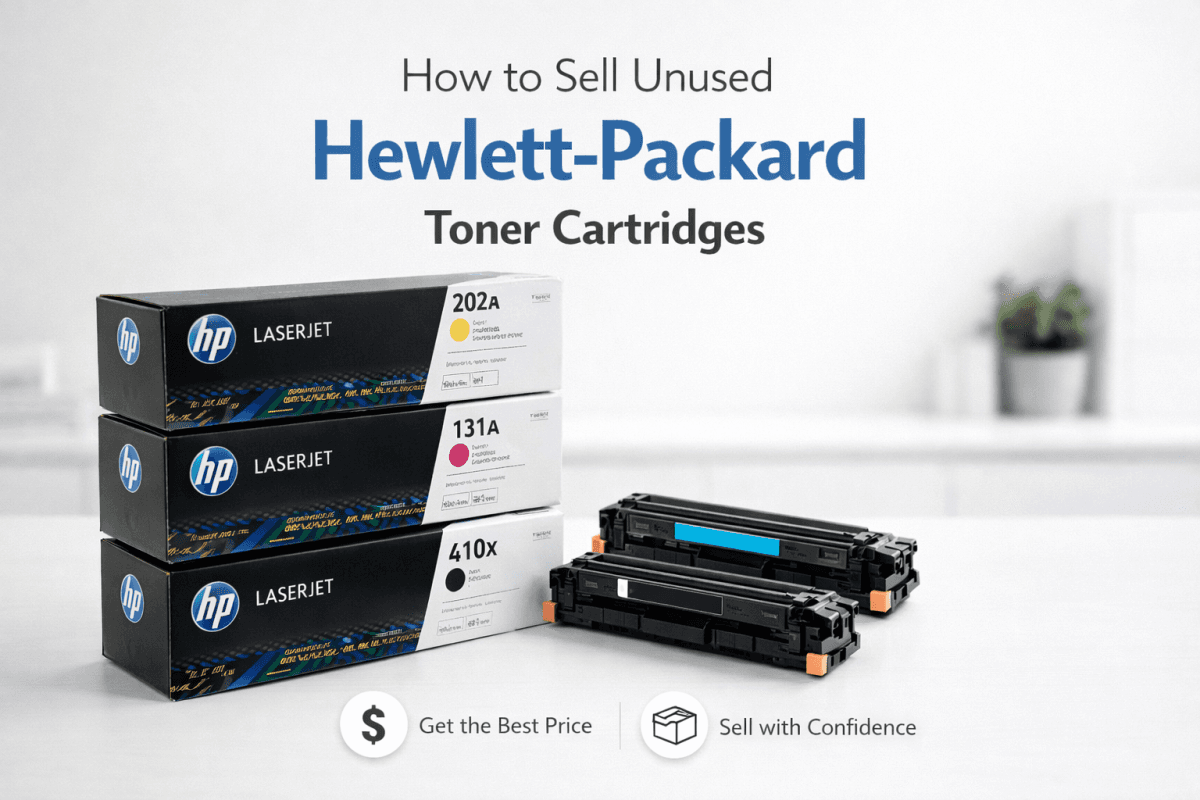
How to Sell Unused Hewlett-Packard Toner Cartridges

Most recent by James Cai

If your business has unused Hewlett-Packard toner cartridges sitting in storage, you’re holding untapped value. The best way to recover that value is by working with a reputable toner buyback company that specializes in new, unopened OEM supplies.

The process is simple and fast. You create a short inventory list, submit it for a quote, and ship your toner using a prepaid label. For companies with surplus stock, this is an easy way to turn excess inventory into cash.

Your Unused HP Toner Is Worth More Than You Think

That unopened HP toner in your supply closet isn’t waste—it’s money. Many businesses are surprised by how much value unused cartridges still have. Selling them is quick, easy, and profitable.

For example, upgrading printers can leave you with unopened cartridges like HP 26X or HP 87A that no longer fit your devices. Instead of letting them expire or get tossed, you can sell them and recover real value.

Why Do Businesses End Up with Surplus Toner?

Having extra supplies is just a normal part of running a business. You might find yourself with an overstock because of:

  • Bulk Order Miscalculations: For example, you bought a case of 10 HP 87A cartridges to get a 15% discount but only used seven before the printer was replaced. Those last three are now surplus.
  • Operational Shifts: The marketing department switches to a managed print service, leaving behind five boxes of HP 414X toner for their old Color LaserJet.
  • Business Closures or Relocations: When a branch office closes, you might discover an entire cabinet filled with various HP toner models like the 58X and 148A, all of which can be liquidated.

Instead of letting these valuable assets expire on a shelf, you can convert them into working capital. The trick is finding a trusted buyer who makes the process simple and pays you what they’re worth.

Turning Dormant Assets into Real Revenue

This guide is designed to walk you through the practical steps of liquidating your excess HP toner. It’s a smart move both financially and environmentally. When you understand the benefits of e-waste recycling, including value recovery, you can see why it’s so important to handle these items responsibly.

We’ll cover everything from identifying your cartridges and checking their condition to finding a reliable buyer like Toner Connect. We’ve already helped over 7,000 businesses turn their surplus supplies back into cash. By following a clear process, you can clean out your storage space and add a nice little boost to your company’s bottom line.

How to Prepare Your HP Toner for a Top-Value Offer

A person uses a smartphone with an HP app to manage inventory of a toner cartridge on a desk.

Before you can turn that extra toner into cash, you need a clear picture of exactly what you have. A quick, accurate inventory is the single most important step in getting a great offer because it removes all the guesswork for the buyer.

Here’s the golden rule: buyers are only looking for new, unopened, and genuine OEM (Original Equipment Manufacturer) cartridges.

Anything with a broken factory seal, along with refilled or third-party “compatible” products, unfortunately can’t be resold. So, the first thing to do is gather up all your surplus HP toner and give each box a quick once-over. Confirm it’s a real HP product and that the seal is intact. This simple check will save you a ton of time down the road.

Getting Your Inventory List Together

Once you’ve sorted out the genuine, sealed cartridges, it’s time to make a list. This doesn’t have to be fancy—a basic spreadsheet or even a clear, handwritten note works perfectly.

For each cartridge, you’ll want to jot down a few key details:

  • Model Number: This is what matters most. Look for codes like HP 87A (CF287A) or HP 414X (W2020X), which are usually printed right on the front of the box.
  • Quantity: A simple count of how many of each specific model you have.
  • Box Condition: A little honesty goes a long way here. Is the box in perfect shape? Or does it have some dings, writing on it, or torn plastic? A practical example of a description would be: “HP 87A – 5 boxes total. 3 are pristine, 1 has a dented corner, and 1 has ‘Marketing Dept’ written in marker on the side.”
  • Expiration Date: While less critical for laser toner, this is a big deal for HP inkjet cartridges, as the liquid ink can degrade over time.

Pro Tip: A detailed inventory list is your ticket to a fast, fair quote. When a buyer knows exactly what you have—down to the dented corner on one box—they can give you a firm offer that sticks.

Taking clear photos is another great move. A few group shots showing all the model numbers and their general condition can really speed up the quoting process. For a little help with this, check out these simple instructions on how to submit images of your toner: https://tonerconnect.net/sell-unused-toners/submit-image-instructions.

The HP Toner Cartridge Inspection Checklist

To make things even easier, use this quick checklist. Running through these points ensures your HP toner inventory is ready for appraisal, which means you’ll get a faster and more accurate quote.

Check Item What to Look For Why It Matters
Authenticity Genuine HP holographic seal and branding. Only OEM cartridges have resale value; aftermarket or refilled cartridges cannot be purchased.
Factory Seal The box must be completely unopened with the factory seal intact. A broken seal means the cartridge is considered “used,” even if it hasn’t been, making it ineligible.
Model Number The specific model code (e.g., HP 414X, CF287A). This is the primary identifier for pricing and compatibility, making it the most crucial detail.
Box Condition Dents, tears, writing, fading, or water damage. Box condition directly affects the resale price. Pristine boxes command the highest offers.
Expiration Date The “Install By” or expiration date on the packaging. For inkjet cartridges, this is critical. For toner, older dates can still have value but may be priced lower.

Taking a few minutes to verify these details ensures there are no surprises and helps you secure the best possible offer for your surplus supplies.

Why Condition and Authenticity Are Deal-Breakers

That stack of extra toner is a genuine asset, and its value is tied directly to its condition and authenticity. The printer cartridge market is massive—HP’s toner cartridges are part of an industry projected to grow from USD 19.17 billion in 2023 to over USD 25 billion by 2029.

Since many businesses find themselves with 15-20% in excess toner each year, there’s a real opportunity to get that money back. Companies like Toner Connect exist to buy this new, unopened HP stock, providing a much-needed service for businesses across the country.

To get your cartridges in the best possible shape, you might even consider using specialized cartridge maintenance tools. A little preparation goes a long way in maximizing the return on your surplus inventory.

So, How Much Are Your HP Cartridges Actually Worth?

Alright, you’ve got your neat and tidy inventory list. Now for the fun part: figuring out what your surplus HP toner is really worth. The value isn’t just some random number; it’s based on a few specific things that any serious buyer will look at. Knowing what they are takes the mystery out of the process and helps you spot a good deal when you see one.

First and foremost, it all comes down to the toner model number. This is the biggest driver of value. Cartridges for popular, newer printers are always in higher demand and will fetch a much better price. Think about it: an HP 414X (W2020X) for a modern Color LaserJet Pro is going to be worth a lot more than a dusty cartridge for a printer that’s been out of production for a decade.

The condition of the box is a close second. Buyers have different price tiers based on box quality, and a pristine, factory-sealed box will always get you top dollar. Minor dings, a scuff here or there, or a slightly dented corner will knock the price down a bit, but you’ll still get a solid offer. For example, a pristine HP 87X cartridge might get an offer of $100, while the same cartridge with a heavily damaged box might only get $70. The key is to be honest about any damage so the quote you get is the real deal.

Getting a Solid Offer—Fast

One of the best things about selling your Hewlett Packard toner to a dedicated buyback company is how quickly it all happens. You don’t have to sit around for weeks waiting for someone to get back to you. Most reputable buyers, including us at Toner Connect, make it incredibly simple to get a quote.

You can usually just send over your inventory list or even just a few clear photos of the cartridges you want to sell.

The whole process is built for speed:

  • Email your list: Send over your spreadsheet with the model numbers, quantities, and a quick note on the box conditions.
  • Or, just send photos: A few quick snaps with your phone showing the model numbers and the overall condition of the boxes is often all it takes.
  • Get your quote: A purchasing agent will look everything over and get back to you with a firm, itemized offer, usually within a couple of business hours.

This fast turnaround means you can make a decision right away, with zero pressure or obligation.

How to Look at Competing Offers

When quotes start coming in, it’s easy to get tunnel vision and just focus on the total payout. But the highest number isn’t always the best deal. You have to look at the entire picture, especially when shipping enters the equation.

A slightly lower offer that includes free, insured shipping is often far more profitable than a higher one where you’re on the hook for shipping costs and any potential transit disasters. Trying to ship heavy toner yourself can easily cost you $20-$50 or more, and if that box gets lost or damaged, your entire profit vanishes.

Let’s say one buyer offers you $300, but you have to handle shipping. Another buyer (like Toner Connect) offers $285 but emails you a prepaid, fully insured FedEx shipping label. After you pay for shipping out of your $300, that second offer almost always leaves more cash in your hand—and you carry none of the risk. Always, always check who is paying for shipping before you say yes.

Packaging and Shipping Your Toner Securely

HP toner cartridges securely packed in a foam-padded shipping container, ready for transport.

Once you’ve accepted a quote, the final step is getting the toner from your office to the buyer. How you package your HP cartridges is a bigger deal than most people think—it directly determines whether they arrive safely and you get the full payment you were promised.

Think of it this way: damage in transit is the #1 reason a quote gets lowered after the fact. A flimsy box or cartridges rattling around inside can easily turn a “like-new” item into a “damaged” one, all because of crushed corners or broken seals. Proper packing makes all the difference.

Choosing the Right Box and Cushioning

Your goal here is simple: make sure the toner cartridges can’t move. At all. Any shifting inside the shipping box creates an opportunity for dings, dents, and damage.

First, find a sturdy corrugated cardboard box that’s just a little bit bigger than your toner. If you’re shipping a few cartridges, try to arrange them snugly like puzzle pieces to cut down on empty space.

Then, fill every gap with the right materials:

  • Bubble Wrap: Perfect for wrapping individual toner boxes or stuffing into voids.
  • Packing Peanuts: Good for filling larger empty areas, but you have to pack them in tight so the toner doesn’t just sink to the bottom.
  • Kraft Paper: Crumpled paper works well to brace items, but it needs to be packed firmly.

Whatever you do, don’t use flimsy materials like old newspapers or plastic grocery bags. They offer almost no real protection.

Here’s a practical example: Say you’re shipping three HP 87X toner cartridges. Instead of tossing them into a big box where they can slide around, find a box where they fit side-by-side with only an inch or two of extra space. Wrap each cartridge in a single layer of bubble wrap, place them inside, and then stuff any remaining gaps with crumpled paper until nothing can move. That’s a secure shipment.

The Power of Prepaid and Insured Shipping

This is where working with a good buyer really pays off. A reputable company will provide a prepaid and insured shipping label from a carrier like FedEx. This is a huge benefit, as it removes two major headaches for you: cost and risk.

Trying to ship heavy toner cartridges on your own can get expensive fast, often costing $20 to $50 or more. That cost comes directly out of your profit. Even worse, if an uninsured package gets lost or damaged, you’re out the entire value of your toner.

With a prepaid, insured label from a buyer like Toner Connect, those worries vanish. Shipping is free, and your package is protected the moment it leaves your office.

This streamlined process is a must-have in an industry where the global market is valued at USD 5.2 billion and is projected to reach USD 8.4 billion by 2034. Companies that get the logistics right, like Toner Connect, have helped over 7,000 businesses sell their Hewlett Packard toner by providing free, insured shipping labels. It takes the cost and risk completely off your plate.

For more detailed tips on the best ways to pack, you can find helpful information at https://tonerconnect.net/learn-more-shippers.

Once your box is ready, seal it up with strong packing tape. Stick the prepaid shipping label on the largest, flattest side of the box, making sure the barcode is clear. Then, just drop it off at the designated carrier location.

Getting Paid: Cashing in on Your Surplus Toner

A man smiles happily while looking at a laptop with a 'Get Paid Fast' banner. Cardboard boxes are stacked nearby, suggesting online business operations.

This is the part you’ve been waiting for: turning those boxes of toner into cash. Once your shipment arrives at the buyer’s facility, their team gets to work. The inspection process is where a professional buyer really shows their worth.

They’ll quickly unpack your items and cross-reference everything against the inventory list you sent. The goal is to confirm that each cartridge is a genuine OEM product with its factory seal intact and that the box condition is just as you described. A seasoned buyer has this process down pat, often completing the entire inspection the same day your package lands on their doorstep.

How You Get Your Money

With the inspection complete, it’s time to get paid. Any trustworthy buyer will have several payment methods available, understanding that different businesses have different needs for accounting and cash flow.

Here are the most common ways you’ll see:

  • Same-Day Digital Payments: Options like Zelle or a digital check have become the go-to for speed. Once your toner gets the green light, the money can hit your account in a matter of hours.
  • Traditional Paper Checks: If your accounting department prefers a paper trail, a check mailed out the same day as the inspection is a standard, reliable option.
  • PayPal Prepay: For sellers who want extra security, getting paid before the toner leaves their office is a huge plus. Buyers like Toner Connect offer a PayPal Prepay option for this exact reason, providing a nice bit of peace of mind.

Choosing a buyer with flexible payment options makes the whole process so much smoother. Whether you want the instant gratification of Zelle or the security of getting paid upfront, the right partner ensures you’re not left waiting to sell Hewlett Packard toner cartridges.

This kind of flexibility is crucial. After all, the printing toner market is not just big; it’s growing. It hit USD 9.30 billion and is expected to reach USD 11.24 billion by 2035. Companies that have been in this space for a while, like Toner Connect, have earned the trust of over 7,000 clients by paying out millions for surplus inventory with a fast, reliable system. You can learn more about the growth of the printing toner market for some interesting insights.

Finalizing the Deal

The best part? It really is that simple. After you’ve confirmed your payment details, your work is done. All that’s left is to see the funds appear in your account. A well-oiled process means you can go from getting a quote to getting paid in just a handful of business days.

Ready to see what your surplus is worth? You can submit your HP toner list for a fast quote and discover just how easy it is to turn those extra supplies into revenue.

Got Questions About Selling Your HP Toner? We’ve Got Answers.

If you’re thinking about selling off your extra HP toner, you probably have a few questions. That’s completely normal. Making sure you understand the ins and outs of the process is the best way to feel confident and get the most value. We hear the same questions all the time from businesses just like yours, so we’ve put together some straightforward answers.

From what to do about a dented box to how quickly you’ll see the money, here’s what you need to know.

What if My HP Toner Boxes Aren’t in Perfect Shape?

This happens all the time. A box gets a little banged up in the supply closet, or someone scribbles a note on the side. The good news? Minor cosmetic damage is almost never a deal-breaker.

Reputable buyers are looking for new, factory-sealed cartridges. A perfect box will always command the highest price, but toner with a few dings and scuffs is still very much in demand. A small dent, a tear in the plastic wrap, or even some writing on the box might lower the offer a bit, but it’s still worth getting a quote. For example, a pristine box might fetch $100, while one with “Finance Dept” written on it might get $95, and one with a crushed corner could be offered at $80.

Where you run into trouble is with significant damage. If a box has been opened and the factory seal is broken, or if there’s major water damage, it can’t be resold as new. Those items will likely be rejected. The best approach is always honesty—just be upfront about the condition of your boxes when you ask for a quote. That way, the offer you get is solid and won’t change later.

Can I Sell Expired HP Laser Toner?

Absolutely. This is probably one of the most common misconceptions out there. Unlike inkjet cartridges, laser toner is a dry, stable powder. That “install by” date on the box is more of a guideline from the manufacturer than a hard-and-fast expiration.

As long as the toner is a genuine OEM product and the box is still sealed, most buyers will happily take it, no matter the date on the package. This is a huge advantage, as it means you can still get paid for older inventory you might have written off as worthless.

It’s a completely different story with inkjet cartridges. The liquid ink in them can dry out or clog print heads over time, so those expiration dates are critical. Expired ink cartridges usually aren’t accepted.

How Quickly Will I Get Paid?

When you work with a seasoned, professional buyer, the payment process is surprisingly fast. Once your toner arrives at their facility, it’s usually inspected that same business day. As long as the items match your inventory list, your payment is sent out right away.

The time it takes to hit your account just depends on how you want to get paid:

  • Digital Payments: Options like Zelle or a digital check can have the money in your account on the very same day.
  • PayPal Prepay: Some buyers even offer to pay you via PayPal before you ship anything, giving you total peace of mind.
  • Paper Checks: If your accounting department prefers a physical check, it’s typically mailed out the same day your items pass inspection.

From the moment you get a quote to having cash in hand, the whole process can be wrapped up in just a few business days.

Is It Actually Legal for My Business to Sell Surplus Toner?

We get this question a lot, and the answer is a firm yes. The toner cartridges on your shelf are assets your company purchased and owns. Period. Just like any other piece of office equipment or property, you have every right to sell them.

Selling surplus inventory is a smart business move called asset recovery. You’re simply liquidating assets that are sitting around depreciating and turning them back into cash you can use. By working with a professional buyback company, you ensure the entire transaction is above board, secure, and handled with complete transparency. It’s a simple way to monetize supplies that would otherwise just be gathering dust.


Ready to turn your surplus HP toner into cash? At Toner Connect LLC, we’ve helped over 7,000 businesses get paid for their unused supplies. Get a fast, no-obligation quote today and see how easy it is to monetize your excess inventory.

Leave a Reply

Your email address will not be published. Required fields are marked *

Skip to toolbar