toner connect logo
    • HomeHome
    • AboutAbout
    • FAQFAQ
    • Buy From Us
      For Drop ShippersFor DistributorsFor Dealers/ResellersFor Drop ShippersFor DistributorsFor Dealers/Resellers
    • BlogBlog
    • Contact UsContact Us
    • Sign InSign In
    Blog/Recycling Ricoh Toner Cartridges for Cash: A Practical Guide
    Most recent

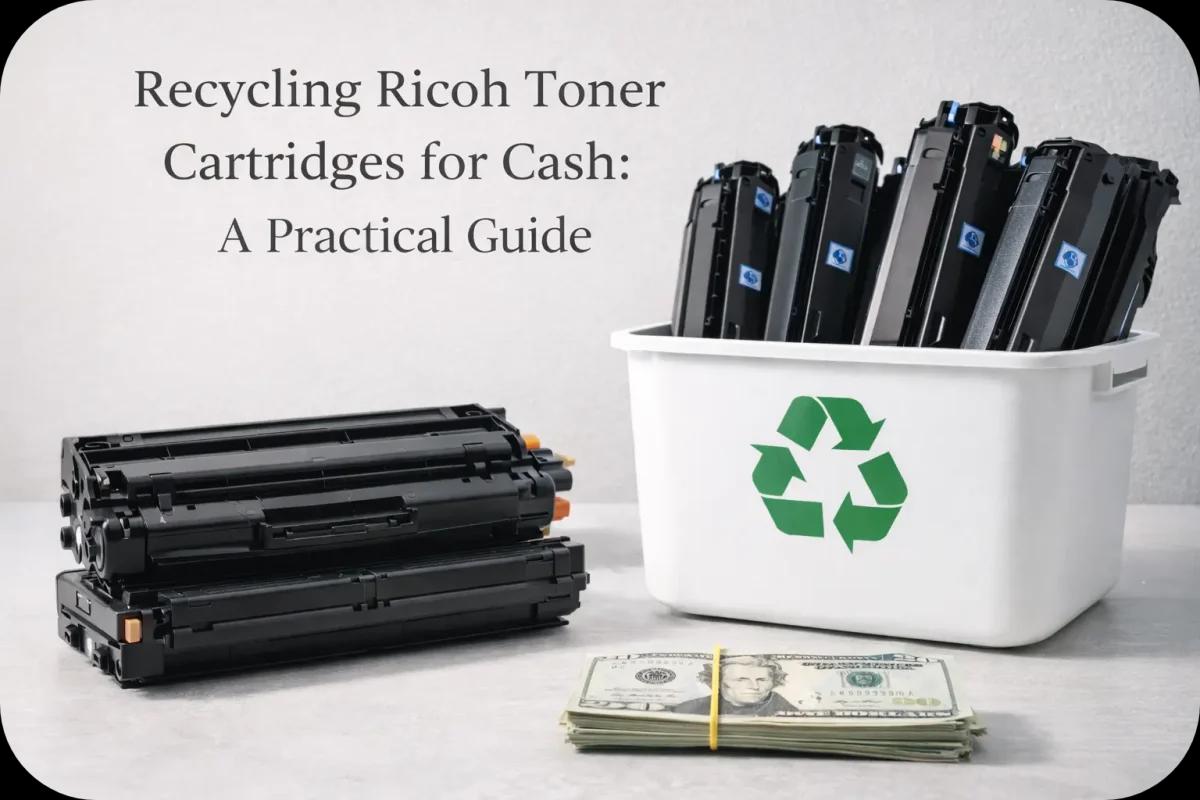
    Recycling Ricoh Toner Cartridges for Cash: A Practical Guide

    December 27, 2025
    James Cai
    17 min read
    Recycling Ricoh Toner Cartridges for Cash: A Practical Guide

    That stack of unused Ricoh toner cartridges collecting dust in the supply closet? It’s not just clutter—it’s cash waiting to be claimed.

    The key is to understand that selling new, unused OEM cartridges is a completely different ballgame from recycling empty ones. This is a straightforward financial transaction, and this guide will walk you through turning that surplus inventory into a new revenue stream.

    Why Your Unused Ricoh Cartridges Are Worth Money

    It’s a situation almost every business runs into eventually. You look up one day and realize you have a stash of perfectly good printer supplies you can no longer use. This isn’t usually a sign of bad planning; it’s just a natural byproduct of a growing, changing business. Suddenly, you’re sitting on valuable assets that don’t fit your current operations.

    So, how does this happen? It’s usually one of a few common scenarios:

    • You Upgraded Your Printers: The company finally invested in a new fleet of multifunction printers. It’s a great move, but the old Ricoh models are being phased out, leaving behind a stockpile of toner that only fits the old machines. For example, if you switched from a Ricoh MP C4504 to a newer series, those leftover 841849 black toner cartridges just became surplus.
    • You Moved or Merged Offices: During an office relocation or consolidation, standardizing equipment is a top priority. This often means the printers from one location are retired, leaving their specific, incompatible supplies behind. For instance, if a merged branch used Ricoh Aficio printers, their stock of MP C2500 series toners won’t fit the main office’s newer IM C series machines.
    • Someone Made a Simple Mistake: It happens. A simple clerical error, like ordering the Ricoh 841284 instead of the 841280, can lead to boxes of the wrong toner. Or maybe a department that used a color printer switched to a monochrome model, leaving a pile of unused cyan, magenta, and yellow cartridges with no home.

    The main thing to remember is that these cartridges are far from waste. They’re brand new, genuine OEM products that other businesses are actively looking for.

    Tapping Into a Booming Market

    This isn’t some tiny, niche opportunity. The global market for reselling and recycling printer cartridges is massive. In fact, it was valued at $2.5 billion in 2023 and is expected to hit $4.8 billion in the near future. This explosive growth proves there’s a strong, consistent demand for OEM supplies outside of the usual big-box retail channels. You can dive deeper into these market trends to see the full picture.

    Think of a buyback program as a matchmaker. It connects your surplus inventory with businesses that are still using the exact printer models you’ve moved on from. It’s a classic win-win that puts money back into your budget while helping the planet.

    Is Your Surplus Ricoh Toner Worth Cash? Here’s How to Tell

    Got a closet full of extra Ricoh toner? Before you toss it, let’s figure out if you’re sitting on a pile of cash. Not every old cartridge has resale value, but a quick check can tell you what’s valuable and what’s ready for recycling. It really comes down to three things that professional buyers look at first.

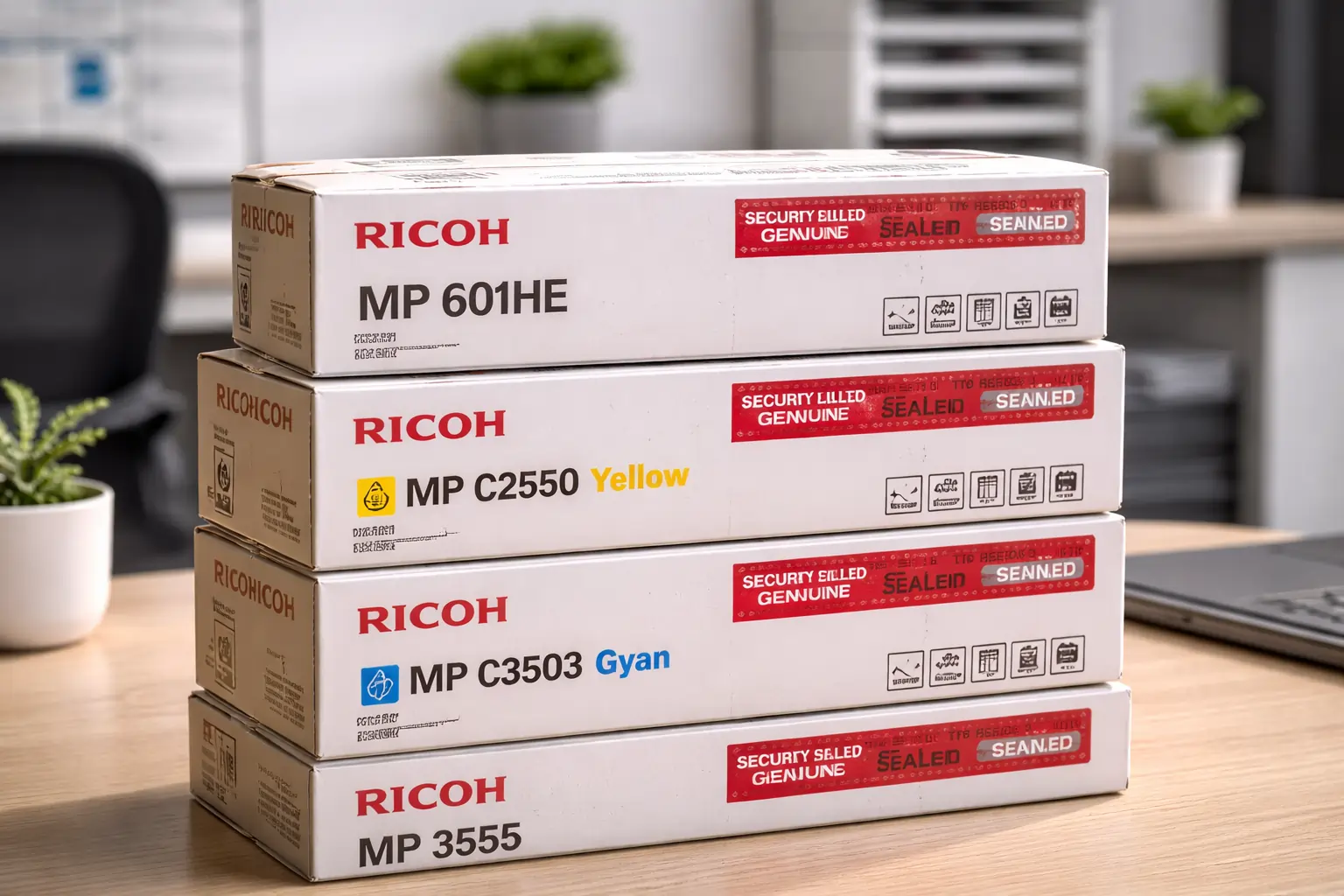
    First and foremost, it has to be the real deal. Buyback programs are only interested in OEM (Original Equipment Manufacturer) cartridges. That means genuine Ricoh products, still in their original packaging. Third-party compatibles, refilled, or remanufactured cartridges just don’t have resale value, so you can set those aside for recycling. A practical example would be a cartridge sold under a brand like “E-Z Ink” or “LD Products” designed for a Ricoh printer—these are not OEM and cannot be resold for cash.

    The Box Tells a Story: Why Condition Matters

    The condition of the toner box is a huge deal. Think of it like a first impression. A clean, factory-sealed box is going to get you the best price, no question. It tells a buyer the toner inside is protected and in perfect shape.

    Now, that doesn’t mean it has to be flawless. A little dust or some minor scuffs on the corners from sitting on a shelf? That’s usually fine. What we’re watching out for are the big problems—the kind of damage that makes you wonder if the cartridge inside is okay.

    Here’s a simple test I always recommend: look at the box and ask yourself, “Would I buy this off a store shelf?” If you see major tears, water damage, big puncture holes, or faded graphics from sun exposure, it’s probably a no-go. That kind of damage will either get the cartridge rejected or lead to a much lower offer.

    This quick flowchart can help you visualize the sorting process right from the start.

    Flowchart guide for managing surplus toner, evaluating if it's unused and has value to decide its fate.

    Use this as your roadmap. It’ll help you quickly separate the valuable stuff from the cartridges that are better off being recycled.

    Ricoh Toner Cartridge Acceptance Checklist

    Use this table to quickly determine if your surplus Ricoh toner cartridges meet the standard criteria for buyback programs.

    Criteria Accepted (Example) Rejected (Example)
    Authenticity Genuine Ricoh OEM in original box Compatible, remanufactured, or refilled toner
    Box Condition Factory-sealed with minor shelf wear Opened, torn, water-damaged, or heavily crushed box
    Packaging Integrity Light scuffs, dust, neatly removed shipping label Deep cuts, punctures, faded graphics, heavy writing

    Sorting your inventory with these points in mind will save you a ton of time and get you a much more accurate quote.

    Is Your Toner Model Still in Demand?

    Finally, the model number of your Ricoh cartridge is a major piece of the puzzle. Just like with any technology, demand changes over time. If your toner fits a popular Ricoh printer that’s still widely used in offices, it’s going to be worth more. Cartridges for older, discontinued printers, on the other hand, have a much smaller market. For example, a toner for a newer Ricoh IM series printer will likely have a higher value than a cartridge for a 15-year-old Aficio model that is rarely in service.

    Seeing a few real-world examples can make this crystal clear. A box with a shipping label carefully peeled off might be perfectly acceptable, but one with deep gashes from a box cutter is likely a pass.

    For more clarity, check out our detailed guide on submitting photos of your toner cartridges. It gives you visual examples of what we look for, helping you set the right expectations and streamline the entire process.

    How to Get a Fast, Accurate Quote for Your Ricoh Toners

    If you want a quick and fair offer for your surplus Ricoh toners, a well-organized inventory list is your best friend. Seriously, it’s the most important part of the process. When a buyer gets a clear, detailed list, it builds immediate trust and takes all the guesswork out of the equation. It shows you’re a professional and makes the whole transaction smoother from the get-go.

    You’ve got two great options for showing us what you have. Neither is better than the other; it just depends on what works for you and how many cartridges you’re looking to sell.

    Desk setup with laptop displaying an inventory system, a smartphone, a plant, and a white device.

    Option 1: Create a Simple Spreadsheet

    For those who like to keep things organized, a spreadsheet is the gold standard. It’s incredibly efficient, especially if you have a lot of toner, because it lays out all the critical information in a format we can process in minutes.

    Just make sure your spreadsheet includes these four columns:

    • Brand: Simply list “Ricoh” to confirm they’re genuine OEM cartridges.
    • Model Number: This is the key detail. Be specific, like 841813 or MP C3503.
    • Quantity: The exact number of boxes you have for each model number.
    • Box Condition: A quick, honest description is all we need. “Pristine,” “Minor Shelf Wear,” or “Small Tear” works perfectly.

    This clean format lets us generate your quote fast. You can easily prepare and upload your inventory file right here: https://tonerconnect.net/sell-unused-toners/submit-file. It’s the preferred method for anyone recycling Ricoh toner cartridges for cash because it’s just so efficient.

    Option 2: Snap Some Clear Photos

    Not a spreadsheet person? No problem. If you have a smaller batch or just prefer a more visual approach, photos work great. A good picture instantly tells us the model numbers and lets us assess the box condition ourselves.

    Just follow a few simple tips to get the best shots:

    • Find Good Light: Take your pictures in a bright room to avoid shadows or glare that could hide the details on the box. Natural daylight from a window is often best.
    • Stack ‘Em Up: If you have multiple boxes of the same toner, stack them together so the quantity is clear in one photo. For instance, arrange five boxes of the same model in a pyramid or a neat row.
    • Zoom In on the Part Number: Make sure the model number is crystal clear and easy to read. A close-up of the label is always a huge help.

    Taking an extra minute or two to put together a quality submission—whether it’s a neat spreadsheet or well-lit photos—really sets you apart. It tells a buyer you’re organized and reliable, which often leads to a faster, smoother payment.

    This bit of effort truly pays off. For more general advice on requesting a fast quote for surplus goods, that resource is a good starting point. It’s also worth remembering why these OEM products are so valuable. Ricoh USA itself has remanufactured over 2.2 million toner cartridges, recovering an incredible 72% to 97% of their weight for reuse. This dedication to a circular economy is precisely why your genuine, unused Ricoh supplies are in demand for resale.

    Getting Your Ricoh Toners Shipped and Paid

    So, you’ve received and accepted our quote. Great! Let’s get to the best part: turning those surplus toner cartridges into cash. The good news is that we handle the heavy lifting from here. The whole process is designed to be painless, secure, and completely transparent, from the moment you tape up the box to when the payment hits your account.

    First things first, we’ll send you free, prepaid shipping labels. This is a non-negotiable part of our service—you should never, ever have to pay to ship your cartridges to a buyback company. These aren’t just any labels, either. They come with insurance, protecting both of us against loss or damage while your package is on its way with trusted carriers like FedEx or UPS.

    A laptop and an open shipping box filled with Ricoh toner cartridges, suggesting online sales.

    How to Pack Your Cartridges Like a Pro

    Proper packing is one of the most important steps. Why? Because toner that arrives damaged isn’t worth what you were quoted. Taking just a few extra minutes to pack correctly protects your payout.

    Here are a few tips I’ve learned over the years:

    • Pick the Right Box: Find a sturdy, corrugated cardboard box. You want something a little bigger than your items, but not so big that they’ll be swimming in it. Reusing an old Amazon or office supply box is fine, but make sure it’s still strong and not falling apart.
    • Fill the Gaps: Use plenty of filler like bubble wrap, packing peanuts, or even crumpled newspaper to fill every empty space. The goal is to make sure nothing can shift, slide, or bang around during transit. A snug fit is a safe fit.
    • Tape It Up: Use strong packing tape to securely seal every seam on the top and bottom. Don’t be shy with the tape! A practical tip is to use the “H-taping method”—tape across the center seam and then along the two edge seams.

    For a more detailed breakdown, you can learn more about our shipping process and see exactly how we recommend preparing your shipment.

    Your Payout: How and When You Get Paid

    Once your package arrives at our warehouse, our team gets to work inspecting everything. As soon as that’s done, it’s time to pay you. We pride ourselves on being fast—payment is often sent the very same day we finish the inspection. We offer a few different options, so you can choose whatever works best for you.

    Here are the most common payment methods:

    • PayPal: A fast and reliable option. For our established, high-volume sellers, we can often prepay via PayPal before your toners even ship.
    • Zelle: The perfect choice if you want a near-instant digital payment sent directly to your bank account on the same day.
    • Check: For those who prefer a more traditional method, we can send a classic paper check or a digital eCheck.

    The bottom line is this: you should always know what to expect. We lay out the entire inspection and payment timeline upfront, so there are absolutely no surprises. That kind of transparency is the hallmark of a partner you can trust.

    By selling your surplus toner, you’re also doing your part for the environment. This isn’t just a small gesture; it’s part of a huge global effort. In fact, Ricoh Group’s own Circular Economy Report revealed that its US take-back program processed 7,571.5 tons of consumables between 2013 and 2024. An incredible 80.3% of that material was recycled, and another 15.5% was reused as components.

    That’s a powerful reminder of the value locked inside every genuine Ricoh product and why the business of recycling Ricoh toner cartridges for cash makes such a big difference.

    Dodging the Pitfalls: Common Mistakes to Avoid When Selling Surplus Toner

    Selling your surplus Ricoh toner can be a great way to recover value, but it’s not without its risks. The toner buyback world has its share of less-than-reputable players, and a few wrong turns can cost you time, money, and a whole lot of frustration. Knowing what to watch out for is half the battle.

    Let’s talk about shipping first, because this is where many sellers get burned. If a potential buyer asks you to pay for shipping, walk away. A legitimate partner will always provide free, prepaid shipping labels. Even more important is insurance. If that shipment isn’t insured by the buyer, you’re on the hook for anything lost or damaged along the way. Think about it: you ship $1,000 worth of toner, the carrier mishandles the box, and you get absolutely nothing. It happens.

    Vague Rules and the Long Wait for Payment

    Another red flag is a company with murky acceptance standards. You should know precisely what they’re looking for before a single cartridge leaves your office. A trustworthy buyer lays out their guidelines on box conditions and OEM requirements clearly and upfront, so there are no surprises.

    Then there’s the payment game. Some companies are notorious for dragging their feet. They’ll get your toner, and then… silence. Weeks, sometimes even months, can go by before you see a dime. This is often a sign of a shaky, disorganized business. A professional operation will be transparent about their payment schedule and offer quick options like Zelle or a check sent out the same day they finish their inspection.

    We once heard from a seller who was thrilled with a high quote they received. They shipped their toner, only to get an email a week later with a drastically lower offer. The buyer cited vague “box damage” and left the seller with a terrible choice: take the lowball offer or pay hefty fees to get their own inventory back.

    The Genuine vs. Compatible Dilemma

    This one is critical. Never mix genuine OEM Ricoh cartridges with third-party compatibles. Those counterfeit or “compatible” cartridges hold absolutely zero value for an OEM buyback company. Sending them in not only wastes everyone’s time but can also make a buyer question the legitimacy of your entire shipment, leading to serious delays. Always take a moment to confirm every single cartridge is a genuine Ricoh product.

    But what if your cartridges don’t qualify? If your Ricoh toner is non-OEM, opened, or just too damaged for a buyback program, don’t just toss it. Responsible disposal is key. In situations like this, finding a great junk removal company can help you manage the items properly and keep them out of landfills.

    By keeping these common mistakes in mind, you can navigate the process of recycling Ricoh toner cartridges with confidence and get the best possible return.

    Your Top Questions About Selling Ricoh Toner Answered

    If you’re sitting on a stash of extra Ricoh toner, you probably have a few questions. We get it. Clearing out surplus supplies isn’t something you do every day. Here are some straightforward answers to the questions we hear most often, based on years of experience helping businesses like yours.

    Is Selling Unused Toner the Same as Recycling?

    Not at all—they’re two completely different things.

    Recycling is what you do with empty, used cartridges. You send them back to a facility where they get broken down and remanufactured. It’s great for the environment, but you typically don’t get paid for it. For example, Ricoh’s own official program lets you print a free shipping label to return empty cartridges for this purpose.

    Selling your unused toner, on the other hand, is a purely financial move. You’re selling a valuable business asset—a brand new, factory-sealed product—to a buyback company for cash. Because it’s in its original, ready-to-use condition, it still holds real market value.

    So, How Much Are My Ricoh Cartridges Actually Worth?

    That’s the big question, and the answer always depends on a few key factors:

    • The specific model number: A high-yield cartridge for a popular new Ricoh printer will be worth more than a standard one for an older, discontinued model. For instance, the Ricoh 841918 (yellow toner for IM series) will typically command a higher price than a toner for a much older Aficio MP model.
    • The condition of the box: Is it pristine? Or does it have some dings, writing, or old shipping labels on it?
    • Current market demand: Like any commodity, toner prices fluctuate based on supply and demand.

    The only way to know for sure is to get a custom quote based on what you have. A quick photo or a list of the model numbers is all it takes to get a real-world valuation.

    Key Takeaway: The value of your toner isn’t static. It changes with the market. That’s why getting a fresh, personalized quote is the only way to get an accurate number.

    What if the Box Has Writing or Old Labels on It?

    In most cases, that’s perfectly fine! While a mint-condition box will always get the highest price, minor cosmetic issues usually aren’t deal-breakers. We see it all the time—cartridges with small dents, neatly removed labels, or a bit of writing on the box (like “Marketing Dept”) are often still sellable.

    Of course, the offer might be adjusted to reflect the condition. The most important thing is to be upfront about it when you request a quote. Honesty ensures there are no surprises down the line. That said, cartridges with severe damage—like water stains, major tears, or opened seals—are generally not accepted.

    Why Do You Only Buy Original (OEM) Cartridges?

    We stick exclusively to OEM (Original Equipment Manufacturer) cartridges because quality and reliability are non-negotiable. When someone buys a genuine Ricoh toner, they know it will work perfectly and won’t risk damaging their expensive office equipment.

    Compatible or remanufactured cartridges just don’t offer that same guarantee. They’re known for having higher failure rates and spotty print quality, which makes them a tough sell on the secondary market. The OEM seal is a mark of trust that third-party products can’t replicate.


    Ready to see what your surplus toner is worth? Toner Connect LLC makes it simple with competitive quotes, free insured shipping, and fast, reliable payment. Submit your inventory list today and turn that office clutter into cash.

    Categories

    Most recent

    About the Author

    James Cai
    Back to Blog
    toner-map

    Toner Connect LLC,
    90 Dayton Ave,
    Bldg 9, Unit 4J,
    Passaic, NJ 07055

    (833)-866-3703

    info@tonerconnect.net

    Mon-Fri 9 am-5pm EST
    Latest Posts
    Toner vs Cartridge An Essential Guide for Resellers
    Toner vs Cartridge An Essential Guide for Resellers
    January 18, 2026
    James Cai
    Your Ultimate Guide to the Types of Printer Ink
    Your Ultimate Guide to the Types of Printer Ink
    January 17, 2026
    James Cai

    See More >>

    Review Us
    EXCELLENT
    4.8 Average 500+ Reviews
    REVIEWS

    Toner Connect has no affiliation with HP or Xerox. All brand names and trademarks referenced are the property of their respective companies. While we make reference to brand name merchandise, we are in no way endorsed by or associated with these companies.

    Copyrights © 2025
    Terms & Conditions | Privacy Policy | Sitemap