cash for toner cartridges
unused toner – Get Cash Now
If your supply closet is crammed with sealed, genuine (OEM) toner and ink cartridges from old printers or last year's over-ordering, you're sitting on a hidden asset. Believe it or not, OEM toner buy-back programs offer a straightforward way to convert that surplus directly into cash. This isn't just about decluttering; it's a smart financial play to get cash for toner cartridges you'll never use.
That stack of printer supplies gathering dust in your storage room is more than just forgotten inventory—it's untapped cash. So many businesses write off surplus toner as a sunk cost, especially after upgrading office equipment. The reality is, a healthy secondary market exists specifically for these items, allowing you to get back a good chunk of what you originally spent.
Let's say your company just leased a new fleet of printers. The old ones are gone, but you're left with a dozen mint-condition HP toner cartridges that originally cost over $100 each. Instead of letting them expire on a shelf, a buy-back service can turn them into immediate working capital. For example, if you have ten HP 414X cartridges, a buy-back program might offer you $50-$70 per cartridge, turning over $500 of "useless" inventory into cash you can use for other business needs.
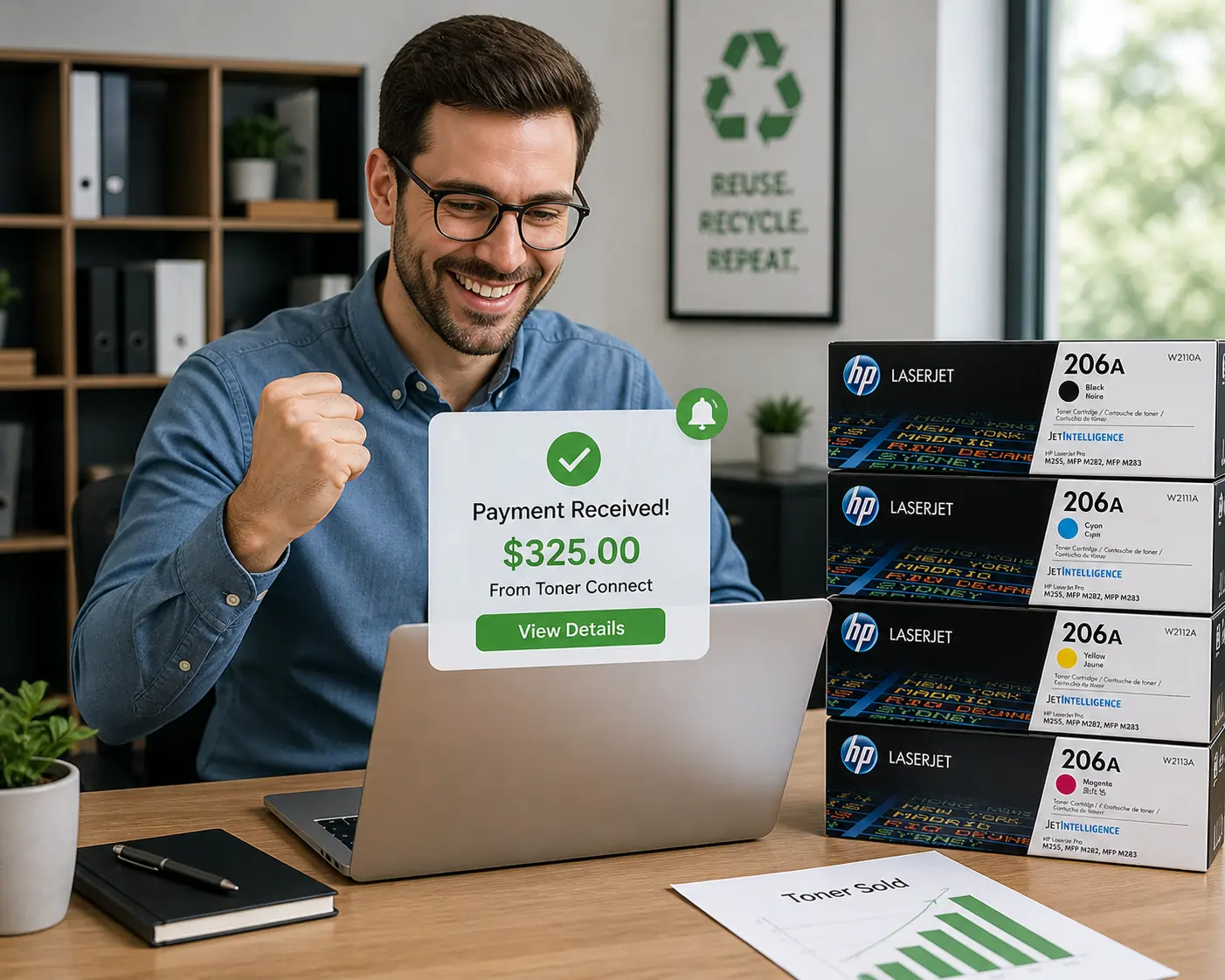
This quick visual breaks down the process of turning those extra supplies into money in the bank.
As you can see, the path from finding your surplus toner to getting paid is designed to be quick and painless.
Beyond the obvious financial benefit, selling your unused toner cartridges is a big win for sustainability. Every cartridge you sell is one less item that could end up in a landfill. The global market for recycled printer cartridges was valued at a staggering $2.5 billion in 2023 and is only expected to grow, which shows just how strong the demand is.
When you sell your surplus, you're supporting a circular economy. Perfectly good products get a second life, which reduces waste and conserves the resources needed to manufacture brand-new ones. For instance, instead of a law firm throwing out five sealed Brother TN850 cartridges after a printer upgrade, they sell them to a buy-back company. That company then sells them to a small business that still uses that printer model, extending the product's life and preventing waste.
This isn't just a simple transaction; it's a strategic move. You clear out valuable space, recover funds for other business needs, and make an environmentally conscious choice—all with surprisingly little effort.
To get the most value, you need to work with professional buyers who specialize in unused, genuine toner. They offer the fastest and most reliable path to getting paid for your sealed cartridges. Depending on the specific model and its current demand, a single unit can fetch anywhere from $10 to over $300. For example, a high-demand cartridge like an HP 90X could fetch a significant price, while an older, less common Xerox cartridge might only be worth a small amount.
Of course, there are other strategies for selling unwanted inventory on broader online platforms. However, I've found that specialized toner buyers provide a much more direct, hassle-free process tailored specifically for these products.
We've created a simple table to show you what buyers look for.
| Factor | High Value Indicators | Low Value Indicators |
|---|---|---|
| Brand & Model | Popular brands (HP, Brother, Canon); recent models | Obscure brands; outdated or discontinued models |
| Box Condition | Pristine, sealed, no writing or damage | Opened, torn, dented, heavy writing, faded |
| Expiration Date | More than 1 year until expiration | Expired or expiring within the next 6-12 months |
| Authenticity | Genuine OEM (Original Equipment Manufacturer) | Compatible, remanufactured, or counterfeit |
| Market Demand | High-volume models used in common office printers | Niche or low-volume models with limited use |
Ultimately, the better the condition and the higher the demand, the more money you'll get back.
This guide will walk you through everything, step-by-step. We’ll cover how to prepare your items, get the best possible quote, and get paid quickly.
When you’re ready to see what your cartridges are worth, you can submit your inventory list for a fast quote and get started right away.
https://tonerconnect.net/sell-unused-toners/submit-form
Want to get the most cash for those unused toner cartridges? It all starts before you even ask for a quote. A little bit of prep work not only makes the whole process smoother but can seriously boost the final offer you receive. It really comes down to knowing exactly what you have sitting in that supply closet.
First things first, you've got to sort your inventory. The most important job is to separate the genuine OEM (Original Equipment Manufacturer) cartridges from any third-party, compatible, or remanufactured ones you might have. For example, if you find a box that says "Toner for use in HP printers" but doesn't have the official HP logo, that's a compatible cartridge. Toner buy-back programs are built around authentic products from brands like HP, Brother, and Canon. That’s what the secondary market trusts and demands.

So if you're looking at a stack of boxes, pull out anything that doesn't have that official HP, Canon, or Brother logo on it. Generic or "re-made" cartridges have next to no resale value in this market, so it’s best to just set them aside. Focusing only on your OEM items saves everyone a ton of time.
Once you have a pile of just your OEM stock, it's time to get organized. The easiest and most effective way to show a buyer what you've got is by creating a simple spreadsheet. This list is what your quote will be based on, so getting it right is crucial.
Your list doesn't need to be fancy. Just make three columns:
Putting together a clean inventory list immediately shows the buyer you're professional and serious. From my experience, this alone often leads to a faster and more accurate quote. Plus, it helps you keep track of your own assets.
Here’s where you can really make a difference in your final payout: the condition of the box. The value of an unused toner cartridge is almost entirely tied to its packaging. Remember, a buyer is purchasing your items to resell them, and their customers expect a product that looks brand new.
Think of it like selling a collectible—a mint-condition, factory-sealed box with crisp corners and zero cosmetic flaws will always get you top dollar. We call this "A-Grade" or "Pristine" condition in the business. A practical example is a brand-new HP cartridge box that looks like it just came from an office supply store.
A pristine box is your golden ticket. It tells the buyer the product inside is untouched and can be resold with confidence. Any deviation from this perfect state—a shipping label, a tear, a dent—will lower the offer.
On the other hand, boxes with minor issues are usually graded lower. This could be anything from small dents and a lightly crushed corner to some residue left over from a removed shipping label. For instance, a box that has "Finance Dept" written in marker on the side would be considered "B-Grade" or having "shelf wear." They definitely still have value, but you should expect a lower offer than for your A-Grade stock.
Finally, boxes with major damage—I'm talking big rips, water stains, or broken seals—are often rejected outright. It’s so important to be honest with your assessment here. It just helps set realistic expectations for everyone involved.
Understanding the difference between box grades is essential when you're sizing up your own stock. If you describe your inventory inaccurately, it can lead to a revised offer after the buyer inspects your shipment, which causes delays and frustration for both sides.
Here’s a quick breakdown to help you grade your own inventory:
| Grade | Description | Expected Payout |
|---|---|---|
| A-Grade (Pristine) | Factory-sealed, no dents, tears, writing, or labels. Looks brand new. | 100% of the quoted value. |
| B-Grade (Shelf Wear) | Sealed, but has minor flaws like small dents, faded color, or label residue. | Typically 80-90% of the A-Grade value. |
| Damaged/Opened | Large tears, water damage, or a broken factory seal. | Often rejected or offered a significantly lower value. |
Taking clear photos of your inventory is a fantastic way to back up your list and get a truly precise quote. In fact, most buyers encourage it. For a great example of what we look for, you can review these detailed instructions on how to submit images for a quote. By prepping your toner this way, you put yourself in the best possible position to get a great cash offer.
Alright, you've sorted through your inventory and know exactly what you have. Now for the most important part: getting a great offer for it.
To get the best possible quote for your unused toner, you need to make it incredibly easy for the buyer to see what you've got. In my experience, most reputable OEM toner buy-back companies will need two things from you right off the bat: a detailed inventory list and a few clear photos of the actual cartridge boxes.
This isn't just about ticking boxes; it's about building trust. When a buyer can immediately see the model numbers, verify the condition, and confirm authenticity from a photo, it removes all the guesswork. This transparency leads directly to a faster, more accurate quote.

Here’s a pro tip that saves a ton of time: before you do anything else, lay all the boxes out on the floor in a room with good lighting. Make sure every model number is facing up and easy to read, then snap a few group photos from different angles. This simple action often answers most of a buyer’s questions before they even have to ask.
It's crucial to understand what really drives the price when you're looking for cash for toner cartridges. Your offer isn't just a random number; it's a direct reflection of current supply and demand in the market.
Think about it this way: a high-yield toner for a popular, late-model HP LaserJet Enterprise printer is always in demand. Thousands of businesses rely on those machines, so buy-back companies are eager to get that stock. On the other hand, a standard-yield cartridge for an older, discontinued inkjet printer has a tiny pool of potential users, which naturally lowers its value. For example, a toner cartridge for an HP LaserJet Pro M404 printer will likely have a higher value than one for a 15-year-old Dell printer that few offices still use.
The bottom line is simple: the more businesses that need a specific cartridge, the more a buy-back company is willing to pay. Your quote is a snapshot of that real-world demand.
This is also why some brands are worth more than others. The market generally breaks down like this:
Knowing where your inventory fits in helps you set realistic expectations and spot a fair offer when you see one.
With your photos taken and your inventory list finalized, it’s time to reach out. A clear, well-organized email makes a world of difference. Vague requests with missing information just create delays and lead to a frustrating string of back-and-forth questions.
You want to make the buyer's job as easy as possible. Here’s a simple and effective template I've used that gets the job done. It gives them everything they need in a clean, scannable format, which almost always results in a quicker—and sometimes better—offer.
Sample Email Template
Subject: Quote Request for Surplus OEM Toner Cartridges
Hi [Buyer Name],
I'd like to get a quote for a small lot of new, factory-sealed OEM toner cartridges we're looking to sell.
Here’s what we have:
I've attached photos of all the items for you to see. Please let me know what you can offer for the whole lot.
Thanks,
[Your Name]
[Your Company]
[Phone Number]
This direct approach provides all the necessary details right away, putting you on the fast track to turning that extra inventory into cash.
You've sorted your inventory, snapped some clear photos, and landed a great quote for your unused toner. Awesome. But don't celebrate just yet—this last step is where the rubber meets the road.
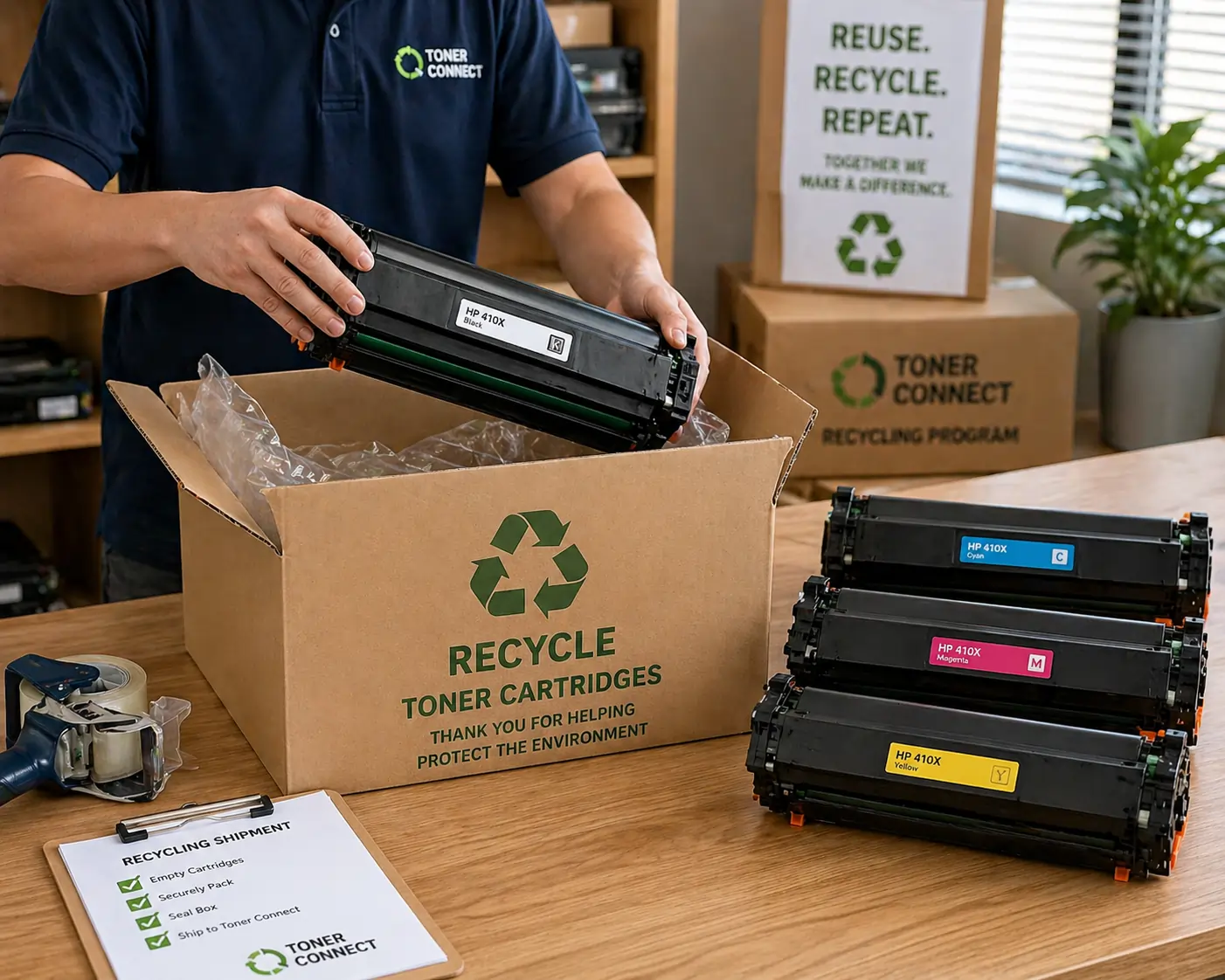
Getting the shipping right is absolutely critical. I've seen it happen too many times: a seller does everything right, but a poorly packed box shows up looking like it went through a blender. Damaged cartridge boxes almost always mean a voided or seriously reduced offer. Let's make sure you get every dollar you were quoted.
First things first, and this is the golden rule: never, ever ship toner cartridges in their original boxes alone. Just slapping a shipping label directly onto the OEM packaging is the fastest way to turn your valuable toner into a worthless, dented mess. For example, if you put a UPS label on a new HP toner box, by the time it arrives, the corners will be crushed and the box scuffed, instantly downgrading it from A-Grade to damaged and potentially voiding your offer.
Your first mission is to find a solid, corrugated shipping box. You want something just a bit larger than your toner cartridges, leaving enough space for about two inches of cushioning on all sides. Resist the temptation to reuse that flimsy Amazon box from last week; those things lose their structural integrity after one trip and can get crushed easily.
The whole point here is to make sure the toner cartridges can't move. At all. Any shifting, bumping, or sliding inside that box during transit will cause scuffs, dents, and crushed corners, which is exactly what kills your payout.
Here are my go-to materials for a bulletproof packing job:
Start by laying a good cushion at the bottom of the box. Then, arrange your toner cartridges inside, almost like a game of Tetris, and stuff all the gaps between them with more packing material. Before you close it up, add another protective layer on top.
Here's a pro tip I always share: Before you tape the box shut, give it a gentle shake. Can you feel or hear anything moving? If you can, you're not done yet. Add more packing material until everything is completely snug.
Once everything is packed tight, it’s time to seal it up. Grab some real packing tape—not scotch tape or masking tape—and be generous with it. Run it across all the seams, paying extra attention to the top and bottom. This reinforces the box and makes sure it doesn't pop open on a conveyor belt somewhere.
Another great habit to get into is taking a quick photo of the open box with your items all packed up, right before you seal it. This gives you a personal record of your fantastic packing job, which can be a lifesaver if any issues come up later. It takes ten seconds and provides a ton of peace of mind.
If you're dealing with a really large shipment, like a whole pallet of inventory, you might want to explore your options. You can learn more about different shippers and freight services on our resource page.
Here’s the good news: nearly every reputable OEM toner buy-back company, including us, provides prepaid shipping labels. The entire process should be completely free for you. We’ll email you a label, you print it, stick it on the sealed box, and drop it off with the carrier (usually UPS or FedEx). Simple.
These labels aren't just for postage; they're also insured. This is a huge deal. It means that if the carrier somehow loses or damages the package—and you did your part by packing it correctly—the insurance will cover the value of your quote. This is one of the biggest reasons to work with an established buyer who offers this protection.
In the rare case you're coordinating your own freight for a massive B2B shipment, it’s a smart move to utilize a shipping quote calculator to get a handle on the costs. For the vast majority of sellers, though, the prepaid label is all you'll ever need.
By taking a few extra minutes to pack your items with care, you’re protecting your inventory and locking in the full cash value of your offer. It's the final, crucial step in turning that surplus unused toner into a nice payout.
You've done the hard part: you’ve sorted, packed, and shipped your extra ink and toner. Now, what's next? Once your box lands at the buy-back facility, it gets queued up for inspection. This is the moment of truth, where the team verifies everything and finalizes your payment. Think of it as the last checkpoint before you get cash for toner cartridges.
This isn't some black-box process. Real, trained inspectors go through your shipment item by item, matching everything against the list and photos you sent. This is precisely why being upfront and accurate about your inventory is so important—it makes this final step a breeze for everyone involved.

Every reputable OEM toner buy-back program follows a strict checklist. It's how they ensure fairness and consistency, whether you're selling one cartridge or a hundred.
The inspection team moves quickly, usually clearing shipments within 1-3 business days of arrival. They’re trained to assess each cartridge for a few key things.
The bottom line of the inspection is simple: Does what we received match what you told us you were sending? Any differences in authenticity, condition, or even the count will be noted and communicated back to you right away.
What if the inspectors find something off? It happens. Maybe an employee accidentally tossed a compatible cartridge into the box, or a corner got dinged in shipping despite your best efforts. A professional buyer won't just reject your whole shipment over a minor issue.
Let's walk through a real-world scenario. Say you sent in ten cartridges you listed as perfect A-Grade. During inspection, the team notices one box has a small tear on the back that was missed in the photos. That one box is now B-Grade. Instead of a problem, it’s just a simple adjustment. The buyer will reach out with a revised quote that reflects the lower value for that single item. For instance, if the A-Grade price was $50 and the B-Grade price is $45, your total payout will be reduced by just $5.
You’ll almost always have two clear choices:
This level of transparency is the hallmark of a good buy-back partner. They're in it for the long haul and want to build trust, which means being upfront and honest if any issues pop up.
Once your shipment gets the green light, the final step is getting paid. The best unused toner buyers know that flexibility is key and offer several ways to get your money.
Here are the most common payment methods you'll see:
| Payment Method | Typical Processing Time | Best For |
|---|---|---|
| PayPal | Often available as a prepay option or immediately after inspection. | Sellers who want the fastest possible access to their funds. |
| Zelle | Same business day after inspection is complete. | Quick, direct bank transfers without fees. |
| Digital Check | Emailed the same business day after inspection. | A fast, modern alternative to a traditional paper check. |
| Company Check | Mailed the same business day; arrival depends on postal service. | Businesses that require physical checks for their accounting. |
You can generally expect payment to be sent out within 24 to 48 hours after your shipment is approved. This quick turnaround is one of the biggest perks of working with a pro—you can convert those dust-collecting supplies into actual working capital in just a few days.
Getting a check for old inventory is great, but selling your surplus toner is also one of the smartest, simplest sustainability moves you can make. When you work with an OEM toner buy-back program, you're not just clearing space; you're putting a perfectly good, valuable product back into circulation. It’s a textbook example of supporting a circular economy—a model focused on eliminating waste and keeping materials in use.
This is a huge step up from just recycling. While recycling is certainly better than the trash can, selling your unused toner means a brand new cartridge doesn't have to be made in the first place. Think about it: manufacturing just one new laser toner cartridge consumes more than two quarts of oil. By reselling, you help cut down on the staggering 375 million cartridges that hit landfills every single year, where they can sit for literally centuries.
For any business serious about its corporate social responsibility (CSR) goals, this is low-hanging fruit. Selling off your surplus isn't just some abstract concept for a sustainability report; it's a real, measurable action. You're actively keeping bulky items out of the waste stream while conserving the raw materials and energy it would take to produce new ones. This turns getting cash for toner cartridges into a genuine win-win.
You're not just clearing out a supply closet—you're turning a sunk cost into a new asset and making a positive environmental impact that reflects well on your company's values.
The financial and environmental benefits are two sides of the same coin. By selling what you no longer need, you convert what would become e-waste into immediate revenue. It’s a process that’s as profitable as it is responsible.
This isn't just about feeling good; it’s about making a sharp business decision. Each cartridge you sell is a small step toward a healthier planet and a healthier balance sheet, proving that smart operations and green initiatives can—and should—go hand in hand.
If you're new to the world of OEM toner buy-back, you probably have a few questions. That's completely normal. Let’s walk through some of the most common things people ask, so you can feel confident and get cash for your toner cartridges without any guesswork.
Yes, absolutely. A lot of expired OEM toner cartridges still hold real value, particularly if they fit popular laser printer models. Toner is a stable, dry powder, so it doesn't really "go bad" the way liquid ink does. For example, a genuine HP toner cartridge that expired six months ago might still be worth 50-70% of its in-date value if it’s for a common office printer.
That said, the value will be a bit lower than an in-date cartridge simply because the potential market is smaller. The best thing you can do is be upfront about any expiration dates when you ask for a quote. Full transparency is the secret to a fast, smooth transaction.
This is a really common question, but unfortunately, the answer is usually no. The resale value is almost entirely dependent on the outer box being factory-sealed. As soon as that main seal is broken, we can't purchase the cartridge.
Even with the inner foil bag perfectly intact, the item is no longer considered "new" for resale. There's no way to guarantee its authenticity or that it hasn't been tampered with, which effectively removes its market value.
A broken factory seal is the #1 reason an otherwise perfect cartridge gets rejected. Before sending anything in, give every seal on the outer box a quick double-check to make sure it’s 100% intact.
It all boils down to simple supply and demand. Toner cartridges for popular, newer office printers that are in high demand are always going to bring in the best prices.
A few other key factors play a big role in pricing, too:
Ready to turn that surplus toner into cash? At Toner Connect LLC, we've built our reputation on making the process straightforward, transparent, and profitable for you. Get your fast, no-obligation quote today and see why thousands of businesses trust us to monetize their unused printer supplies.