How to Calculate Inventory Carrying Costs: Cut Expenses and Optimize Stock

by James Cai

It's easy to think of unsold inventory as just sitting there, waiting for a buyer. But the reality is, every single item on your shelf is quietly costing you money every single day. This is your inventory carrying cost—a collection of hidden expenses that can seriously eat into your profits if you're not paying attention.

To figure out your carrying cost, you’ll need to add up a few key components: the cost of your capital, storage space, services like insurance, and various risks. Once you have that total, you divide it by your total inventory value. The result shows you exactly how much it costs to hold onto unsold stock, and trust me, it’s almost always more than you think.

Why Inventory Carrying Costs Are Silently Draining Your Profits

A smiling man using a tablet to manage inventory in a warehouse, with 'Hidden Holding Costs' overlay.

Think of your unsold inventory like a gym membership you never use—it just keeps charging your account month after month. Each day an item sits on a shelf, it’s racking up expenses far beyond its initial purchase price. This is the core of inventory carrying cost, often called holding cost, and ignoring it is a surefire way to damage your cash flow.

It’s one of those metrics that many business owners overlook, but it's a silent profit killer. We tend to focus on the obvious costs, like warehouse rent, but the true cost of holding inventory goes much deeper.

The Real Financial Impact

Here’s where it gets real. For most businesses, the annual inventory carrying cost falls somewhere between 20% to 30% of the total inventory value. Let that sink in.

If your company is sitting on $1 million in inventory, you could be losing $200,000 to $300,000 every single year just to hold it. That's not a theoretical number; it's actual cash that could have been reinvested into growing the business, launching a new marketing campaign, or developing better products.

Every dollar tied up in a product that isn't moving is a dollar that isn't working for you.

Your inventory is an asset on the balance sheet, but it's a liability in your cash flow statement until it sells. The longer it sits, the more expensive it becomes.

Connecting Carrying Costs to Overall Profitability

Getting a handle on these expenses gives you a much clearer, more honest picture of your company's financial health. It forces you to get smarter about everything—from what you buy and how you price it, to when it's time to cut your losses and liquidate stock that just won't move.

To see the full picture, it's also crucial to understand what is Cost of Goods Sold (COGS), as this is a fundamental part of your product costs. Carrying costs and COGS are two sides of the same coin; they work together to define your true profit margins. When you master both, you can stop making gut decisions and start using real data to drive your business forward.

Getting to Grips with Your Holding Costs

Before you can calculate anything, you have to know what you’re actually adding up. People often think of inventory costs as just warehouse rent, but that’s barely scratching the surface. The real cost of holding stock is a blend of several distinct expenses that quietly eat away at your profits.

Think of your final holding cost percentage as the tip of an iceberg. It’s what you see on a report. But underneath, there are four massive components that make up the bulk of the true cost. Let's dive into each one.

Capital Costs: The Money Tied Up in Stock

This is the big one—the most significant and, frankly, the most overlooked part of carrying costs. Capital costs are all about the money you have locked up in inventory that you can't use for anything else. It breaks down into two key areas: interest and opportunity cost.

If you took out a loan to buy your products, the interest you pay is a direct, tangible capital cost. For example, if you borrowed $20,000 at 7% interest to purchase a pallet of HP toner, you're paying $1,400 a year just for the privilege of letting that inventory sit there.

But what if you paid cash? You're not off the hook. There’s a powerful, invisible force at play called opportunity cost. That $50,000 you spent on toner cartridges could have been working for you elsewhere. It could have funded a new marketing campaign, earned interest in a high-yield account, or been invested in developing a new service. The return you're missing out on is the opportunity cost of that inventory just sitting there.

The Bottom Line: Capital cost isn't just about debt. It's the total financial return you're sacrificing by having your cash trapped in physical goods instead of being put to work growing your business.

Storage Space Costs: More Than Just Rent

This part seems simple, but the costs can hide in plain sight. Storage costs cover all the expenses tied to the physical space where your inventory lives.

The obvious ones include:

  • Warehouse Rent or Mortgage: This is the direct, line-item cost for the square footage your products occupy.
  • Utilities: You have to keep the lights on and the space heated or cooled. These bills are part of the deal.
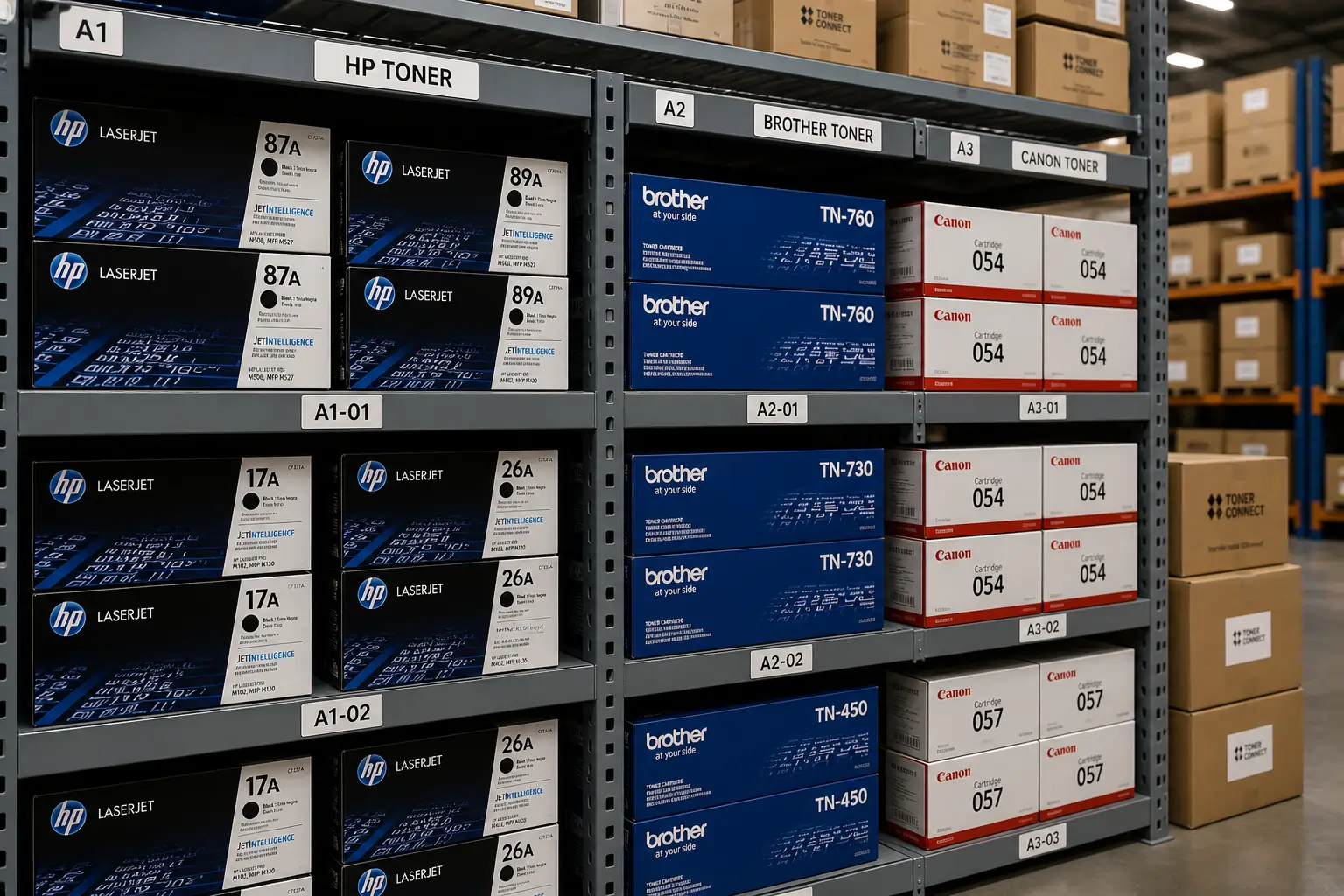
  • Climate Control: This is a huge one for sensitive products like ink. Ink cartridges can be ruined by extreme heat or cold. That specialized HVAC system isn't a luxury; it's a necessary expense to protect your investment.

Picture a business in Arizona trying to store inkjet cartridges. Without powerful air conditioning, the ink would dry up, and the product would be worthless. That hefty summer AC bill is a direct and non-negotiable storage cost.

Inventory Service Costs: Managing and Protecting Your Goods

Next up are the costs of actually managing and protecting your stock. These expenses are less about the physical building and more about the people, systems, and protections you have in place.

This category is a mix of a few things:

  • Insurance: You absolutely need insurance to cover catastrophic losses from things like fire, floods, or a major break-in. Those premiums are a direct service cost.
  • Taxes: In many places, you're on the hook for property taxes on the value of the inventory you're holding. It's a cost of doing business that's directly tied to how much stock you have.
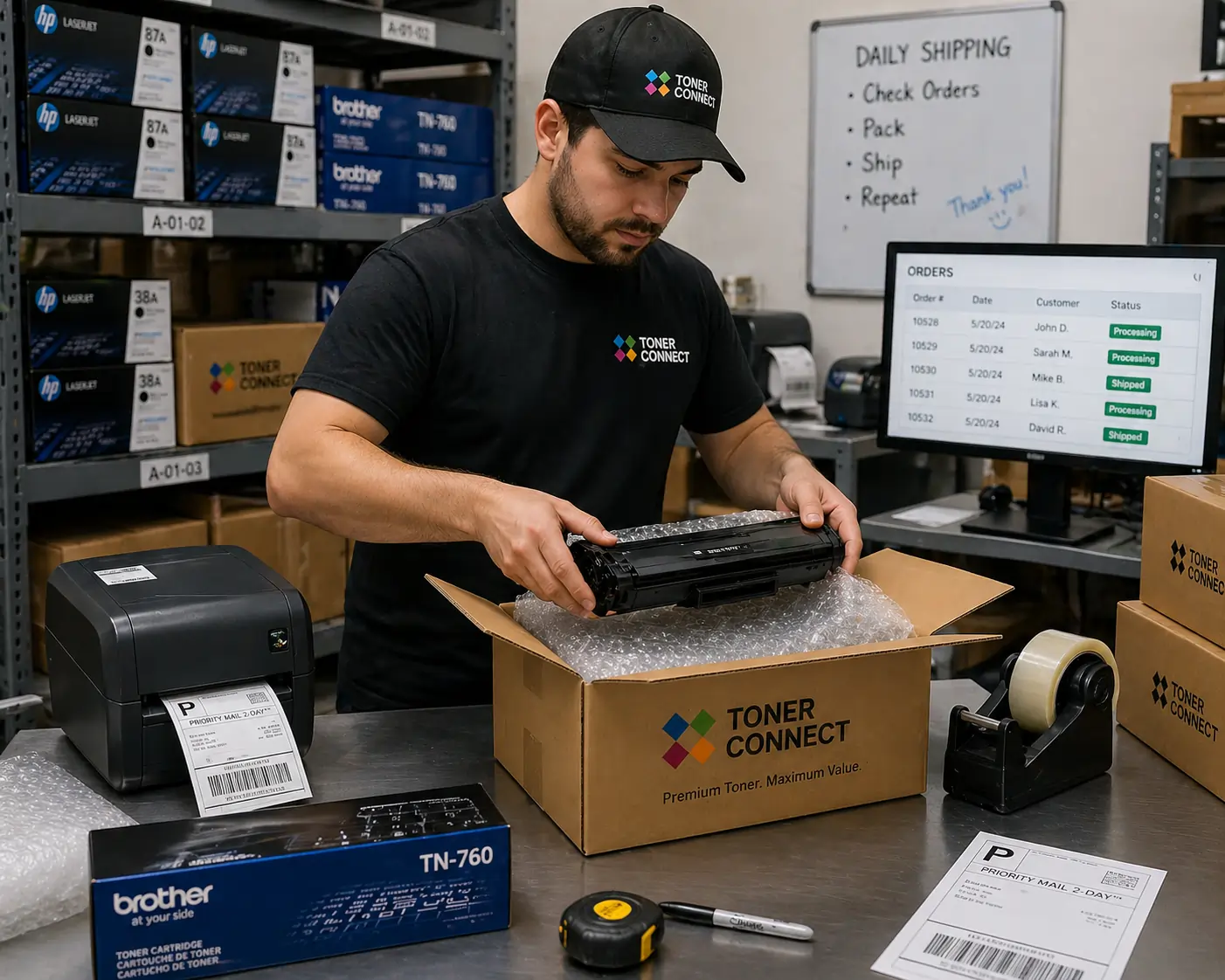
  • Handling and Labor: This includes the salaries for your warehouse crew—the people receiving shipments, organizing shelves, and picking orders. If you're using inventory management software, the subscription fees belong here, too.

For example, a reseller sitting on a large inventory of high-value OEM toner cartridges will naturally pay a higher insurance premium to cover the replacement cost. That's a fixed part of their carrying cost calculation.

Inventory Risk Costs: When Good Stock Goes Bad

Finally, we have to account for inventory risk—the money you lose when products are lost, damaged, or simply become worthless while you own them. This is often the most frustrating and unpredictable piece of the puzzle.

Risk costs come from three main culprits:

  • Obsolescence: This is the silent killer. It happens when a product just becomes outdated. The classic example is when a new printer model comes out, making the toner for the old model instantly less valuable. Suddenly, you're forced to sell that old stock at a steep discount, if you can sell it at all.
  • Shrinkage: This is the industry catch-all for inventory that simply vanishes. It could be due to theft (from employees or outsiders), simple administrative mistakes, or even fraud. A seemingly small shrinkage rate of 1-2% can translate into huge losses over a year.
  • Damage: It happens. A box gets dropped, a pallet gets crushed. When products are damaged in the warehouse, they often become unsellable.

Imagine a distributor with thousands of toner cartridges. A few get damaged during handling each month. One specific toner model becomes obsolete when its compatible printer is discontinued. These aren't just unfortunate events; they are real financial losses that must be factored into your inventory risk.

Putting the Carrying Cost Formula Into Practice

Knowing the theory is one thing, but the real magic happens when you translate those concepts into a hard number for your own business. The formula itself is pretty simple: you just add up all your holding costs and divide that sum by the total value of your inventory. The result is a percentage that tells you exactly how much of your inventory's value you're spending just to let it sit on a shelf.

The basic formula looks like this:

Carrying Cost % = (Total Holding Costs / Total Inventory Value) * 100

Let's run through a real-world example to see how this works. Imagine we're running an online store that specializes in toner and ink cartridges.

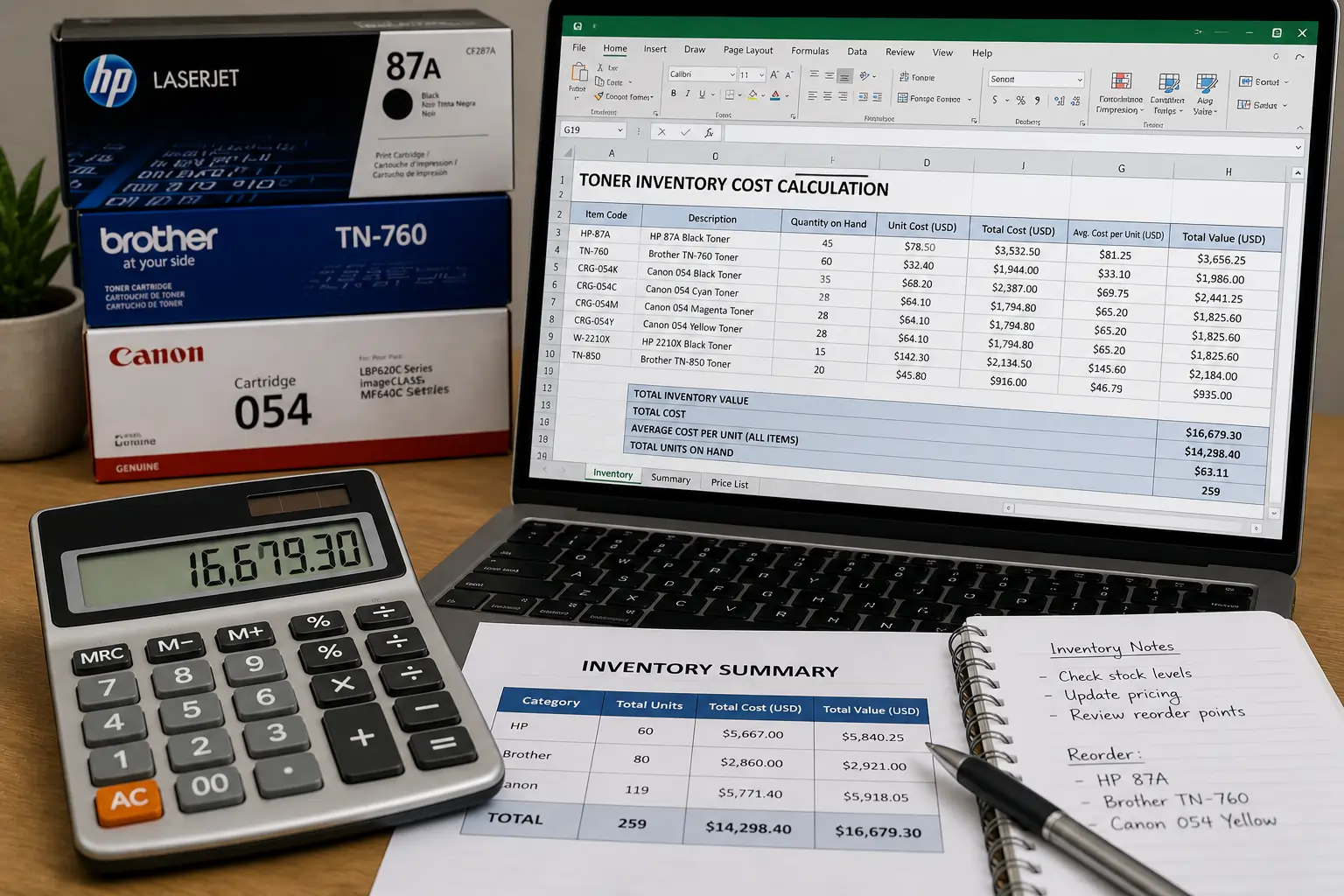
Building a Spreadsheet for an Ink and Toner Retailer

To get our final number, we first need to pin down realistic dollar values for each cost component over a full year. Let's say our fictional business, "PrintPerfect Supplies," has an average inventory value of $500,000 sitting in the warehouse at any given time.

Now, we can start tallying up the individual holding costs.

  • Capital Costs: The owner of PrintPerfect took out a $100,000 business loan at an 8% interest rate to buy some of the inventory. That's a fixed cost of $8,000 per year. The other $400,000 is cash that’s tied up—money that could have been earning a return elsewhere. Using a conservative 5% opportunity cost, that's another $20,000. Total capital cost comes to $28,000.
  • Storage Costs: The business rents a small, climate-controlled warehouse for $2,500 a month, which is $30,000 a year. Utilities, especially the air conditioning needed to keep sensitive ink cartridges from drying out, add another $500 per month ($6,000 annually). That brings total storage costs to $36,000.
  • Service Costs: Annual insurance premiums for the warehouse and its contents run $4,000. The business also pays $2,000 in property taxes on the inventory itself. A part-time warehouse employee who handles receiving and packing earns $25,000. So, the total service cost is $31,000.
  • Risk Costs: Looking at past data, about 1% of stock is lost to shrinkage (think theft or damage), which works out to $5,000. On top of that, 2% of the inventory becomes obsolete when printer models are discontinued, costing another $10,000. This gives us a total risk cost of $15,000.

This infographic is a great way to visualize how all these different costs add up.

Infographic illustrating holding costs, showing capital, storage, service, and risk as key components.

As you can see, every piece of the puzzle—from the interest on your loan to the box that gets damaged in the back corner—contributes to the total financial weight of holding that stock.

Calculating the Final Carrying Cost Percentage

With all our figures laid out, we can finally get our total.

Total Holding Costs = $28,000 (Capital) + $36,000 (Storage) + $31,000 (Service) + $15,000 (Risk) = $110,000

Now we just plug that total back into our formula:

Carrying Cost % = ($110,000 / $500,000) * 100 = 22%

This number is the big reveal. It tells the owner of PrintPerfect Supplies that for every single dollar's worth of inventory on the shelf, they're spending another 22 cents per year just to keep it there.

For PrintPerfect Supplies, a 22% carrying cost on $500,000 of inventory is a $110,000 annual expense. That’s a massive hit to the bottom line, coming from nothing more than holding onto unsold products.

This single calculation uncovers a huge operational expense that was probably flying under the radar. It’s a powerful piece of data you can use to make smarter decisions, like ordering smaller batches of slow-moving cartridges or looking for better financing.

For many toner resellers, simply managing stock levels better can make a huge difference. You might want to explore the benefits of working with a reliable partner to streamline your supply chain and learn more about how we can help at https://tonerconnect.net/learn-more-distributors.

Once you have a firm grip on your carrying costs, you can take your financial analysis even further. A great next step is to use a tool like a Shopify Profit Margin Calculator to see exactly how these holding expenses are eating into the profitability of each product you sell.

Practical Ways to Slash Your Inventory Carrying Costs

A warehouse worker scans inventory with a handheld device amidst pallets and boxes, text says 'Reduce holding Costs'.

Running the numbers on your inventory carrying costs is a real eye-opener. But that calculation is just the starting point. The real payoff comes from using that insight to make smarter decisions that boost your bottom line. Once you have a firm grip on what your inventory is really costing you, you can start chipping away at those expenses.

Knocking that percentage down, even by just a few points, can free up a surprising amount of cash. These aren't just abstract concepts; they are field-tested strategies that smart businesses use to become more efficient and profitable. It’s all about running a leaner, more responsive operation guided by what your sales data is telling you.

Try Leaner Inventory Models

The most direct way to cut holding costs is simply to hold less inventory. A Just-in-Time (JIT) model is the classic example. Instead of stockpiling products, you order supplies from vendors only as they're needed to fulfill customer orders. It's a big shift in thinking.

A small online electronics store might use JIT by partnering with a large distributor. When a customer orders a printer, the store places a corresponding order with the distributor, who then ships it directly to the customer (dropshipping). This way, the store never has to pay for warehouse space or insurance for that printer.

This approach drastically cuts your storage and capital costs because your money isn't just sitting on a shelf gathering dust. The catch? JIT demands an incredibly reliable supply chain and rock-solid communication with your suppliers. Any hiccup can lead to a stockout, so it's not a fit for every business.

Use Modern Forecasting Software

Over-ordering is one of the biggest culprits behind high carrying costs, and it usually happens when you're relying on gut feelings instead of good data. Modern inventory forecasting software takes the guesswork out of the equation. It digs into your past sales, spots seasonal patterns, and helps you predict future demand with far greater accuracy.

These tools help you dodge the expensive mistake of loading up on products that will just sit there for months. For example, the software might notice that sales for a particular black toner cartridge spike every August during back-to-school season. It will then recommend a larger order in July to meet demand, while suggesting smaller orders for the rest of the year. This keeps your warehouse from getting clogged with slow-movers and slashes your risk of obsolescence—a huge deal for items with a limited shelf life, like certain ink and toner cartridges.

Key Takeaway: Forecasting isn't a crystal ball. It’s about minimizing uncertainty so you can make purchasing decisions with confidence. This data-driven approach is one of the surest ways to cut carrying costs.

Know When to Liquidate Obsolete Stock

Clinging to obsolete inventory is like paying rent on garbage. It’s a constant financial leak that will never turn into revenue. The best move is often to strategically liquidate that dead stock, even if it means selling it for less than you'd like.

Think about it: the cost of letting an outdated toner cartridge occupy shelf space for another year almost always outweighs the one-time loss you'd take by selling it at a discount today. For businesses sitting on surplus OEM supplies, you can easily sell your unused toner cartridges for cash and immediately wipe out all the holding costs tied to them.

Optimize Your Warehouse and Supplier Agreements

Finally, don't overlook the nuts and bolts of your operation. Small adjustments to your physical space and your vendor relationships can lead to big savings.

  • Rethink Your Warehouse Layout: Organize your space based on sales velocity. Keep your best-sellers close to the packing stations to reduce labor and handling time. A practical example would be placing the most popular HP and Brother toner cartridges on shelves right by the shipping desk, while specialty or less common cartridges are stored further back. Every step you can save for your team trims down your service costs.
  • Renegotiate with Suppliers: Have a conversation with your main suppliers about payment terms. If you can extend your payment cycle from 30 to 60 days, it gives your cash flow more breathing room and eases the strain on your capital, effectively lowering your capital costs.

Got Questions About Inventory Carrying Costs? Let's Clear Them Up.

Even after you nail down the formula, a few practical questions almost always pop up the first time you try to calculate your carrying costs. Getting a handle on these details is what separates a theoretical number from a metric you can actually use to make smarter business decisions.

Let's walk through some of the most common points of confusion.

What’s a Good Inventory Carrying Cost Percentage?

Everyone wants a magic number, but the truth is, it varies. A healthy benchmark for most retail and e-commerce businesses is somewhere between 20% and 30% of your total inventory value.

Of course, your industry makes a huge difference. A grocery store with razor-thin margins and products that fly off the shelves might hover near the low end of that range. On the other hand, a specialty shop selling high-end, slow-moving items like luxury watches could easily see their costs push past 30%.

The real goal isn't just to match an industry average. A "good" percentage is one you are actively working to lower. If that number is trending downward over time, you know your efforts are paying off.

How Often Should I Be Calculating This?

For most businesses, running the numbers once a year is perfectly fine. It gives you a solid, high-level view for annual planning and financial reporting.

But if your business deals with major seasonal swings or your inventory levels are constantly in flux, you should absolutely switch to a quarterly calculation. For example, a retailer selling school supplies would calculate this quarterly to see how the "back-to-school" rush impacts their holding costs versus the slower spring quarter. This gives you much more current data, allowing you to react quickly when storage costs spike or you notice a sudden increase in obsolete stock. You can then make faster decisions about running a sale or liquidating before those costs get out of hand.

My Two Cents: Calculating quarterly helps you spot trouble before it becomes a disaster. A sudden jump in your carrying cost from Q1 to Q2 is a major red flag. It’s far better to investigate that right away than to wait until the end of the year to find out you've been bleeding cash for months.

Can My Inventory Management Software Do This for Me?

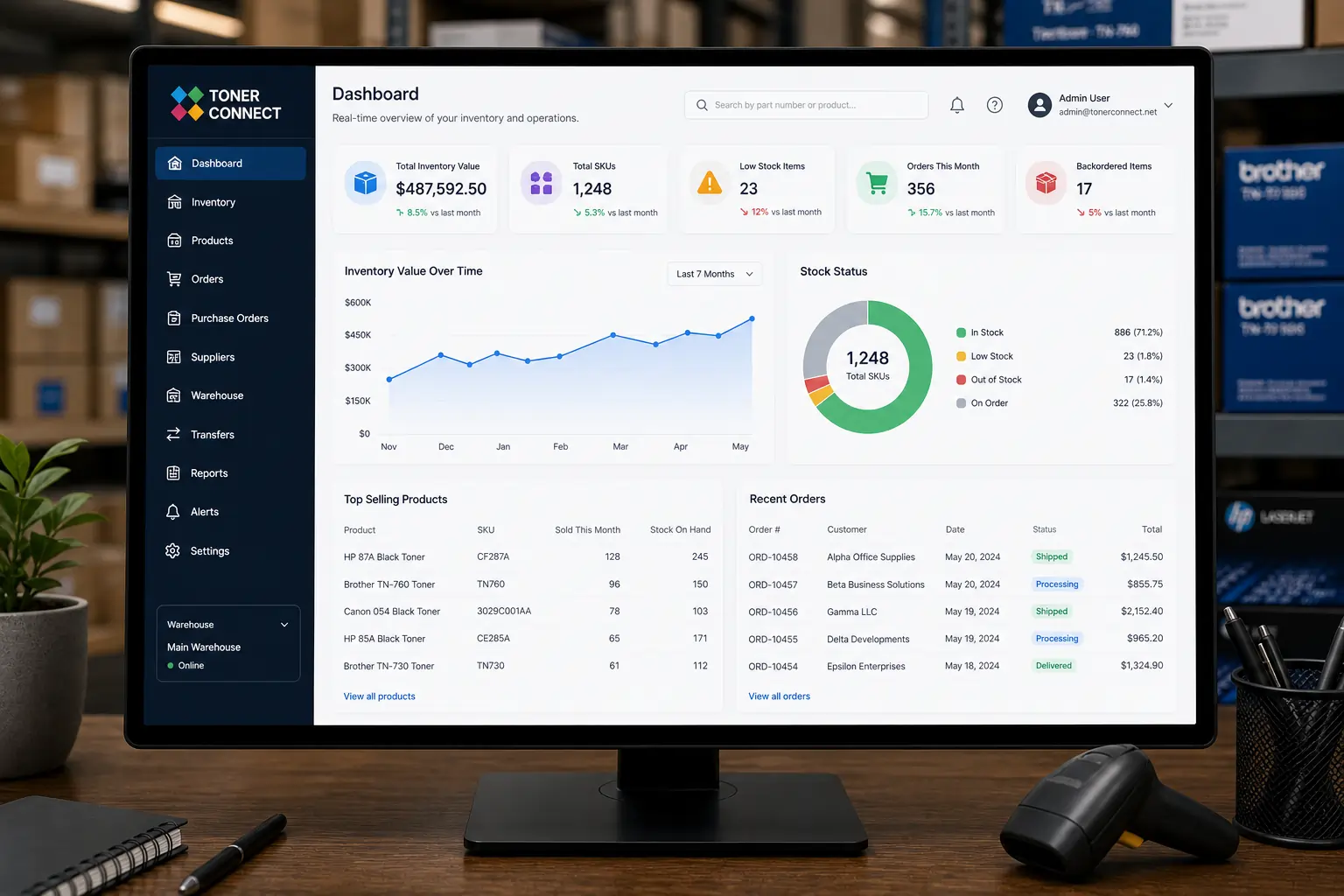
Yes, to an extent. Many modern inventory management systems and ERPs can automate a good chunk of the math. They're great at tracking your average inventory value in real-time and can often pull direct costs like rent and utilities from your accounting software.

They can't do everything, though. You'll almost always have to manually input the more nuanced figures, like your capital cost percentage, insurance rates, and estimated shrinkage. Think of the software as a powerful calculator that centralizes the data and prevents human error—but you still need to feed it the right information.

Is Opportunity Cost a Real Expense I Need to Worry About?

Absolutely. While you won't see "opportunity cost" as a line item on your profit and loss statement, it's a very real economic cost that can silently drain your business. It’s the potential profit you gave up because your cash was tied up in products sitting on a shelf.

Just think about it: that money could have been used for something else. A game-changing marketing campaign? Developing a new product? Or even just earning interest in a high-yield savings account.

Ignoring it gives you a dangerously incomplete picture of what it truly costs to hold inventory. This is often why businesses end up with way too much capital stuck in the warehouse. For more answers to common business questions, you can check out our comprehensive FAQ page for additional insights.

Leave a Reply

Your email address will not be published. Required fields are marked *

Skip to toolbar