
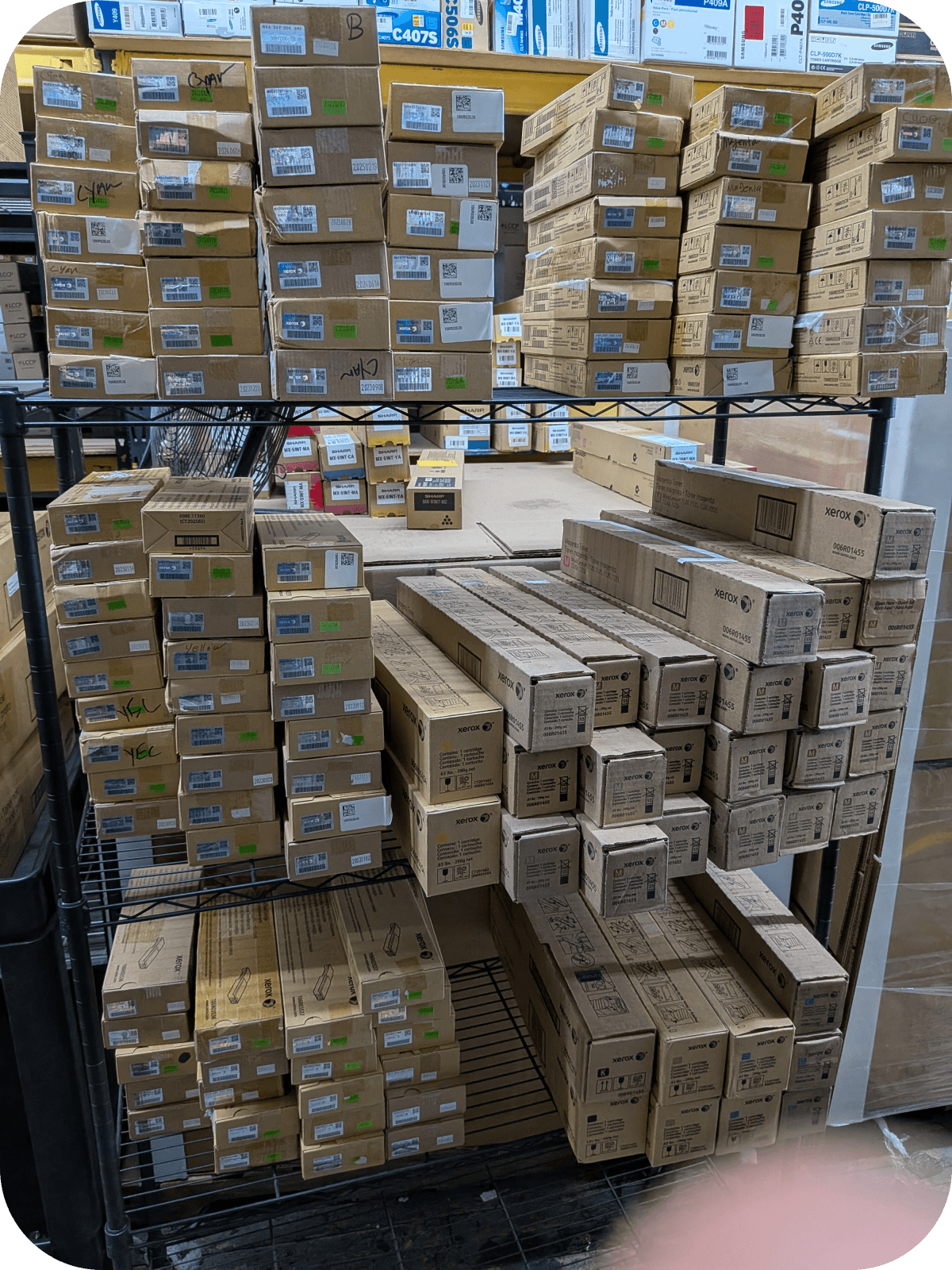
To avoid counterfeit toner, first buy from the manufacturer or an authorized supplier. Next, verify the seller, compare prices, inspect factory seals, and authenticate security codes when available. In addition, keep invoices and photographs so suspicious products can be returned, investigated, and reported before they reach a printer.
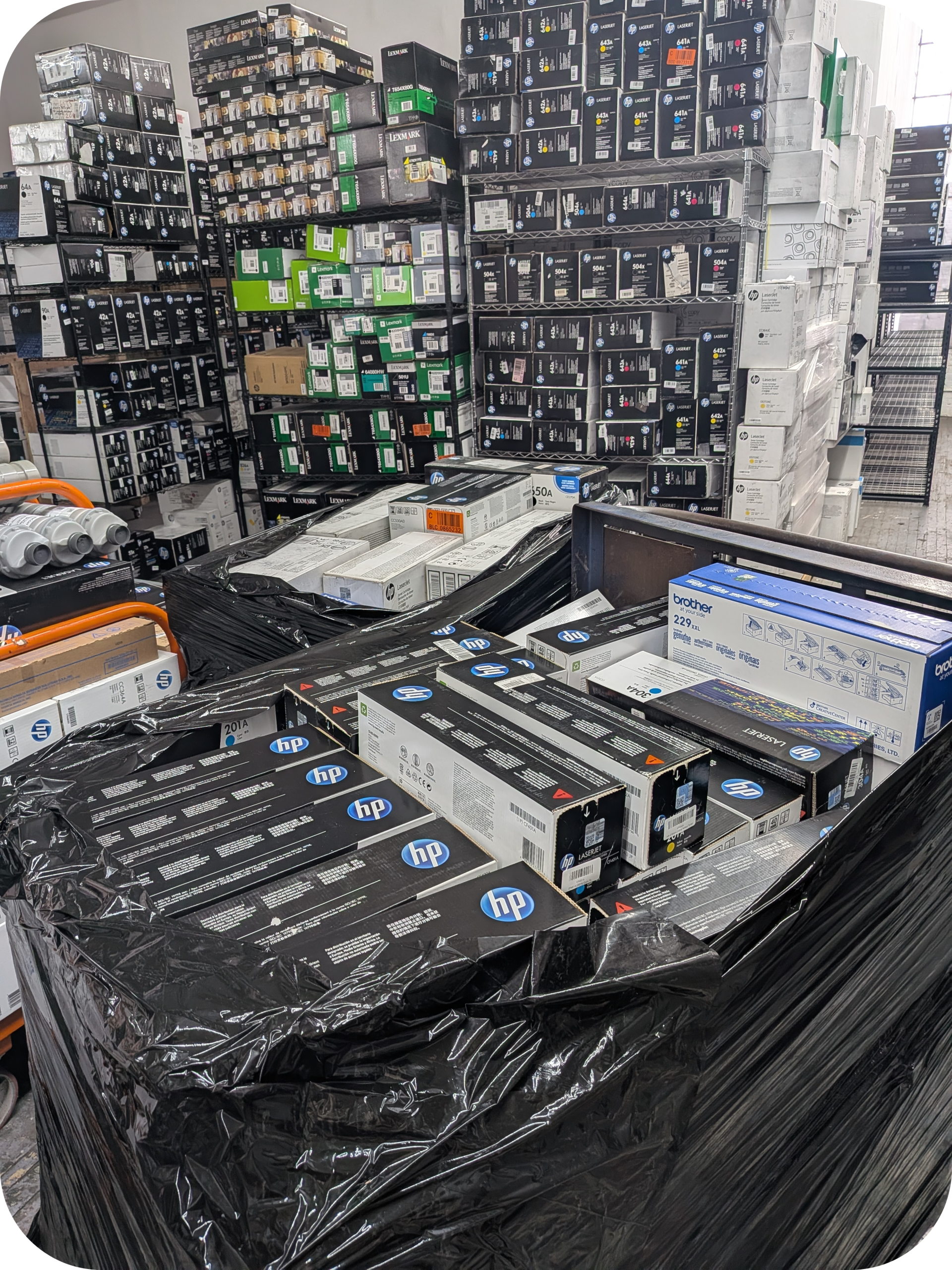
What Is Counterfeit Toner?
Counterfeit toner is a product made or packaged to mislead buyers into believing it is a genuine cartridge from the original printer manufacturer.
For example, a counterfeit product may copy a manufacturer’s name, logo, cartridge design, security label, or packaging. As a result, buyers may believe they are purchasing Original HP, Canon Genuine, Brother Genuine, or Genuine Xerox toner when the manufacturer did not produce it.
However, counterfeit toner should not be confused with a compatible or remanufactured cartridge that is accurately labeled.
| Cartridge Type | Description |
|---|---|
| Genuine OEM | Produced and branded by the original printer manufacturer |
| Compatible | Produced by a third party for use with a particular printer |
| Remanufactured | A used cartridge that has been cleaned, repaired, and refilled |
| Refilled | A cartridge that has received additional toner |
| Counterfeit | A product falsely presented as genuine OEM toner |
In other words, a third-party cartridge is not automatically counterfeit. Instead, the problem occurs when its origin, condition, or brand is deliberately misrepresented.
Why Is Counterfeit Toner Difficult to Identify?
Counterfeit toner can be difficult to identify because the cartridge, box, seals, and security labels may closely imitate genuine packaging.
Some copies contain obvious printing errors. However, others require a closer inspection of serial numbers, barcodes, seals, holograms, and authentication codes.
For instance, possible warning signs include:
- Unusually low pricing for supposedly genuine OEM toner
- Blurry or poorly aligned logos
- Spelling or grammatical errors
- Colors or fonts that differ from normal packaging
- Missing security labels
- Damaged or replaced seals
- Barcodes covered by stickers
- Serial numbers removed from the box
- Loose cartridges sold without original packaging
- Packaging that appears opened and resealed
- Product descriptions that avoid the word “genuine”
- Invoices that do not identify the cartridge manufacturer
Nevertheless, one warning sign does not always prove that a product is counterfeit. Therefore, buyers should consider the seller, price, packaging, documentation, and authentication features together.
Verify the Supplier Before Ordering
The most effective counterfeit check begins before the cartridges are shipped.
Buy From the Manufacturer or an Authorized Source
First, consider purchasing directly from the manufacturer or an authorized reseller.
This approach reduces uncertainty about the product’s supply chain. In addition, authorized sellers may provide better documentation and manufacturer support if questions arise.
If a supplier claims to be authorized, ask for:
- Its legal business name
- A manufacturer partner or reseller number
- A current authorization certificate
- A link to the manufacturer’s dealer directory
- Written confirmation that the products are genuine OEM
- An invoice identifying the manufacturer and part number
Afterward, verify the authorization independently. Do not rely only on a manufacturer logo or partner badge displayed on the seller’s website.
Identify the Actual Marketplace Seller
Next, identify the actual merchant when purchasing through an online marketplace.
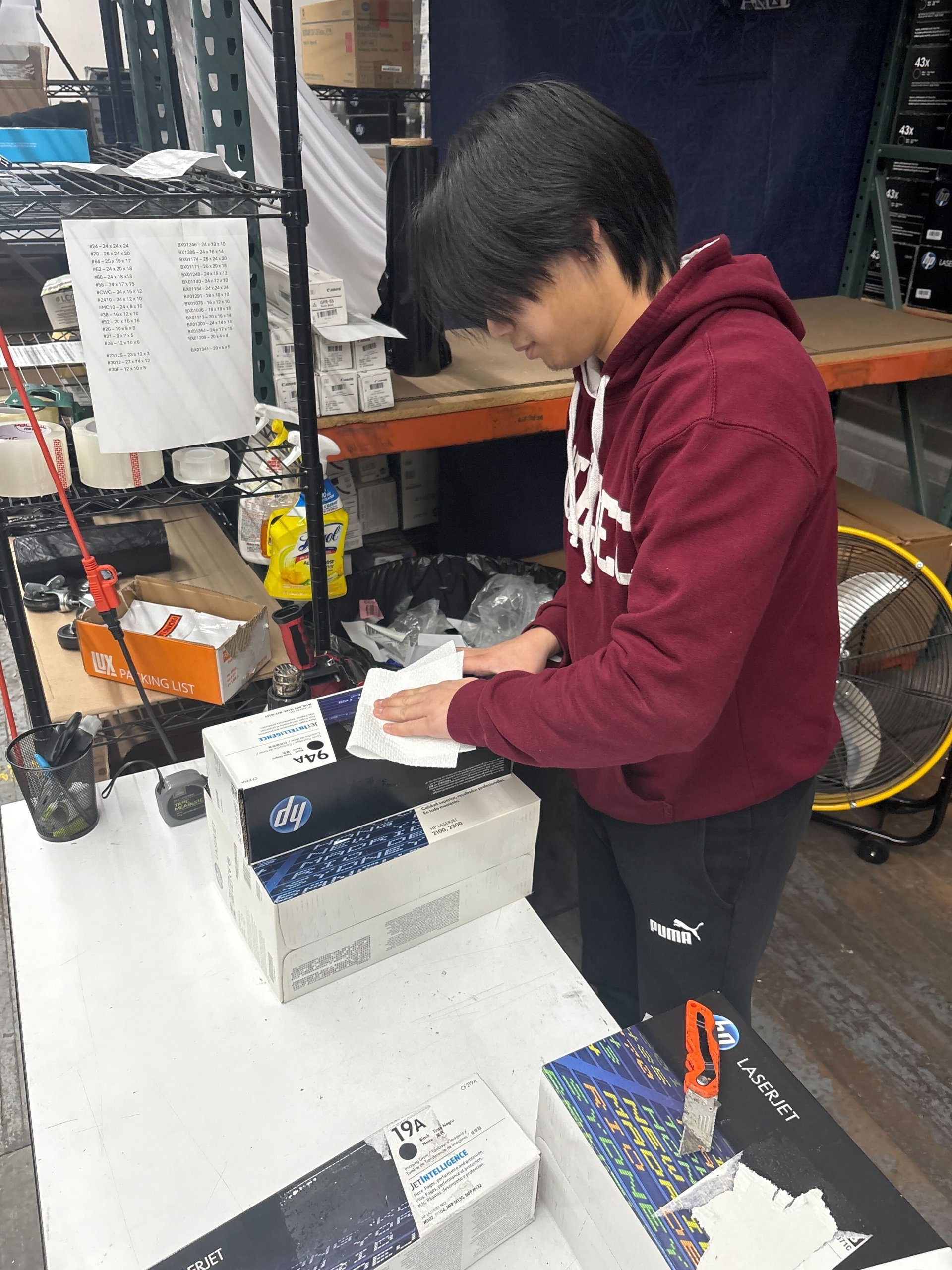
Although the marketplace may be familiar, the toner could be supplied by an independent seller. Therefore, review that seller’s business information, recent feedback, location, return terms, and product photographs.
Also, keep the payment within the marketplace’s approved checkout process. Otherwise, you may lose protections that would have applied to the original transaction.
Compare the Price With Established Sellers
An unusually low OEM toner price should prompt additional questions.
Of course, clearance inventory, damaged packaging, and discontinued products may sometimes sell for less. However, the supplier should explain the condition and reason for the lower price.
Ask:
- Why is the price lower?
- Is the cartridge factory sealed?
- Is the retail box damaged?
- Is it old or discontinued inventory?
- Is it an original manufacturer product?
- Can you provide photographs of the actual box?
- Can you confirm authenticity in writing?
Price alone does not prove that toner is counterfeit. Nevertheless, a large unexplained difference deserves additional inspection.
Request the Exact Part Number
Before ordering, request the complete manufacturer part number.
A reliable supplier should confirm the:
- Printer manufacturer
- Printer model
- Cartridge number
- Manufacturer part number
- Toner color
- Standard or high-yield version
- Quantity
- Regional compatibility
Furthermore, ask the supplier not to make substitutions without written approval. A compatible cartridge should never replace an ordered OEM product without the buyer’s knowledge.
Review the Return Policy
Finally, review how the supplier handles products suspected of being counterfeit.
Before paying, confirm:
- The return period
- Whether an opened cartridge can be returned
- Who pays return shipping
- Whether restocking fees apply
- How authenticity disputes are reviewed
- Whether a refund or replacement is available
- What photographs or documents are required
In addition, save a copy of the policy and all supplier communications. That documentation may become important if the product does not match its description.
Inspect Every Shipment Before Opening It
Every OEM toner shipment should be inspected while the manufacturer boxes are still sealed.
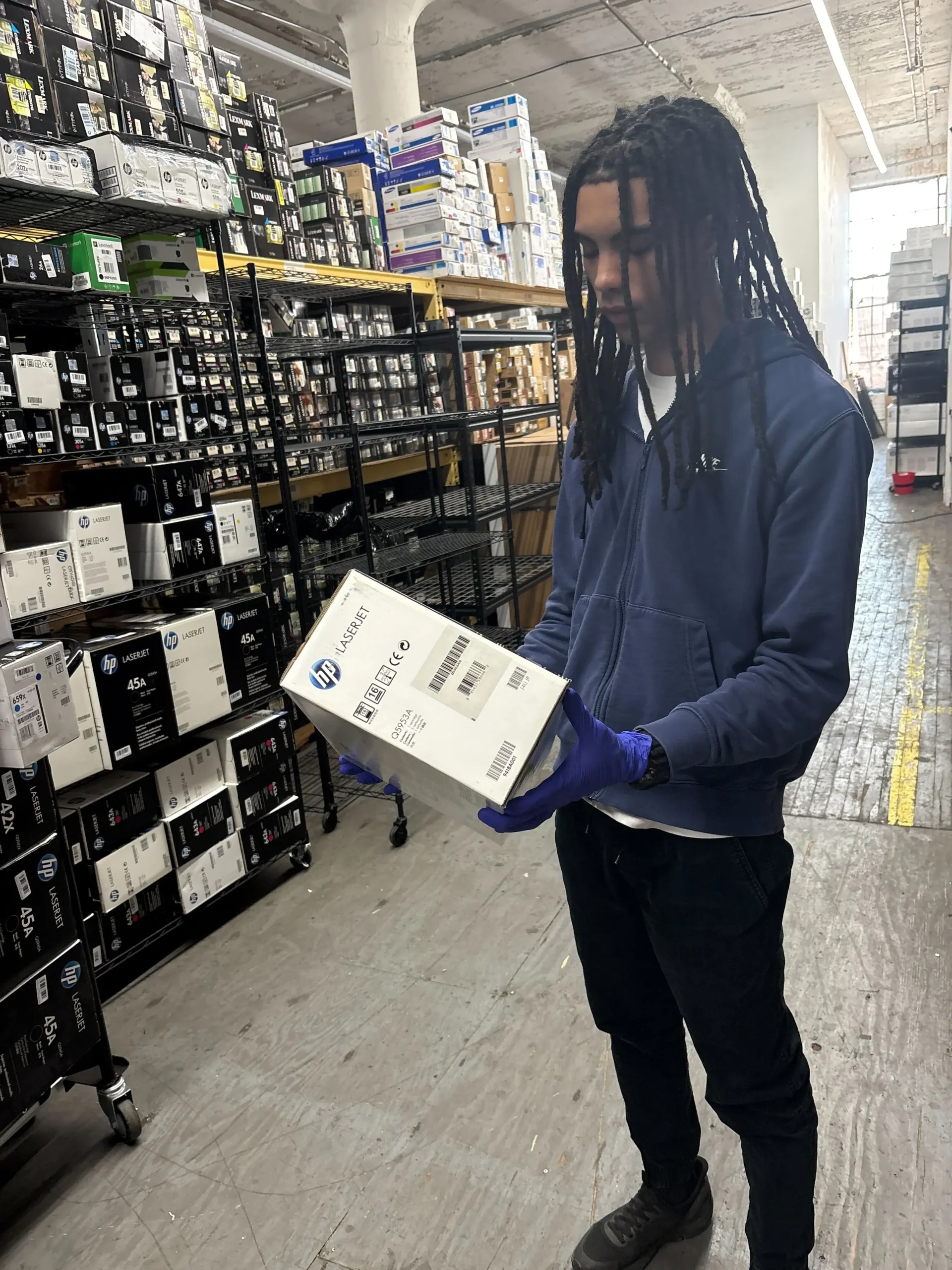
First, compare the delivery with the purchase order. Then, complete the following receiving checklist:
- Confirm the manufacturer and part number.
- Check that the quantity and colors are correct.
- Inspect the outer shipping carton for damage.
- Photograph the unopened manufacturer boxes.
- Look for torn, missing, or replaced seals.
- Check security labels and authentication features.
- Compare the packaging with known genuine stock.
- Record serial numbers when available.
- Review the invoice and packing slip.
- Quarantine any questionable cartridges.
Most importantly, do not install suspicious toner simply to see whether it works. Opening or using it may make the product harder to return. In addition, installation could remove evidence needed for an authenticity review.
Check Manufacturer Security Features
Security features differ by brand, packaging generation, and region. Therefore, buyers should always follow the manufacturer’s current instructions.
HP Toner
HP advises customers to inspect the holographic features on its security labels and scan the label’s QR code to validate the product. However, older valid label designs may still appear in the market, so a different label does not automatically prove counterfeiting.
For HP toner, check:
- The security label
- Holographic movement when the box is tilted
- The QR-code validation result
- Tamper-evident packaging
- The cartridge and box part numbers
- Signs that labels or seals were replaced
In addition, use HP’s official anti-counterfeit website rather than an unfamiliar verification page provided by the seller.
Brother Toner
Brother provides label, mobile, and web-based authentication options for supported supplies.
Specifically, Brother instructs buyers to examine the security label, compare the hologram, and use the Data Matrix code or product ID for further verification.
When checking Brother toner:
- Locate the security label
- Inspect the holographic effect
- Scan the supported code
- Confirm the verification result
- Compare the box ID with the manufacturer’s system
However, a failed scan does not always prove that the product is counterfeit. For example, the code may be damaged, unreadable, or affected by a technical problem. Therefore, contact Brother for confirmation if the result is unclear.
Canon Toner
Canon instructs customers to look for its anti-counterfeiting hologram and inspect the printing quality of the Canon and Canon Genuine logos.
According to Canon, the hologram image should change when the box is tilted. In addition, blurry, bleeding, or misaligned logos may indicate questionable packaging.
Examine:
- The Canon hologram
- The Canon Genuine logo
- Logo alignment and sharpness
- Box printing quality
- Factory packaging
- Product and printer compatibility information
Again, evaluate these features together rather than relying on one detail.
Xerox Toner
Xerox directs buyers to check the authentication label on the outer toner box.
Its guidance describes labels with a unique serial number, barcode, and viewing-angle effects. By contrast, removed, torn, or cut-out labels may indicate that the product has been altered.
Check the box for:
- A Xerox authentication label
- A unique serial number
- A barcode
- The expected viewing-angle effect
- Evidence that the label was removed or altered
- Damage around the labeled area
If the label appears suspicious, contact Xerox before opening or installing the cartridge.
What Should You Do if Toner Looks Counterfeit?
You should stop using the cartridge, preserve the evidence, and contact both the seller and manufacturer.
First, follow these steps:
- Do not install the cartridge. Keep the toner and packaging in their current condition.
- Separate the shipment. Prevent questionable cartridges from entering normal inventory.
- Take photographs. Capture every side of the box, seals, labels, barcodes, and shipping carton.
- Save all records. Keep the listing, quotation, invoice, payment record, tracking information, and messages.
- Contact the seller. Request a written explanation, replacement, or refund.
- Contact the manufacturer. Use its official anti-counterfeit or support channel.
- Monitor dispute deadlines. Contact the payment provider promptly if the seller does not resolve the issue.
- Notify internal purchasing staff. Block additional orders while the product is reviewed.
Meanwhile, do not accuse a supplier publicly before the product has been evaluated. Packaging differences may result from legitimate regional versions, design updates, or older inventory. Therefore, manufacturer verification is an important step.
Create a Counterfeit-Toner Receiving Policy
Businesses with recurring toner orders should use the same inspection process for every delivery.
For example, a basic policy can assign responsibilities to purchasing, receiving, IT, and accounting teams:
| Role | Responsibility |
|---|---|
| Purchasing | Approve suppliers and document OEM requirements |
| Receiving | Inspect boxes, seals, quantities, and labels |
| IT or print team | Confirm compatibility and investigate printer alerts |
| Accounts payable | Match invoices to approved products and prices |
| Inventory staff | Store cartridges securely and track distribution |
In addition, maintain a list of approved suppliers. Require written authorization before an employee purchases toner elsewhere. As a result, the business can reduce off-contract orders from unknown marketplace sellers.
For larger deliveries, inspect a sample from every model and retain photographs with the receiving record. If one box appears suspicious, review the rest of the shipment before distributing it.
Protect Unused OEM Toner After Purchase
Genuine toner can lose resale or return value when its seals, authentication labels, or manufacturer boxes are damaged.
Therefore, store cartridges indoors in a clean, dry location. Also, avoid attaching inventory stickers, shipping labels, or tape directly to retail boxes. Instead, place warehouse labels on shelves, bins, or removable outer packaging.
If printing needs change, unopened OEM cartridges may still qualify for resale. We purchase eligible original-brand toner that remains sealed in its manufacturer packaging. However, we do not buy cartridges with broken seals or missing authentication labels. We also do not purchase used, refilled, remanufactured, or compatible products.
You can submit eligible surplus toner for a quote using model numbers, an inventory list, or clear photographs.
Make Authentication Part of Every Purchase
Ultimately, avoiding counterfeit toner requires more than checking a box after it arrives.
First, approve the supplier and confirm the product description. Next, verify part numbers, pricing, and return terms. Then, inspect sealed deliveries and use official manufacturer authentication tools.
Finally, preserve invoices, photographs, and supplier communications. As a result, your business will have a consistent process for identifying suspicious toner before it reaches a printer.