
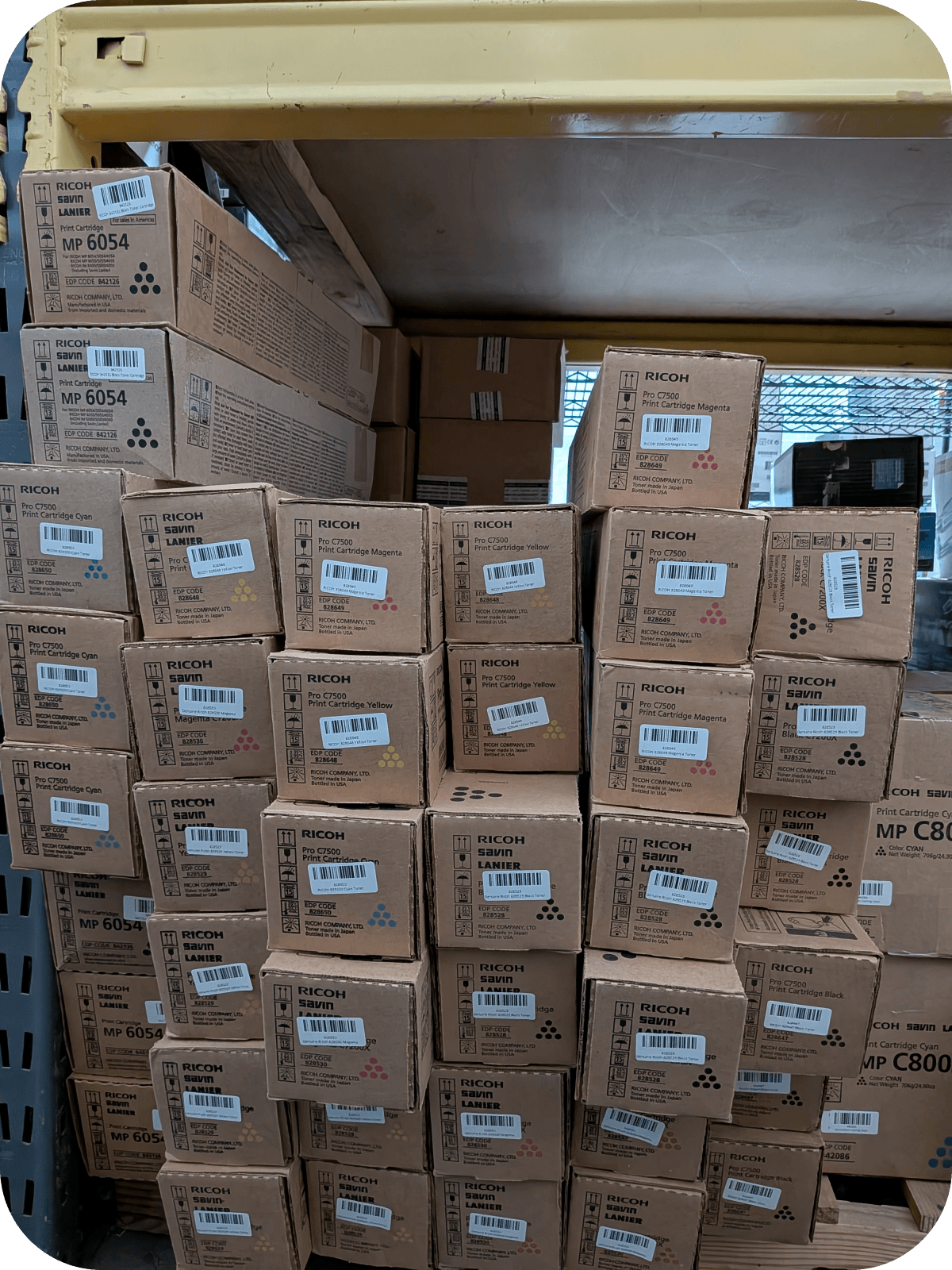
When choosing a toner cartridge supplier, prioritize accurate product identification, proven authenticity, dependable inventory, fair total pricing, and clear return terms. The best supplier should consistently deliver the correct cartridges, explain whether products are OEM or third-party, and provide responsive support when an order is delayed, damaged, incompatible, or defective.
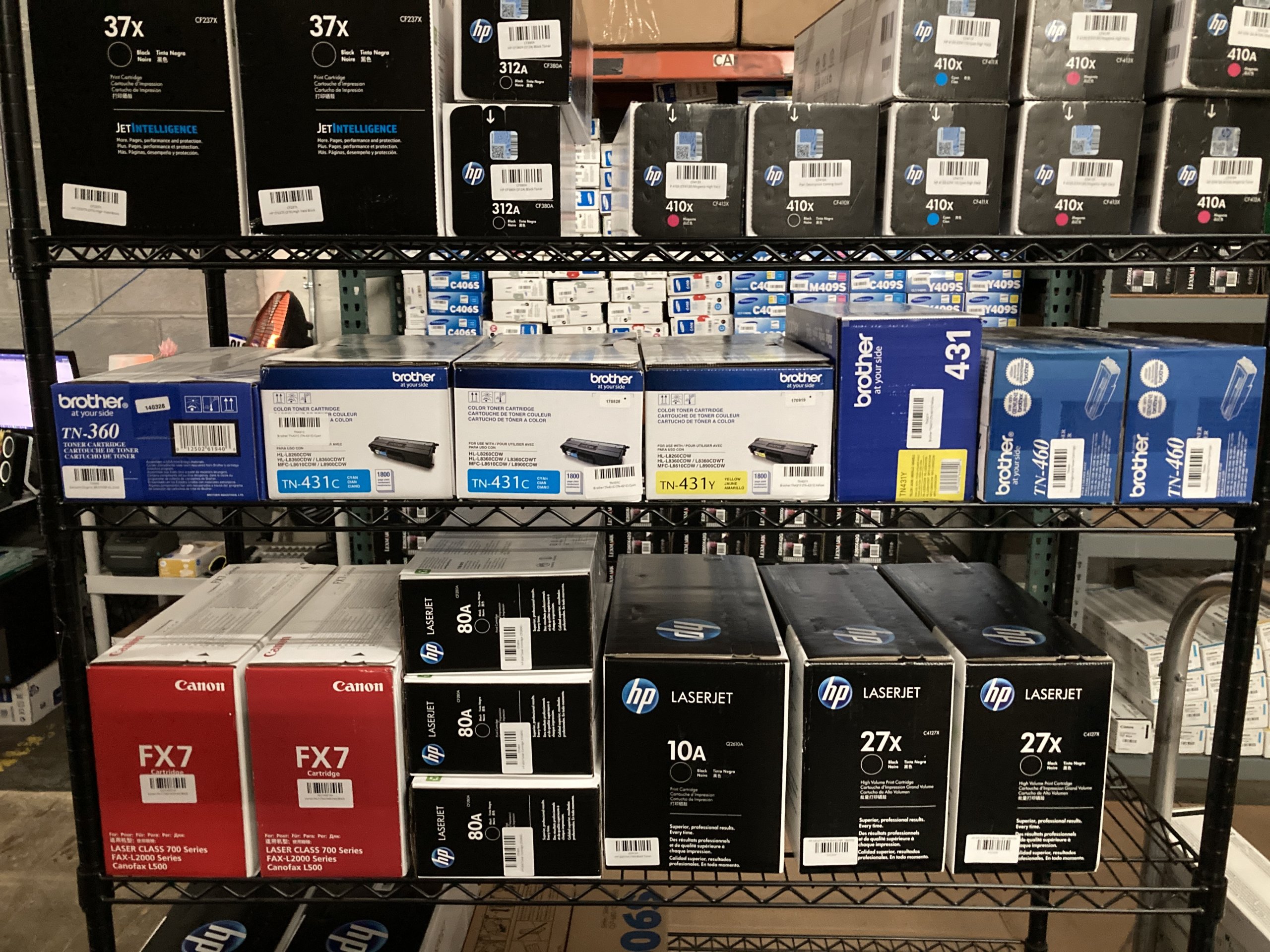
Nine Checks to Complete Before Ordering
A structured review makes it easier to compare suppliers on evidence instead of advertising.
Use the following nine checks for a new supplier or when reviewing an existing vendor.
1. Confirm Exactly What the Supplier Sells
The supplier should clearly identify every cartridge as OEM, compatible, remanufactured, refilled, open-box, or used.
These terms describe different products:
- OEM toner is produced by the original printer manufacturer.
- Compatible toner is a new third-party cartridge designed for a particular printer.
- Remanufactured toner is a previously used cartridge that has been cleaned, repaired, and refilled.
- Refilled toner has received additional toner but may not have been fully rebuilt.
- Open-box toner has packaging that is no longer factory sealed.
Do not assume terms such as “premium,” “OEM-style,” or “equivalent to OEM” mean the product is an original manufacturer cartridge. Ask the supplier to identify the manufacturer and condition in writing.
2. Check Product Authenticity and Traceability
A reliable supplier should be able to explain where its OEM toner comes from and provide proper purchase documentation.
Check the packaging for:
- Intact manufacturer seals
- Correct logos and colors
- Readable part numbers
- Security or authentication labels
- Consistent barcodes
- Signs of removed or replaced labels
- Unusual tape or altered packaging
- Matching information on the invoice
HP provides instructions for checking holographic security labels and validating certain toner supplies through a QR code. These features can help customers evaluate Original HP products.
Authentication features should be considered together with the seller’s identity, product condition, invoice, and price. A single label should not be your only verification method.
3. Require Precise Compatibility Information
The supplier should verify the complete printer model and cartridge part number before processing the order.
Cartridges with similar names or packaging may have different yields, colors, chips, or regional configurations. A supplier should not rely on a broad description such as “Canon color toner” or “HP LaserJet cartridge.”
Provide:
- Printer brand
- Complete printer model
- Cartridge number
- Full manufacturer part number
- Required color
- Standard or high-yield preference
- Country or region where the printer was purchased
For a business order, send the information in a spreadsheet and request written compatibility confirmation. This creates a clear record if the wrong cartridge arrives.
4. Verify That Inventory Is Actually Available
The supplier should distinguish between products physically in stock and products that must be ordered from another distributor.
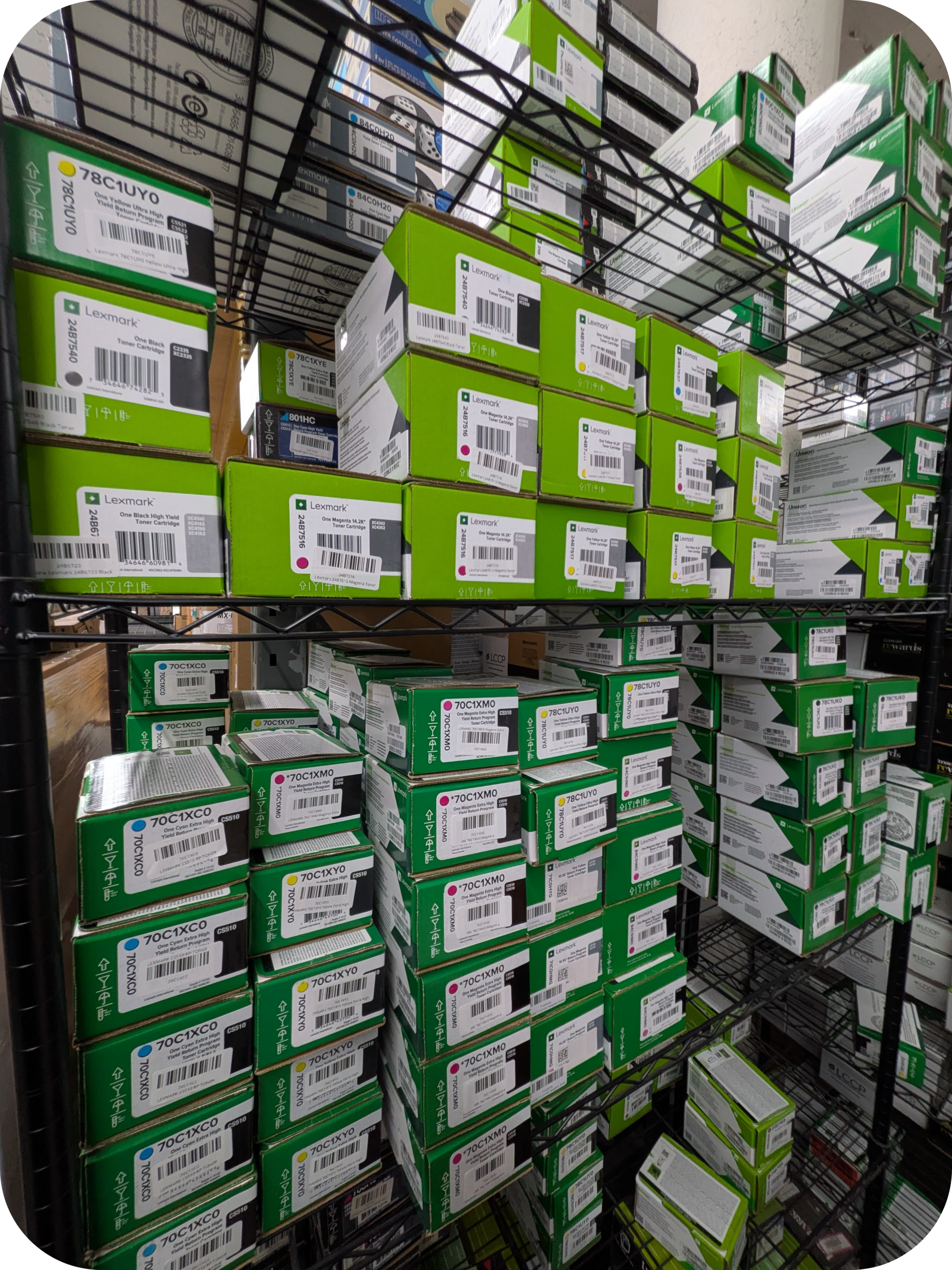
Ask these questions:
- Is the item currently in your warehouse?
- How many units are available?
- When will the order leave your facility?
- Will all cartridges ship together?
- How are back orders communicated?
- Can inventory be reserved for recurring customers?
- Is the listed product discontinued or replaced by another part number?
A product page marked “available” does not always mean the item is ready to ship. Written stock confirmation is particularly important when a printer is nearly out of toner or when multiple office locations depend on the same order.
5. Compare the Total Purchasing Cost
The lowest advertised price may not produce the lowest final cost.
Request a quotation that separates:
- Cartridge price
- Shipping
- Taxes
- Handling charges
- Minimum order requirements
- Volume discounts
- Restocking fees
- Return shipping
- Account fees
- Expedited delivery costs
For recurring purchases, ask whether the quoted price is fixed for a defined period or subject to change without notice.
Businesses should also consider the administrative cost of incorrect orders. Employee time, printer downtime, return shipping, and emergency replacement purchases can quickly erase a small unit-price saving.
6. Read the Return and Defect Policies
The supplier should have written procedures for incompatible, damaged, incorrect, and defective cartridges.
Review the policy before opening a cartridge. Some suppliers apply different rules once the manufacturer’s packaging has been opened.
Confirm:
- How many days are allowed for returns
- Whether opened cartridges can be returned
- Who pays return shipping
- Whether restocking fees apply
- How defective toner is evaluated
- Whether replacements or refunds are offered
- How long refunds typically take
- Whether clearance items have separate terms
The Federal Trade Commission advises online shoppers to review return windows, refund rules, return-shipping responsibility, and restocking fees before purchasing.
Save the policy that applied on the date of purchase. Website terms can change over time.
7. Evaluate Delivery and Packaging Standards
A dependable supplier should protect the cartridges and provide realistic delivery expectations.

Manufacturer boxes should normally be packed inside a suitable outer shipping carton rather than used as the shipping container. Adequate cushioning helps prevent crushed corners, torn boxes, and broken seals.
Ask whether the supplier provides:
- Shipment tracking
- Delivery notifications
- Protective outer packaging
- Insurance for high-value orders
- Signature confirmation
- Expedited service
- Support for lost packages
- Multi-location delivery
- Documented back-order updates
Inspect every shipment when it arrives. Photograph visible damage before opening the outer carton and notify the supplier promptly.
8. Test Customer Support Before Committing
The supplier should answer product and policy questions clearly before receiving a large order.
Send a short message containing a printer model, cartridge number, quantity, and delivery deadline. A useful reply should address each question without replacing your requested product with an unexplained alternative.
Look for support through:
- Telephone
- Business email
- Live chat
- Account representative
- Order-tracking portal
- Written escalation process
For schools, corporations, healthcare facilities, and government offices, also ask about purchase orders, tax-exempt accounts, invoice terms, approval workflows, and delivery to multiple departments.
9. Review Payment Security and Recordkeeping
The supplier should accept an appropriate payment method and provide complete transaction records.
Keep copies of:
- The original quotation
- Product descriptions
- Compatibility confirmation
- Order confirmation
- Invoice
- Tracking details
- Return policy
- Emails or chat messages
- Photographs of damaged products
- Refund or replacement documentation
The FTC recommends using payment methods that provide useful buyer protections and warns against sellers who insist on difficult-to-reverse methods such as gift cards, cryptocurrency, or certain wire transfers.
When buying through an online marketplace, identify the actual merchant. Marketplace policies and individual seller policies may provide different levels of protection.
Use a Weighted Supplier Scorecard
A scorecard helps purchasing teams apply the same standards to every candidate.
Rate each supplier from one to five in the areas below. Adjust the weight based on your organization’s priorities.
| Evaluation Category | Suggested Weight |
|---|---|
| Product authenticity and traceability | 20% |
| Cartridge compatibility accuracy | 15% |
| Inventory availability | 15% |
| Total purchasing cost | 15% |
| Return and warranty terms | 10% |
| Delivery reliability | 10% |
| Customer support | 10% |
| Payment and documentation | 5% |
A supplier with the lowest price may still receive a weak overall score if its inventory, returns, or support are unreliable. The weighted approach makes that tradeoff visible.
Place a Controlled Trial Order
A controlled trial order lets you evaluate a supplier using an actual transaction without exposing the business to a large purchasing risk.
Choose a small selection of cartridges that you can verify easily. When the order arrives, check:
- Did the final invoice match the quotation?
- Were all models and quantities correct?
- Did the order ship when promised?
- Were tracking updates provided?
- Did the cartridges arrive in protective packaging?
- Were the manufacturer boxes sealed and undamaged?
- Did the cartridges install and operate as expected?
- Was customer support responsive if a problem occurred?
Document the results and keep them with the supplier record. Repeat the review periodically, especially after ownership changes, account-representative changes, or repeated service problems.
Watch for Signs of a High-Risk Supplier
Several warning signs should prompt a closer review or a decision to purchase elsewhere.
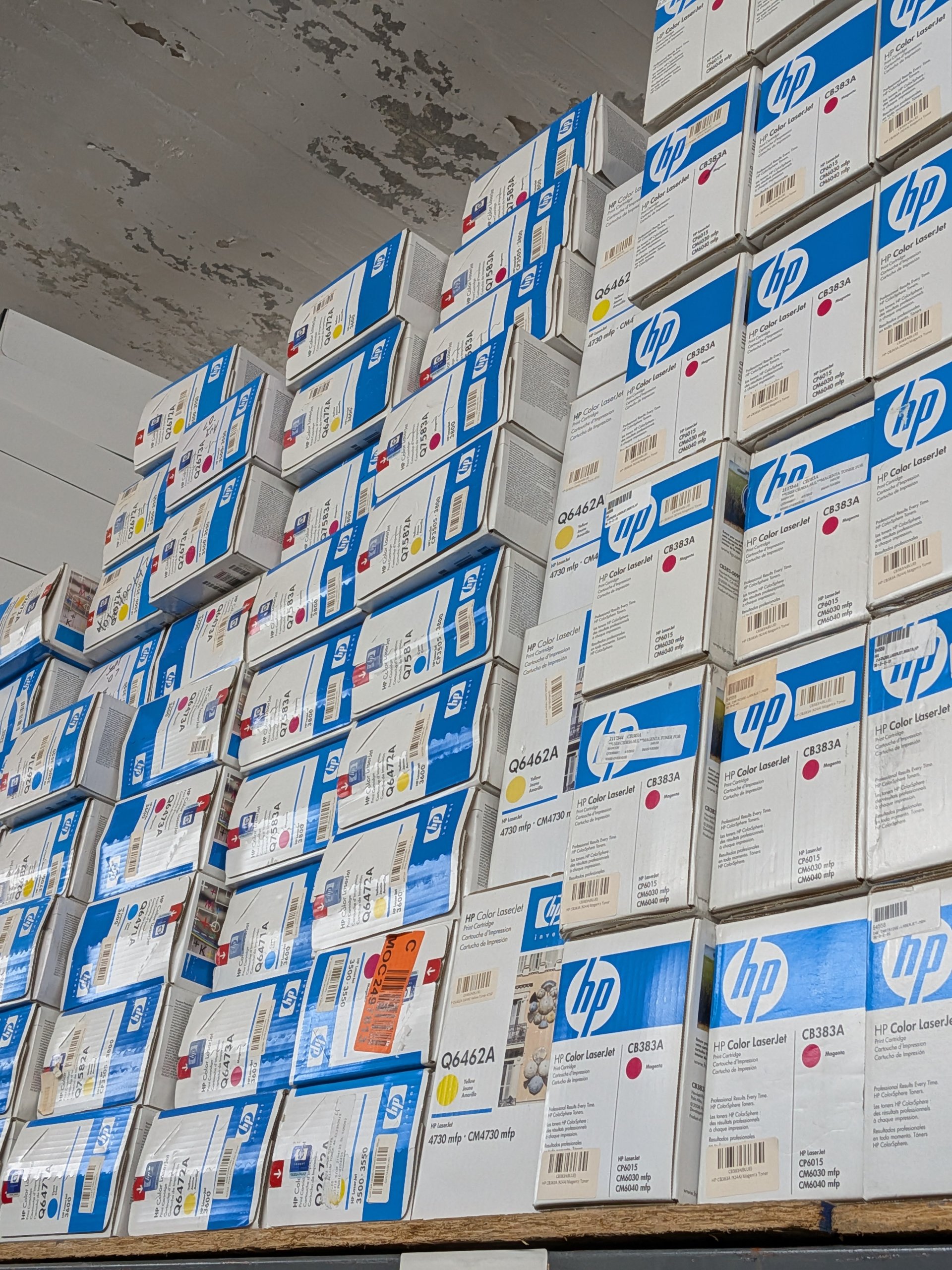
Be cautious when a seller:
- Will not identify the cartridge type
- Cannot provide complete part numbers
- Advertises unusually low OEM prices without explanation
- Uses vague or copied product descriptions
- Has no written return policy
- Provides no working contact information
- Pressures you to pay outside a marketplace
- Changes terms after payment
- Cannot confirm whether inventory is in stock
- Ships open or altered manufacturer boxes without disclosure
- Refuses to provide an invoice
- Avoids questions about authenticity
Canon advises customers to purchase genuine consumables from its online store or authorized dealers and to examine marketplace sellers and suspiciously inexpensive toner carefully.
Include Surplus Toner in the Purchasing Plan
Supplier evaluation should also consider what happens when cartridges are no longer needed.
Printers may be replaced before their backup toner is used. Offices may close, consolidate, change service providers, or reduce printing. Ask whether the supplier accepts returns of unopened cartridges and how long the return period lasts.
Maintain an inventory containing the brand, part number, quantity, condition, purchase date, assigned printer, and storage location. This makes it easier to stop unnecessary reordering and identify supplies connected to retired equipment.
If eligible OEM cartridges can no longer be returned, we may be able to purchase them. Our program accepts qualifying original-brand toner that remains sealed in the manufacturer’s packaging. We do not buy used, refilled, remanufactured, compatible, or open-box cartridges.
Organizations can submit unused toner cartridges for a quote using model numbers, an inventory list, or clear photographs.
Make the Final Decision With Written Evidence
Choose the supplier that can demonstrate product accuracy, authenticity, reliable fulfillment, reasonable total pricing, and fair problem resolution.
Collect written quotations, verify compatibility, review policies, and complete a trial purchase before approving large recurring orders. A supplier relationship is most valuable when the correct cartridges arrive consistently and your team knows exactly what will happen if something goes wrong.