Finding the Best Place to Sell Unopened Toner Cartridges

Most recent by James Cai

If you’re looking for the best place to sell unopened toner cartridges, especially if you have several units, a specialized buyback service is almost always your best bet. These companies are built for this specific purpose, offering fair prices, free shipping, and quick payment. It’s the most direct and efficient way to turn that extra inventory into cash.

Your Guide to Selling Surplus Toner Cartridges

It happens to every business. You upgrade printers, switch models, or just accidentally over-order, and suddenly you’re stuck with a closet full of unopened toner cartridges. It’s a common problem, but that box of supplies isn’t just clutter—it’s an asset.

Selling those extra cartridges is a smart move. Not only does it put money back into your budget, but it also keeps perfectly good products out of a landfill. This guide will walk you through the best ways to sell them so you can feel confident you’re making the right choice for your situation. If you’re just starting to sort through your supply closet, you might find some general strategies on how to decide what to keep and what to sell helpful for organizing what you’ve got.

Understanding Your Selling Options

Before you start, it’s good to know where you can sell your cartridges. Each option is designed for a different type of seller, so the best one for you really depends on how much you have, how fast you need the money, and how much work you’re willing to put in.

Here’s a quick breakdown of the main players we’ll cover:

Selling Channel Best For Typical Payout Speed & Convenience
Specialized Buyback Services Businesses, IT departments, or anyone with multiple cartridges. Good to Excellent High
Online Marketplaces Individuals with one or two popular, high-demand cartridges. Excellent Low
OEM/Manufacturer Programs Businesses wanting store credit with a specific brand. Fair to Good Medium
Local Buyers/Recyclers Sellers needing immediate cash for a few common items. Fair Medium

Why Selling Your Toner Is a Smart Move

Getting paid is the biggest reason to sell, of course, but there are other real benefits for your business. It’s simply good asset management.

  • Recovering Capital: Those unused supplies are cash sitting on a shelf. Selling them puts that money back to work for your business. For example, a marketing firm that sells $800 worth of surplus toner can reinvest that directly into a new ad campaign.
  • Reducing Clutter: Old inventory takes up valuable storage space that you could definitely use for something more important. Think of the extra room in the supply closet for items your team actually needs.
  • Promoting Sustainability: Letting someone else use those cartridges is a responsible choice that cuts down on waste. Instead of going to a landfill, your unused HP toner could end up in another small business’s printer.

The trick is to stop thinking of surplus supplies as a sunk cost and start seeing them as an opportunity. A professional buyback service gives you the clearest, most straightforward path to cashing in on that opportunity.

Ready to find out what your cartridges are worth? The process is simple. Just make a list of what you have and send it over for a quote. To get a fast, no-obligation offer, submit your toner list for a free quote.

Comparing Your Top 4 Options for Selling Toner

So, you’ve got a stack of unopened toner cartridges and you’re wondering what to do with them. It can feel like a niche problem, but you’d be surprised how often this happens. The good news is you have options, and choosing the right one really comes down to what you have, how much time you’re willing to spend, and whether you need quick cash or the absolute highest price.

We’re not talking about a small market, either. The global ink and toner cartridge industry was valued at over USD 20.63 billion in 2025 and is on track to hit nearly USD 38.91 billion by the decade’s end. That growth is fueled by businesses getting smarter about managing their surplus assets. You can get a deeper look at the ink and toner market projections on globalgrowthinsights.com.

Let’s break down your four main channels: specialized buyback services, online marketplaces, manufacturer take-back programs, and local buyers. Each has its place.

This quick flowchart should help you see where you likely fall.

Flowchart guiding toner sales decisions: sell large quantities via buyback service, small quantities on a marketplace.

As you can see, it often boils down to a simple question of quantity. If you’re dealing with a large batch, a buyback service is your best bet for efficiency. If it’s just one or two, a marketplace might be the way to go.

Specialized Toner Buyback Services

Think of these companies as the professional wholesale buyers of the surplus toner world. Their entire business is built around buying unopened, genuine OEM cartridges in bulk. This is, without a doubt, the most efficient route for businesses, schools, or IT departments looking to offload multiple items at once.

The process is incredibly straightforward. You send them a list of what you have, they give you a single cash offer for the whole lot, and if you accept, they send you prepaid shipping labels. You pack it all up, send it off, and get paid. No individual listings, no back-and-forth with tire-kickers.

Here’s a real-world scenario: A law firm just upgraded its entire printer fleet and the office manager is left with 35 assorted HP and Brother toners. Instead of trying to sell each one on eBay, she gets a quote from a buyback service. They send her insured shipping labels, she packs everything into two big boxes, and gets a check the day after the shipment is verified. Problem solved.

The Bottom Line: The biggest draw here is the total elimination of risk and effort. These services handle all the logistics, insure the shipment, and guarantee payment. For anyone managing a business, that peace of mind is worth its weight in gold.

Online Marketplaces Like eBay and Amazon

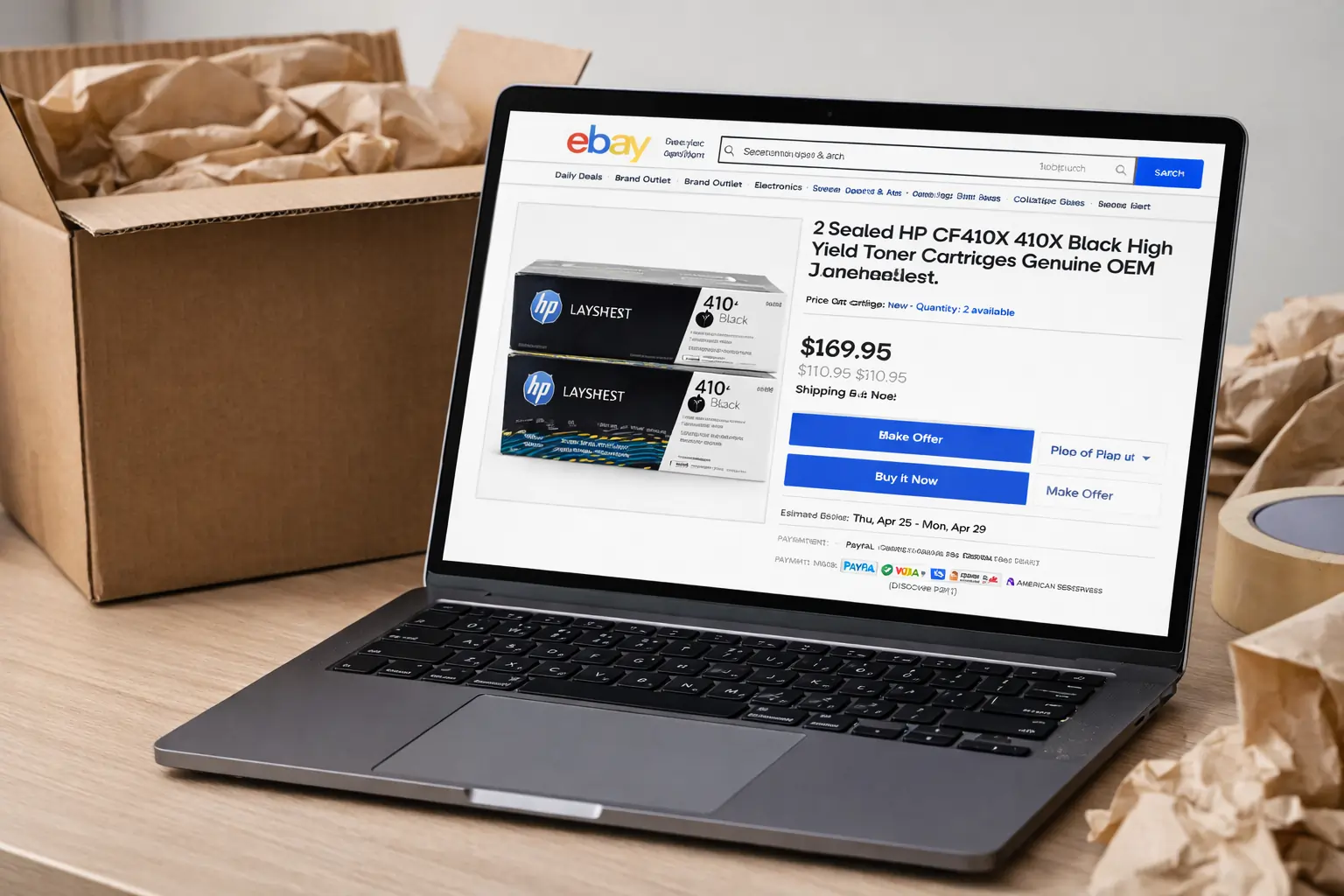
Going the marketplace route with platforms like eBay or Amazon means you’re selling directly to the person who will actually use the cartridge. This peer-to-peer approach can get you the highest price per item because you’re cutting out the middleman.

But—and it’s a big but—that higher potential payout comes at the cost of your time and sanity. You’re on the hook for everything: taking good photos, writing a descriptive listing, answering questions, packing each item securely, and dealing with any shipping issues or returns.

Here’s a typical example: A remote worker accidentally buys the wrong Epson 288XL ink cartridge. He lists it on eBay for 15% less than retail. A week later it sells. Now he has to find a box, pack it up, print a label, and drop it at the post office. After marketplace fees and shipping costs, his net profit is less than he hoped.

  • Seller Risk: You carry all the risk. This includes buyers claiming the item was damaged in transit, fraudulent claims, and the dreaded negative review that can tank your seller account. For example, a buyer might claim the toner was “not as described” to force a free return at your expense.
  • Time Commitment: Selling one cartridge is a chore. Selling ten or more this way can feel like a part-time job you never wanted. You could spend hours answering questions like, “Will this fit my printer?” from multiple potential buyers.
  • Hidden Costs: Don’t forget that marketplace fees, payment processing fees (like PayPal’s cut), and the cost of shipping supplies all chip away at your profit. That $50 sale might only net you $38 after fees and shipping materials.

OEM Take-Back Programs

Most of the big printer brands—HP, Canon, Lexmark, and others—have their own take-back or recycling programs. These are primarily designed for environmental reasons, but some will give you store credit or a discount on a future purchase for sending back your unused, surplus cartridges.

This path really only makes sense if you’re fiercely loyal to one brand and plan on buying more supplies from them soon. You won’t get cash in hand, and the credit you receive is almost always less than what you’d get from a buyback company or even on a marketplace.

Picture this: A large office uses nothing but HP printers. They have five unopened HP 952XL cartridges from a printer they no longer use. They can send them back through HP’s Planet Partners program and get a voucher to put toward their next big order of toner directly from HP.

This isn’t really “selling” in the traditional sense. It’s more of a trade-in system designed to keep you buying from the manufacturer.

Local Buyers and Recyclers

Your final option is to sell locally. This could mean finding a small printer repair shop, a local office supply reseller, or just an individual through platforms like Facebook Marketplace or Craigslist. The main appeal here is a quick, local, cash transaction with no shipping involved.

The downside is that it’s a total shot in the dark. Finding someone in your immediate area who needs the exact model you have can be tough, and this method simply doesn’t work for large quantities. Payouts are also usually on the lower end, as any local reseller needs to buy low enough to make a profit themselves.

A common story: A college student has two extra Brother TN760 cartridges after graduation. She lists them on Facebook Marketplace. The owner of a local repair shop responds, they meet up in a coffee shop parking lot, and she walks away with cash—but it’s about 50% of what they might have sold for online.

  • Limited Demand: The pool of potential buyers in your town is tiny compared to the entire internet. You might wait weeks for a single inquiry on a less common model like a Xerox Phaser cartridge.
  • Negotiation Hassles: Get ready for lowball offers, people who say they’re coming and never show up, and plenty of haggling. A listing for $40 might get an immediate offer for $15.
  • Safety Concerns: Meeting strangers always comes with a bit of risk. Be sure to take precautions. For example, always choose a public, well-lit meeting place like a police station’s designated “safe trade” spot.

Toner Selling Channels Head-to-Head Comparison

To make the best decision, you need to see how these options stack up against each other based on what matters most to you—payout, speed, or convenience.

This table gives a quick, at-a-glance look at the trade-offs involved with each selling channel.

Selling Channel Typical Payout Payment Speed Convenience Level Best For
Specialized Buyback Service Good to Excellent Very Fast (1-3 days) Highest Businesses with 10+ cartridges who value efficiency and no-risk transactions.
Online Marketplace Excellent (before fees) Slow Lowest Individuals selling 1-2 popular items who want the highest gross price and don’t mind the work.
OEM Take-Back Program Fair (store credit) N/A (credit applied) Medium Brand-loyal companies that need store credit, not cash.
Local Buyer Fair to Good Instant (cash) Medium Someone needing quick cash for 1-3 items where convenience trumps profit.

When all is said and done, for most businesses, organizations, or even individuals with a decent amount of surplus stock, a specialized buyback service strikes the best balance. It lets you recover significant value from your assets without sinking a ton of your own time and resources into the process.

How Specialized Buyback Services Work

When you’re sitting on a pile of unopened toner cartridges, a specialized buyback service is your most direct route to turning that clutter into cash. These companies have a single mission: to buy surplus OEM toner and ink from businesses, schools, and even other resellers. Their entire process is built around making it fast and painless for you.

Forget the hassle of creating individual listings on a marketplace, fielding questions from dozens of people, and shipping packages one by one. A buyback service acts as one professional buyer for everything you have. This approach is perfect for anyone with more than just a cartridge or two to sell.

The demand for this kind of service makes sense when you look at the numbers. The global printing toner market was valued at USD 5.27 billion in 2024 and is expected to climb to USD 8.5 billion by 2032. As the market grows, more businesses are looking for smart ways to manage their printing supplies without letting unused inventory go to waste. You can read more about the printing toner market growth to see how this trend is changing how companies handle their supplies.

The Step-by-Step Buyback Process

Getting from a supply closet full of old toner to money in your account usually takes just four simple steps. Let’s use a company like Toner Connect as an example to see how it works.

  1. Submit Your Inventory for a Quote: First, you’ll need to list out what you have. This can be as simple as filling out a form on their website, emailing a spreadsheet, or just snapping clear photos of the cartridge boxes. The key is accuracy—make sure you note the brand, model number, and how many of each you have.
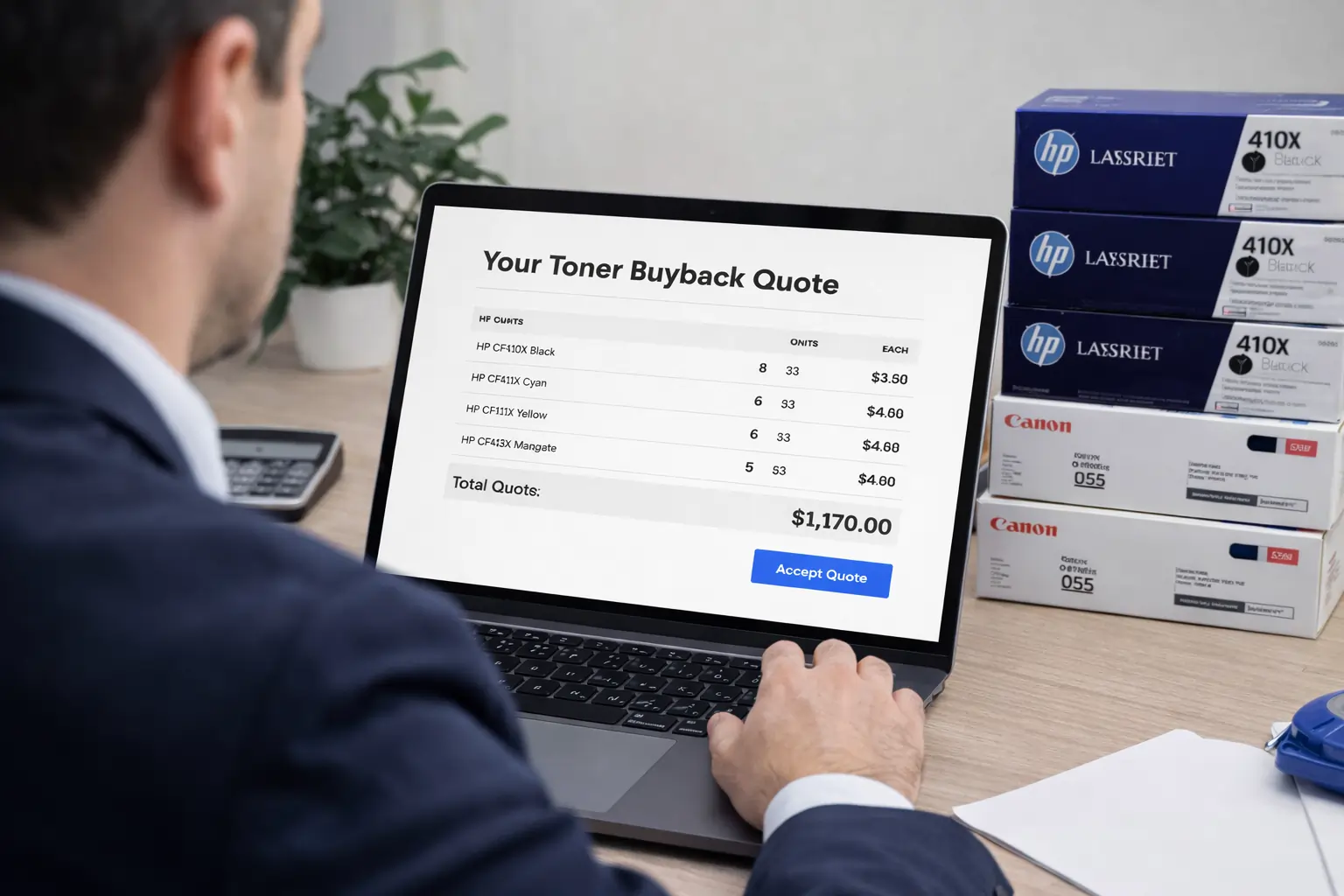
  2. Receive a Professional Offer: The buyback company reviews your list and sends you a single offer for the whole lot. A good service will get back to you quickly, often within a few hours. For example, a quote for 15 assorted HP cartridges might come back as a single $450 offer.
  3. Ship Your Items for Free: Once you accept the offer, the company emails you prepaid and insured shipping labels. This is a huge perk. You don’t pay a dime for shipping, and your items are protected if they get lost or damaged on the way. Just pack everything securely into a sturdy box, tape on the labels, and send it off.
  4. Get Paid Quickly: After the shipment arrives at their warehouse, the team inspects the items to make sure they match what was on your list. Once confirmed, they issue your payment right away. Most companies offer a few ways to get paid, like PayPal, Zelle, a digital check, or a classic paper check mailed to you—often on the same day the inspection is finished.

The real beauty of a buyback service is that they take on all the risk. With insured shipping and a guaranteed payment, you’re protected from the usual headaches of selling online, like dealing with flaky buyers or shipping disputes.

Who Benefits from a Buyback Service

This model is a perfect fit for a few different types of sellers who need a simple, secure solution.

  • IT Departments: When a company gets a new fleet of printers, the IT department is usually left with a mountain of old, incompatible toner. For instance, after switching from Lexmark to Canon printers, a tech department can sell off 50+ Lexmark cartridges in a single transaction.
  • Office Managers: If you’re in charge of office supplies, you know how easy it is to end up with overstock or cartridges that were ordered by mistake. Selling them recovers money that can go right back into your budget.
  • Nonprofits and Schools: These organizations often receive office supplies as donations. A buyback service helps them turn those donated cartridges into cash they can use for their programs. For example, a university might sell donated toner to help fund its student library.
  • Distributors and Resellers: For businesses that deal in supplies, liquidating slow-moving or excess inventory is key to keeping operations running smoothly. For a closer look, you can learn more about how distributors can benefit from buyback programs.

A Practical Example of a Quote Request

Getting started is easy. Your first email or message doesn’t need to be complicated; just be clear and direct to get a faster response.

Sample Quote Request Script:
*Hello, we have the following surplus OEM toner cartridges for sale:

  • HP 952XL Black (Quantity 8)
  • Brother TN760 (Quantity 12)
  • Canon 128 (Quantity 5)
    All cartridges are in their original, sealed, and unopened boxes. Please provide a quote and outline the next steps for selling them to you.*

An email like this gives the buyer all the information they need to send you an accurate offer and get the ball rolling.

How to Squeeze Every Dollar Out of Your Unopened Cartridges

Want to get the most money for your surplus inventory? It all boils down to prep work. No matter which selling route you take, a few simple steps beforehand can guarantee you get the best possible offer and sidestep any last-minute price adjustments. Think of it this way: buyers pay top dollar for cartridges that are easy for them to turn around and resell. A little effort on your part now pays off big time.

This all starts with knowing exactly what you’ve got. Getting your inventory list right from the get-go saves everyone a headache and prevents frustrating surprises like rejected shipments or re-quotes.

A person wearing a ring stacks brown and black boxes, with documents on a clipboard nearby.

Nail Down Your Inventory Details

First things first, make sure your cartridges are genuine Original Equipment Manufacturer (OEM) products. Buyback companies and marketplace buyers want the real deal from brands like HP, Brother, and Canon because they’re known for quality and reliability. Aftermarket stuff—compatible or remanufactured cartridges—just doesn’t have much, if any, resale value in this market.

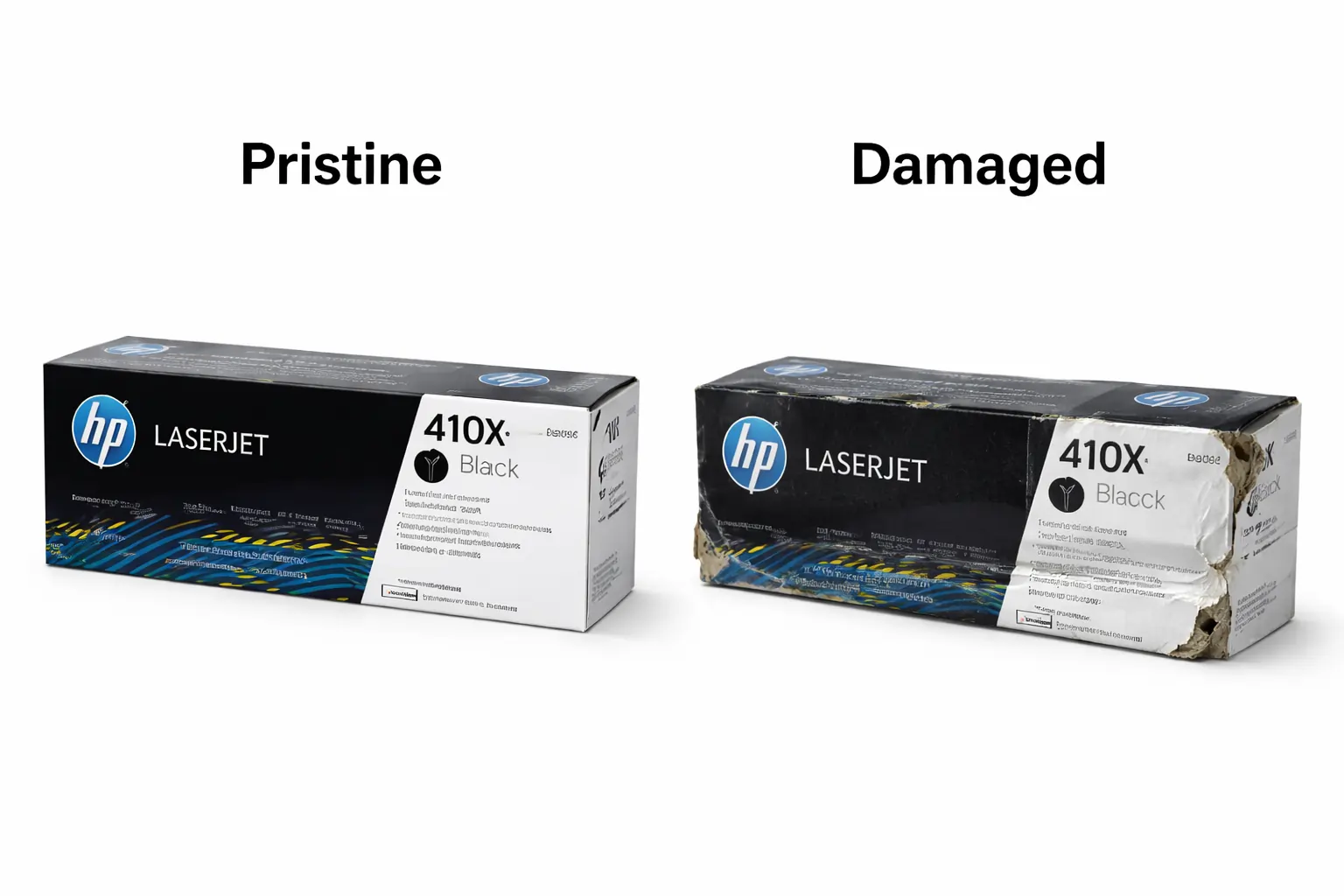
Next, get brutally honest about the condition of each box. The packaging is almost as important as the cartridge inside because it’s the first thing the next buyer sees. A pristine, factory-sealed box is the gold standard and will always fetch the highest price.

Be upfront about any flaws, like:

  • Minor Dents or Creases: Small dings from being shuffled around in a supply closet. For example, note “one corner slightly crushed.”
  • Writing or Labels: Marker notes or old shipping stickers stuck to the box. For instance, “has ‘Marketing Dept’ written in marker on top.”
  • Tears or Rips: Any damage to the cardboard, especially if it’s near the factory seals. An example would be “a 1-inch tear on the side panel.”

A box with some writing on it is still sellable, but it won’t command the same price as a perfect one. Being transparent builds trust with your buyer and ensures the quote they give you is the one you actually get paid.

Get Your Cartridges Ready for Their Close-Up

Once you’ve taken stock, a few quick actions can make the whole selling process smoother and boost your final offer. It shows you’re a professional and makes life easier for the buyer, which they appreciate.

Here’s a simple checklist to follow:

  1. Group by Model Number: Sort your cartridges by their model (e.g., put all the HP 952XLs together). This makes creating an inventory list a breeze.
  2. Check Inkjet Expiration Dates: Most toner doesn’t expire, but inkjet cartridges do. Look for the date on the box—anything with at least a year of shelf life left is prime inventory. For example, an inkjet cartridge expiring in 2026 will fetch a much better price than one expiring in six months.
  3. Clean Up the Boxes: Give them a gentle wipe to get rid of any dust. If you can peel off old shipping labels without tearing the box, do it. If not, leave them be.
  4. Take Clear Photos: Sometimes, a few good pictures of your stacks of cartridges can replace a typed-out list. It’s faster and often more accurate. For example, lay out one of each model with the rest stacked behind it so the buyer can see everything clearly.

When you present a clean, organized, and honestly described inventory, you signal that you’re a serious seller. This simple effort almost always leads to a smoother deal and a better final payout because the buyer knows exactly what they’re getting.

Why Selling in Bulk (and Selling OEM) Is Smarter

Offloading your entire inventory in a single go to a buyback service is usually more profitable than piecing it out one cartridge at a time. It dramatically cuts down on shipping costs and logistical nightmares. Plus, buyers are often willing to pay a little more per item when you’re selling a larger quantity.

The demand for genuine cartridges isn’t going anywhere. In fact, the ink cartridge market alone was valued at USD 21.8 billion in 2025 and is projected to hit USD 41.8 billion by 2035. That kind of growth shows just how much people still want OEM products. To see how different selling options might impact your bottom line, a free e-commerce profit margin calculator can be a handy tool.

Vetting Your Buyer and Avoiding Common Scams

Selling surplus inventory online is a great way to recover value, but you need to be careful. Finding the best place to sell unopened toner cartridges really comes down to finding a buyer you can trust. A little bit of homework upfront can save you from major headaches and make sure the whole experience is safe and profitable.

A tablet displays 'Vet Buyer' with two blue stars and one gold star on a wooden desk, surrounded by office items.

The difference between a professional buyback service and some random person on a marketplace is night and day. A legitimate company has a clear, well-defined process. A scammer, on the other hand, thrives on confusion and high-pressure tactics. Knowing what to look for is your best defense.

Critical Red Flags to Watch For

Some behaviors should immediately set off alarm bells. If you run into any of these, it’s best to hit the brakes and think twice, or just walk away from the deal entirely.

Keep an eye out for these warning signs:

  • Refusal to Provide Prepaid Shipping: Any serious buyback company will always cover the shipping costs. If a buyer insists you pay to ship your items to them, it’s a huge red flag. For instance, they might say, “Ship it to us, and we’ll add the shipping cost to your payment,” but you may never see that money.
  • Suspiciously High Offers: If an offer seems way too good to be true, it probably is. Scammers love to bait sellers with unbelievably high prices, only to drastically lower the offer once they have your toner, making up excuses about damage or condition. A scammer might offer $80 for a cartridge that typically resells for $50.
  • Vague or Ambiguous Payment Terms: A professional buyer will tell you exactly when and how you’ll get paid. Be very skeptical of anyone who says something like, “We pay at the end of the month,” without specifying a clear timeline from when they receive your goods.

A trustworthy buyer’s process is built on clarity and security. They provide insured shipping labels to protect your inventory in transit and have a clear inspection and payment workflow, eliminating surprises and building confidence.

Questions to Ask Any Potential Buyer

Before you commit to anything, have a few key questions ready. A legitimate company will have no problem giving you straight answers. A shady operator will likely get evasive or defensive.

Here are a few essential questions to ask:

  1. What is your exact payment timeline after you receive my items? (Look for a clear answer, like “Payment is issued within 24 hours of inspection.”)
  2. Do you provide insured shipping labels, and what is the coverage limit? (A good answer would be, “Yes, our FedEx labels are insured up to $500 per box.”)
  3. What is your process if a package is damaged or lost in transit? (You want to hear that they handle the insurance claim for you.)
  4. Do you have online reviews I can read on a third-party platform? (They should be able to point you to Google Reviews, Trustpilot, or the Better Business Bureau.)

These questions cut right to the chase, helping you gauge a buyer’s professionalism and whether they’re committed to a fair deal. If you’re curious what clear, upfront answers look like, feel free to check out our own process on our Frequently Asked Questions page.

By knowing the red flags and asking the right questions, you can vet potential buyers with confidence. This simple step ensures you find a reliable partner, sidestep common scams, and successfully turn your surplus toner into cash without the risk.

A Few Common Questions About Selling Toner

Even with a solid game plan, you probably still have a couple of questions. That’s normal. Let’s run through some of the most common things people ask us before they sell their surplus toner for the first time. The goal here is to give you those last few bits of info so you can move forward confidently.

We’ve kept the answers short and to the point, pulling from the key ideas we’ve already covered.

How Much Can I Expect to Get Paid for My Toner?

This is the big one, and the honest answer is: it depends. The payout for unopened toner cartridges can swing quite a bit based on a few key things. The single most important factor is whether you have a genuine Original Equipment Manufacturer (OEM) cartridge. Those always bring in the most money.

Other factors that move the needle are the market demand for that specific model, the condition of the box, and how many you’re selling. For instance, a popular, high-yield OEM cartridge like an HP 952XL in a perfect box will get you a nice chunk of its retail price. On the other hand, a cartridge for an older, obscure printer or one with a beat-up box will naturally be worth less. As a general rule of thumb, specialized buyback companies usually pay between 30-60% of the original retail value, depending on those conditions.

Is It Legal to Resell OEM Cartridges?

Yes, absolutely. It is 100% legal to resell genuine, unopened OEM toner and ink cartridges. This is thanks to a legal principle called the “First Sale Doctrine.” In a nutshell, it means that once you’ve legally bought a trademarked item, you have the right to sell that specific item without needing the original manufacturer’s permission.

So, as long as you came by the cartridges legally and you’re selling them in their original, unopened packaging, you’re completely in the clear. This doctrine is the very foundation of the surplus toner resale market, giving businesses a legitimate way to recoup money from unused inventory.

What Is the Difference Between OEM and Compatible Cartridges?

Knowing the difference here is critical because it directly affects what your cartridges are worth. Reputable buyers are really only looking for one type.

  • OEM (Original Equipment Manufacturer): This is the real deal. These are brand-new cartridges made by the same company that made your printer—think HP, Canon, or Brother. They’re the gold standard for quality and reliability, which is why they have the highest resale value.
  • Compatible: These are brand-new cartridges made by a third-party company, not the printer manufacturer. They’re designed to work in certain printers but have no affiliation with the original brand. They typically have little to no resale value. An example would be a cartridge from a brand like “LD Products” or “Smart Ink.”
  • Remanufactured: These are old OEM cartridges that someone has cleaned out, refilled, and tested. Like compatibles, buyback companies generally don’t purchase them.

When you’re deciding where to sell your unopened toner cartridges, just remember that nearly all serious buyers—especially the specialized services—will only buy genuine OEM products. It’s all about ensuring quality and reliability for the next person who uses it.

How Should I Pack My Cartridges for Shipping?

Packing your cartridges correctly is a bigger deal than you might think. If they get damaged in transit, it could affect your payout. The key is to use a sturdy, corrugated cardboard box that’s just a bit bigger than what you’re shipping.

Always place the heaviest cartridges on the bottom and pack them in snugly so they can’t slide around. Then, fill any gaps with packing material like bubble wrap, crumpled paper, or air pillows to keep everything cushioned. Try to avoid packing peanuts, as they can shift and let items move. Once everything is secure, tape up the box with good-quality packing tape. For a practical example, if you have 10 toner boxes, find a shipping box where they fit together like puzzle pieces with just enough room for a layer of bubble wrap on all sides.


Ready to see what your surplus toner is actually worth? At Toner Connect LLC, we’ve made the whole process simple, secure, and profitable. We give you an instant quote, provide free insured shipping, and pay you fast for your unopened OEM cartridges. Come see why thousands of businesses have trusted us to turn their extra inventory into cash.

Get Your Free, No-Obligation Quote Today!

Leave a Reply

Your email address will not be published. Required fields are marked *

Skip to toolbar