
Yes, you can absolutely recycle printer cartridges for cash. This isn't about used or empty cartridges; we're talking about new, unused OEM (Original Equipment Manufacturer) supplies still in their sealed boxes. For businesses with surplus ink and toner, this is a straightforward way to turn office clutter into a reliable revenue stream. It’s a simple quote-and-ship process that many companies are using. For example, a law firm that recently upgraded its printer fleet discovered it had over $2,000 in old, unused toner—a quick call turned that into cash within a week.
Take a look in your office supply closet. Is there a growing pile of unused printer cartridges collecting dust? For many businesses, IT departments, and even resellers, this isn't just clutter—it's a hidden financial asset waiting to be unlocked.
Monetizing your surplus OEM toner and ink is one of the easiest ways to convert a common storage headache into real working capital. Instead of letting those valuable supplies expire or go to waste, you can get paid for them. It’s a win for your bottom line and a smart, environmentally responsible choice.
The journey from a dusty shelf to cash in your bank account is surprisingly simple. We've broken it down into a few key stages that take you from listing your inventory to getting paid, often with free shipping included.
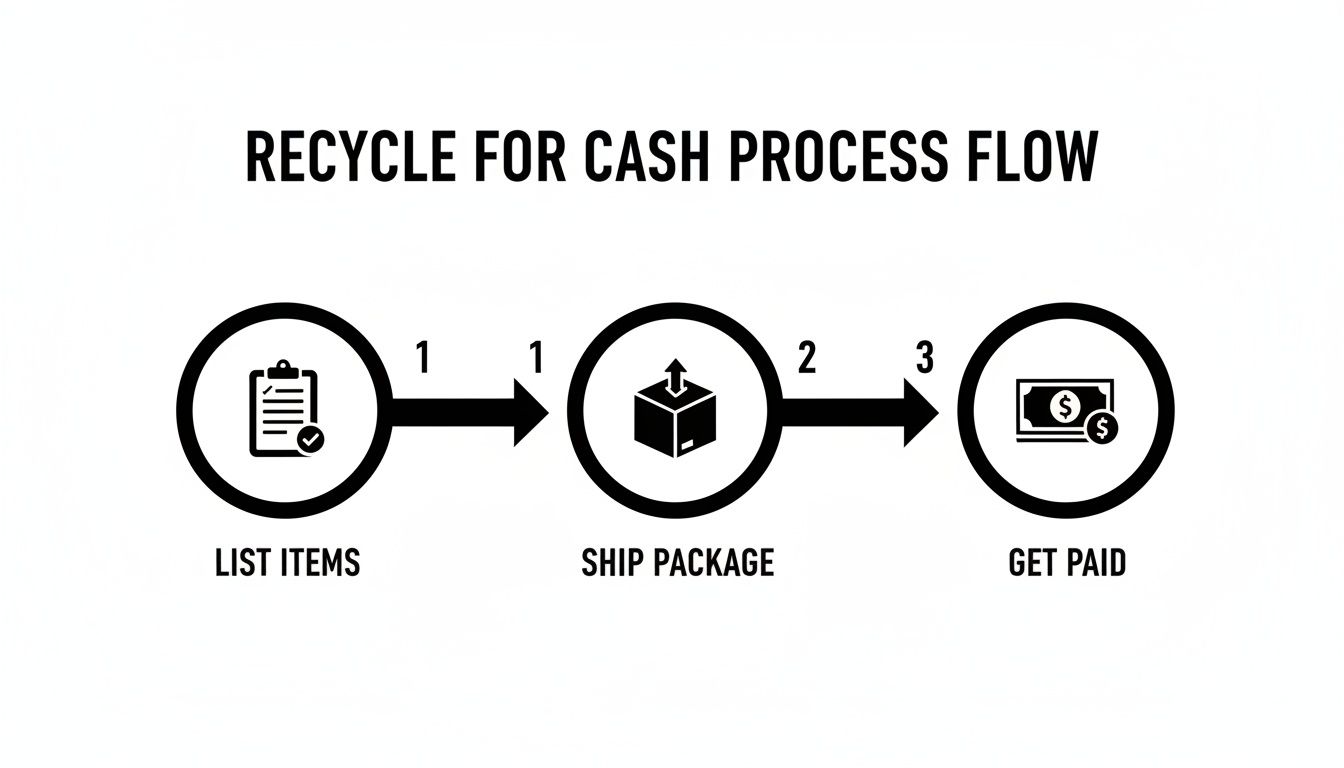
As you can see, the whole process is designed to be efficient. It removes common hurdles like shipping costs and complex payment systems, so you can focus on getting paid for what you have.
The market for buying and selling surplus cartridges is bigger than most people realize and it’s expanding quickly. In fact, the global printer cartridge recycling market is valued at roughly USD 500 million in 2025 and is projected to hit USD 1.1 billion by 2033. This boom is fueled by growing environmental awareness and stricter e-waste regulations, creating a perfect opportunity for anyone sitting on surplus stock.
And this thinking doesn't have to stop with just toner. If you have other unused items, it’s worth looking into broader profitable asset sales strategies to see what else can be converted into cash.
By tapping into this secondary market, a business can transform an operational oversight—like over-ordering supplies—into a direct financial gain. We recently worked with a marketing firm that upgraded its printers, only to discover they had over $1,500 worth of old toner models just sitting on a shelf.
Let's walk through the exact steps to turn those boxes into cash. Here’s a quick overview of what to expect.
The process of selling your unused toner is designed to be transparent and efficient. It moves you from inventory assessment to payment in five clear stages.
| Stage | Action Required | Key Consideration |
|---|---|---|
| 1. Eligibility & Prep | Check if your cartridges are OEM and in good condition. | Only new, unused, and undamaged OEM cartridges are accepted. |
| 2. Quote Request | List your items using a form or by sending photos. | Accuracy is crucial for a fair quote; include part numbers and quantities. |
| 3. Offer Evaluation | Review the buyback offer, which depends on demand and condition. | Payouts can vary, so ensure the offer meets your expectations. |
| 4. Shipping | Pack your items securely and use the provided prepaid shipping labels. | Proper packing prevents damage, which could reduce your final payout. |
| 5. Inspection & Payment | The buyback company inspects the items upon arrival. | Payment is typically issued within 1-3 business days via check, PayPal, or ACH. |
Each stage is a simple step forward, designed to make the process as hands-off as possible for you.
Ready to see what your surplus is worth? The first step is to pull together a quick list of what you have and submit your inventory for a fast, no-obligation quote.
So, you've got a closet full of extra toner and ink. Before you start counting your cash, the first step is figuring out what’s actually worth selling. Not all cartridges are the same in the eyes of a buyback company, and knowing the difference is key to getting a solid offer.
It all boils down to one simple idea: buyers are looking for supplies they can turn around and sell to someone else as new. This means your inventory has to meet a few specific standards. Let's walk through exactly what to look for.
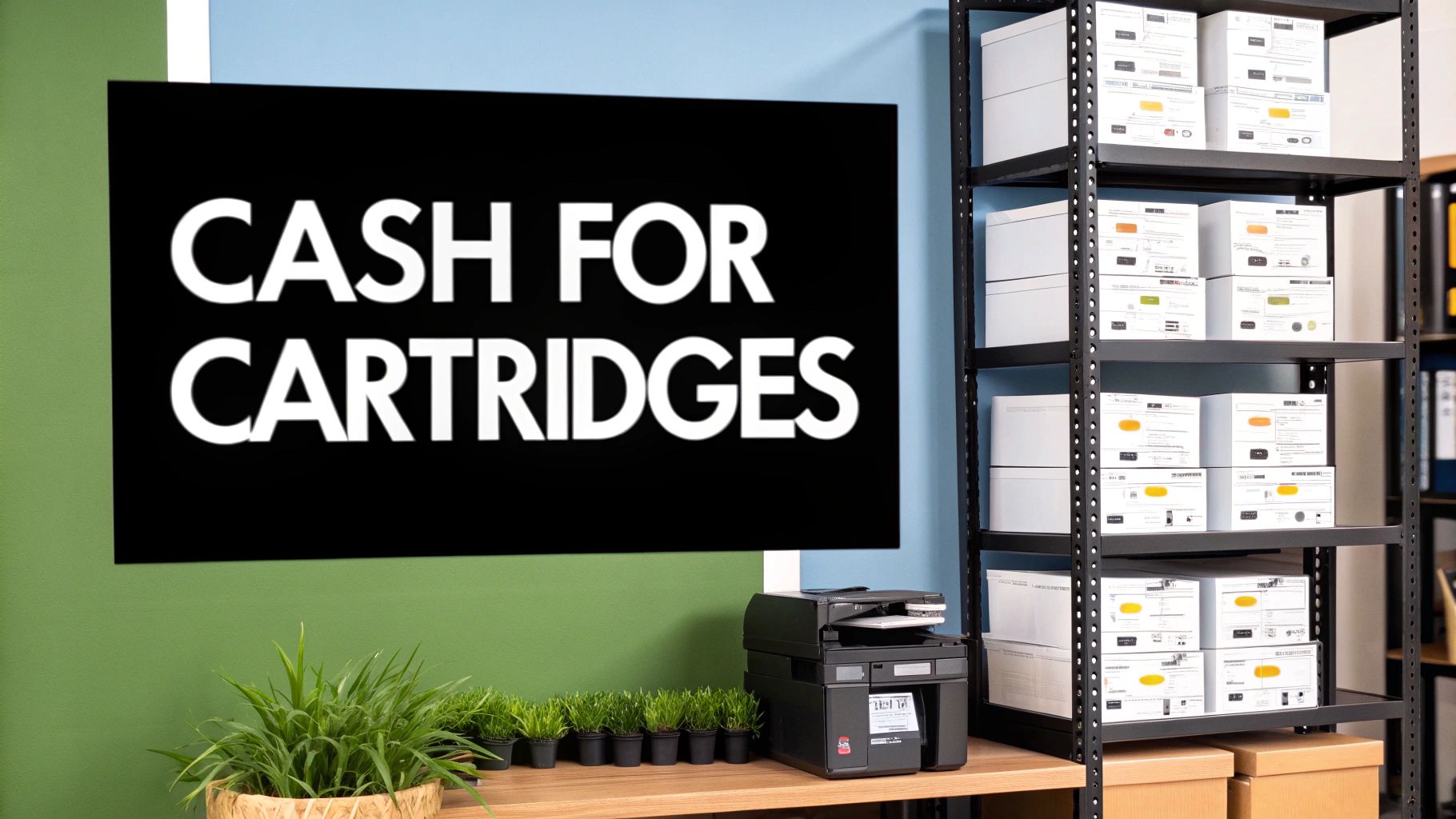
Here’s the single most important rule: we can only buy Original Equipment Manufacturer (OEM) products. This means the cartridge was made by the same company that made your printer—think major brands like HP, Brother, Canon, or Xerox. These are the only ones with real resale value.
Anything else, like a compatible or remanufactured cartridge from a third-party, unfortunately won't qualify. For example, a cartridge in a box that says "Compatible with HP LaserJet" but doesn't have the official HP logo cannot be purchased. The quickest way to tell is by looking for the official brand logo right on the box. If it's there, you're on the right track.
Getting this right from the start saves a ton of time. For a closer look at what we accept, our photo submission guide has clear examples of OEM vs. third-party packaging to help you build an accurate inventory list.
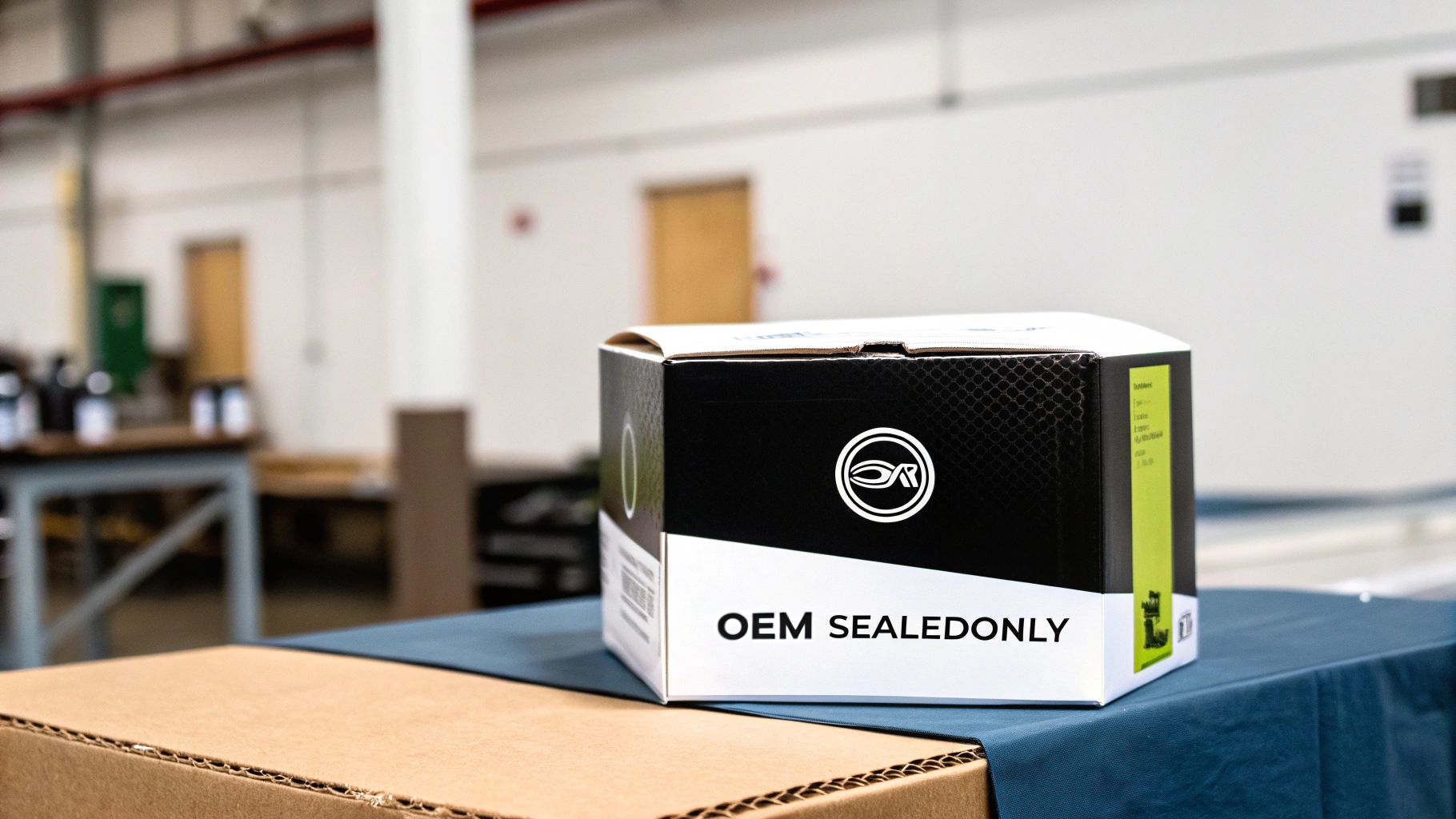
For a cartridge to be sellable, it needs to be new, unused, and still in its original, factory-sealed box. The condition of that box is a huge deal because the next person who buys it wants a product that looks brand new.
Put yourself in their shoes. A pristine, clean box is going to fetch the top dollar, no question.
The factory seal is the ultimate deal-breaker. If that pull-tab has been messed with or the security tape is cut, the cartridge is considered open. Even if the inner plastic bag is untouched, it has lost its resale value.
Don't stop at cartridges! Many offices have other valuable printer supplies collecting dust that also qualify for our buyback program. When you're gathering your inventory, keep an eye out for these items:
Tossing these into your quote request can seriously boost your final payout. From my experience, a single OEM fuser kit for a high-end office printer can often be worth more than a stack of common toner cartridges. It pays to be thorough.
Getting a great offer when you sell your surplus printer cartridges really boils down to clear communication. The more information you can give a buyer upfront, the faster and more accurate your quote will be. I always tell people to think of it like selling anything else—the better you can describe what you have, the more a buyer is willing to pay.
You've got a couple of solid options for getting a quote, and which one you choose really just depends on how your inventory is organized. Both are simple and get the job done.
If you have everything somewhat organized, just creating a simple list is easily the most direct route. It doesn’t have to be a fancy spreadsheet; a basic list in an email works perfectly.
For the most accurate quote, make sure you include these three things for each type of cartridge:
When a buyer sees a well-prepared list, they know exactly what they're bidding on. This almost always results in a faster, more competitive offer because you've removed all the guesswork for them.
Don't have time to create a list? Maybe you just have a big pile of mixed cartridges from an office clean-out. No problem. In this case, photos are your best friend. It’s fast, easy, and gives the buyer a clear visual of what you're selling.
Just lay the boxes out on the floor or a big table so that every box is visible. Good lighting is key here—make sure the part numbers are easy to read in the pictures. A great example is spreading them out on an empty conference table under bright office lights.
A pro tip I've learned over the years: take a few extra close-up shots of any security seals or box damage. Being transparent like this builds trust and helps the buyer give you their best price from the start, which means no disappointing surprises when they inspect the items later.
Once you get a few quotes, it's natural to gravitate toward the highest number. But hold on—the biggest dollar sign doesn't always equal the best deal. A genuinely good offer provides value and security from start to finish.
Here’s what I look for in any quote I’m seriously considering:
By looking at the whole package—the price, shipping, insurance, and payment terms—you can find a partner who delivers the most real value, not just the highest number on paper.
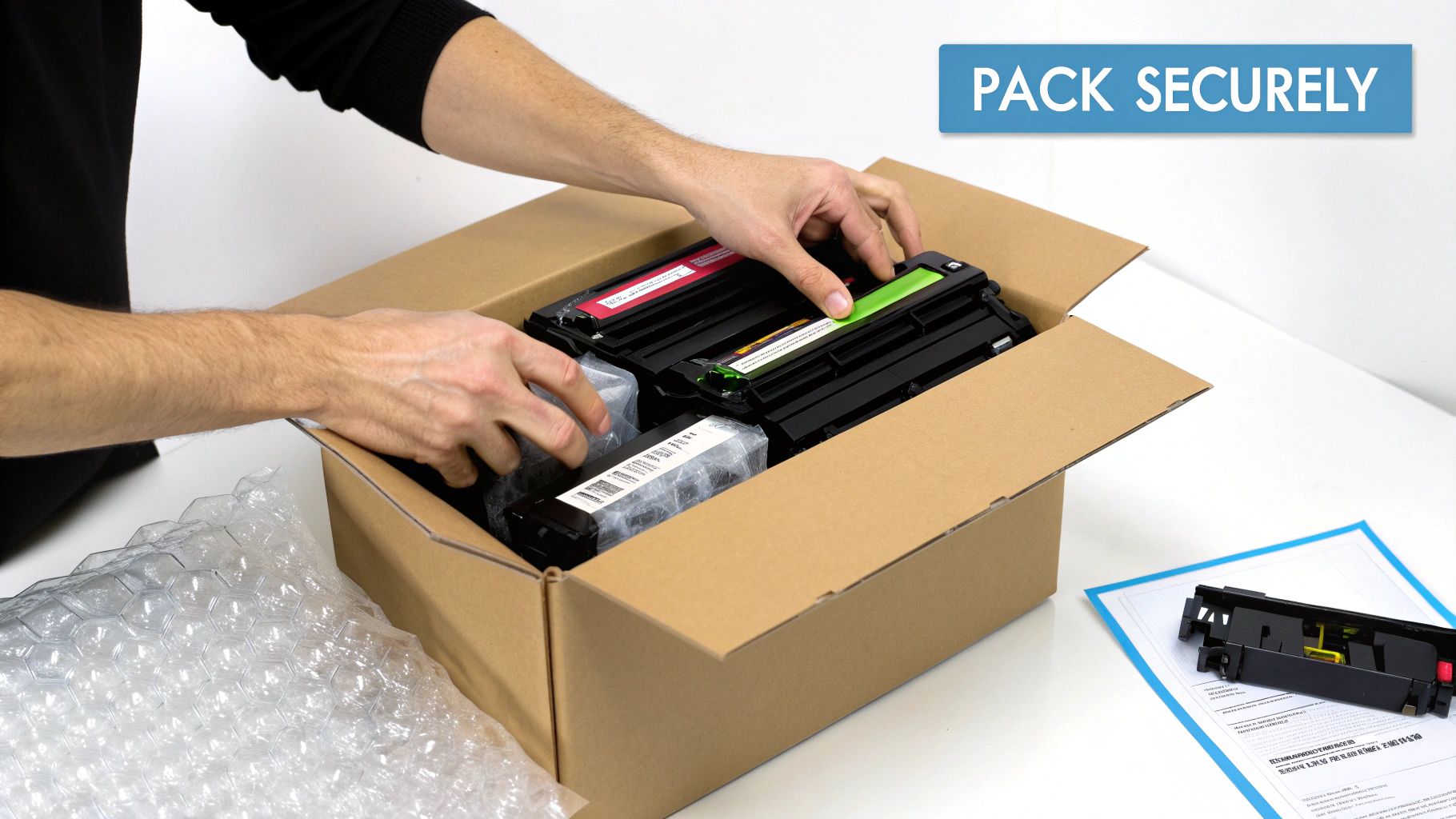
You’ve accepted an offer—now comes the most important part of the process: getting your cartridges to us in one piece. How you pack your surplus toner and ink directly impacts your final payout. It's the last hurdle to cross, and cutting corners here can be a costly mistake.
Thankfully, you don't have to worry about the shipping costs or risk. Reputable buyers cover that by providing fully insured, prepaid shipping labels. If the carrier drops the ball (or the box), you’re protected. Your only job is to pack everything securely so it arrives in the same condition you sent it.
First things first, find a solid cardboard box. This isn't the time to reuse that flimsy, beat-up box from your last online order. You need something with structural integrity that’s just the right size—not too big, not too small. For example, if you have ten toner cartridges, find a box that fits them with about two inches of space for padding on all sides.
When it comes to padding, you've got a few solid choices:
One thing to avoid? Packing peanuts. They're notorious for shifting around during transit, which allows heavy items to sink to the bottom and get damaged. To see how different carriers handle packages, check out our guide on partnering with major shippers for an inside look.
Here’s a little trick I’ve used for years: After taping the box shut, give it a gentle shake. If you hear anything rattling or feel items shifting, it’s not ready. Open it back up and add more packing material until it’s silent and solid.
It’s common to send a mix of heavy toner cartridges and much lighter ink cartridges, especially after a big office clean-out. Packing these together requires a bit of strategy to prevent damage.
Always start by placing the heaviest items—like those big toner cartridges or fuser units—at the bottom of the box. This creates a stable foundation. Then, lay a piece of cardboard or a thick layer of crumpled paper on top of them to act as a divider.
Now you can place the smaller, lighter ink cartridges on that top layer. This simple "heavy on the bottom, light on the top" method keeps the delicate ink boxes from getting crushed under the weight of the toner during shipping.
Once your package is on its way, you can keep an eye on its journey. It’s helpful to understand the lingo, like what 'in transit' means, so you know exactly where your shipment is. A few minutes of careful packing makes all the difference in ensuring a smooth and successful transaction.
You’ve packed everything up and sent it off. Now for the final, and most important, part: getting paid. This is where your unused supplies officially become cash in the bank. Knowing what to expect during the inspection and payment stages makes the whole experience transparent and hassle-free.
Once your box lands at the buyback facility, it gets opened right away. An inspection team takes over, and their main job is simple: make sure what's inside the box matches the inventory list you sent for your quote.
This verification step is what locks in the final value of your shipment.
Think of the inspection as a quick but thorough quality control check. The inspector goes through each item one by one, looking for a few key things that determine its value.
Here's what they're checking for:
This careful process is what allows buyback companies to offer you good money—they need to ensure the inventory they're purchasing is high-quality and ready for resale.
Once the inspection is done (which is usually the same business day your package arrives), your payment is processed immediately. A good buyback partner knows you want your money quickly and will offer flexible options to make it happen.
The best part? The entire cycle, from your shipment's arrival to your payment being sent, is often wrapped up in less than 24 hours. That kind of speed is a clear sign of a professional operation.
You'll typically get to choose how you want to receive your funds:
This efficient system means you get paid without any frustrating delays. You're not just clearing out clutter and adding to your bottom line; you're also making a genuinely positive environmental impact. A staggering one million printer cartridges are thrown away every single day across the globe. By selling your surplus, you're doing your part to keep them out of landfills. You can dive deeper into this topic by reading these insights on e-waste reduction.
Diving into selling surplus supplies for the first time usually brings up a few questions. That's perfectly normal. Getting a handle on how you can recycle printer cartridges for cash is the key to making the whole process smooth and profitable. Let's walk through some of the most common things people ask us, so you can move forward with confidence.
My goal here is to give you clear, straight-up answers based on how the buyback industry actually works. This way, you can turn that office clutter into a real asset without any second-guessing.
This is a big one. The whole buyback model is built on reselling your cartridges as brand new. That means they have to be genuine Original Equipment Manufacturer (OEM) products, still in their factory-sealed boxes. For the end-user buying them, quality and authenticity are everything.
Once a box is opened—even if the plastic pull-tab or inner bag is still sealed—it’s no longer considered "new" and can't be accepted. The same goes for remanufactured or compatible cartridges. Those are made by third-party companies, and while they might have worked fine for you, they don't have the OEM branding or meet the strict standards for resale in the secondary market.
This is probably the most critical question we get, and the answer shows why working with a professional buyback company is so important. Any reputable buyer will provide free, prepaid shipping labels that are also fully insured. That insurance is your financial safety net.
If the shipping carrier somehow damages or loses your package on its way to the warehouse, the insurance kicks in to cover the full quoted value of your items. For example, if your shipment was quoted at $500 and the box is destroyed by the carrier, you still receive the full $500. This takes all the financial risk off your plate.
Think of insured shipping as your ultimate peace of mind. It transforms the transaction from a potential risk into a guaranteed payout, contingent only on the accuracy of your inventory list.
The price you're offered isn't just pulled out of a hat; it’s a direct reflection of real-time market supply and demand. Just like any other product, a printer cartridge's value goes up and down. Models that fit popular, current printers will always fetch a better price than those for older, discontinued machines. For instance, toner for a new model like the HP LaserJet Enterprise M611 will be worth more than toner for a 15-year-old model.
Box condition is the other huge piece of the puzzle. A perfect, retail-ready box is worth top dollar. On the other hand, a box with dings, writing, or ripped-off labels will get a lower offer simply because it’s harder to resell.
You can sell a single cartridge, but it’s almost always better to sell your surplus inventory in bulk. From a practical standpoint, managing a bunch of tiny shipments is a headache for both you and the buyer.
It’s just so much more efficient to pull everything together into one transaction. You only have to pack one time, track one shipment, and wait for one payment. For example, instead of sending five separate boxes for five cartridges, you combine them into one larger, more cost-effective shipment. My advice is always to gather all your unused, eligible cartridges at once and get a single, comprehensive quote.
Ready to see what those extra cartridges are worth? At Toner Connect LLC, we make it easy to turn surplus supplies into cash. Get a fast, free quote today and discover the value hiding in your supply closet. Visit us at https://tonerconnect.net to get started.
