
That supply closet full of extra printer cartridges? It’s not just clutter—it’s cash waiting to be collected. The smartest way to sell unused printer cartridges is to partner with a professional buyback service. They offer a secure, streamlined process to turn those surplus OEM supplies into real revenue for your business. Instead of letting them expire on a shelf, selling them is a savvy financial move.
It’s surprisingly common for businesses to end up with a stockpile of OEM (Original Equipment Manufacturer) cartridges. Maybe you upgraded your office printers, a department over-ordered by mistake, or a project ended, leaving you with incompatible supplies. For example, a marketing firm might upgrade its fleet of HP Color LaserJet printers, leaving them with dozens of unused toner cartridges for the old models. Whatever the reason, those boxes often get tucked away in a storage room, slowly losing their value.
But don't think of that inventory as a sunk cost. Think of it as a hidden asset. Liquidating these surplus supplies is one of the easiest ways to recover capital and give your company’s bottom line a nice little boost. You’re essentially turning forgotten items into a tangible financial return, all while clearing out valuable storage space.
For many office managers I've worked with, the moment they realize their "clutter" is actually worth hundreds or even thousands of dollars is a real game-changer. It’s a simple way to add unexpected money back into the operating budget.
The process of turning those extra cartridges into cash is simpler than you might think.
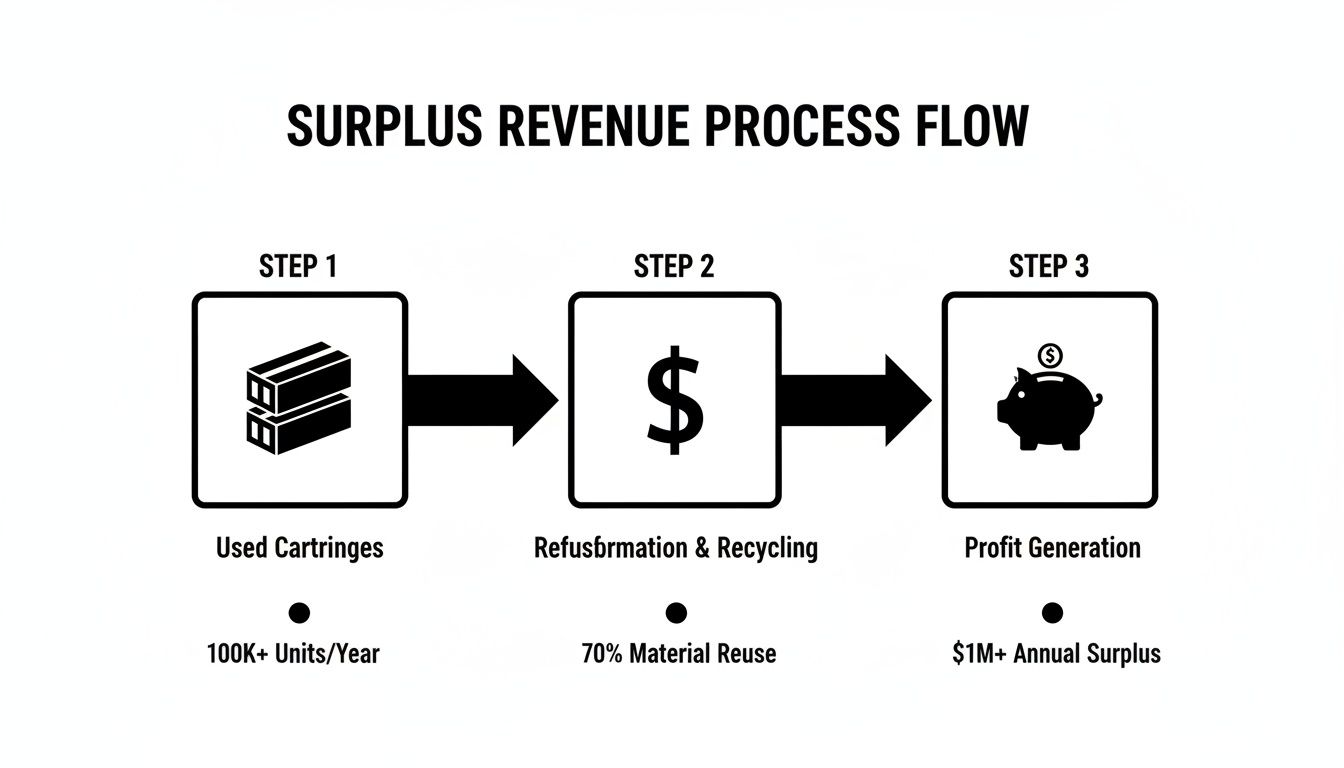
As you can see, a good buyback partner makes it incredibly straightforward to monetize these assets.
Beyond the obvious financial benefit, selling your unused cartridges is a smart move for your operations and your company's environmental goals. Letting excess inventory sit around comes with hidden costs—it takes up space, and eventually, the cartridges expire and become worthless. Taking a proactive approach avoids that waste entirely.
Here’s a quick breakdown of the benefits:
For businesses looking to get the most out of their surplus assets, it's helpful to understand strategic IT asset disposition practices for maximizing value. While that often refers to old computers and servers, the core principle is identical: identify unused assets and find a reliable partner to turn them into revenue. This guide will walk you through exactly how to do that with your extra printer cartridges in a way that is fast, profitable, and secure.
Before you can turn that stack of unused printer cartridges into cash, you need to know exactly what you have. A detailed inventory is your secret weapon for a quick, profitable sale. It cuts out the guesswork and helps buyback companies give you an accurate, top-dollar quote from the get-go. Taking a little time to gather, inspect, and document your supplies is the most crucial step you'll take.
Think of it like selling a used car. You wouldn't just tell a buyer, "I have a blue car." You’d list the make, model, year, and condition. The same logic applies here—the more detail you provide, the faster and more transparent the whole process becomes.
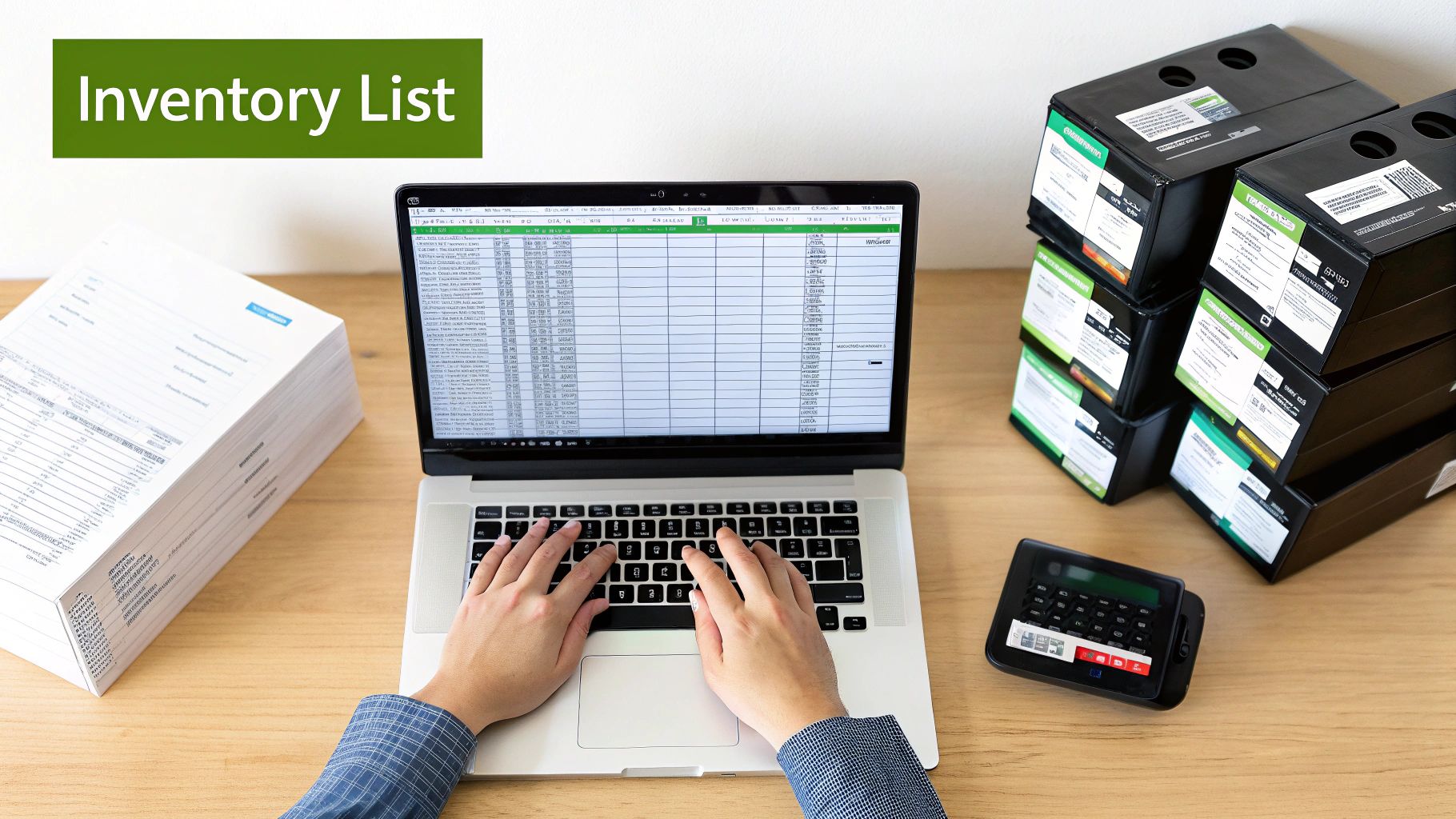
Your very first task is to sort the genuine OEM cartridges from the rest. OEM stands for Original Equipment Manufacturer, which means the cartridges were made by the same company that built your printer—think HP, Brother, or Canon. These are the ones buyback companies are after because they're reliable, high-quality, and can be resold with confidence.
Anything else—often called compatible, generic, or remanufactured—is made by a third-party company. While they might work fine, they have virtually no resale value in the buyback market due to spotty quality control. You’ll want to set those aside, as they typically aren't accepted. For example, a cartridge labeled "Made for use in HP printers" but lacking the official HP logo is a non-OEM product.
Once you've got your pile of OEM cartridges, it's time for a quick inspection of each box. The condition of the packaging has a huge impact on the value. A pristine, retail-ready box will always command the highest price, while damaged packaging can lead to a lower offer or even a rejection.
Run through this simple checklist for each cartridge:
This inspection process is also becoming more important due to shifting global regulations. For instance, starting in 2025, Spain's Catalonia region will enforce its Waste Prevention Act, banning non-refillable toner cartridges and pushing businesses toward reusable options. This trend is creating a goldmine for buyback firms, as governments worldwide roll out schemes that make manufacturers responsible for end-of-life products, spiking demand for collection and resale services.
With your inspection done, it's time to get everything documented. A clean, well-organized spreadsheet is the gold standard for getting a fast and accurate quote. It shows potential buyers you’re organized and serious, which almost always leads to a better experience and a higher payout.
Your list doesn't need to be fancy. A simple spreadsheet with a few key columns is all it takes to make the process a breeze. You can even use our simple file submission form to upload your list directly when you're ready.
Pro Tip: A detailed inventory list is your best negotiation tool. It removes all ambiguity, allowing a buyer to give you their best offer upfront without a lot of back-and-forth questions.
Here's a sample template to help you organize your surplus printer supplies. A clear list like this helps buyback companies like Toner Connect process your request quickly and accurately.
Use this template to organize your surplus printer supplies for a faster and more accurate quote. A clear inventory helps buyback companies like Toner Connect process your request quickly.
| Brand | Part Number | Description (Color/Type) | Quantity | Box Condition (e.g., Mint, Minor Wear) | Ink Expiration Date (if applicable) |
|---|---|---|---|---|---|
| HP | 952XL | Black Ink, High-Yield | 8 | Mint, sealed | 08/2026 |
| Brother | TN760 | Black Toner, High-Yield | 5 | Minor corner dent | N/A |
| Canon | 137 | Black Toner | 12 | Good, light scuffs | N/A |
| HP | 902 | Cyan Ink, Standard | 4 | Box has a small tear | 11/2025 |
This simple document is your ticket to a hassle-free sale. By providing this level of detail, you’re not just listing items; you’re presenting a professional inventory that makes a swift and seamless transaction possible.
You've done the legwork and have a detailed inventory list. Honestly, that's the toughest part. Now you're ready to get an offer and turn those surplus supplies into cash. Any reputable buyback company will make this next step as painless as possible, usually giving you a few ways to submit your list so you can pick what works best for you.
We all know you're busy, so the process needs to be straightforward. The main goal is to give the buyer the info they need to make a fair, accurate offer without a bunch of back-and-forth. Most companies, including Toner Connect, can get a quote back to you within just a few business hours, letting you make a decision quickly.
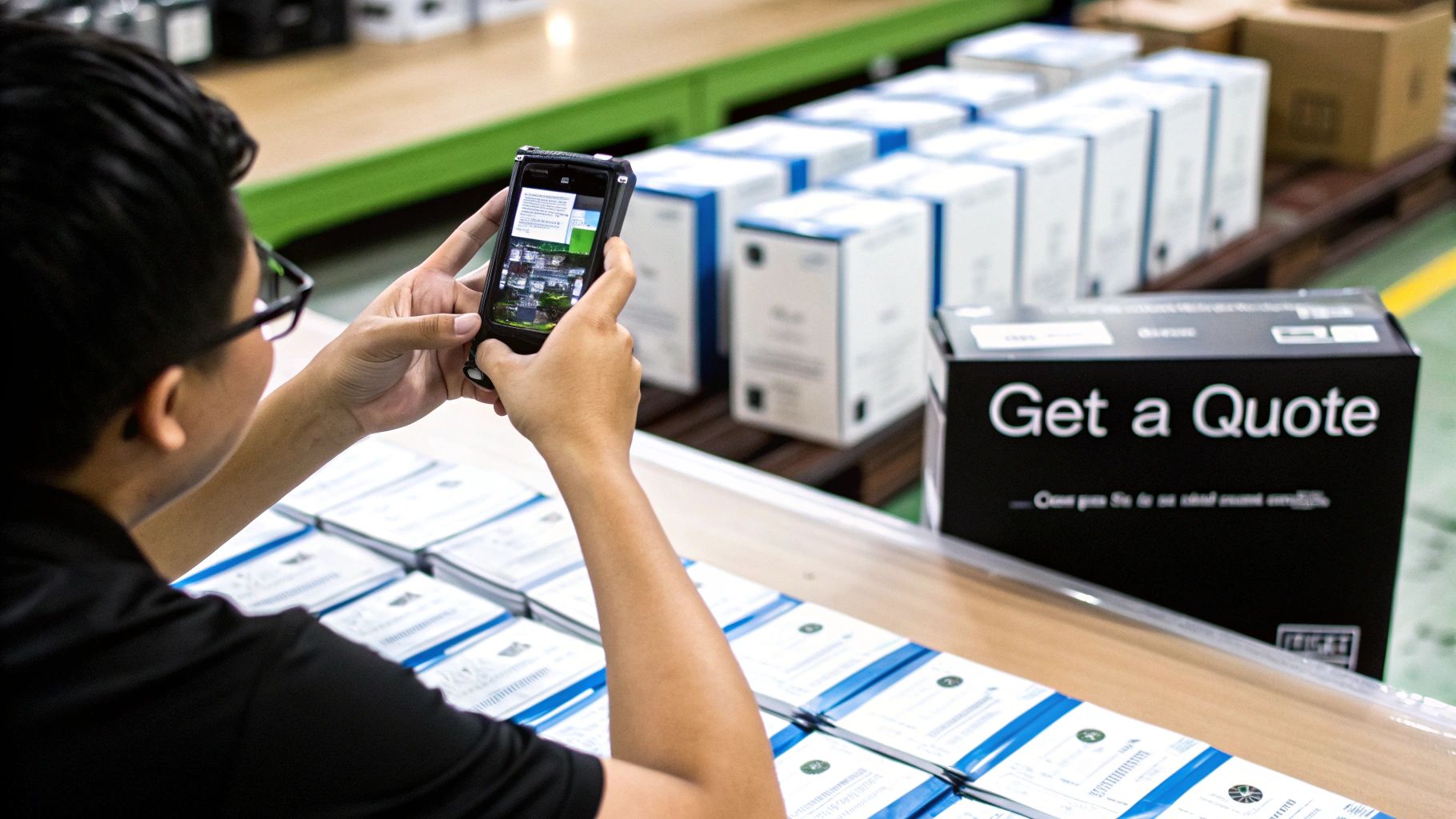
Different situations call for different methods. A big, organized inventory? A spreadsheet is your best friend. Just a handful of boxes? A couple of quick photos might be all you need.
Here’s a rundown of the three most common ways to get a quote.
Whichever way you go, a few simple tricks will help you get the fastest response and the most accurate quote. The clearer your info, the better.
If you’re sending photos, quality is everything. Blurry or dark pictures just lead to delays while the buyer has to ask for more information. To get it right the first time, check out these helpful image submission instructions. They offer simple tips on lighting and angles. The key is making sure the brand, part number, and any expiration dates are sharp and easy to read.
A common mistake I see is sellers sending a single photo of a large, messy pile of boxes. It’s far better to stack them neatly with the labels facing out or take a few pictures of smaller, organized groups. This small effort can cut the quoting time in half.
If email is your thing, using a clear, simple template ensures the buyer gets everything they need in your very first message. This helps them process your request right away instead of playing email tag. Feel free to adapt this template when you decide to sell unused printer cartridges.
Subject: Quote Request for Surplus OEM Printer Cartridges
Body:
Hello,
I'd like to get a quote for the following list of new, factory-sealed OEM printer cartridges we're looking to sell.
I've also attached photos of the items for your review. Please let me know your offer and the next steps.
Thanks,
[Your Name]
[Your Company]
[Your Phone Number]
Alright, you’ve agreed on a price for your cartridges. Now for the final, crucial step: getting them to the buyer in one piece.
Don’t just toss them in a box and hope for the best. I’ve seen it happen, and it never ends well. A cartridge that shows up damaged is a cartridge that can’t be resold, which means your payout gets slashed or even canceled. Proper packing is basically cheap insurance for your payment. A few extra minutes of care here makes sure the money you were quoted is the money you get.
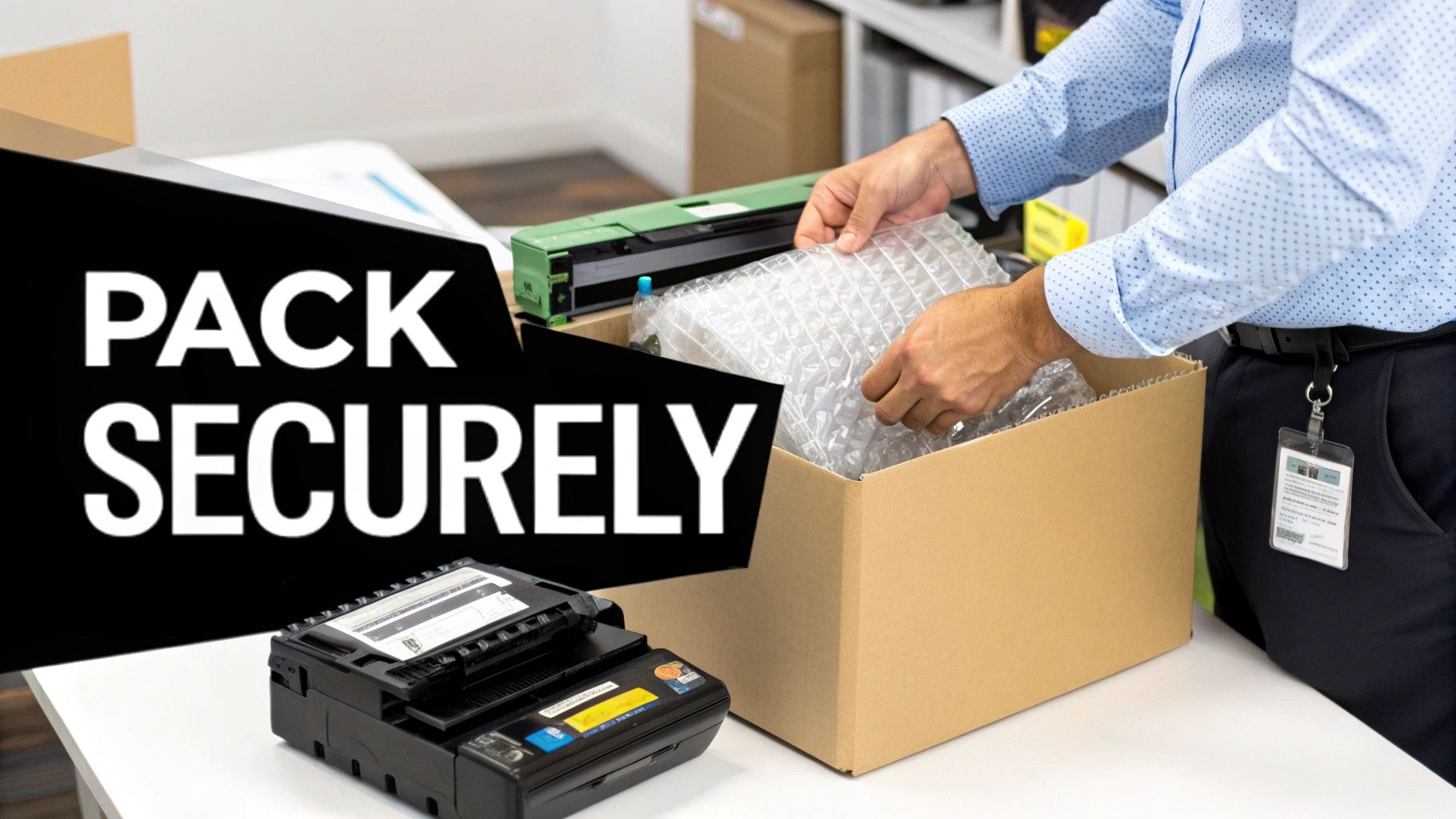
The number one enemy of a safe shipment is movement. If your cartridges can slide, rattle, or bump against each other, they will get damaged. The goal is to create a solid, cushioned block inside your shipping box where nothing can budge.
It’s simpler than it sounds. It all starts with the right materials.
Here's a pro tip I always use: the "shake test." After you've taped the box shut, give it a firm shake. Can you hear or feel anything moving inside? If so, open it back up and add more packing material. A perfectly packed box is a silent one.
While the basic idea is the same, toners and inkjets need slightly different handling. Getting these details right not only protects your items but also shows the buyer you know what you're doing, which can smooth out the inspection process.
Toner is a super-fine powder. If a cartridge is shipped or stored standing up, that powder can settle unevenly. This is a common cause of printing defects later on.
Inkjet boxes are far more fragile than toner boxes. Their thin retail packaging gets dented and crushed easily.
Here’s one of the best parts about this whole process: you shouldn’t have to pay a dime for shipping.
When you sell unused printer cartridges to a reputable buyback company, they cover all shipping costs. They will send you a prepaid and insured shipping label from a major carrier like FedEx or UPS. This is non-negotiable. If a buyer asks you to pay for shipping, it's a major red flag.
This isn’t just about saving you money; it’s about risk management. The insured label protects both you and the buyer in the rare event the package gets lost or damaged in transit—though if you’ve packed it right, damage is highly unlikely.
Beyond the cash in your pocket, there's a real environmental upside. One Australian company's recycling efforts over seven years saved 50,000 cartridges from the dump. That’s 1.5 tons of waste kept out of landfills and an estimated 130 sea turtles protected from harmful plastic pollution. It’s a small action with a big impact.
You’ve sorted, packed, and shipped your cartridges. Now for the final, most important part: getting paid. Once your box arrives at the warehouse, it moves into a final inspection. This isn't a complicated process, but knowing what to expect is key to a smooth, surprise-free transaction.
Think of it from the buyer's perspective. They need to ensure every cartridge they accept can be confidently resold to someone who needs a perfectly functioning, genuine product. The acceptance criteria are there to protect the end-user, which in turn protects the integrity of the buyback program.
Every cartridge that comes in gets a close look. Before any money changes hands, each item is checked against a few non-negotiable standards. Understanding these up front will help you filter your inventory correctly and know exactly what your payout will be.
Here’s what every legitimate buyback company will be looking for:
This is exactly why that initial inventory you created is so valuable. You've already weeded out the items that won't qualify, which means no disappointments when the final payment comes through.
Once your items are received and everything checks out, it's time to get your cash. A professional buyback service should make this part fast and flexible. We typically process inspections and payments on the very same business day your package arrives.
Here’s a look at the payment options we offer at Toner Connect.
Choose the payment method that best suits your business needs. This table compares the speed and process for each option offered.
| Payment Method | Payment Timing | Best For |
|---|---|---|
| Digital Check (ACH) | Same business day | Businesses needing a secure, electronic payment with a clear paper trail for accounting. |
| Zelle | Instant | Individuals or businesses who want the fastest possible access to their funds. |
| Paper Check | 3-5 business days (mail) | Companies that prefer or require traditional, physical checks for their bookkeeping. |
Having a few different ways to receive your money ensures the process fits seamlessly into how you already manage your company's finances.
Here’s a pro tip from years of experience: The single most important factor for a smooth inspection is honesty. If a box has a crushed corner or a small tear, just tell us when you request your quote. We would much rather adjust an offer slightly upfront than be surprised by an item that doesn't match its description. Transparency builds trust and leads to a great long-term partnership.
For sellers looking for absolute certainty, some companies provide a prepayment option. For example, at Toner Connect, we offer a PayPal Prepay method. It's exactly what it sounds like: we send you the payment before your items even leave your office.
This is a fantastic choice if you're a first-time seller or have a high-value shipment and want the security of having cash in hand first. It completely removes any risk on your end and turns the whole process into a simple, worry-free way to sell your unused surplus printer cartridges.
It's completely normal to have a few questions before you're ready to sell your unused printer cartridges. Even with a clear process, some specifics might be on your mind. We've compiled the most common questions we hear from business owners, office managers, and IT pros just like you, with direct, practical answers to help you move forward.
Of course. While we often buy large inventories from office liquidations, it’s just as common for folks to have only one or two extras lying around after a printer upgrade. There’s no minimum quantity needed to get a quote.
Think of it this way: a small accounting firm recently replaced a single desktop printer and ended up with two extra high-yield HP toner cartridges. They snapped a quick photo, got a quote, we sent a prepaid shipping label, and they had their payment just a few days after shipping. Every genuine cartridge has value, no matter how small the pile.
This comes up all the time, and it’s an important one. The condition of the box directly affects the cartridge's resale value, so it's something every buyer assesses carefully.
Here’s a realistic breakdown of how most buyers view box damage:
The best thing you can do is be upfront. Just send a quick photo showing any damage when you request a quote. It avoids any surprises and gets you an accurate offer from the start.
No. You should never have to pay to ship your cartridges to a reputable buyback company. The industry standard is simple: the buyer provides you with a prepaid, insured shipping label from a major carrier like FedEx or UPS.
This service should always be free for you. The buyer covers all the costs, and the insurance on that label protects both of us in the rare case a package gets lost or damaged on its way. If a company asks you to pay for shipping, see that as a major red flag.
The market for these services is growing, too. The global printer cartridge recycling market, valued at around $500 million in 2025, is on track to more than double to $1.1 billion by 2033. This boom is fueled by greater environmental awareness and stricter e-waste rules, making the entire buyback process more competitive and seller-friendly. You can discover more insights about this market growth on archivemarketresearch.com.
It all boils down to one word: quality. Genuine OEM (Original Equipment Manufacturer) cartridges are made by the same company that built your printer—think HP, Brother, Canon. They’re known for their reliability and consistent performance.
Remanufactured and compatible cartridges, on the other hand, are made by third-party companies. Their quality can be all over the map, with higher failure rates and a nasty habit of causing printer errors. Because buyback companies have to stand behind the products they resell, we can only accept genuine OEM cartridges that come with that built-in promise of quality.
The core of our business is trust. The next person who buys that cartridge needs to know it will work perfectly, right out of the box. Sticking to OEM-only is the only way we can make that promise every single time.
This focus on OEM ensures the whole system works and remains valuable for everyone. If you have more specific questions or a unique situation, you can always find more in our frequently asked questions about selling toner.
Ready to turn those surplus cartridges into cash? At Toner Connect LLC, we've helped over 7,000 businesses do just that. Get a fast, fair quote today and see how easy it is to monetize your unused supplies. Visit us at https://tonerconnect.net to get started.
