
You can absolutely recycle Ricoh toner, but let’s talk about a much smarter, more profitable option for your unused cartridges. Instead of simply sending them off to a recycling center, many businesses can actually sell their surplus toner for cash, turning that office clutter into a welcome budget boost.
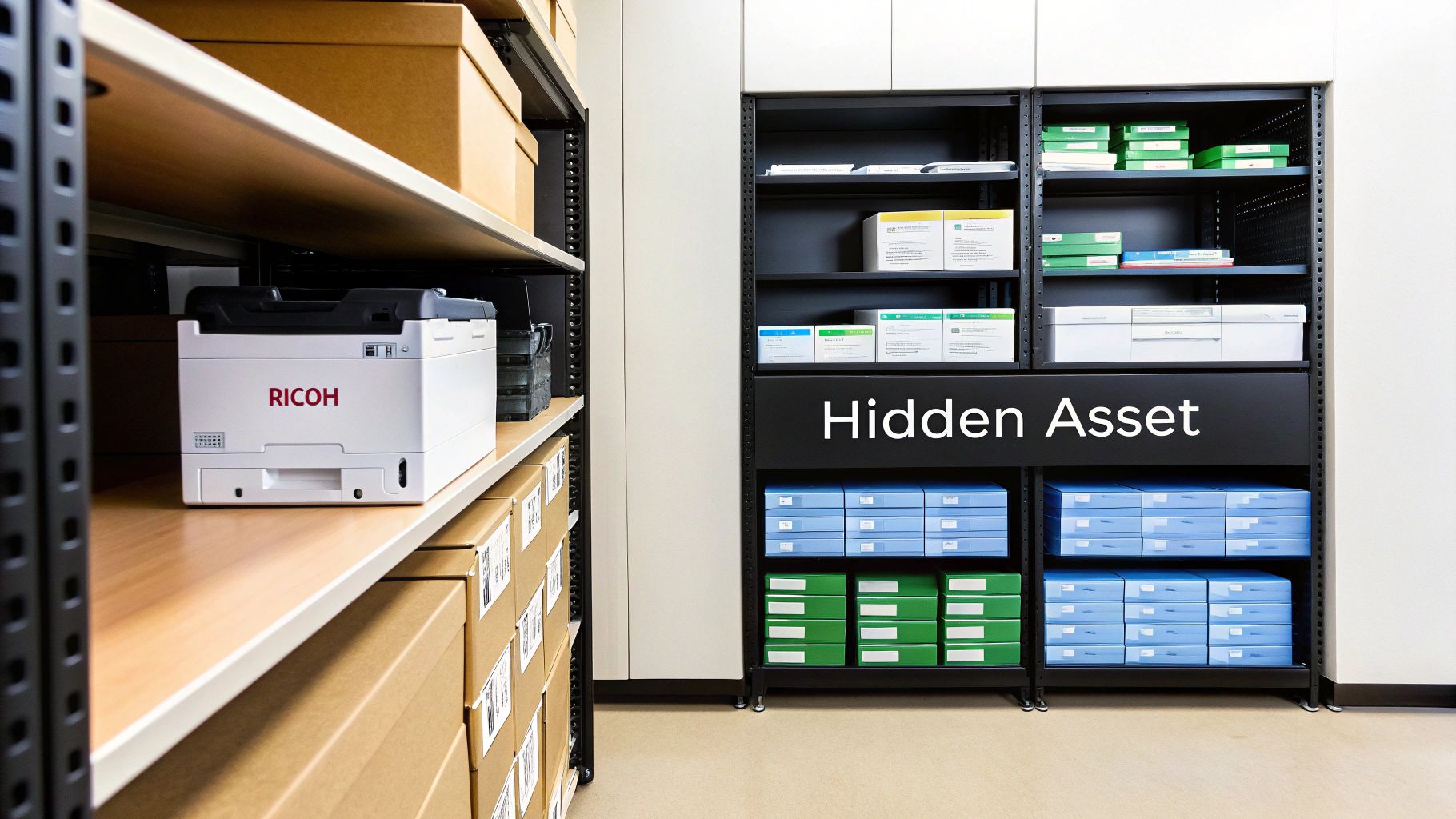
Take a look in your supply closet. That stack of forgotten Ricoh toner boxes is more than just a future recycling trip—it's a hidden asset, just waiting to be cashed in. Too often, office managers and IT teams write these cartridges off as a sunk cost, especially after upgrading the printer fleet and rendering them obsolete.
But that’s a missed opportunity. Instead of only thinking about the environmental angle of recycling, a truly effective Ricoh toner recycle strategy should include asset recovery. It’s a simple switch: turn that idle inventory directly into working capital for your business.
Holding onto surplus toner cartridges costs you more than just the initial purchase price. These supplies quietly drain company resources in a few key ways:
Let's put that into a real-world context. Imagine a marketing firm that just upgraded its office printers and now has 20 leftover boxes of toner for the old machines. They could go the standard recycling route, which is fine. Or, they could find a buyback program willing to pay $50 or more per cartridge, instantly turning a disposal chore into a $1,000 revenue boost.
It's all about shifting your perspective. When you start seeing surplus toner as a financial asset instead of just waste, you can make smarter, more profitable decisions that are still great for the planet.
The best approach to your Ricoh toner recycle plan is one that blends environmental responsibility with a healthy dose of financial savvy. Traditional recycling is fantastic and necessary for used, empty cartridges. But for new, unused toner, selling it prevents a perfectly good product from being destroyed before its time.
This puts valuable supplies back into the circular economy, getting them to businesses that still use and need them. It's a true win-win. Getting a handle on effective inventory management practices is the key to unlocking this value. This isn’t just about tidying up; it's about optimizing your resources and directly benefiting your bottom line.
This guide will walk you through the practical steps to identify, value, and sell your surplus Ricoh toner, turning those overlooked supplies into a surprising—and reliable—source of income.
Before you do anything else, you need to play detective. The value of that stack of toner cartridges sitting in your supply closet hinges entirely on what’s inside those boxes. A quick inventory check is the difference between finding a few hundred dollars and just having a load for the recycling bin.
I've seen it happen time and time again. An office manager, let's call her Sarah, was cleaning out a cabinet at her accounting firm. They'd switched printer models six months ago, and she found a stash of old Ricoh toner. Her first thought was to just send it all to an e-waste facility. But she took ten minutes to check, and it turned out she was holding onto five genuine OEM cartridges in perfect boxes, each worth over $70 to a buyback company.
That's a $350 discovery from a ten-minute audit. Not bad at all.
The first and most important question is whether your toner is OEM (Original Equipment Manufacturer). In simple terms, this means it was made by Ricoh, for Ricoh printers. These are the only cartridges buyback companies are interested in because their quality and performance are guaranteed.
On the other hand, you might have a compatible or remanufactured cartridge. These are third-party products made to fit a Ricoh printer. They’re often cheaper to buy, but they have virtually zero resale value.
So, how do you spot the difference? It's usually pretty straightforward.
The bottom line is simple: if it doesn't say "Ricoh" and look like it came directly from the factory, it's almost certainly a compatible cartridge. Your best bet for those is a manufacturer take-back program or a local recycling center, not a buyback service.
Once you've confirmed your cartridges are the real deal, you need to gather a couple more details to figure out their cash value. Every little thing matters when you're asking for a quote.
The model number is the key piece of information here. It’s usually a mix of letters and numbers printed clearly on the front of the box—something like "MP C3003" or "Pro C5200s". This number tells a buyer exactly which printers the toner fits, which is what determines its demand and price.
Next, give the box a good look-over. To get top dollar, the packaging needs to be in great shape.
To get the most accurate quote, it's always a good idea to snap a few pictures. You can learn more here about submitting photos of your toner for an accurate quote, which helps a buyer see exactly what you have and give you their best offer.
So, should you sell it or recycle it? Use this quick table to figure out if your surplus Ricoh toner qualifies for a cash buyback program or is better suited for a standard recycling service.
| Cartridge Condition | Best Option | Potential Outcome |
|---|---|---|
| New, unopened OEM box in good condition | Toner Buyback Service | Cash payment. You recover the asset's value, and the cartridge is used as intended. |
| New, OEM box but with significant damage | Toner Buyback Service (with disclosure) | Reduced cash offer or recycling. The buyer may accept it at a lower price or suggest recycling. |
| Opened box, even if the toner is unused | Ricoh Recycling Program | Responsible disposal. The cartridge is recycled according to manufacturer standards. |
| Compatible or remanufactured toner (any condition) | Local E-Waste Center | Responsible disposal. These cartridges have no resale value and should be properly recycled. |
By taking just a few minutes to identify your toner's type, model, and condition, you can confidently choose the right path. You'll either be turning that forgotten inventory into a nice financial return for your company or making a positive environmental impact.
Once you’ve figured out what you have, the real question is: where should it all go? You've got three main options for your surplus Ricoh toner, and the best choice really boils down to the condition of your cartridges and what you're trying to achieve.
There’s no single right answer here. A business sitting on a dozen factory-sealed cartridges is in a completely different position than a company with a mixed bag of used, damaged, and non-OEM items. Let’s walk through each path with some real-world examples.
Ricoh's own recycling program is your best bet for used or empty cartridges. It’s an impressive, environmentally-focused operation designed specifically for toner that has been opened or is no longer sellable. Think of it as the responsible end-of-life solution that aligns with corporate sustainability goals.
Imagine your office just upgraded a printer, leaving you with three half-used cartridges. These have zero resale value. Instead of just tossing them in the bin, sending them to Ricoh ensures they get properly handled and re-enter a circular economy system.
And this isn't some token effort. Ricoh has remanufactured over 2.2 million toner cartridges globally, recovering between 72% to 97% of the post-consumer weight to be used again. That's a serious, global infrastructure working to keep toner out of landfills.
This is where that forgotten stash in your supply closet turns into cash. For any new, unopened, and genuine OEM Ricoh cartridges, toner buyback companies are easily the most profitable route. These businesses buy your surplus inventory and get those valuable supplies back into the hands of companies that still need them.
Here's a classic scenario I see all the time: an IT manager finds a case of 15 brand-new Ricoh MP C6003 toner cartridges after a fleet-wide printer upgrade. The boxes are pristine. Ricoh's program would simply recycle them, but a buyback service could offer over $50 each. Suddenly, that forgotten box is worth $750.
This is the smartest Ricoh toner recycle move for any business with valuable, unused stock.
Key Takeaway: If your toner is genuine OEM, new, and still in its sealed box, a buyback service will give you the best financial return. For everything else—used, opened, or damaged—Ricoh's official program is the perfect, responsible choice.
Making this decision is simpler than it sounds. Just follow a clear path to figure out what your cartridges are actually worth.
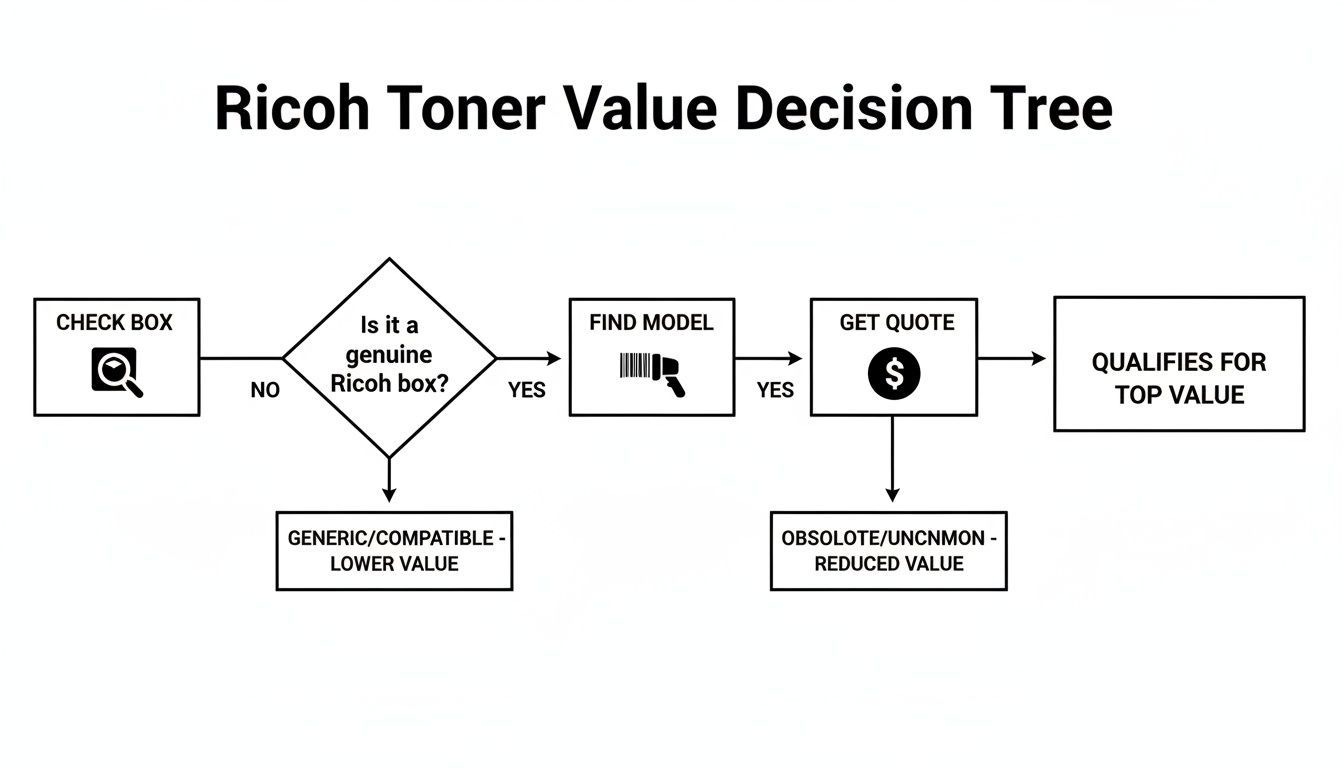
As you can see, the condition of the box and the specific model number are the two things that really matter. They're what separate a valuable asset from an item that simply needs to be recycled.
Your third option is a local e-waste or municipal recycling center. This can be a convenient choice if you're already getting rid of a bunch of office electronics at once—old keyboards, monitors, and a mix of different printer cartridges.
But here's the big trade-off: you won't get paid. These centers do a great job providing a responsible disposal service for the community, but they don't buy back individual items like toner. This path makes sense if you only have a few non-valuable cartridges (like compatibles or heavily damaged OEM boxes) and you're already making a trip to drop off other electronics.
A critical part of managing this process is choosing trusted e-waste disposal companies that know how to handle these materials. Not every facility is equipped to deal with toner powder safely, so working with a certified center is key. While you can often learn more about distributors and their specific recycling capabilities at https://tonerconnect.net/learn-more-distributors, a dedicated buyback service is always the better financial option for quality surplus. Choosing the right path ensures your Ricoh toner recycle efforts are both profitable and environmentally sound.
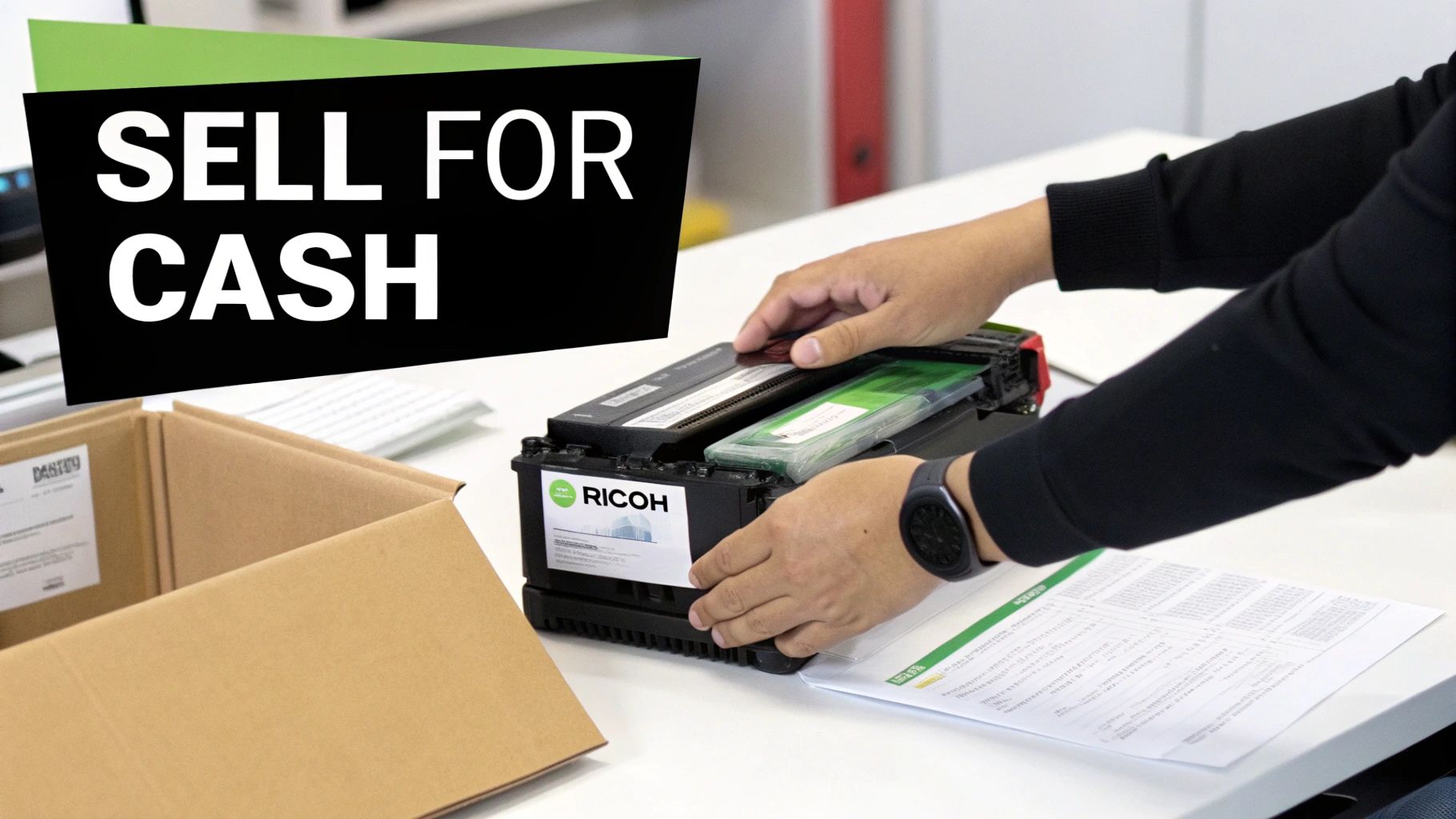
This is your playbook for turning that forgotten stash in the supply closet into real money. Selling your unused Ricoh toner is a straightforward way to get rewarded for smart inventory management. For any cartridges still in new, sellable condition, it's a far more profitable move than a standard Ricoh toner recycle program.
Let's walk through the entire buyback journey, from figuring out a fair price to seeing the money land in your account. With just a little prep work, you can unlock the hidden value in those surplus supplies without any hassle or out-of-pocket costs.
First things first: you need to find out what your toner is worth. To get the best possible offer, you need to be specific. Vague details lead to vague quotes, so being precise from the start works in your favor.
Simply saying "I have some Ricoh toner" isn't going to cut it. A much better request looks something like this: "I have five boxes of Ricoh MP C3003 toner. All are brand new, factory-sealed, and in excellent condition with no writing or damage." This level of detail empowers the buyer to give you a firm, reliable quote right away.
To get the ball rolling, gather these key details for each cartridge:
Reputable buyback companies make this easy. You can get a free, no-obligation quote by submitting a simple form with your list of toner and a few quick photos. It's the fastest way to get a real offer on the table.
Pro Tip: Before you even ask for a quote, snap a few clear photos. One picture of the entire stack of boxes and a close-up of a model number and security seal can answer most of a buyer's questions instantly. I've often seen this lead to a faster and sometimes even higher offer.
Once you've accepted an offer, the next step is crucial: packaging. How you pack your cartridges has a direct impact on their value when they arrive. If items get damaged in shipping, their value can be reduced or they might even be rejected completely. A few minutes of care here really pays off.
The golden rule is simple: keep them in their original, undamaged boxes. That box is what protects the cartridge and proves it’s a genuine, brand-new product. Whatever you do, don't remove the toner from its packaging.
Here’s how to make sure your cartridges arrive safely:
Think of it like shipping a collectible. The condition of the packaging is just as important as what's inside. A pristine box tells the buyer they're getting a top-quality product, which ensures you get the full value you were quoted.
One of the biggest perks of working with a professional buyback service is how simple and cost-free they make the shipping. You should never have to pay to send your toner in. A good company will provide you with prepaid, insured shipping labels from carriers like FedEx or UPS.
This makes the entire process risk-free for you. The insurance covers any potential loss or damage while it's on the truck, giving you complete peace of mind. All you need to do is pack the items, slap the label on, and drop off the box.
So, how long does it take to get paid? The timeline is usually pretty quick.
Professional services offer flexible payment options like PayPal, Zelle, or a physical check to fit your needs. In many cases, the entire cycle from your initial email to having cash in your account can happen in under a week.
Always keep your shipping receipt and tracking number until you’ve confirmed the payment has been received. It’s a simple step that provides a safety net and proof of shipment, guaranteeing a smooth and secure transaction from start to finish.
Let's get practical. Managing your toner supply isn't just about keeping the supply closet tidy—it's about strategic asset recovery. Those unused cartridges aren't a sunk cost; they're a chance to get cash back.
It’s a scenario I see all the time. A mid-sized marketing firm upgrades its fleet of printers, and what do they find in the back of a cabinet? Fifty surplus Ricoh cartridges for the old models. Instead of just sending them to a basic Ricoh toner recycle program, they opt for a buyback service. Just like that, they could earn over $2,000 and reclaim an entire shelving unit for supplies they actually need.
Choosing to sell your surplus toner is one of those rare win-wins. On the financial side, you're unlocking capital that was just sitting there collecting dust. Environmentally, you're keeping perfectly good, high-value products in circulation, making sure they get used as intended instead of being shredded prematurely.
This one decision boosts both your bottom line and your sustainability report. The impact is real and easy to measure, proving that smart office management is both profitable and responsible.
The numbers don't lie. One company that fully embraced Ricoh's recycling initiatives for its used cartridges kept 22,216 units—or 75,534 pounds of plastic and metal—out of landfills. They also paired this with smarter printing habits, which led to over $1.3 million in savings from using less paper and ink. You can see exactly how they did it over on Ricoh's case study page.
You don't need to be a massive corporation to see these kinds of results. For small businesses, non-profits, and schools, every dollar recovered and every pound of waste avoided makes a huge difference.
Here’s what that looks like in practice:
When you start treating surplus toner as a recoverable asset, you’re doing more than just making a one-time sale. You’re adopting a smarter, more circular approach to how you manage supplies—one that pays off again and again.
At the end of the day, having a clear Ricoh toner recycle and resale strategy is a powerful business move. It turns a common office headache into a clear win, demonstrating financial savvy and environmental responsibility all at once.
Alright, let's get into the nitty-gritty. Once you start looking into recycling your Ricoh toner, a few practical questions always come up. These are the details that often determine whether you move forward or just let those cartridges keep collecting dust in a supply closet. Here are the answers I've found most people are looking for.
This is a big one, and I get this question all the time. If toner has been sitting in storage for a while, a few bumps and bruises on the box are normal. Most buyback companies are looking for the original, sealed box to give you the best price, but minor cosmetic dings usually only knock a small amount off the offer.
The real trouble starts with major damage—think large tears, obvious water stains, or a totally crushed corner. That kind of damage can make a cartridge ineligible for resale. The best thing you can do is be completely transparent.
When you request a quote, just snap a few clear photos of the damage and send them along. It lets the buyer give you a firm, accurate number right away. If a box is too beat up to sell, Ricoh's official recycling program is still the perfect, responsible way to dispose of it.
I'll be direct: almost certainly not. Toner buyback programs are built around Original Equipment Manufacturer (OEM) cartridges. It all comes down to trust. OEM products have a proven track record for quality and performance, which means there's a reliable market for them. Third-party cartridges just don't have that same guarantee.
So, what do you do with those compatibles? You have a couple of good options:
Your first call should be to the compatible brand's supplier, but don't expect to get cash for any non-OEM products.
Most people are genuinely surprised by how fast this all happens. A professional buyback service has this process down to a science.
Let me give you a real-world example. I worked with an IT manager in Chicago who needed to clear out 20 surplus Ricoh cartridges. He sent over his list at 10 AM on a Monday and had a quote waiting in his inbox before he even went to lunch. After accepting the offer, he got his prepaid shipping labels that same afternoon, and the box was on a FedEx truck the next morning. The package was delivered and inspected on Thursday, and he had the payment via Zelle before heading home for the day.
From his first email to cash in the bank, the whole thing took just four business days. It’s a clean, efficient process.
Absolutely. You don't need a pallet of toner to make this worth your time. We see it all the time—even one or two high-demand cartridges can fetch $50 to $100, sometimes more. The best part is that reputable buyback companies cover the shipping and insurance, so there is zero cost or risk on your end.
Think of it as finding money in a closet. It's a simple way to recover value from something that's just taking up space. For example, finding just one high-yield cartridge like a Ricoh MP C6003 can be worth over $50. There's no minimum quantity to get a quote, so you have nothing to lose by finding out what your surplus toner is worth. It's usually more than you expect.
Ready to see what your surplus Ricoh toner is worth? Toner Connect LLC makes it easy. Request a free, no-obligation quote today and turn your unused supplies into cash. Visit the Toner Connect website to get started.
