
Finding effective fundraising ideas for schools often feels like a repetitive cycle of bake sales and car washes. While these classics have their place, modern school communities require innovative, sustainable, and high-impact strategies that don’t exhaust volunteers or strain parent budgets. The objective isn’t just to raise money for a single field trip; it’s to create reliable revenue streams that support essential needs, from technology upgrades and arts programs to classroom supplies and extracurricular activities.
This comprehensive guide moves beyond the expected, offering 12 practical, step-by-step fundraising plans designed for today’s educational environment. We’ll explore everything from traditional events with a fresh twist to unique programs that turn everyday surplus items, like unused printer cartridges, into significant financial assets. Each idea is presented as a detailed blueprint, complete with target audiences, cost estimates, promotional tips, and potential pitfalls to avoid.
Whether you’re a PTA leader searching for your next big campaign, a school administrator aiming to balance the budget, or a teacher looking to fund a classroom project, these actionable strategies will help you achieve your financial goals. For comprehensive guides on generating sustainable income and other creative options, explore resources like these on 9 Top Charity Fundraising Ideas for Schools. By thinking creatively and implementing structured plans, you can build a stronger, more engaged, and better-funded school community. Let’s dive into the fundraising ideas that deliver real results.
One of the most overlooked yet effective fundraising ideas for schools involves monetizing surplus office supplies. This program turns used and unused toner and ink cartridges from school offices, local businesses, and the community into a consistent revenue stream. By partnering with a buyback service, schools can sell these items, converting potential e-waste into valuable funds for student programs while promoting environmental responsibility.
The concept is simple: collect qualifying OEM (Original Equipment Manufacturer) toner and ink cartridges that are new and in their original, unopened boxes. Schools act as collection hubs, gathering these supplies from their own inventory, parents, and corporate partners. Once a significant quantity is collected, you can sell them for cash.
For instance, a school district might consolidate all its surplus cartridges from various schools at the end of the fiscal year. A PTA could also partner with a local accounting firm to collect their unused supplies after a printer fleet upgrade.
Key Insight: This fundraiser requires minimal upfront investment. The primary resources needed are storage space and a system for collecting and tracking inventory, making it an accessible option for any school.
A corporate matching program elevates a standard donation drive into one of the most powerful fundraising ideas for schools. This model doubles your impact by securing a commitment from a corporate partner to match every dollar or item donated by the community. By focusing the drive on high-value items like new OEM printer cartridges and office supplies, schools can collect tangible goods and then sell them for cash, with the corporate match amplifying the total funds raised.
The school first secures a corporate sponsor willing to match donations up to a certain amount. The school then launches a donation drive, asking parents, community members, and other businesses to contribute specific items like unopened toner cartridges. For every cartridge donated, the corporate sponsor contributes an equivalent cash value or makes a matching product donation.
For example, a regional bank could agree to match up to $5,000 in donations. If the school collects 100 toner cartridges valued at $50 each, totaling $5,000, the bank donates an additional $5,000, bringing the fundraiser total to $10,000.
Key Insight: The matching component creates a sense of urgency and incentivizes larger contributions. Donors feel their gift has twice the impact, which significantly boosts participation and overall revenue.
This initiative empowers students by putting them in charge of a sustainable business venture. A student-led group, like a technology or environmental club, takes full ownership of collecting, managing, and selling surplus toner and ink cartridges. This approach not only generates funds but also provides invaluable, real-world experience in project management, business logistics, and sustainability practices.
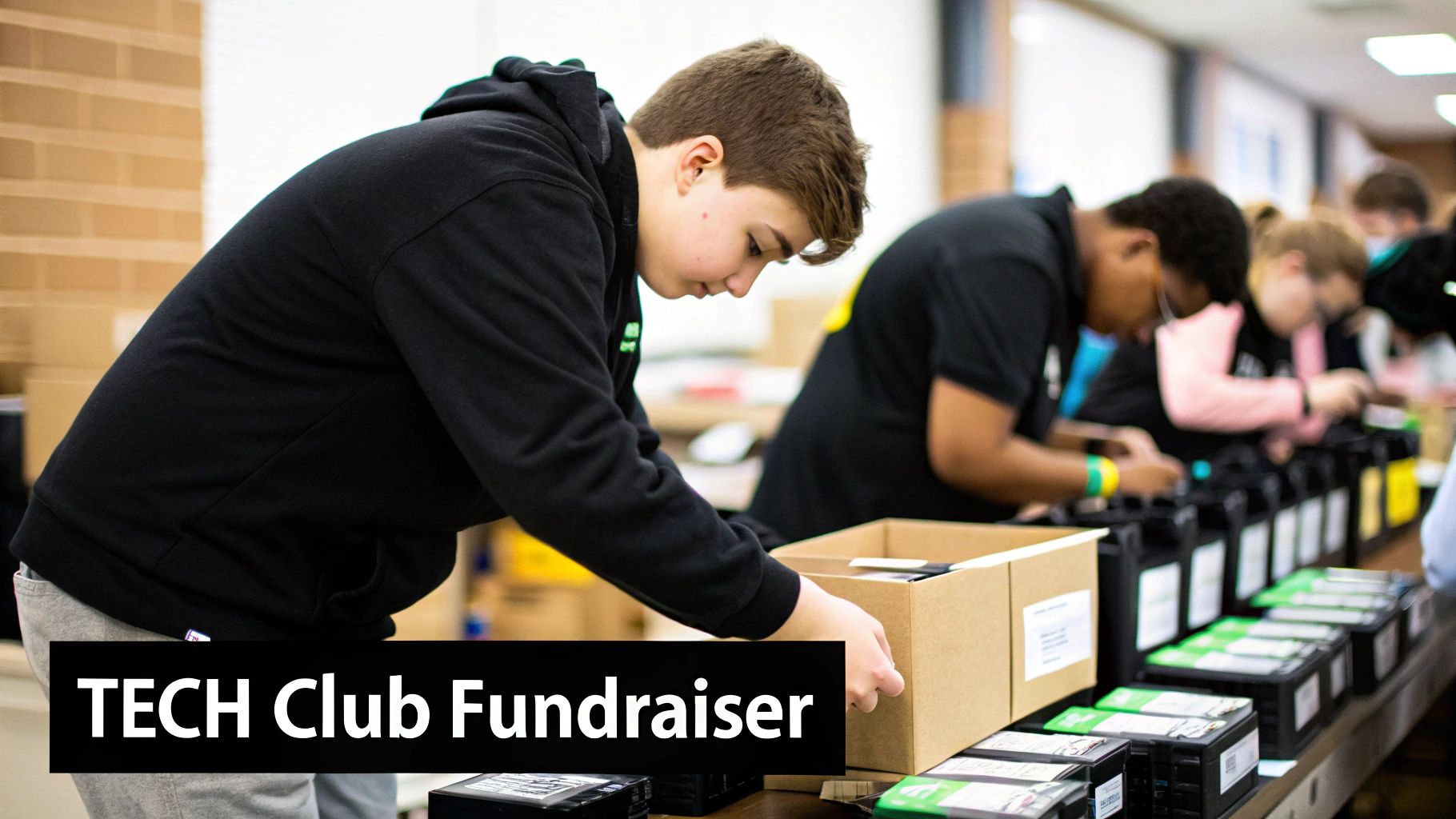
The club becomes the central engine for the fundraising program. Students are responsible for every step, from promoting the initiative to handling the final sale. They learn to manage inventory, research and communicate with buyback services, negotiate pricing, and coordinate shipping logistics, turning classroom knowledge into practical application.
For example, a school’s robotics club could manage the entire process to fund its competition travel expenses. They would track collected cartridges in a spreadsheet, contact businesses for donations, and use a service like Toner Connect to sell the items, directly seeing their efforts pay off.
Key Insight: This fundraiser doubles as a hands-on educational tool. Students gain resume-building skills in leadership, logistics, and financial management while directly contributing to their club’s or school’s goals.
This community-focused event turns surplus office supplies from local businesses and households into a profitable fundraiser. Schools host a marketplace where donated items, especially valuable printer cartridges, are sold at affordable prices. This approach combines a community yard sale with a targeted drive for high-value goods, creating a dynamic and engaging fundraising idea for schools.

The school acts as a central collection point for new or gently used office supplies donated by the community. These items are then sorted, priced, and sold at a one-day event held on school grounds. The main revenue drivers are often OEM toner and ink cartridges, which can be sold to attendees or, if unsold, to a buyback service for guaranteed cash.
For example, a middle school could organize a “Back-to-Business” sale in August, collecting supplies from local companies that are upgrading their equipment. Items like pens, paper, and organizers are sold for a few dollars, while unopened toner cartridges are priced at 20-40% below retail for a quick sale.
Key Insight: This event model has multiple revenue streams. You profit from direct sales to the community and from selling leftover high-value inventory like toner cartridges to a dedicated buyer, ensuring no valuable donation goes to waste.
Transforming business e-waste into educational resources is one of the most sustainable fundraising ideas for schools. This program formalizes partnerships with local businesses, creating a predictable pipeline of donated surplus toner and ink cartridges. Companies get an easy way to offload unwanted inventory, receive tax documentation, and support their community, while the school gains a steady, recurring source of income.
This model moves beyond one-off collections by establishing ongoing relationships with businesses that regularly use and replace printer supplies. The school acts as a designated recipient for their surplus OEM cartridges, collecting them on a monthly or quarterly basis. Once collected, these new, in-box supplies are sold to a buyback service.
For example, a law firm upgrading its printer fleet could donate its entire stock of old, unused cartridges. Similarly, a local medical office could set up a quarterly donation of surplus supplies from its billing department.
Key Insight: This strategy builds long-term, mutually beneficial relationships. Businesses reduce waste management costs and gain positive PR, while the school secures a reliable fundraising channel with minimal effort from its parent community.
Tapping into your school’s most dedicated resource, its faculty and staff, creates one of the most reliable fundraising ideas for schools. This program incentivizes teachers to bring in surplus toner and ink cartridges from their homes, previous workplaces, or community connections. In exchange for their contributions, staff can earn small rewards like classroom supply credits, preferred parking spots, or gift cards, turning their everyday connections into a consistent source of inventory.
This internal drive leverages staff motivation by offering direct benefits for their participation. The school sets up a simple system where staff members can drop off new, unopened OEM cartridges. Each contribution is tracked, and rewards are distributed once certain milestones are met.
For example, a middle school could offer a $25 gift card to a local coffee shop for every five qualifying cartridges a teacher brings in. An elementary school might create a “Cartridge Champion” contest, awarding the top contributor each semester with a coveted front-row parking space.
Key Insight: This approach builds on existing relationships and requires minimal outreach. Staff members are already invested in the school’s success, and a small, tangible incentive can significantly boost participation and inventory collection.
One of the most engaging fundraising ideas for schools is to gamify the collection process through friendly competition. This approach turns a simple collection drive into an exciting event by pitting classrooms or grade levels against each other. The group that collects the most qualifying toner and ink cartridges wins a prize, motivating students, parents, and teachers to participate actively and boost collection volumes significantly.
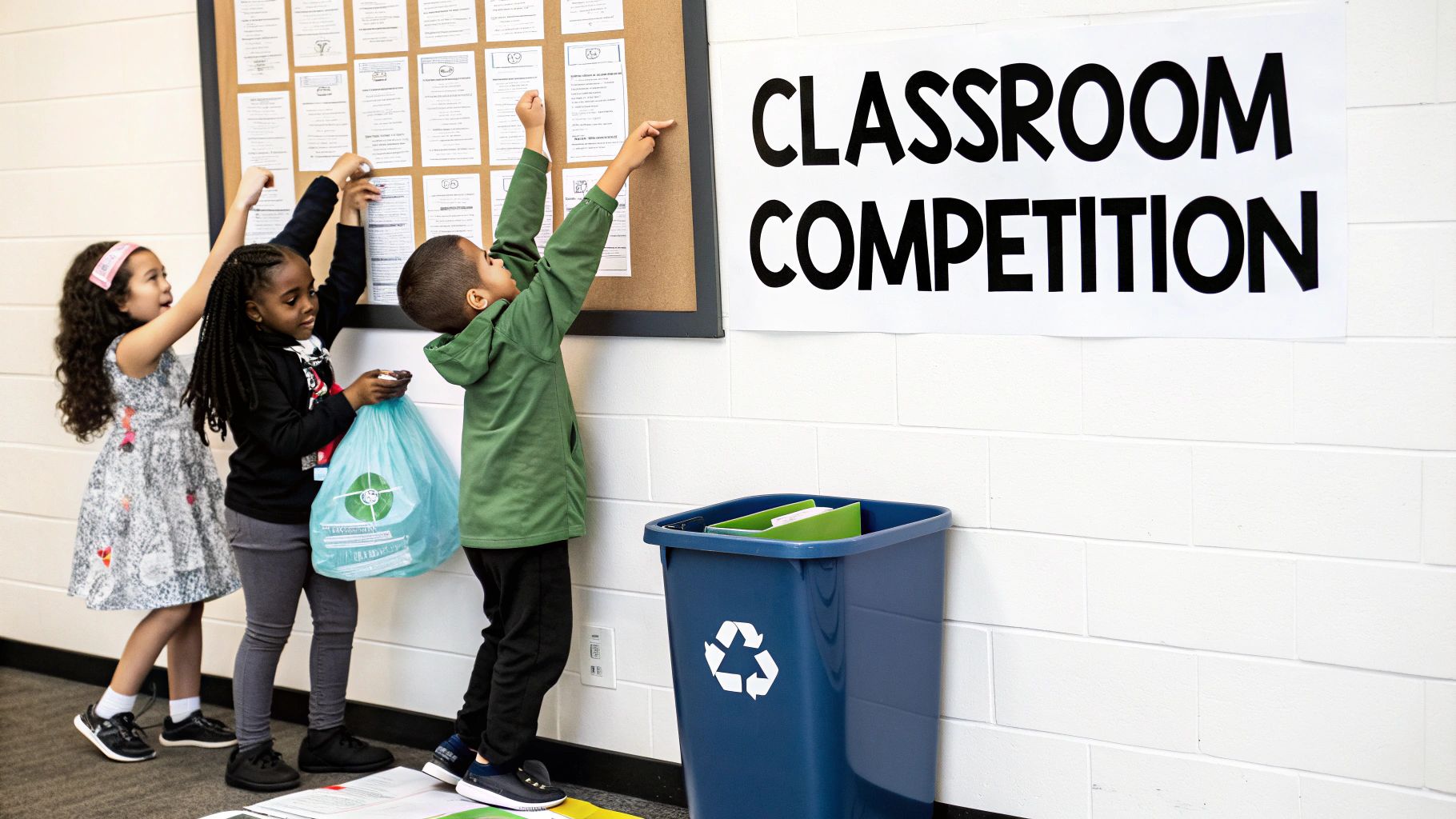
The school establishes a competition where classes or grades earn points for each eligible surplus toner or ink cartridge they bring in. The winning group receives a predetermined reward, such as a pizza party, extra recess time, or a contribution toward a field trip. This creates a fun, team-based incentive that drives participation far beyond a standard collection drive.
For example, an elementary school could run a month-long “Cartridge Clash,” with the top-collecting classroom winning an ice cream social. A middle school might have a quarter-long contest where the winning grade earns a movie day.
Key Insight: The competitive element taps into school spirit and teamwork. Prizes do not need to be expensive; often, simple rewards like bragging rights or extra privileges are highly effective motivators for students.
Leveraging the power of an established parent organization like a PTA or PTO creates one of the most effective fundraising ideas for schools. This approach turns a standard collection drive into a well-organized, community-wide campaign. The PTA/PTO spearheads the effort, using its existing communication channels and volunteer base to collect surplus OEM toner and ink cartridges from school families, their workplaces, and local connections.
The PTA/PTO acts as the central coordinator for the fundraiser. They handle all aspects, from promotion and logistics to sorting cartridges and finalizing the sale. This model capitalizes on the trust and reach the parent organization already has within the school community, making it easier to secure participation and donations.
For example, a PTO could launch a “Green Initiative” campaign at the start of the school year, asking each family to bring in one qualifying new, unopened cartridge from a home office or a parent’s workplace. The campaign could have a clear goal, like funding a new set of library books or a specific field trip.
Key Insight: This fundraiser thrives on existing infrastructure. The PTA/PTO’s established communication network, from newsletters to social media groups, provides a ready-made platform to promote the drive and track progress.
A smart twist on traditional back-to-school fundraisers, this idea involves creating and selling pre-packaged supply bundles for students and families. By including essential items like notebooks and pens alongside new printer cartridges, schools offer a convenient, one-stop shopping solution while generating a profit on each bundle sold. This approach saves parents time and money while providing a reliable source of income for the school.
The school partners with local or wholesale suppliers to purchase school supplies and new OEM printer cartridges in bulk at a discount. Volunteers then assemble these items into grade-specific packages. These bundles are sold to families at a price lower than retail but high enough to create a fundraising margin.
For example, an elementary school could offer a “$50 All-in-One” bundle containing folders, crayons, paper, and a popular ink cartridge model for home printers. A middle school might create a premium “$100 Tech-Ready” package with binders, highlighters, USB drives, and a high-yield printer cartridge.
Key Insight: This fundraiser capitalizes on a necessary annual expense for families. By offering convenience and value, the school turns a routine purchase into a supportive act, making it one of the most practical fundraising ideas for schools.
Expand your school’s environmental impact by hosting an e-waste collection drive that goes beyond just printer cartridges. This community-wide event allows residents and local businesses to safely dispose of old electronics like computers, phones, and TVs. By specifically separating OEM toner and ink cartridges, you create a powerful dual-stream fundraiser: one for recycling general electronics and another for selling valuable, unused supplies.
This fundraiser positions the school as a central hub for responsible electronics recycling. Families and businesses bring their unwanted e-waste to a designated drop-off point on a specific day. While a certified e-waste partner handles the bulk recycling, your team sorts and sets aside any new, in-box OEM toner and ink cartridges. These cartridges are then sold to a buyback service for cash.
For instance, a school could host an Earth Day drive, partnering with a local R2-certified recycler to manage the laptops and monitors. Volunteers would direct donors with cartridges to a separate, clearly marked station, where the items are inspected and sorted for future sale.
Key Insight: This event combines a high-visibility community service with a targeted revenue opportunity. The broad appeal of general e-waste recycling attracts a larger volume of donors, increasing the chances of collecting high-value, sellable cartridges.
An effective end-of-year fundraising idea for schools is liquidating surplus office and classroom supplies. This process involves auditing inventory, identifying unused items like toner and ink cartridges, and selling them to a buyback service. This not only clears valuable storage space for the summer but also generates unexpected revenue from assets that would otherwise sit idle or expire. It’s a smart, budget-conscious way to close out the fiscal year.
As the school year winds down, staff conduct an inventory audit. They identify unopened and unused supplies, particularly high-value items like OEM toner cartridges. These items are then documented and sold. This method turns annual cleanup into a profitable activity, converting clutter into cash for the upcoming school year’s needs.
For example, a school district might consolidate leftover cartridges from all its schools after annual budget reviews. Similarly, a single school undergoing office renovations could discover a stash of surplus supplies from older printer models, which can be easily sold.
Key Insight: This fundraiser leverages existing assets, requiring no new purchases or donor solicitations. It’s an internal process that transforms routine administrative tasks into a direct financial benefit for the school.
This innovative strategy transforms a standard operational expense into a self-sustaining fundraising engine. It creates a circular funding model where teachers and departments allocate a portion of their supply budgets to purchase new, high-value OEM toner cartridges. The school then collects these cartridges at the end of the year to sell, returning a significant percentage of the proceeds back to the participating teachers’ budgets.
Instead of simply spending their supply allowance, teachers invest a part of it. The school acts as a cooperative, pooling these “investments” to sell in bulk for a higher return. The revenue generated is then shared, directly increasing the purchasing power for classroom supplies the following year.
For example, a middle school’s science department might collectively decide to use $1,000 of its budget to buy in-demand toner models. After selling them, the school could return 40% ($400) of the revenue generated from those specific cartridges back to the department, boosting their next year’s budget.
Key Insight: This model incentivizes smart purchasing and creates a vested interest in the fundraiser’s success. Teachers see a direct return on their participation, making it a collaborative and financially rewarding effort for everyone involved.
| Program | Complexity (🔄) | Resources Needed (⚡) | Expected Outcomes (📊) | Ideal Use Cases (💡) | Key Advantages (⭐) |
|---|---|---|---|---|---|
| Toner & Ink Cartridge Recycling Program | Low 🔄 — simple collection & ship process | Minimal staff time; collection bins; prepaid labels | $100–$2,000+ per cycle; same-day payouts after inspection 📊 | Ongoing recycling; schools with surplus inventory | Low effort; eco-friendly; no upfront cost ⭐ |
| Donation Drive with Corporate Matching | Medium 🔄 — sponsor recruitment & coordination | Outreach time; storage; tax receipt processing | $2,000–$10,000+ (matching multiplies donations) 📊 | Schools near active businesses; community campaigns | Multiplies funds; strong PR & tax incentives ⭐ |
| Student Tech Club Cartridge Collection & Sales | Medium 🔄 — training and student management | Student volunteers; advisor oversight; shipping logistics | $500–$2,000+ per year; high educational value 📊 | STEM/tech clubs; student-led sustainability programs | Hands-on learning; leadership development; sustainable ⭐ |
| Office Supply Swap & Sell Event | High 🔄 — event planning, logistics, and sales | Venue; 15–20 volunteers; promotion; storage | $1,000–$5,000 (event sales + buyback) 📊 | Community markets; seasonal fundraising events | High visibility; dual revenue streams; community engagement ⭐ |
| Corporate Partnership Cartridge Donation Program | Medium-High 🔄 — contracts and relationship-building | Liaison staff; scheduled pickups; partnership agreements | $1,000–$5,000 annually (predictable) 📊 | Schools near clusters of businesses; long-term funding plans | Recurring revenue; low ongoing effort once established ⭐ |
| Teacher & Staff Supply Incentive Program | Low-Medium 🔄 — manage incentives and tracking | Small incentive budget; collection boxes; admin tracking | $300–$1,200 annually 📊 | Schools with engaged staff; internal sourcing | Reliable supply source; boosts staff morale ⭐ |
| Grade-Level & Classroom Competition Fundraiser | Medium 🔄 — ongoing promotion and fair tracking | Prizes budget; tracking boards/spreadsheets; collection bins | $1,000–$3,000+ (high engagement-driven) 📊 | Elementary/middle schools; family-engagement drives | Very high participation; increases collection volumes ⭐ |
| Parent Organization (PTA/PTO) Cartridge Drive | Low-Medium 🔄 — coordinated by PTA/PTO leadership | PTA volunteers; parent communication channels; storage | $500–$2,000+ depending on reach 📊 | Schools with active parent organizations | Leverages existing infrastructure; organized execution ⭐ |
| Back-to-School Supplies Bundle & Cartridge Package | High 🔄 — procurement, bundling, and sales logistics | Upfront capital; inventory management; marketing; volunteers | $1,500–$4,000 (depends on volume & margins) 📊 | Back-to-school season; families and bulk purchasers | Higher margins; appeals to families; multi-product sales ⭐ |
| E-Waste Collection Event with Cartridge Focus | High 🔄 — regulatory compliance and vendor coordination | Certified recyclers; liability insurance; 20–30 volunteers | $2,000–$5,000+ plus possible grants; very high diversion 📊 | Large community events; Earth Day/ district-wide drives | Very high environmental impact; broad community reach ⭐ |
| Summer School Supply Inventory Liquidation | Low 🔄 — end-of-year audit and sell | Staff time for audit; documentation; shipping | $1,000–$3,000+ (annual one-time) 📊 | End-of-year clearing; districts with accumulated surplus | Clears storage; immediate revenue; simple process ⭐ |
| Classroom Supply Budget Reallocation Program | Medium 🔄 — accounting and ROI tracking | Administrative accounting; upfront teacher purchases; inventory tracking | $1,000–$2,500 annually; ongoing cycle 📊 | Schools seeking internal, sustainable funding loops | Very high sustainability; predictable reinvestment to teachers ⭐ |
The journey from a promising concept to a successful fundraiser is paved with strategic planning, dedicated execution, and community engagement. Throughout this guide, we’ve explored a dozen innovative fundraising ideas for schools, each designed to transform untapped resources like surplus toner and ink cartridges into vital funds for educational programs. From a straightforward Teacher & Staff Supply Incentive Program to a large-scale E-Waste Collection Event, the common thread is the power of turning everyday items into financial opportunities.
The most effective strategy doesn’t come from a template; it’s built by understanding your unique school environment. A Grade-Level Competition might ignite friendly rivalry and drive participation in an elementary school, while a Student Tech Club Cartridge Collection program could be the perfect fit for a high school with a strong focus on student leadership and technology. The key is to select an idea that aligns with your school’s culture, available resources, and the capacity of your volunteers.
Success hinges on more than just choosing the right idea. It requires a repeatable framework built on core principles. As you move forward, keep these critical takeaways at the forefront of your planning:
Feeling inspired? It’s time to translate that energy into action. Don’t try to implement everything at once. Instead, follow a structured approach to launch your next successful campaign.
By combining a creative fundraising core with smart, consistent execution, you not only raise money but also build a stronger, more connected school community. Many of these initiatives can also be paired with other school spirit activities. For example, proceeds from a toner buyback program could fund new team apparel, a great opportunity to explore fresh design concepts. To further enhance fundraising potential through merchandise, creative approaches like those discussed in this guide on Creating School Spirit Wear Designs That Actually Sell from Lion DTF Transfers can provide additional revenue streams. Ultimately, these efforts create a powerful cycle of engagement and support that benefits every student.
Ready to turn your school’s surplus toner and ink into a simple, profitable fundraiser? Partner with Toner Connect LLC to get top-dollar payouts for your unopened OEM cartridges with a fast, secure, and hassle-free process. Visit Toner Connect LLC to get a free quote and see how easy it is to fund your next school project.
