
Yes, you absolutely can get cash for recycling toner cartridges. It's a surprisingly legitimate and simple way for businesses to turn surplus office supplies into real money. Reputable buyback companies are actively looking for unused, original brand (OEM) toner cartridges in good condition. The whole process is designed to be easy: you get a quote, they send a shipping label, and you get paid.
Think about that back-room supply closet. That forgotten stack of toner cartridges from an old printer isn't just clutter—it's a hidden asset. It happens all the time. Companies upgrade their printers, accidentally over-order, or close down a location, leaving them with perfectly good, unused toner. Instead of letting those valuable cartridges gather dust until they expire, you can convert them back into cash.
This isn't just about tidying up. The toner buyback market offers a real financial opportunity. Professional services have made it incredibly easy to sell your surplus, and depending on the model, they might pay anywhere from $10 to over $300 per cartridge. For an office with a decent amount of overstock, that can add up fast. For example, a law firm that upgraded its printer fleet might find they have a dozen leftover HP 87X cartridges. At over $100 each on the buyback market, that’s more than a thousand dollars waiting to be claimed.
The value of your toner really boils down to a few critical things. Original Equipment Manufacturer (OEM) products—the ones made by brands like HP, Canon, or Brother—are always going to fetch the best prices. Aftermarket or generic cartridges, not so much.
Condition is the other major factor. A pristine, factory-sealed box is the gold standard. A box with dings, dents, torn plastic, or old shipping labels plastered all over it will be worth significantly less, or maybe nothing at all. Imagine you found two identical Xerox toner cartridges. One is in a perfect, factory-sealed box, and the other has a crushed corner and a peeled-off shipping label. The first one could be worth $150, while the damaged one might only fetch $50, or even be rejected entirely.
This simple flowchart breaks down the entire journey.
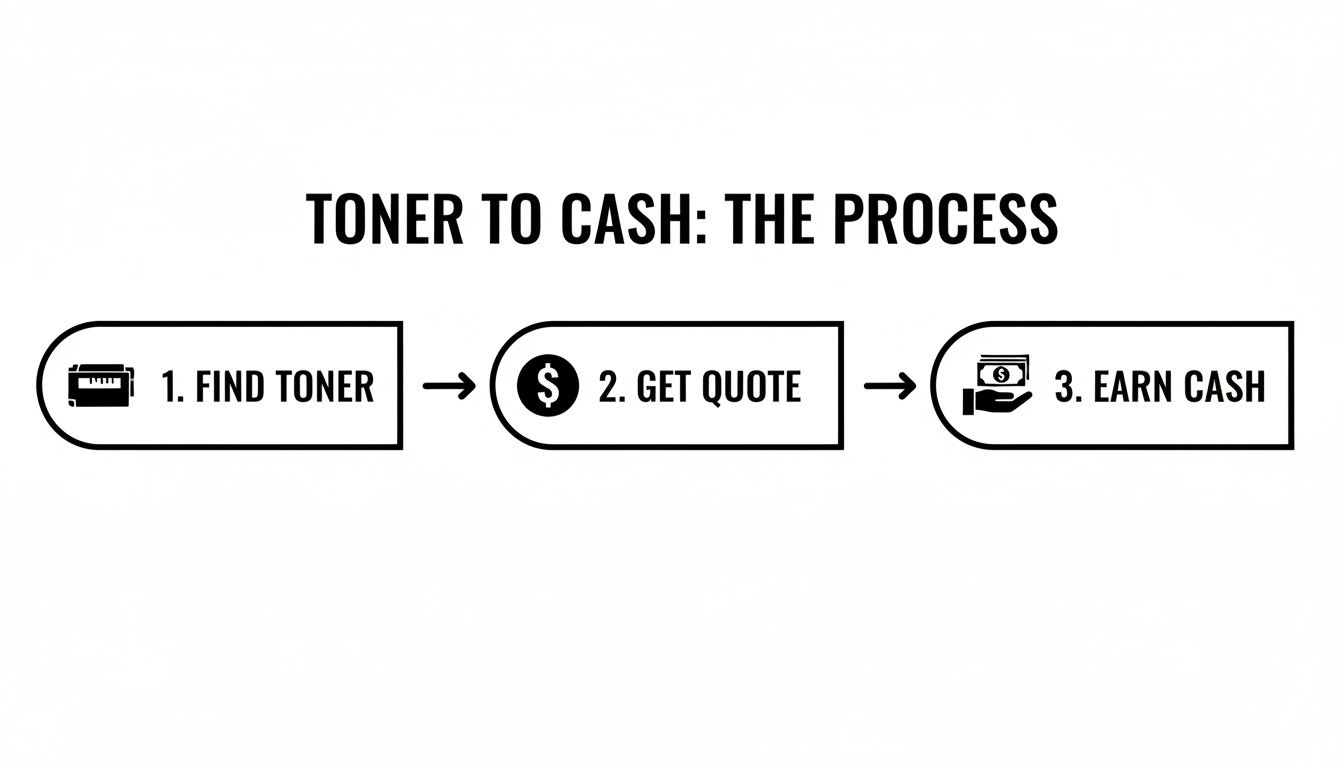
As you can see, it’s a direct path from identifying what you have to getting paid. This makes it a practical option for any business, big or small. At the end of the day, this isn't just about being eco-friendly; it's a smart financial decision.
Selling surplus toner is an effective way to recover sunk costs and improve your bottom line. An item that has zero value sitting in a closet can be converted back into working capital for your business.
Use this table to quickly gauge the potential value of your toner stock before you even create an inventory list.
| Factor | High Value Example | Low or No Value Example |
|---|---|---|
| Brand | OEM (HP, Brother, Canon, Xerox) | Remanufactured, compatible, or generic brands |
| Box Condition | Pristine, factory-sealed, no damage | Opened, dented, torn, water-damaged, heavy writing |
| Expiration Date | More than 1 year away | Expired or expiring within a few months |
| Model Popularity | For a current, popular business printer model | For a discontinued or obscure printer |
This quick check can save you time by helping you focus on the cartridges that are most likely to earn you cash.
Once you have a general idea of what's valuable, the next step is getting an actual offer. The fastest way to start is to submit your toner inventory online for a quote.
After you've cashed in on your unused toner, you might start looking around for what else is hiding in plain sight. If you're curious, you can learn how to recycle other old electronics for cash and keep turning unused items into revenue. This guide will walk you through everything you need to know to evaluate and sell your stock for the best price.
Before you can get a quote, you need a clear picture of what you're sitting on. Honestly, a proper appraisal is the most important part of this whole process. It’s what separates a great cash offer from a disappointing one.
The first thing to sort out is whether your cartridges are OEM (Original Equipment Manufacturer) or aftermarket. OEM products—the ones made by brands like HP, Brother, or Canon—are where the real value is. Unfortunately, compatible or remanufactured cartridges just don't have any resale value in the buyback market.
Telling the difference is usually pretty simple once you know what to look for. Grab a box and check for these tell-tale signs of a genuine OEM product:
Doing this quick check first will help you weed out any cartridges that won't qualify for a cash offer. It saves a lot of time and lets you focus on the items that will actually make you money.
Alright, once you've separated your OEM cartridges, the next step is a close look at the condition of each box. Remember, buyers are selling these to people who expect a brand-new item. Pristine packaging gets the best price, and even small dings can drop the value.
A common mistake I see is people ignoring what they think are minor cosmetic issues. That little pull tab that got torn off or a deep crease in the side? It might not seem like a big deal, but it can knock an offer down by as much as 40%. You have to treat the box as part of the product.
Run through this quick checklist for every box to get an accurate grade on its condition:
Taking the time to be thorough here really pays off. A fantastic way to document everything is to take clear photos. If you want some pointers, you can check out these instructions on how to submit images for an accurate quote. This kind of transparency helps buyers give you a fair and fast appraisal.
If you want a fast, fair offer for your surplus cartridges, a clear inventory list is non-negotiable. Without one, you’re just guessing, and frankly, so is the buyer. Taking a few minutes to throw your stock into a simple spreadsheet turns a random pile of boxes into an asset that’s easy for anyone to price out.
This one step makes the entire submission process painless. Whether you're filling out a buyback company's online form or just shooting them an email, having your ducks in a row makes everything go smoother. It also shows you’re a serious seller, and that often leads to a much better experience.
Think of this list as a snapshot of what you have. A basic spreadsheet is all you need—the goal is to give a buyer the essential details so they can give you a solid offer without a lot of back-and-forth questions.
For each cartridge model you have, just create a new row with these key details:
Here’s a real-world example of what a few lines on your list should look like:
| Brand | Part Number | Quantity | Box Condition |
|---|---|---|---|
| HP | CF287X (87X) | 8 | Pristine, Sealed |
| Brother | TN850 | 12 | 2 have minor dents |
| Canon | 137 | 5 | All good, some dust |
A simple list like this gives a buyer everything they need in a single glance. It's the fastest way to get a quote you can count on.
Your inventory list is essential, but photos are what seal the deal. They provide instant visual proof of what you're selling and what kind of condition it's in. You don't need a professional camera; your phone will do just fine if you follow a couple of simple guidelines.
First, get a good group shot. Spread all the cartridges out on the floor or a big table so the buyer can see the whole lot in one picture. This immediately gives them a sense of scale. A single photo showing 25+ boxes tells a much different story than a picture of just two or three.
Pro Tip: Make sure you also snap a few close-ups of any boxes with significant damage. Being upfront about a torn tab or a crushed corner builds trust and helps the buyer give you a quote that won’t suddenly change later. No one likes surprises.
After the group shot, take a few detailed pictures. Get some shots of the mint-condition boxes to show their quality, but don't forget to photograph the ones with cosmetic flaws. For example, if one of your Brother TN850 boxes has a large shipping label stuck to the front, take a specific photo of it. This kind of transparency helps the buyer price each item accurately, ensuring the offer you receive is the payment you actually get.
When you send over your spreadsheet and photos together, you’ve turned what could be a headache into a simple, straightforward step toward getting paid.

You've got a great offer for your surplus toner. Now comes the last, crucial step: making sure those cartridges get to their destination looking just as good as they did when they left your shelf. Trust me, proper packing isn't just a suggestion—it's what protects your payout.
The good news is that any reputable buyback company will make this part incredibly easy and, most importantly, free. They provide prepaid and insured shipping labels, so you won't spend a penny on postage. This completely removes the risk and out-of-pocket costs, making the logistics of recycling toner cartridges for cash a simple, worry-free process. All you have to do is pack them right.
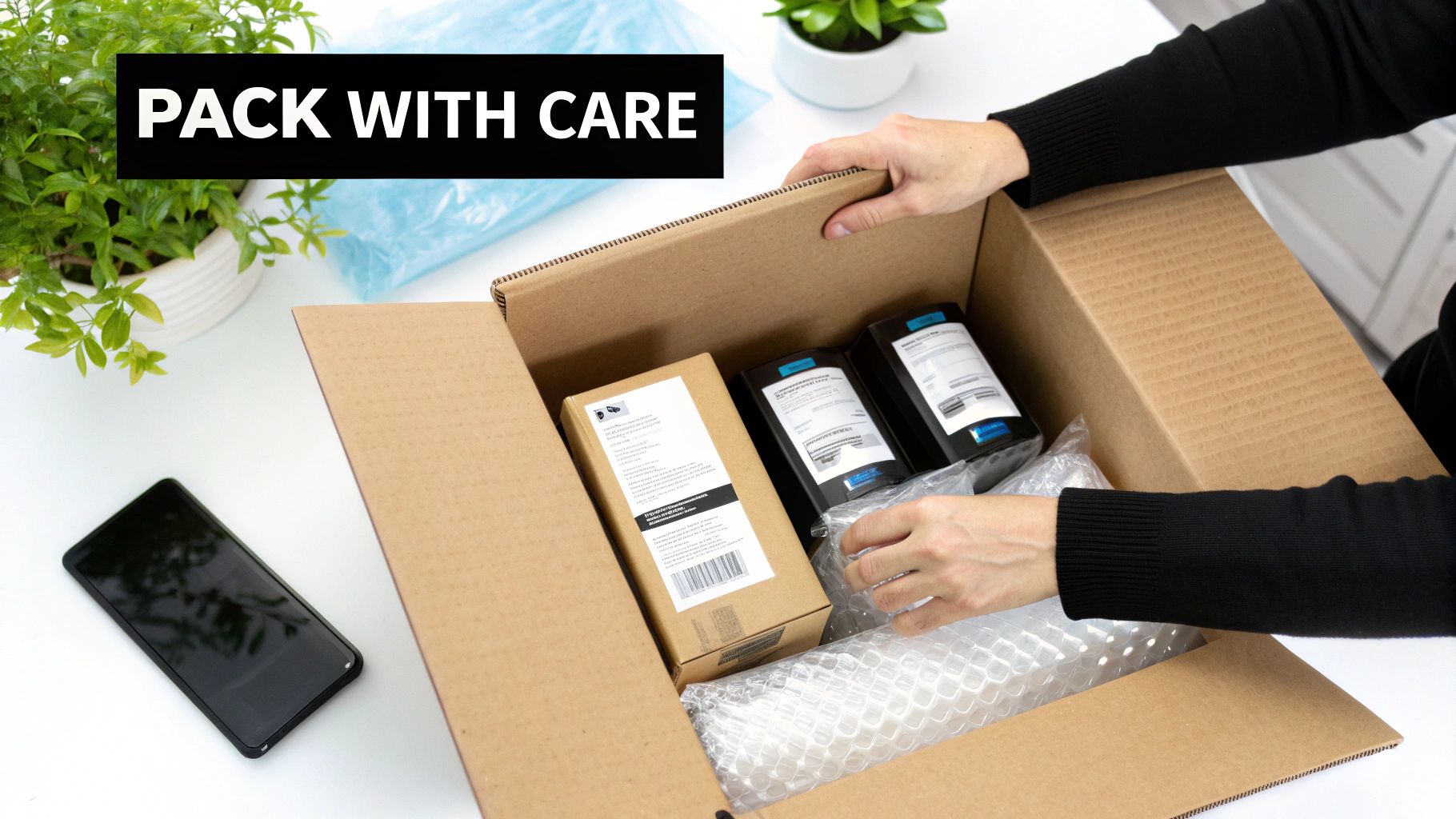
First things first, find a solid shipping box. This is no time to reuse that flimsy, beat-up box from your last online order. You need something sturdy that can handle the weight and the inevitable bumps of transit. For instance, a heavy-duty, double-walled cardboard box from a local hardware store is a perfect choice.
Once you’ve got the box, your main goal is to eliminate all empty space. Any room for your cartridges to slide around is a recipe for dented corners and damaged packaging, which will absolutely affect your final payment.
Pro Tip: The Shake Test.
After you've taped the box shut, give it a gentle shake. If you hear or feel anything shifting inside, it needs more padding. A box that's silent and solid is a box that's ready to go.
Let's say you’re shipping a mixed lot of 15 cartridges. You have some big, heavy toner boxes and a handful of small, lightweight inkjet packages. The way you arrange them inside the box really matters.
Always start by placing the heaviest toner cartridges on the bottom. This creates a stable base and stops them from crushing the smaller, more delicate inkjet boxes during shipping. Then, you can nestle the smaller boxes in the gaps and on top, filling in any remaining space with your packing material. This method distributes the weight properly and protects everything in the shipment.
Taking the time to do this is essential. The market for resold cartridges was valued at around USD 2.5 billion in 2023 and is expected to nearly double by 2032. Buyers need these products in perfect condition to meet that demand. A well-packed box is a win for you and for them.
Once you’re all packed and sealed, just slap on the prepaid label from your buyback partner. You can also learn more about our shipping partners to see how we ensure the process is smooth and secure from start to finish.
Once you've shipped your box, you're on the home stretch. Knowing what happens next will give you peace of mind and help you set realistic expectations for when you’ll see your cash. The journey is pretty simple: your package arrives at the buyback company, gets checked in, and then waits its turn for inspection.
This inspection is where the magic happens on their end. A technician will carefully unpack your shipment and go through it item by item, comparing everything to your initial quote. They're looking at part numbers, counting quantities, and giving the boxes a final condition check. A professional operation can usually get this done in just one to three business days after the shipment lands at their door.
With the inspection complete and everything approved, it’s time to get paid. Most reputable buyers give you a few different ways to receive your money, and the one you choose determines how fast it gets to you.
Think about your cash flow needs. If you want the money right away, go digital. If you’re not in a hurry, a paper check works just fine.
So, what happens if an item gets dinged up during shipping, even though you packed it well? This is a moment where the quality of your buyback partner truly shines. A legitimate company will never just slash your payout and leave you guessing.
A transparent buyback partner communicates proactively. They should send you photos of any damaged items and provide a clear, itemized breakdown of the adjusted payout. This level of accountability is what separates a professional service from the rest.
For example, let's say your original quote was for $500. During inspection, the buyer finds that one cartridge box worth $80 was crushed in transit. A good company will email you a photo of the damaged box and an updated payment invoice for $420, explaining the exact reason for the change before sending payment.
This transparent process is key, as it supports the very reason many businesses choose to sell their surplus. When you’re trying to meet both budget targets and sustainability goals, recycling toner cartridges for cash is a win-win. As detailed in how recycling programs meet business objectives on ecyclegroup.com, this approach delivers on both financial and environmental fronts.
Ultimately, clear communication is everything. It ensures you know exactly where you stand, even when the unexpected happens.
Even with a clear game plan, a few questions always pop up before people are ready to sell their surplus cartridges. It’s completely normal. Let’s walk through some of the most common ones we hear, so you can move forward knowing exactly what to expect.
Most people’s first concern is a simple one: is this whole thing legitimate?
Yes, 100% legal. If you are the rightful owner of the cartridges, you have every right to sell them. It's no different than selling any other surplus office supply you no longer need. You bought it, it's your asset, and you can liquidate it.
Reputable buyback companies are simply in the resale business. We purchase genuine, unused products and find new homes for them with customers who need them. There are no legal gray areas here—it's a standard, ethical way to manage excess inventory.
This is a big one, as it directly affects the cartridge’s value. The hard truth is that almost every buyback company will only purchase cartridges that are still in their original, factory-sealed, and unopened boxes.
Even if the internal foil bag is perfectly intact, an opened outer box usually means the cartridge has no resale value. Think about it from the end-user's perspective: they expect a brand-new, untouched product. A broken seal immediately signals that the item is no longer in that pristine condition. For instance, if you tore the perforated pull-strip on an HP box just to peek inside, it's considered open and will almost certainly be rejected.
Pro Tip: Always double-check the buyer's policy before you ship. While a sealed box is the golden rule, some companies might make a rare exception for a high-demand model. But don't count on it.
Payment timelines can differ a bit from one buyer to the next, but the process is generally quick and follows a predictable path. Once you know the steps, you'll know when to expect your cash.
Here’s what a typical timeline looks like:
Expiration dates matter, but they matter more for certain types of cartridges. Inkjets, which use liquid ink that can dry up over time, are the most sensitive. Most buyers will want to see at least one year of shelf life left on them.
Toner cartridges are more forgiving since they contain a dry powder. The date isn't as critical, but extremely old or outdated packaging can still knock down the price. For example, a toner cartridge in packaging from 2012 might get a lower offer than the same model in a 2022 box, simply because the packaging looks dated to a potential buyer.
For any cartridges that are too old or damaged to be sold, proper disposal is key. Many printer supplies are considered e-waste. Using a certified e-waste recycling program is the most responsible choice, ensuring harmful materials are kept out of landfills.
Ready to get a fast, fair offer for your own surplus toner? With Toner Connect LLC, you can get a quote in as little as two hours and enjoy free, prepaid shipping. Turn your unused office supplies into cash today at https://tonerconnect.net.
