
If you're looking for the fastest way to get paid for your surplus toner, the best website to sell unused printer cartridges is almost always a specialized buyback company. These services have perfected the process, offering a great balance of fair pricing, sheer convenience, and quick payment for sealed, genuine (OEM) cartridges. For businesses, IT departments, or anyone with more than a few cartridges to offload, they're the clear winner.

Chances are, if you're reading this, you've got extra printer cartridges sitting in a supply closet somewhere. Maybe you upgraded your office printers, accidentally ordered the wrong model, or just have a general overstock. Whatever the reason, those sealed boxes are a cash asset, not just future e-waste.
This guide is designed to give you a straightforward, no-fluff overview of your options. The goal is to equip you with enough information to make a smart, quick decision. You really have three main avenues to explore, and each one makes sense for different types of sellers and inventory.
First, let's get a lay of the land. When it comes to selling your extra cartridges, your options generally fall into one of these three buckets:
Specialized Buyback Websites: These are companies that do one thing and one thing well: buy surplus OEM printer supplies. They’re built for volume, offering instant quotes, prepaid shipping labels, and fast payouts. If you have a decent amount of inventory, this is your best bet. A practical example would be an IT manager for a school district who needs to offload 200 toner cartridges after a printer fleet upgrade; a buyback site is the only efficient option.
Online Marketplaces: Think eBay or Facebook Marketplace. Going this route means you're selling directly to the end-user. You might fetch a slightly higher price per cartridge, but it comes at the cost of your own time. For instance, if you have a single, popular Brother toner cartridge left over from a home printer you no longer own, eBay could be a good choice.
Recycling and Take-Back Programs: These programs, often run by manufacturers or big-box stores, are about responsible disposal, not making money. They are the right choice for cartridges that are already used, expired, or damaged and have no real resale value. A practical case would be taking your empty HP ink cartridges to Staples for a small store credit towards your next purchase.
The decision really boils down to how much you have and how much effort you want to put in. A company liquidating 50 toner cartridges has very different priorities than someone selling a single leftover ink cartridge from a home printer. The former should almost always go with a specialized buyer.
To help you decide, let's look at these channels side-by-side. The table below breaks down the key differences to give you a clear picture of what to expect from each.
This table summarizes the main selling channels, highlighting who they're best for, what you can expect to earn, and how long it typically takes to get paid.
| Selling Method | Ideal For | Payout Potential | Time to Payment |
|---|---|---|---|
| Specialized Buyback Website | Businesses, IT departments, and resellers with bulk inventory. | High (based on market demand for OEM products). | Fast (1-3 business days after receipt). |
| Online Marketplace (e.g., eBay) | Individuals selling a few high-demand, popular cartridges. | Varies (potentially higher but with seller fees). | Slower (weeks or months, depending on the sale). |
| Recycling Program | Anyone with used, damaged, expired, or non-OEM cartridges. | Low (typically store credit or no payment). | N/A (focus is on environmental disposal). |
Think of this as your starting point. To get a real, accurate quote from any buyer, you'll need to know exactly what you have and take good, clear photos. You can review our image submission instructions to see what we look for. From here, we'll dig deeper into what makes certain cartridges valuable and how you can get the most cash for your inventory.
Before you start looking for the best place to sell your unused printer cartridges, it helps to know why those boxes gathering dust in your supply closet are actually a valuable asset. This isn't just about cleaning house; it's about plugging into a surprisingly large secondary market where your surplus supplies are always in demand.
Think of it this way: a sealed, genuine printer cartridge is a guaranteed product. For companies that remanufacture or resell them, an unopened OEM (Original Equipment Manufacturer) box represents a known quantity of high-quality parts, from the plastic shell down to the toner or ink inside. That certainty is precisely what gives it immediate cash value.
Several key things determine how much an unused cartridge is worth. Just like anything else, its value comes down to supply, demand, and its condition. Any offer you get is a direct reflection of how easily a buyer can turn around and sell that specific item to another business or consumer.
Getting a handle on these factors helps you set realistic expectations. It also explains why one cartridge might fetch a premium price while another is only good for recycling. It’s the difference between a high-demand HP toner for a popular office laser printer and an expired inkjet cartridge for a model nobody uses anymore.
Here are the main things that influence your payout:
Here's a real-world example: Say you have two HP 58X toner cartridges. One is in a pristine, factory-sealed box. The other has a crushed corner and an old shipping label plastered on it. The first one will get the full quoted price, but the second might lose 20-30% of its value just because of the cosmetic damage.
Expiration dates are another critical piece of the puzzle, especially for inkjet cartridges. Toner is just a dry powder with a very long shelf life, but the liquid ink in inkjet cartridges can dry out or separate over time, which ruins print quality.
Because of this, most buyers will only take inkjet cartridges that have at least one year left before they expire. Toner cartridges are a bit more flexible, but really old or long-expired models will still get you a lower price or might be rejected outright. Always check the date before you ask for a quote.
The engine driving all of this is a massive global industry. The market for recycling and remanufacturing printer cartridges was valued at around USD 2.5 billion in 2023, and it's expected to grow to nearly USD 4.8 billion by 2032. This boom is fueled by corporate sustainability initiatives and tougher e-waste laws, giving companies a strong reason to buy back unused supplies. Buyers can afford to pay for your sealed OEM cartridges because they are the raw materials for a multi-billion dollar remanufacturing pipeline, where every single component is recovered and reused. You can discover more about the scale of this market by digging into detailed industry reports.
This thriving market means your unused cartridges are more than just office clutter; they are essential materials for a circular economy. By selling them, you not only get cash back for your business but also contribute to a more sustainable system, keeping perfectly good products out of a landfill.
So, you've realized those unused cartridges sitting in your supply closet are worth real money. That's the easy part. Now you have to figure out the best way to actually sell them. The path you choose makes a huge difference in how much cash you’ll pocket, how much work you’ll have to do, and how quickly you’ll get paid.
This isn't about finding one "best" way to sell—it's about finding the best way for you. Let's walk through the four main channels for offloading unused printer cartridges so you can see which one makes the most sense for your situation.
These companies are built for one thing and one thing only: buying surplus OEM printer supplies, often in bulk. Think of them as the professional-grade solution. They're the go-to for businesses, IT departments, and resellers who need to liquidate inventory without the usual headaches.
A real-world example: A company needs to sell 100 HP 58X toner cartridges. Instead of creating 100 separate listings, they get one quote from a buyback site, use one set of shipping labels, and receive a single payment for thousands of dollars in about a week. The time savings alone is massive.
Platforms like eBay or Facebook Marketplace connect you directly with the person who will actually use the cartridge. This gives you total control over your pricing, but it also means you’re on the hook for all the work. It’s a great route for individuals with just a couple of items.
The value of your cartridges can vary wildly depending on a few key factors, as this decision tree shows.
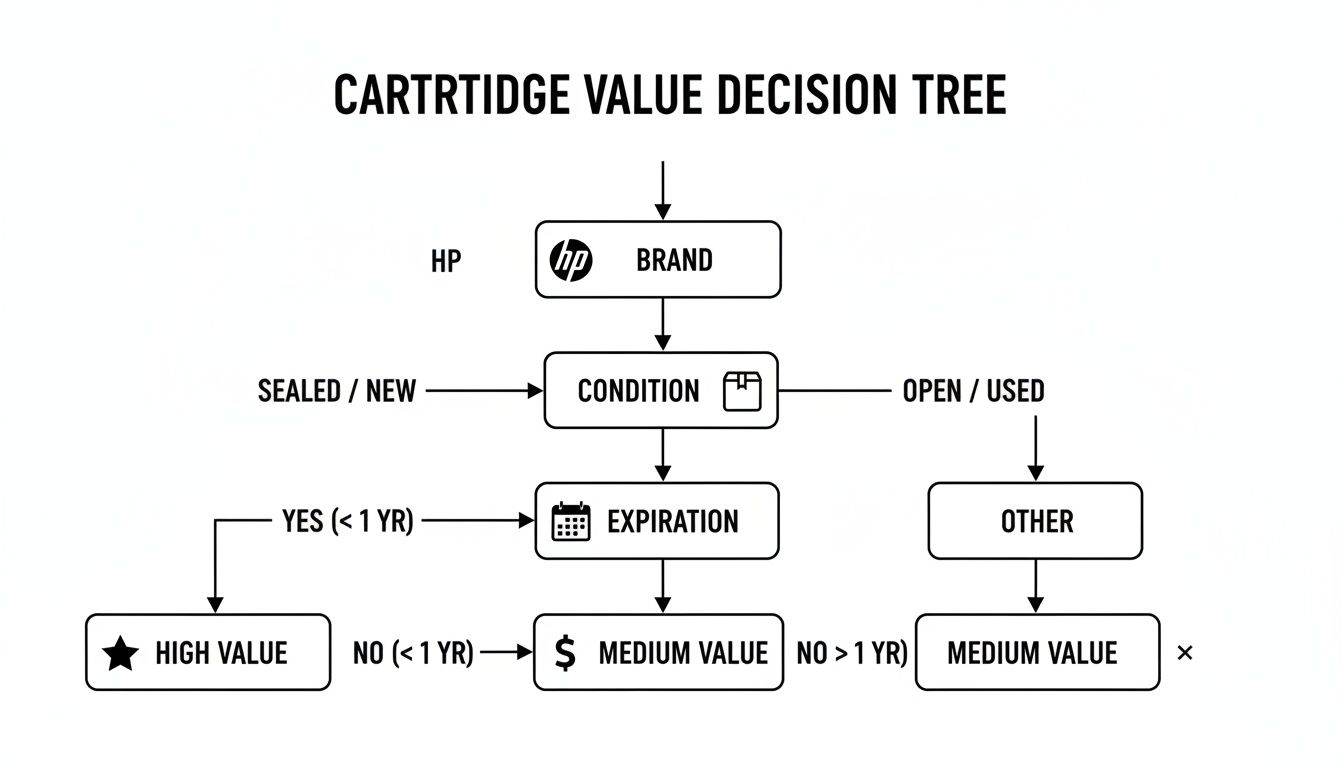
This graphic is a great reminder that the brand, box condition, and expiration date are what really drive a cartridge's value—something you'll need to know when you set your price on a marketplace.
If you value speed and immediate cash above all else, a local computer repair shop or office supply reseller might be your best bet. This is really for those one-off situations where convenience is everything.
It’s really important to draw a line between selling for cash and recycling for the environment. Programs like HP Planet Partners are fantastic for responsible disposal, but they are not a way to make money.
To help you visualize the trade-offs, here’s a breakdown of how these channels stack up against each other.
| Feature | Specialized Buyback Website | Online Marketplace (e.g., eBay) | Local Reseller | Recycling Program |
|---|---|---|---|---|
| Best For | Bulk quantities (10+ items), businesses | Small quantities (1-5 items), individuals | A single item, urgent cash needed | Empty, damaged, or expired cartridges |
| Pricing | Competitive wholesale rates | Highest potential gross price per item | Lowest cash offer (20-40% of retail) | $0 (or small store credit) |
| Seller Fees | None | High (10-15% +) | None | None |
| Shipping | Free (prepaid labels provided) | Seller pays | In-person drop-off | Free (mail-in or drop-off) |
| Effort Required | Low (submit one list, one shipment) | High (individual listings, packing, shipping) | Medium (find a buyer, drive to them) | Low |
| Payment Speed | Fast (1-3 days after receipt) | Slow and variable | Immediate | N/A |
Ultimately, choosing the right path comes down to what you value most. Are you trying to maximize every dollar, or do you want the fastest, most efficient process? If you're dealing with any significant quantity of valuable OEM cartridges, a specialized buyback website is almost always the smartest and most profitable choice.
Turning that closet full of surplus printer cartridges into cash isn't just about finding a buyer—it's about doing it right. The difference between a decent payout and a great one often boils down to a few simple preparation steps. Following a clear checklist maximizes your return and makes the whole process, from quote to payment, completely painless.
Think of it like selling any other valuable asset. You wouldn't sell a car without cleaning it first, right? Organizing your inventory and presenting it clearly to a buyer builds confidence and gets rid of any back-and-forth. This little bit of effort shows you're a serious seller, which almost always leads to better offers and a faster sale.
Before you even think about contacting a buyer, you need to know exactly what you've got. A basic spreadsheet is your best friend here. It gives potential buyers a professional, at-a-glance look at what you’re offering.
For each cartridge model, make sure your list includes these key details:
An organized list helps a buyer give you a fast, accurate quote. For example, an entry like HP, 414X, 12 units, Pristine Box tells them everything they need to know. It cuts out all the guesswork and gets things moving.
The condition of the cartridge box is one of the biggest factors in determining its value. Remember, the buyer has to resell these items, and a beat-up box forces them to discount it. Be your own toughest critic here to avoid any unpleasant surprises down the road.
A perfect, factory-sealed box will always get the highest price. Any cosmetic flaw, no matter how minor, will lower the payout. This means any dents, tears, punctures, writing, or even old shipping labels that can’t be removed cleanly.
Here's a real-world example: Say you have two identical Canon toner cartridges. One box is flawless. The other has a crushed corner from being dropped. The pristine one will fetch the full quoted value, but the damaged one might lose 20-30% of its value. Being upfront about this ensures the quote you get is the payment you actually receive.
Don't just jump on the first offer. The best website to sell unused printer cartridges is simply the one that puts the most money in your pocket. Take your detailed inventory list and send it to at least two or three reputable buyback companies.
This step is surprisingly quick and can make a huge difference in your final payout. Most serious buyers provide quotes within a few hours. When comparing them, look at the total offer, not just individual item prices, and double-check that they provide free, prepaid shipping labels. For instance, one buyer might offer a higher price on your HP toners but a lower one on your Brother cartridges. Comparing the total value of the quotes gives you the true picture.
To see what your surplus is worth, you can submit your surplus cartridge list here for a fast, no-obligation quote.
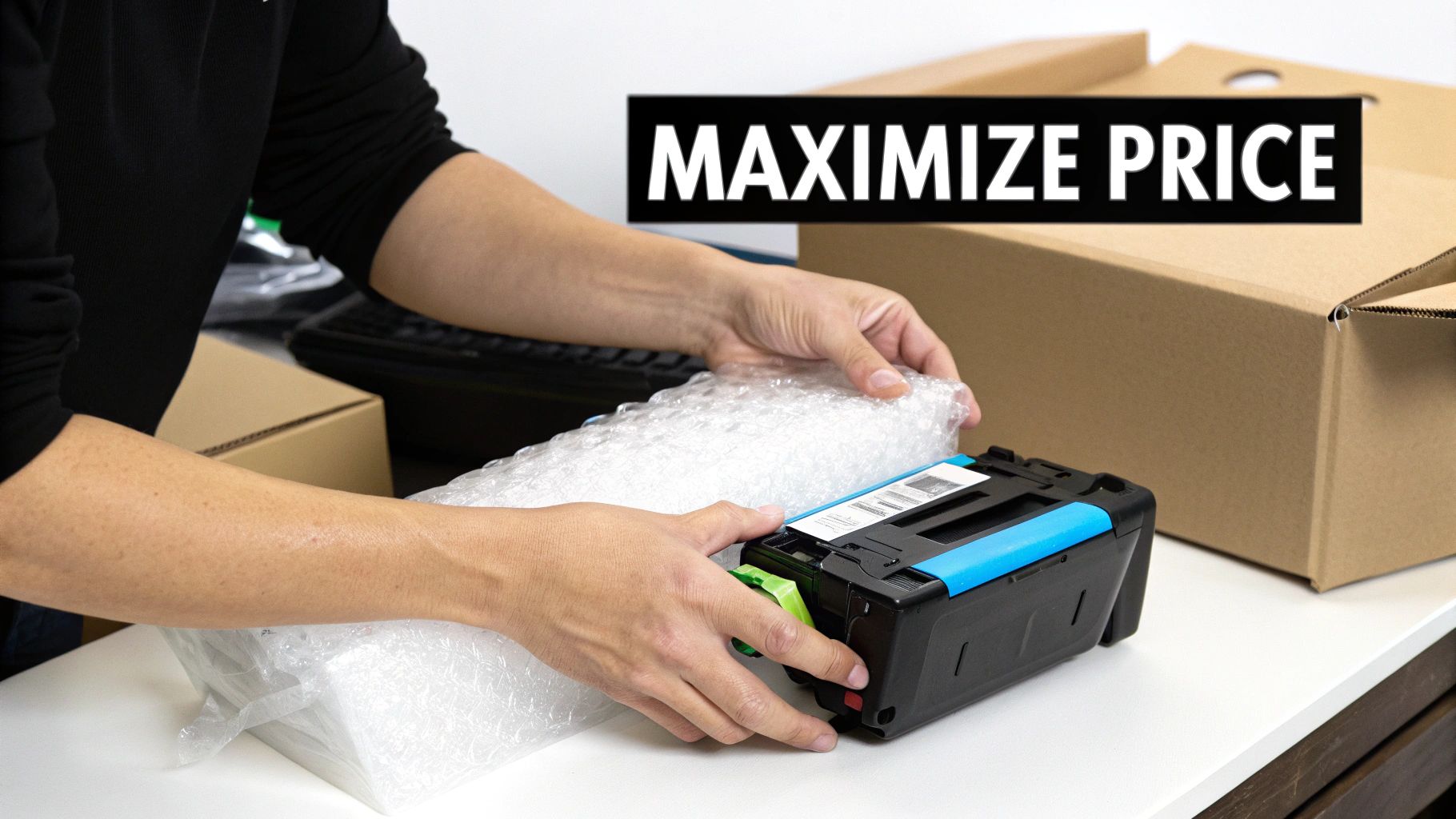
Once you've locked in a great offer, it's time to pack. Proper packaging is critical. The number one reason for a reduced payment is damage during shipping, and it's completely avoidable. A cartridge that shows up cracked or leaking is worthless.
Just follow these simple packing tips:
This small amount of effort protects your assets and guarantees you get paid what you were promised. Your sealed OEM units are a valuable commodity, and taking care of them until they reach the buyer is the final step to a successful sale.
Finding the right place to sell your unused printer cartridges isn't just about chasing the highest offer. The buyer's integrity and reliability are just as crucial. A great quote means nothing if the company vanishes after your shipment arrives or suddenly slashes their offer for vague reasons. Taking the time to properly vet a potential buyer is the single most important step to ensure the whole process is smooth, secure, and ultimately, profitable.
Not all buyback companies are created equal. You're looking for a partner who sees your surplus inventory for the asset it is and provides a transparent, no-nonsense process from start to finish. A little due diligence upfront will shield you from shady operators and make sure you get paid what you were promised.
Spotting a reputable buyer is pretty straightforward once you know what to look for. These are the non-negotiable signs of a professional operation you can trust with your inventory.
First, check out their website. A legitimate business will have a professional, easy-to-use site that clearly lays out their process, the items they purchase, and how they pay. Look for a physical address and a direct phone number—real businesses aren't afraid to show you where they are and how to reach them.
Next, dig into their customer reviews on third-party sites. Don't just take their word for it with testimonials plastered on their homepage. Go to independent platforms and see what real sellers are saying.
A consistent pattern of positive, detailed reviews is one of the strongest indicators you've found a good partner. Vague praise is easy to fake, but specific comments about quick payments and great communication are the real deal.
Beyond reviews, certain practices have become standard among the best websites to sell unused printer cartridges. One of the biggest is providing free, prepaid shipping labels. Any buyer asking you to pay for shipping upfront is a massive red flag. Legitimate, high-volume buyers handle all the logistics and associated costs.
Another industry standard is a clear, upfront structure for pricing and grading box condition. A trustworthy buyer will explain exactly how they evaluate boxes and how dings or tears might affect your final payout. Vague terms are often a trick to justify lowering your payment once they have your items in hand. When weighing your options, the principles outlined in this guide to reputable online services can offer some great general advice for vetting any online platform.
Just as there are green flags, there are also bright red ones that should give you pause. Recognizing these can save you a ton of frustration and money.
Be on the lookout for websites missing basic contact information or a physical address. Anonymity is never a good sign in an online transaction. Be equally wary of buyers who are slow to respond or give you vague, non-committal answers to direct questions. For businesses and dealers aiming for a steady partnership, understanding the specifics of a dealer program can add another layer of security and value. You can see an example of what to look for here: https://tonerconnect.net/learn-more-dealers
Practical Scenario: Let's say you have 50 OEM toner cartridges ready to go. Buyer A has a polished website, thousands of great Trustpilot reviews, and sends you a clear, itemized quote with prepaid FedEx labels. Buyer B has a sketchy-looking site with no reviews, offers a slightly higher price, but asks you to ship everything on your own dime and promises to reimburse you later. Always choose Buyer A. The small bump in price isn't worth the huge risk of dealing with an unproven, unprofessional outfit.
Even after you've decided to sell your surplus printer cartridges, a few questions usually pop up. It's a niche market, after all, and knowing the ins and outs can make a real difference to your bottom line. We've compiled the most common questions we hear from sellers to give you clear, straight-up answers.
These aren't just generic replies. They cover the practical stuff, from what "OEM" really means to the best way to offload a huge inventory from an office move.
This is probably the most important thing to get right. OEM (Original Equipment Manufacturer) cartridges are the real deal—made by the same company that built your printer, like HP, Canon, or Brother. Reputable buyers are almost exclusively looking for these, especially if they're still in a sealed, unopened box. Why? Because they have the highest resale value and guaranteed quality.
On the flip side, you have compatible or remanufactured cartridges, which are made by third-party companies. "Compatibles" are new knock-offs, while "remanufactured" means an old OEM cartridge was cleaned, refilled, and tested. Because the quality can be all over the place, most cash buyers won't touch them.
Here’s a real-world example: If you have a genuine, sealed HP 58X toner, you're going to get a solid cash offer. But if you have a "generic for HP 58X" cartridge, even if it's brand new, any serious buyback service will likely turn it down. They just can't guarantee its performance for their own customers.
The condition of the box is a huge deal and directly impacts how much cash you’ll get. Put yourself in the buyer’s shoes: they need to resell these, and a box that looks like it just came off the shelf is far more appealing to the next person.
The grading is pretty simple:
When you're asking for a quote, be honest about the condition of your boxes. It saves everyone time and makes sure the offer you get is the one you'll actually be paid.
Yes, you often can, but the offer will be lower. Most specialized buyers have a tiered pricing system based on the expiration date. This is especially true for toner cartridges—since toner is just a dry powder, it stays good long after the date on the box.
That said, the older it is, the less it's worth. A toner cartridge that expired six months ago might still fetch a good price. But one that's five years out of date? It probably has little to no cash value and might only be good for a free recycling program. Inkjet cartridges are a different story since the ink is liquid, so buyers usually want them to have at least a year of shelf life left.
If you're dealing with a large quantity from an office closure, an equipment upgrade, or just years of over-ordering, a specialized buyback website is your best bet. Trying to sell hundreds of individual cartridges on a marketplace would be a logistical nightmare.
The process is built for business-to-business deals:
Good buyers make it easy to sell in bulk. They can arrange for freight shipping or pallet pickups and offer payment options that work for businesses. It saves a massive amount of time and effort compared to any other method out there.
Ready to turn that pile of printer cartridges into cash? At Toner Connect LLC, we make it simple, fast, and profitable. Get a quick, no-obligation quote for your inventory and see why over 7,000 businesses trust us for top prices and great service. Visit us at https://tonerconnect.net to submit your list today.
