
The first rule of dealing with a used toner cartridge is to prevent a mess. It sounds obvious, but you'd be surprised how often a simple swap turns into a cleaning nightmare. The moment you pull that old cartridge out, your top priority is containment.
Think of toner powder as a much finer, clingier version of dust. It gets everywhere, and you really don't want to breathe it in. The best trick I've learned over the years is to use the packaging from the new cartridge. It's a perfect system.
Before you even unbox the replacement, take a look inside. Most big brands like HP or Brother will give you a sealable bag and clear instructions for this exact purpose. Get in the habit of saving it. As soon as the old cartridge is out of the printer, slide it straight into that bag, seal it up tight, and pop it back in the box the new one came in. Simple, clean, and contained.
Now, before you lump everything together, take a second to sort what you have. This quick check can be the difference between paying for recycling and getting paid for your old stock.
To make this foolproof, set up two clearly marked bins in your supply room: one for "Used – Recycle" and another for "Surplus – Sell." This little bit of organization prevents a brand-new, valuable cartridge from getting tossed in with the empties by mistake.
Pro Tip: The single best thing you can do is contain the old cartridge immediately. Using the new one's packaging is the simplest, most effective way to stop leaks before they start and get it ready for whatever comes next.
While modern toner is pretty safe when handled correctly, that fine powder can still irritate your skin and lungs. A few basic precautions go a long way. I always keep a box of disposable gloves nearby just for changing cartridges. It keeps your hands clean and makes the whole process feel less like a chore. If you're swapping out a bunch of them at once, especially in a back office with poor airflow, a simple dust mask is a smart move.
The scale of toner usage is staggering, which is why this matters. In 2025 alone, the global market is projected to sell around 304,000 tons of ink and toner, worth nearly $14.5 billion. That's a mountain of plastic and chemicals. Handling your small part responsibly is what keeps this manageable. If you're curious about the bigger picture, it's worth exploring the latest research on the state of the print industry.
To help you decide on the right path for your cartridges, here's a quick breakdown of your options.
This table summarizes the most common disposal methods and which types of cartridges they're best suited for.
| Disposal Method | Best For | Key Consideration |
|---|---|---|
| Manufacturer Take-Back | Used OEM Cartridges | Free and easy, but usually only for their own brand. |
| Retail Drop-Off Programs | Used OEM & Remanufactured | Convenient for small quantities; check store policies first. |
| Local E-Waste Recycling | All Used Cartridges | Good for mixed brands, but may involve a fee. |
| Toner Buyback Companies | Unopened OEM Cartridges | The best way to get cash for surplus, unused stock. |
| Hazardous Waste Facility | Leaking or Damaged Cartridges | The legally required method for compromised cartridges. |
Ultimately, taking a moment to identify what you have and choosing the right channel isn't just about compliance—it's smart business.
Okay, you’ve handled the toner safely and sorted your cartridges. Now what? The good news is that figuring out how to dispose of your printer toner isn't the headache it used to be. You've got several solid, straightforward options, and the best one for you really just depends on your situation.
For most people, the easiest route is often going right back to the source: the manufacturer.
Big names like HP, Brother, and Canon have poured a lot of resources into their own take-back programs. The HP Planet Partners program is a perfect example. You just hop on their website, print a free shipping label, and pop your used cartridge in the box your new one arrived in. It’s a beautifully simple system that works great for home users and small offices alike.
The first big question to answer is whether your cartridge is used (and ready for recycling) or if it's an unopened spare that could be worth some money. This chart breaks down the two main paths.
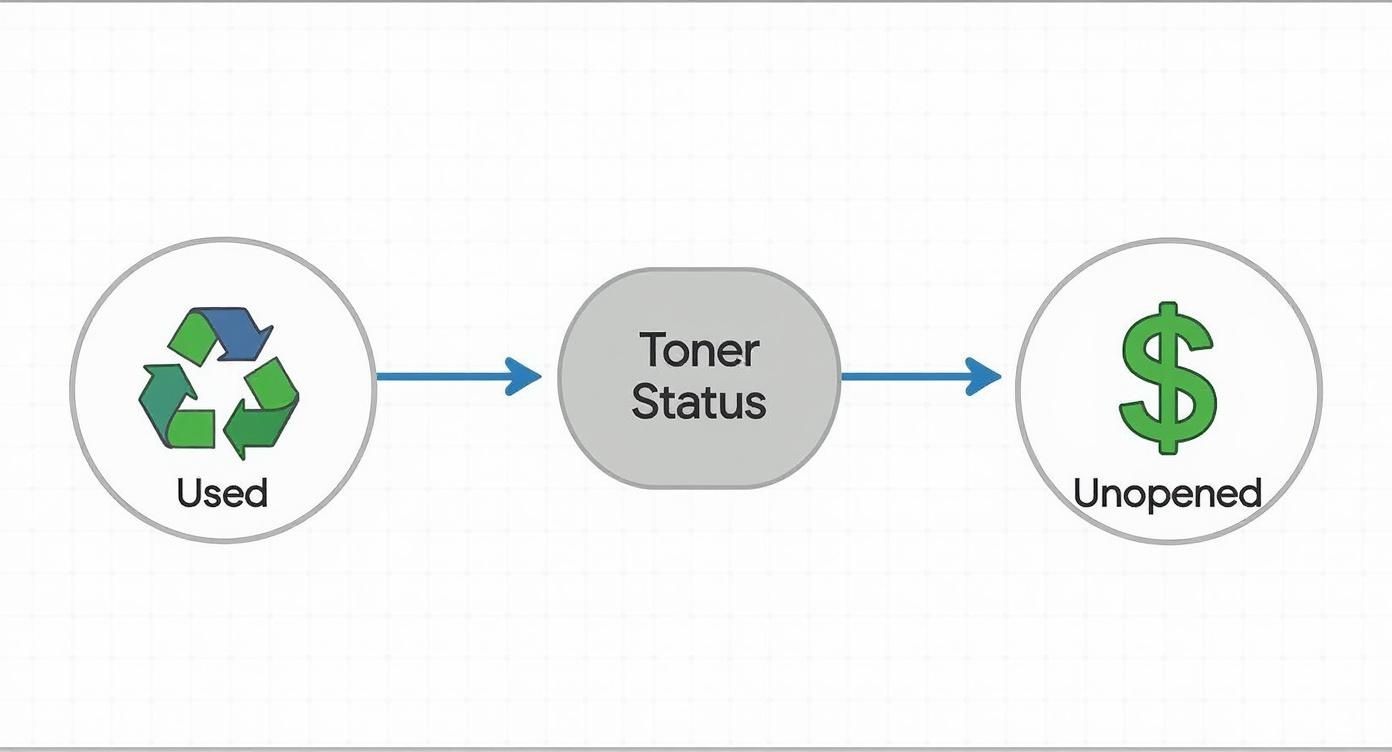
As you can see, used cartridges are destined for recycling, while unopened ones can actually put cash back in your pocket. Knowing which path you're on will guide your next move.
If you'd rather not deal with shipping, many office supply stores have your back. Retailers like Staples and Office Depot almost always have collection bins right near the entrance or their service desk. This is the perfect solution when you only have a cartridge or two to get rid of while you're out running other errands.
It’s always a good idea to give your local store a quick call before you head over. While most are flexible, some locations might have specific rules about the brands or types of cartridges they’ll take. This is a fantastic, low-effort way to do your part and keep e-waste out of the local landfill.
When you're dealing with a large volume of cartridges, sending them back one by one just isn't practical. This is where bulk recycling programs and specialized e-waste companies really make sense. They're built to handle quantity, often providing you with collection boxes and sometimes even scheduling a pickup right from your office.
One of the biggest perks of working with a dedicated e-waste recycler is the paperwork. They can provide certificates of recycling, which are invaluable for any business needing to prove they're compliant with corporate sustainability goals or local environmental laws. For example, a company pursuing ISO 14001 certification would use these certificates as evidence of responsible waste management.
The scale of this problem is staggering—globally, about one million printer cartridges are trashed every single day, feeding a massive e-waste crisis. But there's a flip side: it has also created a thriving recycling market valued at $2.5 billion in 2023 and projected to nearly double by 2032.
Ultimately, choosing the right method comes down to your volume and what's most convenient for you. It's about more than just the toner; understanding the importance of recycling printer ink cartridges helps show how these small, conscious choices add up to a significant positive impact.
Whether you're sending a single used cartridge back for recycling or shipping a whole pallet of surplus stock, packing it right is non-negotiable. This isn’t just about being neat. It's about preventing a messy toner leak, protecting the cartridge from damage, and making sure it arrives ready for its next step—be it recycling or resale.
Honestly, the best container is usually the one you just took your new toner out of. It’s a perfect fit and built for the job. Just pop your old cartridge into a sealed plastic bag (again, the one from the new cartridge is ideal) to catch any loose powder. Then, tuck it snugly back into the box.
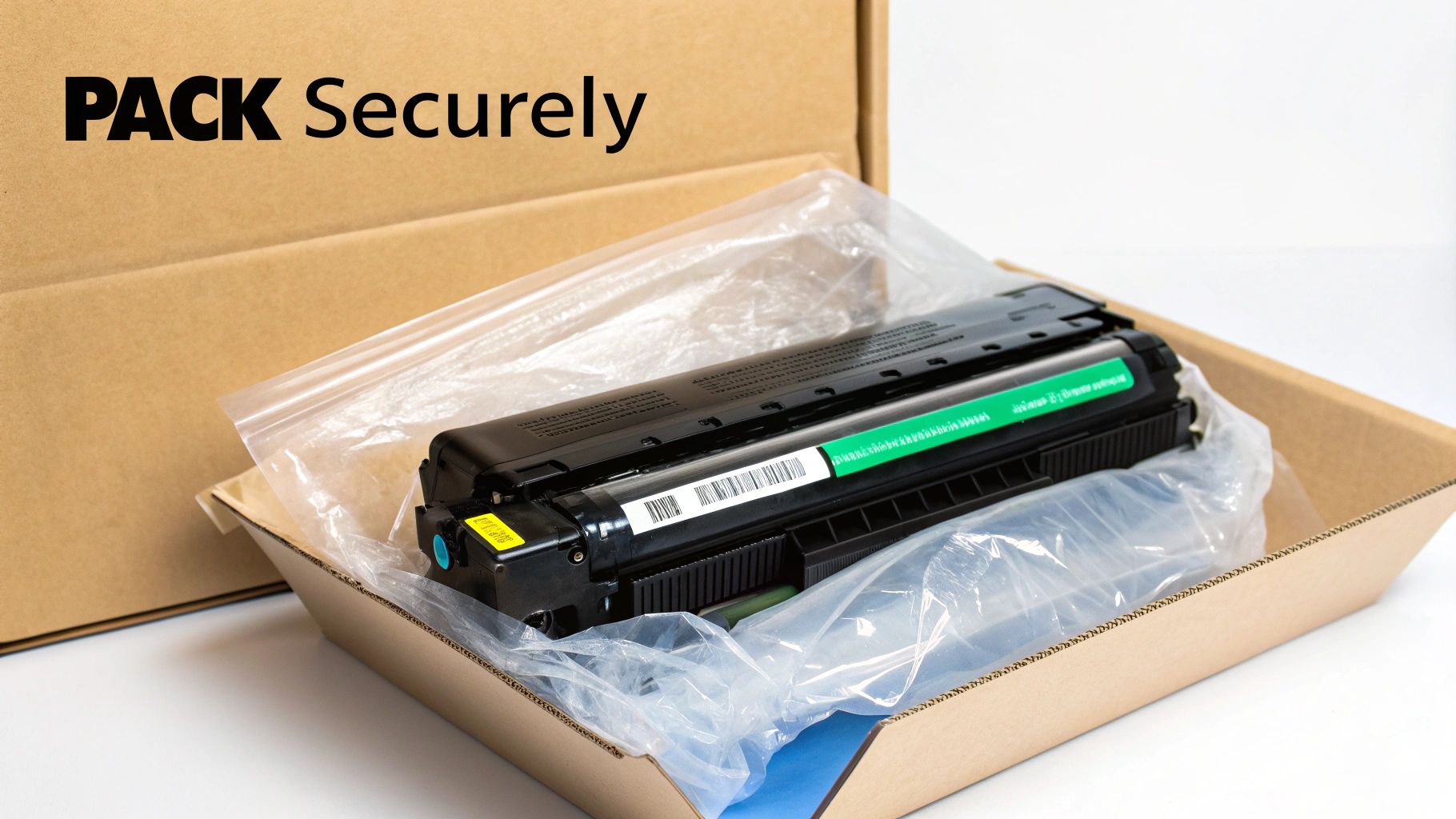
This simple two-step method—bag then box—is the gold standard for preventing toner dust from coating the inside of the package and creating a real mess for whoever handles it next.
With your used cartridge safely boxed up, you need to get the label right. Most manufacturer mail-back programs, like HP Planet Partners or Brother’s recycling service, give you free, prepaid shipping labels right from their websites. You’ll just need to fill in your info, download the PDF, and print it out.
Slap that label on the box and tape it down securely. Just make sure you cover up any old shipping labels or barcodes to avoid confusing the postal service. For instance, if the box has an old Amazon or FedEx label, use a black marker to cross it out or apply your new label directly over it.
If you’re a business managing a large volume, it’s worth exploring your options. You can learn more about high-volume shipping solutions to find a system that makes sense for your scale.
Now, if you're packing unopened, surplus cartridges to sell, the rules change a bit. The goal here shifts from simple containment to total preservation. Why? Because the condition of that original box directly impacts its resale value.
Never, ever apply tape or shipping labels directly to the original OEM toner box you plan to sell. Doing so immediately tanks its value. Always put the toner box inside a larger, plain shipping box with plenty of padding.
Use bubble wrap, packing paper, or air pillows to fill any empty space. You want to stop that inner box from sliding around and getting dented or scuffed up. A mint-condition box signals to the buyer that the product inside is genuinely factory-fresh and undamaged.
The way you prep a shipment depends entirely on where it's headed. A cartridge going to a recycling plant needs different handling than one going to a reseller. This quick table breaks down the key differences.
| Preparation Step | Used Cartridges for Recycling | Unused OEM Cartridges for Resale |
|---|---|---|
| Primary Goal | Contain toner powder and prevent leaks. | Preserve the original box's mint condition. |
| Inner Packaging | Seal the cartridge in a plastic bag. | Keep the OEM box sealed; no extra wrapping. |
| Outer Packaging | Place bagged cartridge in any sturdy box. | Place the OEM box inside a larger shipping box. |
| Padding | Optional, just enough to stop rattling. | Crucial. Fill all gaps to prevent movement. |
| Labeling | Apply prepaid shipping label to outer box. | Apply label to the outer box only. NEVER the OEM box. |
As you can see, the destination dictates the prep. For recycling, it’s all about mess prevention. For resale, it’s all about presentation and protecting your asset.
That supply closet filled with old, unopened printer cartridges? It's not just taking up valuable shelf space—it's a hidden asset. If you've ever upgraded your office printers or just got a little too enthusiastic with an order, you probably have surplus toner that can be turned back into cash. It's a much smarter, and more profitable, move than just recycling perfectly good products.
The trick is knowing what buyers are looking for. Reputable toner buyback companies are almost exclusively interested in new, unopened OEM (Original Equipment Manufacturer) cartridges. We're talking about genuine cartridges from brands like HP, Brother, or Canon, still in their factory-sealed, undamaged boxes.
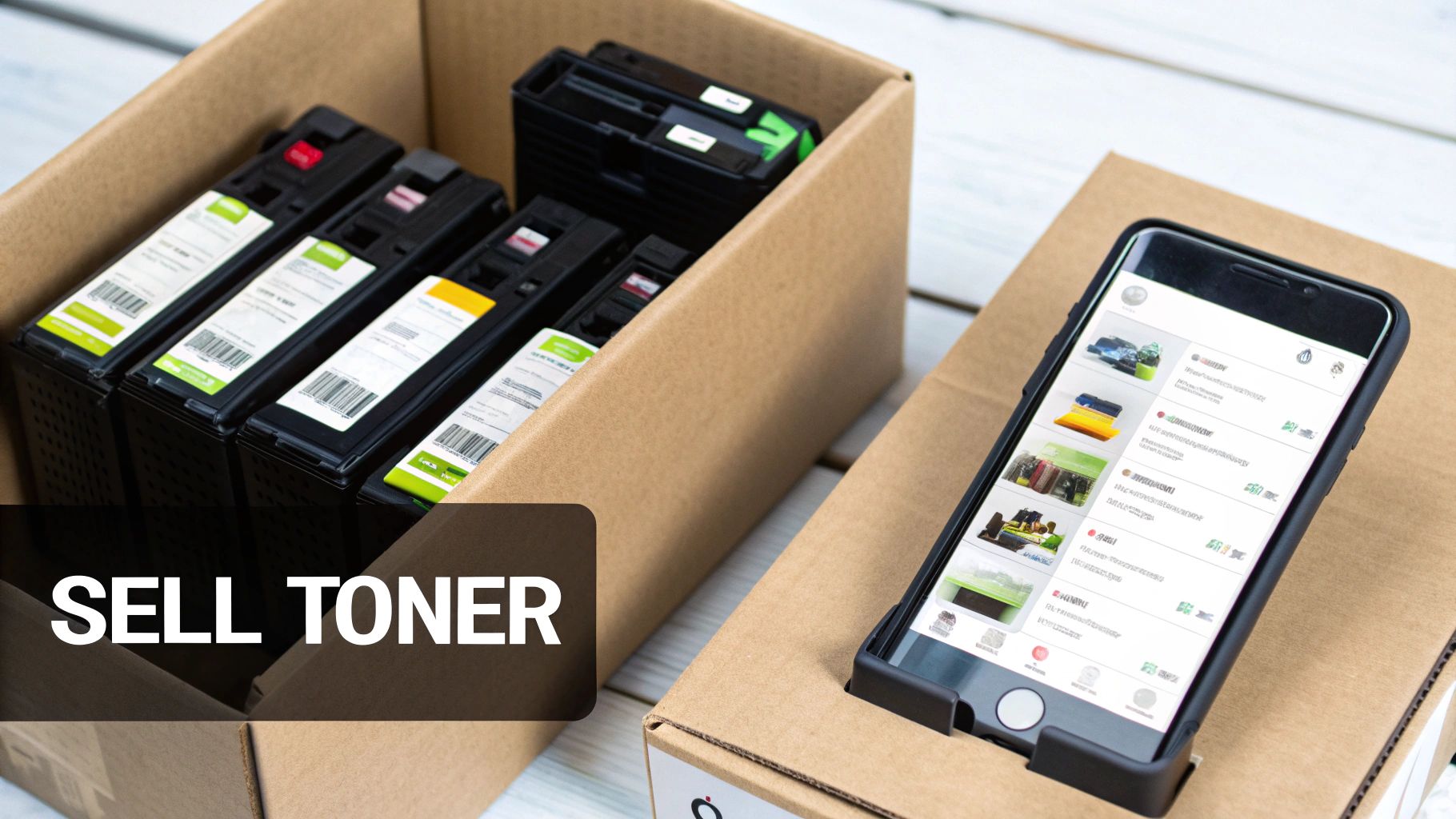
To get a fast and accurate offer, you need to show potential buyers exactly what you've got. Think of it like getting a car appraised—the more details you provide upfront, the smoother the process will be. A simple spreadsheet is your best friend here.
Just create an inventory list with a few key columns:
Being upfront about the box condition is absolutely critical. A small tear, a dented corner, or an old shipping label can impact the value. Mentioning it from the start builds trust and ensures the quote you get is one you can count on. Snapping a few quick, clear photos of your stack of cartridges can also really speed things up.
With your list ready, it’s time to find a company that will offer a fair price and make the whole process a breeze. A good partner is transparent, quick to respond, and handles all the logistical headaches for you.
Here are the green flags to look for:
The real goal here is to find a partner who makes selling simple. A great company handles the details, so all you have to do is pack the box and wait for the payment. It’s the easiest way to turn forgotten office supplies into a nice financial return.
A streamlined process, for example, lets you quickly submit your toner list for a fast quote and see what your inventory is worth without any hassle. This takes the guesswork out of the equation and helps you turn that closet clutter into cash.
Most quotes are tied to current market demand, so you'll see prices vary quite a bit between different models. Cartridges for popular, high-volume business printers will almost always fetch a better price. For instance, a cartridge for a widely used HP LaserJet Enterprise model will likely have a higher buyback price than one for an older, discontinued desktop printer.
Once you agree on an offer, the final steps are incredibly straightforward. You'll get your shipping labels, pack your cartridges securely (just like we covered earlier), and send them off. It's a simple, smart financial move that also keeps usable products in circulation and out of the landfill.
Figuring out how to dispose of old printer toner isn't just about being "green"—it's often a legal requirement. Many places classify used toner cartridges as electronic waste (e-waste), which means you can't just toss them in the dumpster with the rest of the office trash. Getting this wrong can lead to some surprisingly hefty fines.
There’s a good reason for this classification. Cartridges are a complicated mix of plastics, metals, and leftover toner powder. That fine powder is the last thing you want sitting in a landfill, where it and the other components can eventually break down and contaminate soil and water.
The rules for handling e-waste can change dramatically depending on where your business is located. Generally, North America and Europe have the strictest and most established regulations, largely because of strong government mandates and public pressure. For example, California's Electronic Waste Recycling Act imposes an advanced recycling fee on certain electronics, while in the UK, businesses must comply with the Waste Electrical and Electronic Equipment (WEEE) Directive.
In fact, these regions are at the forefront of the printer cartridge recycling market. North America's market alone is projected to grow by 5.5% each year, hitting around $1.2 billion by 2032. This isn't happening by accident; it's a direct result of government programs designed to curb e-waste. This regulatory landscape puts the responsibility squarely on businesses to track and document how they get rid of these materials.
This is exactly why certified e-waste recyclers are so important. These aren't just junk haulers. They are specialized companies that provide a verifiable paper trail, confirming that every cartridge you hand over is processed according to all local, state, and federal laws.
When you work with a certified recycler, you get two critical things:
Think of a certificate of recycling as your insurance policy. It formally documents that your business has complied with e-waste laws, shifting the liability from your shoulders to the certified handler.
To get a better handle on the bigger picture of hazardous materials, this comprehensive guide to hazmat waste management is a great resource.
Ultimately, dealing with these regulations isn't just another box to check. It's about protecting your business from risk, showing you take corporate responsibility seriously, and making sure your used supplies don't harm the environment. Choosing the right partner to help you do it is one of the most important steps.
Even the best-laid plans can hit a snag. When it comes to getting rid of toner, a few common questions always seem to surface. Let's clear up some of the most frequent ones we hear from our customers.
In a word: no. Please don't do this. Toner cartridges should never go into your regular trash bin.
Think of them as a specific type of electronic waste, or e-waste. They're a complex mix of plastics, metals, and leftover toner powder, all of which are a nightmare for landfills. It's not just a bad idea; in many places, it's actually illegal. For instance, in several states and municipalities, it is illegal for businesses to dispose of e-waste in landfills.
This is a big one, and it's especially important if you have a stack of new cartridges you're thinking about selling. The type you have makes all the difference.
Recycling programs will generally take both types of used cartridges. But if you're looking to sell your surplus, only genuine, factory-sealed OEM cartridges are what buyers are looking for. Knowing which is which will save you a ton of time.
For a deeper dive into all the industry lingo, check out the answers on our toner disposal FAQ page.
A toner spill looks messy, but don't panic. The cleanup is pretty simple as long as you know what to do—and more importantly, what not to do.
Crucial Safety Tip: Whatever you do, do not use a regular household vacuum. The filter is way too coarse to trap the ultra-fine toner particles, so you'll just end up blowing them all over the room. Even worse, the static electricity from a standard vacuum can create a fire or even a small dust explosion hazard.
The right way? First, grab some gloves and a dust mask. Gently sweep the biggest clumps of powder into a dustpan. Use a cold, damp cloth to wipe up any remaining residue. If you happen to have a special toner vacuum (an ESD-safe or HEPA-filter vac), that’s the gold standard for a safe and thorough cleanup.
Ready to turn that surplus toner into cash? At Toner Connect LLC, we make it simple to sell your new, unopened OEM cartridges. We offer fast quotes, free insured shipping, and prompt payments, helping over 7,000 businesses monetize their excess inventory. Get your free quote today!
