
It's a common question we hear: can you actually get cash for old ink cartridges? The short answer is yes, but it's crucial to understand what buyers are looking for. Cash buyback programs aren't for your empty, used cartridges. Those are better suited for store credit or rewards-based recycling programs. For instance, Staples might offer you $2 in store rewards for an empty cartridge, but they won't give you cash.
The real money is in new, unused, and factory-sealed OEM (Original Equipment Manufacturer) cartridges.
Take a look in your supply closet. That dusty shelf in the back could be hiding a surprising source of income. It happens all the time—businesses upgrade their printers, projects change, or they simply over-order. The result is a stash of surplus, genuine OEM ink and toner from brands like HP, Canon, and Brother just sitting there.
Instead of letting those valuable assets expire and become e-waste, you can turn them back into working capital. This guide will walk you through, step-by-step, how to identify the cartridges that are in high demand, get your inventory ready for a competitive quote, and make the selling process a breeze.
This isn't just some niche side-hustle; selling surplus cartridges is a booming industry. With a bigger focus on sustainability and stricter rules around electronic waste, the demand for responsible solutions has never been higher.
In fact, the global printer cartridge recycling market was valued at around USD 2.5 billion in 2023 and is on track to hit nearly USD 4.8 billion by 2032. That's a solid 6.8% compound annual growth rate, a trend largely pushed by better recycling tech that makes the whole process more profitable. You can dig deeper into the printer cartridge recycling market trends to see where things are headed.
Key Takeaway: Selling your surplus cartridges is more than just spring cleaning. It’s a smart financial move that lets you tap into a strong, growing market and convert a depreciating asset into a genuine revenue stream for your business.
The cash is obviously the main draw, but selling your unused supplies comes with some other great perks. For one, it’s a fantastic way to get your inventory management in order. Clearing out old stock frees up valuable space and makes reordering what you actually need much simpler.
Think about a small marketing firm that upgraded its printers last year. They might have five boxes of expensive toner for the old models just collecting dust. For example, if they have five Canon 055H toners, they could potentially sell them for over $50 each, turning that dead stock into $250 of usable cash while instantly clearing a whole shelf.
Plus, it's a solid win for your company's sustainability goals. By getting these cartridges back into circulation, you're keeping them out of landfills where they can take centuries to decompose. It’s a simple action that supports a more circular economy.
The process really is a win-win-win:
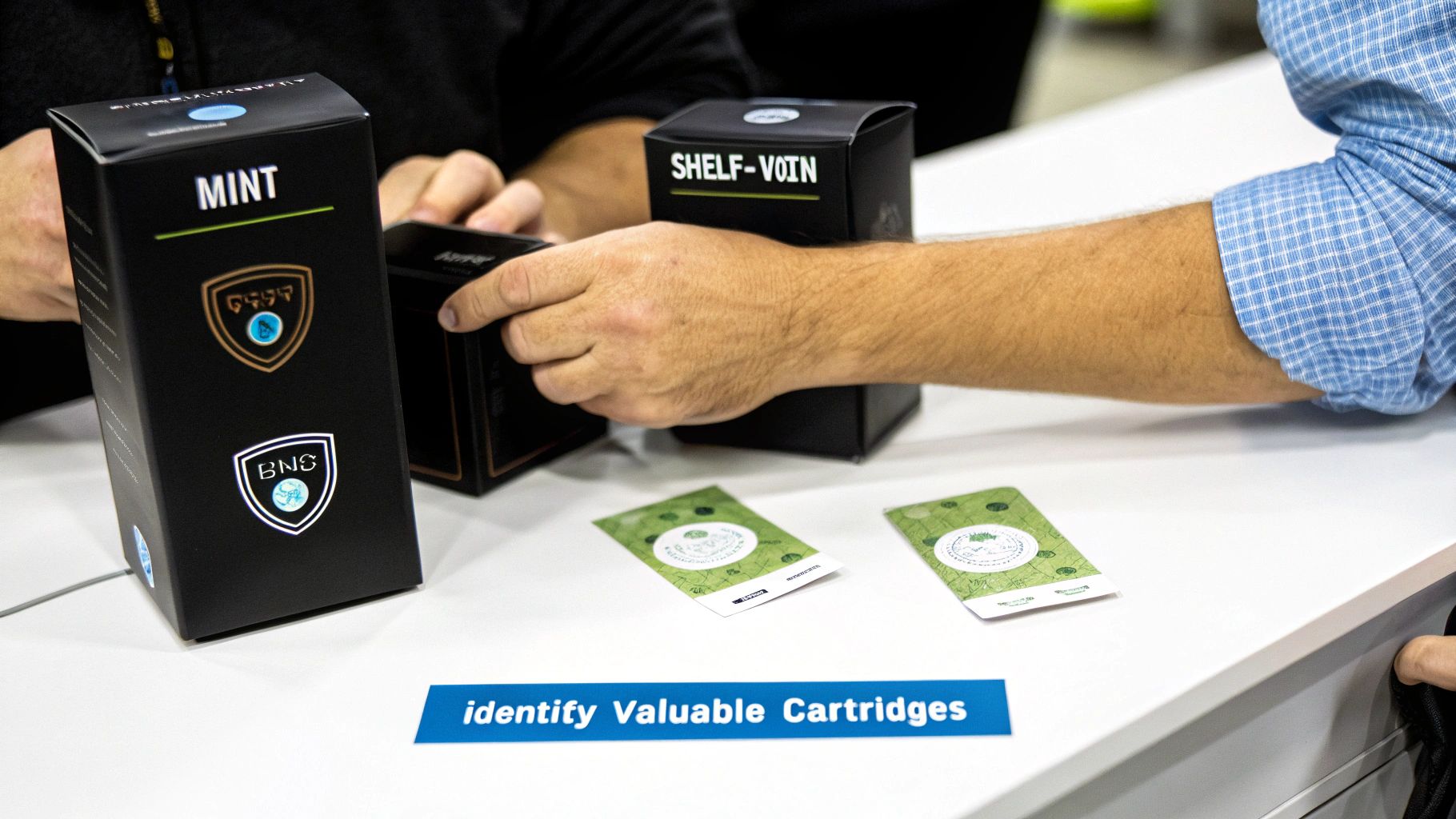
Before you can turn those extra ink cartridges into cash, you need to figure out what you’re actually holding. Let's be honest, not every cartridge gathering dust in your supply closet is a hidden gem. The first order of business is separating the valuable stuff from what belongs in a standard recycling bin.
Buyback companies are almost exclusively looking for genuine OEM (Original Equipment Manufacturer) cartridges. These are the cartridges made by the same brand that built your printer—think HP, Canon, Brother, and Epson. Why the preference? Because buyers know they're reliable, high-quality, and in demand.
On the other hand, remanufactured or "compatible" cartridges from third-party companies are typically a no-go for cash buybacks. For example, a cartridge from a brand like "LD Products" or "Smart Ink" won't be accepted. They just don't have the resale value or the quality guarantee that comes with an OEM product.
At a quick glance, a compatible cartridge box can easily be mistaken for a genuine one. But if you know what to look for, the differences become obvious. Big brands go to great lengths to help you verify their products, which makes sorting your inventory much easier.
Take HP, for example. They're serious about fighting counterfeits. Most of their genuine ink and toner boxes have a holographic security seal. When you tilt the box, the images and text on the seal should shift. You can often even scan a QR code on the label with your phone to confirm it's legit.
Here’s what a genuine HP security label looks like.
This little label is your proof of authenticity and a major factor in its resale value. Other brands use their own identifiers, like specific logo placements and high-quality, seamless packaging that knock-offs just can't seem to replicate perfectly.
My Two Cents: If the price seemed too good to be true when you bought the cartridges, they probably aren't OEM. Focus on sorting the boxes with official brand logos you recognize—HP, Canon, Brother, Dell, Lexmark, etc.
So, you’ve confirmed your cartridges are genuine OEM. Great! The next step is evaluating the condition of the box itself, because this directly impacts the cash you'll get. A pristine box is worth a whole lot more than one that’s been banged up.
Buyers usually sort boxes into three grades. Knowing these categories will help you set realistic expectations when you ask for a quote.
Think of it this way: you have two HP 952XL ink cartridges. One box is perfect. The other has a giant shipping label slapped across the front and a crushed corner. The mint-condition cartridge could fetch a $25 offer, but the damaged one might only be worth $10—or even less. Taking the time to sort your inventory by condition is non-negotiable if you want to get the best possible return.
Okay, so you've sorted through your cartridges and have a good idea of what's what. Now comes the part that really separates a quick, profitable sale from a frustrating back-and-forth: creating a detailed inventory list. This isn't just busywork—it's the single most important thing you can do to get a fast, accurate, and high-value quote.
Think about it from the buyer's perspective. A clear, professional list says you’re a serious seller who knows what they have. A vague email with a blurry photo of a pile of boxes? That signals a potential headache and often gets a lowball offer or just gets pushed to the bottom of the pile.
Your goal here is simple: make it incredibly easy for a buyback company to see exactly what you’re offering. A basic spreadsheet is your best friend for this. No need for fancy formulas, just a clean, organized document.
This little bit of upfront effort pays off big time. It lets a buyer generate a solid offer in minutes, and you can easily send the same list to multiple companies to compare quotes. This is how you ensure you're getting the best possible price.
Here’s what your spreadsheet needs for each type of cartridge:
A structured list like this makes all the difference. For example, a line item should look like: HP | 952XL Black | 12 | Mint.
Here’s a detail that trips up a lot of sellers: the expiration date. For inkjet cartridges, this is a make-or-break issue. Most buyback companies will not accept expired inkjets, and many won’t even consider them unless they have at least a year of shelf life left.
Toner cartridges generally don't have expiration dates, but for ink, it's a huge deal. Before you even add an inkjet to your list, find the date on the box. Adding an "Expiration Date" column to your spreadsheet for your ink cartridges is a pro move that builds trust and saves everyone from surprises down the road.
I saw this happen with a graphic design studio recently. They sent in a perfect list of surplus Epson ink and got a great quote. But when the cartridges arrived for inspection, half of them were expired. Their final payout was cut by 50%. A simple check upfront would have saved them a lot of disappointment.
While your spreadsheet is the foundation, photos provide the visual proof that helps lock in a great offer. Clear, well-lit pictures give buyers the confidence to make a firm quote quickly. You don’t need a professional camera—your phone will do just fine.
Instead of one shot of a jumbled pile, stack the boxes neatly by model. Take a group shot showing the overall quantity and condition. For example, a single clear photo of a stack of 20 mint-condition HP 63XL boxes with the expiration dates visible is far more effective than individual shots. For more detailed tips, check out these instructions on how to submit images for a quote.
The fact that this is even a business shows how much demand there is. The global market for recycling cartridges is expected to jump from USD 2.16 billion in 2025 to USD 4.0 billion by 2035. North America is a huge part of this, with its market share projected to hit USD 1.5 billion by 2035, thanks to businesses and individuals getting on board.
Once you have a detailed inventory list, you're officially in control. The next move is finding reputable buyers who will turn that spreadsheet into cash. A quick online search for "sell unused toner" or "ink buyback program" will give you plenty of options, but don't stop there. The real key to getting top dollar is to create a little friendly competition.
My best advice? Never take the first offer. Always send your inventory list to at least three different buyback companies. It's a simple step, but it forces them to put their best foot forward, which almost always means a better price for you.
You don't need to write a novel when you reach out for a quote. A quick, professional email is all it takes to get things moving. Just be sure to attach your inventory spreadsheet and the photos you took—this gives buyers everything they need to give you an accurate offer without a lot of back-and-forth.
Here’s a simple template I've seen work well:
Subject: Quote Request for Surplus OEM Cartridges
Body:
Hi there,We have a stock of surplus, factory-sealed OEM ink and toner cartridges we're looking to sell. I’ve attached our detailed inventory list and photos for your review.
Please send over a purchase offer when you get a chance.
Thanks,
[Your Name]
[Your Company]
[Your Contact Information]
This approach is direct, respects the buyer's time, and shows you’re an organized seller. In my experience, that professionalism often leads to faster and more serious responses. If you have your list ready, you can easily use a form to submit your list for a fast quote and get the process started.
When those offers start rolling in, it’s so tempting to just grab the one with the biggest number. But a smart seller knows the initial dollar amount doesn't tell the whole story. You have to dig into the details to see what you'll actually walk away with.
Think about it this way: one company might offer $500 for your lot but make you pay for shipping and insurance. That could easily eat up $50 or more of your profit. Meanwhile, another company might offer $480 but provide free, fully insured shipping labels. Suddenly, that second "lower" offer is the one that puts more money in your pocket.
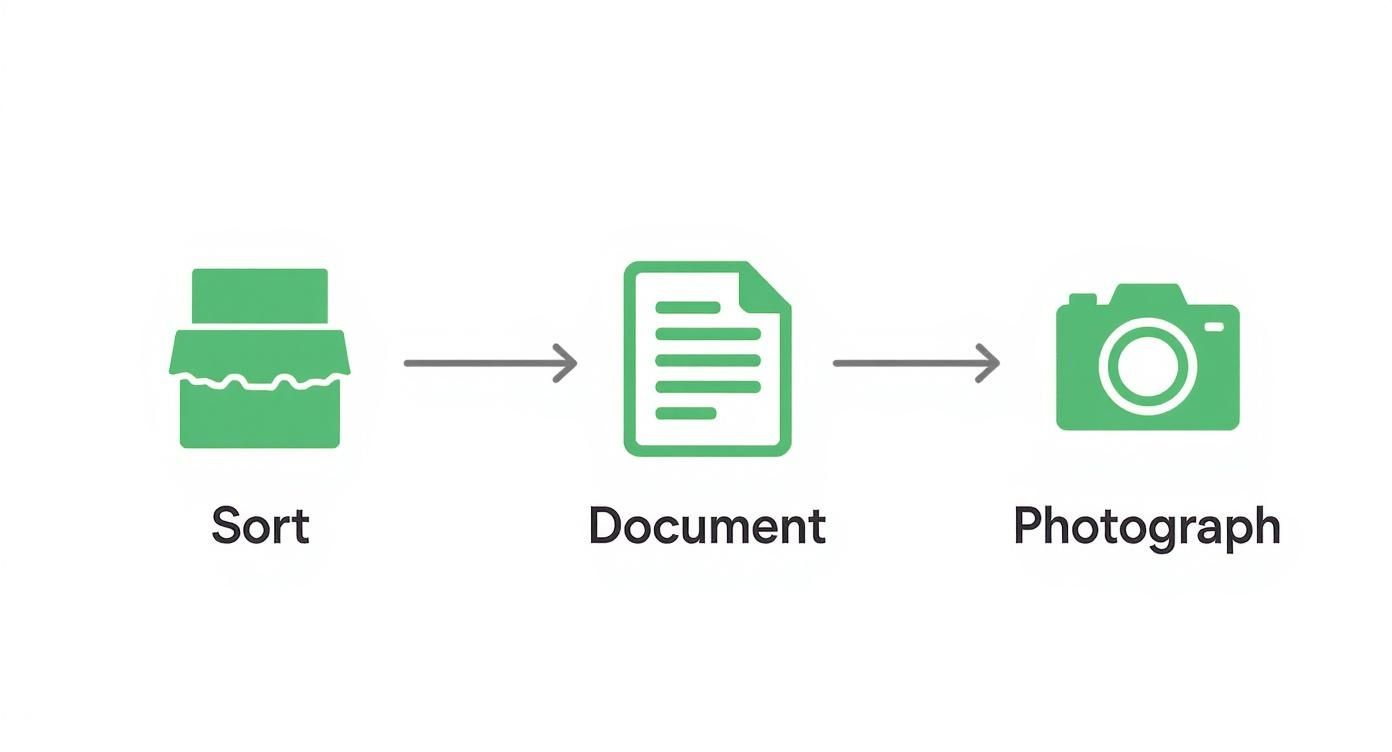
Putting in the prep work to sort, document, and photograph your inventory makes this entire quoting process smoother. When buyers see a professional package, they tend to provide better, more reliable offers.
Here’s how three offers for the same batch of surplus cartridges might stack up, highlighting important factors beyond the price.
| Comparison Point | Company A | Company B | Company C |
|---|---|---|---|
| Total Offer | $550 | $525 | $540 |
| Shipping Costs | Seller Pays (Est. $45) | Free Prepaid Label | Free Prepaid Label |
| Insurance Coverage | Seller's Responsibility | Included up to $500 | Included up to $1,000 |
| Payment Speed | 5-7 days after inspection | 1-2 days after inspection | Same day as inspection |
| Online Reviews | 3.5 stars (Mixed) | 4.9 stars (Excellent) | 4.2 stars (Good) |
At first glance, Company A's $550 offer looks like the winner. But once you subtract the $45 you have to pay for shipping, your actual profit drops to $505. Company C is a solid option at $540 with fast payment. But Company B, despite the lowest initial quote, nets you a respectable $525 and comes with stellar reviews and quick payment—a great combination of value and peace of mind.
This is a perfect example of why you have to look at the complete picture. When you're finding buyers and comparing competing offers, it helps to be familiar with broader decluttering and resell strategies to understand all the variables that affect your bottom line.
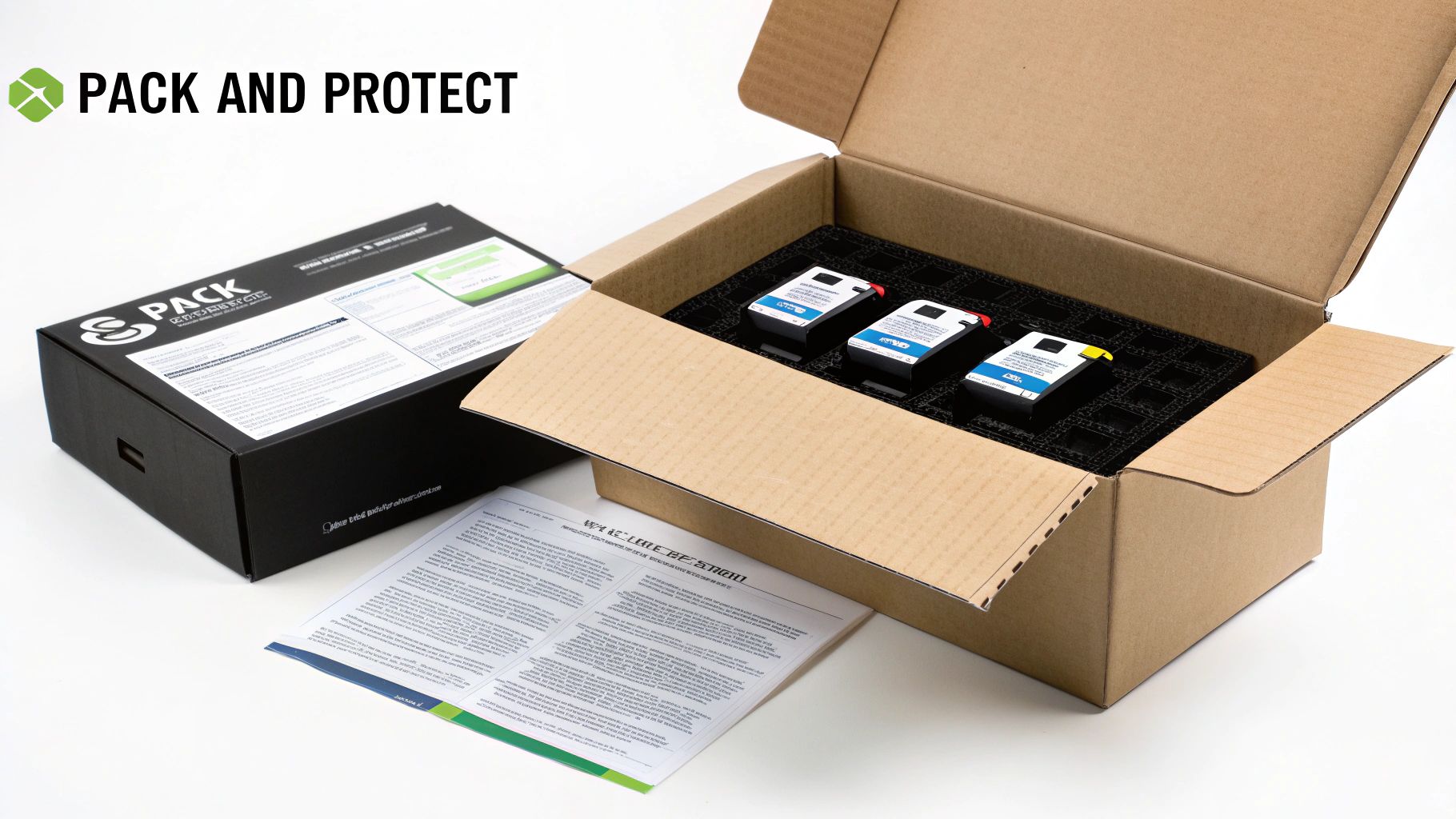
You’ve accepted an offer, and the finish line is in sight. Now it's time to handle the final steps: packing, shipping, and collecting your cash. This part is pretty straightforward, but how you manage it can make or break your final payout.
Proper packaging isn't just about getting items from point A to B. It’s about making sure they arrive in the exact same condition you sent them, protecting the value you’ve already locked in. Think of it as the final handshake of the deal. A well-packed box guarantees the buyer gets what they agreed to pay for, which is the quickest way to get paid without surprise deductions.
I've seen it happen too many times: a payout gets reduced because cartridges were damaged in transit. A mint-condition box can easily get scuffed, dented, or crushed if it’s rattling around in a flimsy container on the back of a truck. Protecting your items is non-negotiable.
First things first, find a good outer box. It needs to be sturdy—either new or barely used—with enough room for your cartridges plus at least two inches of padding on all sides. Whatever you do, never just slap a shipping label directly onto the product box. That’s an instant downgrade from "new" to "used" condition.
Here are a few simple rules I always follow to make sure everything arrives safely:
A Quick Word of Warning: Even if the buyer gives you a free shipping label, you are still responsible for packing everything securely. A shipping damage claim won't cover items that were poorly packed to begin with, and you'll be the one who loses out.
Insurance is your safety net. Let's be real—packages get lost or damaged sometimes, even with the best carriers. If your uninsured $800 shipment goes missing, that profit is gone for good. You should always, always insure your shipment for its full quoted value.
The good news is that most reputable buyback companies, including Toner Connect, provide prepaid shipping labels that already have insurance coverage built-in. This is a huge perk that protects you. If you’re handling shipping yourself, make sure you add adequate insurance. It’s a tiny cost that buys you complete peace of mind.
Once you ship your items, the buyer will inspect them to make sure everything matches your list. This usually happens within a day or two of the package arriving at their warehouse. As long as it all checks out, your payment is processed right away.
Different buyers have different ways of paying, so it’s good to know your options.
Common Payment Methods Include:
The best companies are quick and transparent with their payments. You should expect to see your money the same day the inspection is done, or within a couple of business days at the most. This final step is what turns your surplus supplies into a nice return, successfully letting you recycle ink cartridge for cash.
Getting a great quote is a good start, but making sure that number ends up in your bank account is what really matters. A few smart moves can seriously boost your payout, while a couple of common slip-ups can just as easily slash it. Think of this as your final pre-shipment checklist to lock in the highest possible profit.
One of the easiest ways to get more cash is by selling in bulk. Why? Buyers love bigger lots. It's more efficient for them to process one large shipment than several small ones, and they'll often pass those savings on to you with better per-item pricing and even free shipping. For instance, a single toner cartridge might get a $30 offer, but a pallet of 20 could fetch $35 a pop simply because of the economies of scale.
Timing is everything. Keep your ear to the ground for news about printer models being discontinued. When a popular workhorse printer gets phased out, companies everywhere start liquidating their now-useless supplies. For example, when HP retired the popular LaserJet 4250, the market was flooded with 42X toner cartridges. If you act fast, you can sell your stock while buyback demand is still hot, right before the market gets swamped.
To truly get top dollar, you need to clearly show the buyer what you have. This is where the principles of value selling come into play, focusing on communicating the tangible worth of your assets. A detailed inventory list and crisp, clear photos are your best tools to prove that value right from the get-go.
I've seen even seasoned sellers make simple mistakes that chip away at their final payment. Knowing what to watch out for is the best defense for your bottom line.
I once worked with an accounting firm that almost lost $400 on a single shipment. They tossed mint-condition toner boxes into a much larger container with no padding. The boxes rattled around the entire way, arriving with crushed corners and dented sides. Their top-dollar quote was nearly cut in half because of a completely avoidable mistake.
Finally, don't forget the bigger picture. In 2025, it's estimated that Americans will go through around 400 million ink cartridges. By selling your surplus, you’re not just making money—you're playing a part in a more sustainable system. You're helping keep plastics that take over 450 years to break down out of our landfills.
When you're looking to sell surplus printer supplies, a few questions always pop up. We get it. Here are some straightforward answers to the things businesses most often ask.
The short answer is almost always no. Buyback programs are specifically looking for unused, factory-sealed OEM (Original Equipment Manufacturer) cartridges. The whole point is to resell them as new.
If you have used or empty cartridges, those fall into a different category. You'd be looking at traditional recycling programs, which sometimes offer small perks like store credit, but not cash. For example, a program like HP Planet Partners lets you mail back empty cartridges for free recycling, but there's no payment involved.
This is the big question, and the answer really depends. A few key things determine the value: the printer model's popularity, how far out the expiration date is, and the physical condition of the box. A pristine box for a high-demand cartridge will always get you the best price.
On the other hand, cartridges for older, less common printers or those with dinged-up, torn, or marked-up boxes will be worth a lot less. The only real way to know for sure is to get a custom quote.
A cartridge’s value is a direct reflection of current market demand and its condition. For example, a popular high-yield HP inkjet in a perfect box might fetch 60% of its retail price. That same cartridge in a damaged box? The offer could drop to just 20%.
It's simple: OEM cartridges are made by the original printer manufacturer—think HP, Brother, Canon. Compatible or remanufactured cartridges are made by a third-party company. A compatible cartridge might look similar but will have a different brand name on the box, like "E-Z Ink" or "LD Products."
For cash buyback programs, the focus is exclusively on genuine, unused OEM products. You can find more details on our FAQ page for selling toner.
Ready to turn those extra supplies into cash? At Toner Connect LLC, we make it easy and profitable. We provide fast quotes, cover the insured shipping, and process same-day payments. Get your no-obligation offer today by visiting https://tonerconnect.net.
