
So, you've got an empty ink cartridge. What now? Tossing it in the bin might seem like the easiest option, but there are much better ways to handle it. Recycling is a straightforward process, usually involving manufacturer take-back programs, drop-off bins at office supply stores, or specialized mail-in services. For example, a home user can simply drop an empty HP 67 cartridge into a collection bin at their local Staples, while an office can mail a box of used Brother TN-760 toners back to the manufacturer for free.
The best route really depends on the type of cartridge you have, but the goal is the same: keep these complex plastic and metal components out of our landfills. It’s a small action, but it has a surprisingly big positive ripple effect on the environment.
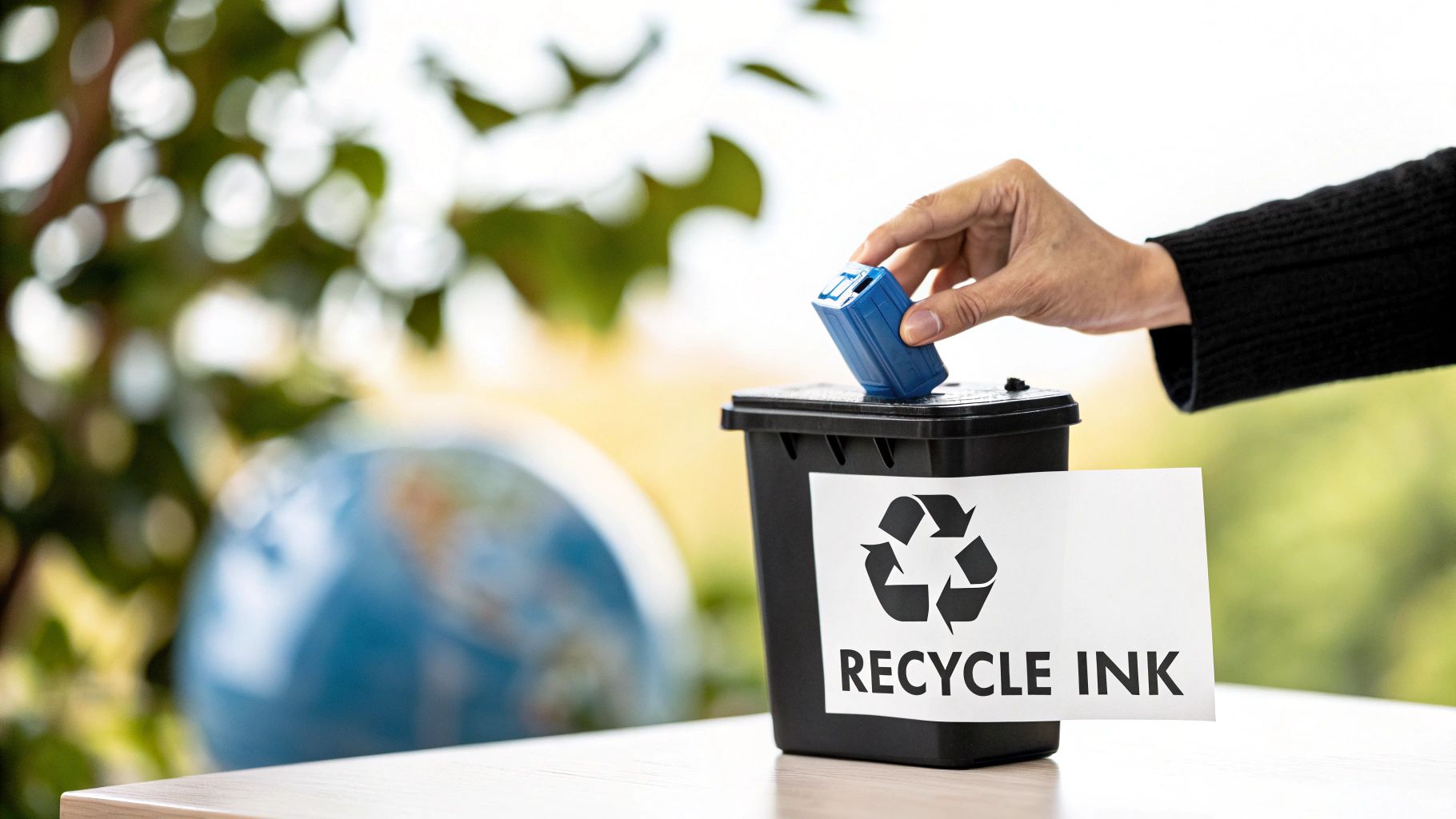
It’s easy to think of an empty ink cartridge as just another piece of office trash. But when you add them all up, the collective impact is staggering. Hundreds of millions of these cartridges end up in landfills every single year, contributing to a massive and persistent environmental problem.
Think about it—these aren't just simple plastic shells. Each cartridge is a mix of industrial-grade plastics, steel, aluminum, and foam. That plastic can take up to 1,000 years to fully decompose. For centuries, it just sits there, slowly leaching microplastics and residual chemicals into the ground and our water systems.
When you make the choice to recycle, you're doing a lot more than just diverting waste. You’re actively conserving precious natural resources and cutting down on energy use. For example, it takes over two quarts of oil just to manufacture a single new toner cartridge.
By recycling that same cartridge, you help break our reliance on fossil fuels. This one decision has a direct and positive impact on the planet in several key ways:
If you want to dig deeper into the broader consequences of e-waste, this resource on the environmental impact of electronic waste is a real eye-opener.
The good news is that people are catching on, and your choice to recycle is part of a much larger global movement. Printer cartridge recycling has become a key part of managing e-waste and building a more circular economy where we reuse materials instead of just throwing them away.
The global printer cartridge recycling market was valued at roughly $2.5 billion in 2023 and is expected to nearly double to $4.8 billion by 2032. This isn’t just a trend; it’s a fundamental shift in how we handle these products.
By taking part, you're not just protecting the environment—you're supporting an industry that creates green jobs. And as we'll explore, recycling your ink cartridges can also be good for your bottom line, turning what was once office waste into a potential source of income.
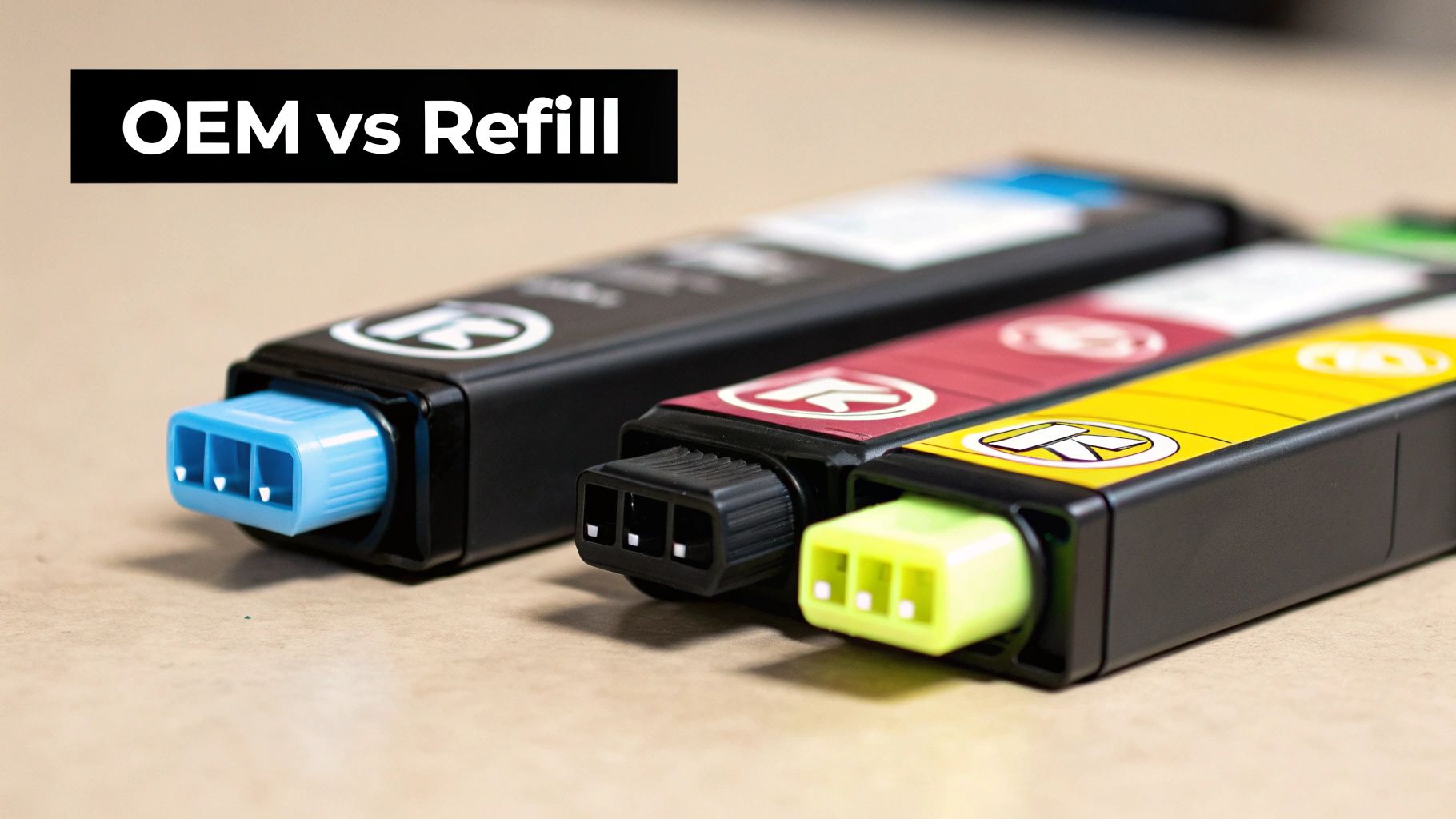
Before you can figure out the best way to get rid of your old ink cartridges, you need to know exactly what you’re holding. Not all cartridges are created equal, and where they came from directly impacts their recycling options and potential cash value. The main difference boils down to Original Equipment Manufacturer (OEM) products versus third-party alternatives.
An OEM cartridge is the real deal—made by the same company that built your printer. Think HP, Canon, Epson, or Brother. These are the brand-name cartridges you buy from the manufacturer or an authorized store. They’re generally higher in quality and, most importantly for us, they're what buyback companies are looking for.
Then you have the third-party cartridges. This group includes both "remanufactured" and "compatible" options. A remanufactured one is just an old OEM cartridge that’s been professionally cleaned, refilled with ink, and tested. A compatible cartridge, on the other hand, is a brand-new knockoff made by an entirely different company.
So, how can you spot the difference? It’s usually easier than you think. Start with the most obvious clue: the brand logo.
Taking a moment to identify your cartridges is a crucial step. While most free recycling programs will take just about anything, the services that pay you for empties almost exclusively want one specific type.
The gold standard for resale and recycling is a "virgin" OEM cartridge. This is a genuine, brand-name product that has been used only once and has never been refilled or remanufactured before.
Once you know what kind of cartridges you have, you know what to expect. If your office just upgraded its printers and you’re sitting on a box of virgin HP toner cartridges, you might have a few hundred dollars on your hands. A buyback service like Toner Connect specializes in purchasing these exact items because they can be reliably remanufactured into high-quality products.
Let's say a business just leased new machines. They might have dozens of authentic, unused Canon 055H toner cartridges that are now obsolete for them. These are perfect candidates for selling, potentially recovering a significant part of their original cost.
On the flip side, if you have a mixed bag of refilled or generic cartridges, their value lies in their raw materials, not their potential for reuse. The best route for these is a free drop-off program at a retailer like Staples or your local e-waste facility. There, they'll be properly broken down and processed. It's all about matching the right cartridge to the right recycling path.
Alright, you’ve sorted through your cartridges. Now comes the important part: figuring out the best home for them. The right path really depends on what you've got on your hands, how many you have, and what you're trying to get out of it—maximum convenience or a little cash back.
Think of it this way: a home user with a single, empty inkjet cartridge just wants to do the right thing and keep it out of the trash. Easy. But an office manager sitting on a closet full of brand-new, genuine toner cartridges from a now-obsolete printer? That's not trash; that's an asset. Each situation points to a different solution.
For most folks, especially if you have refilled or third-party cartridges, a free recycling program is the way to go. These programs are all about breaking down the materials for reuse, not necessarily refilling the cartridge itself.
Here are the most common no-fuss options:
These routes are designed for pure convenience, making it incredibly easy to be responsible without sending more plastic to the landfill.
If you're holding onto unused or even empty "virgin" OEM cartridges (meaning they've never been refilled), you can actually turn that clutter into cash. This is a game-changer for businesses that have upgraded their printers and are now stuck with perfectly good, but incompatible, supplies.
Here’s the critical difference: a free recycling program sees an old cartridge as raw materials—plastic, metal, and leftover ink. A buyback service, on the other hand, sees a high-quality component that can be professionally remanufactured and given a second life. That’s precisely why they only want genuine OEM products that haven’t been tampered with.
A small business with even a dozen surplus OEM toner cartridges—say, a box of HP 414X toners they no longer need—could pocket a few hundred dollars. If your company has a stockpile gathering dust, it's absolutely worth your time to explore selling your unused toners by submitting a form to get a quote. The process is usually quick and painless—they provide free shipping labels and pay you once they've checked everything out.
To help you visualize your options, I've put together a quick comparison of the most popular methods.
Deciding where to send your cartridges can feel overwhelming, but it boils down to a few key factors. This table breaks down the most common routes, helping you see at a glance which one fits your specific needs, whether you're dealing with one empty cartridge or a hundred new ones.
| Recycling Method | Best For | Potential Payout | Convenience Level |
|---|---|---|---|
| Retail Drop-Off | Single or few cartridges, any type | Store credit (sometimes) | High |
| Manufacturer Mail-In | Empty OEM cartridges | None | Medium |
| Online Buyback Service | Unused or empty "virgin" OEM cartridges | Cash payment | Medium |
| Local E-Waste Event | All types of cartridges and e-waste | None | Low (event-based) |
As you can see, choosing the right option is all about matching your situation to the services available. By taking a moment to find the right fit, you not only make an environmentally sound choice but might also recover some of your original investment. It’s a win-win.
You've done the hard part—you’ve sorted your cartridges and picked a home for them. Now for the final, critical step: packing. Don't rush this part. Whether you're sending cartridges back to the manufacturer or selling them to a service like ours, a damaged or leaking cartridge can get rejected on arrival. A few extra minutes of careful packing makes all the difference.
The main goal is to keep any residual ink or toner contained and protect the cartridge’s sensitive parts, like an inkjet's print head or a toner's drum. A leaky package isn't just a mess; it can contaminate and ruin the entire shipment, turning valuable supplies into worthless plastic.
This flowchart can help you quickly see where your specific cartridges fit in the recycling and resale ecosystem.
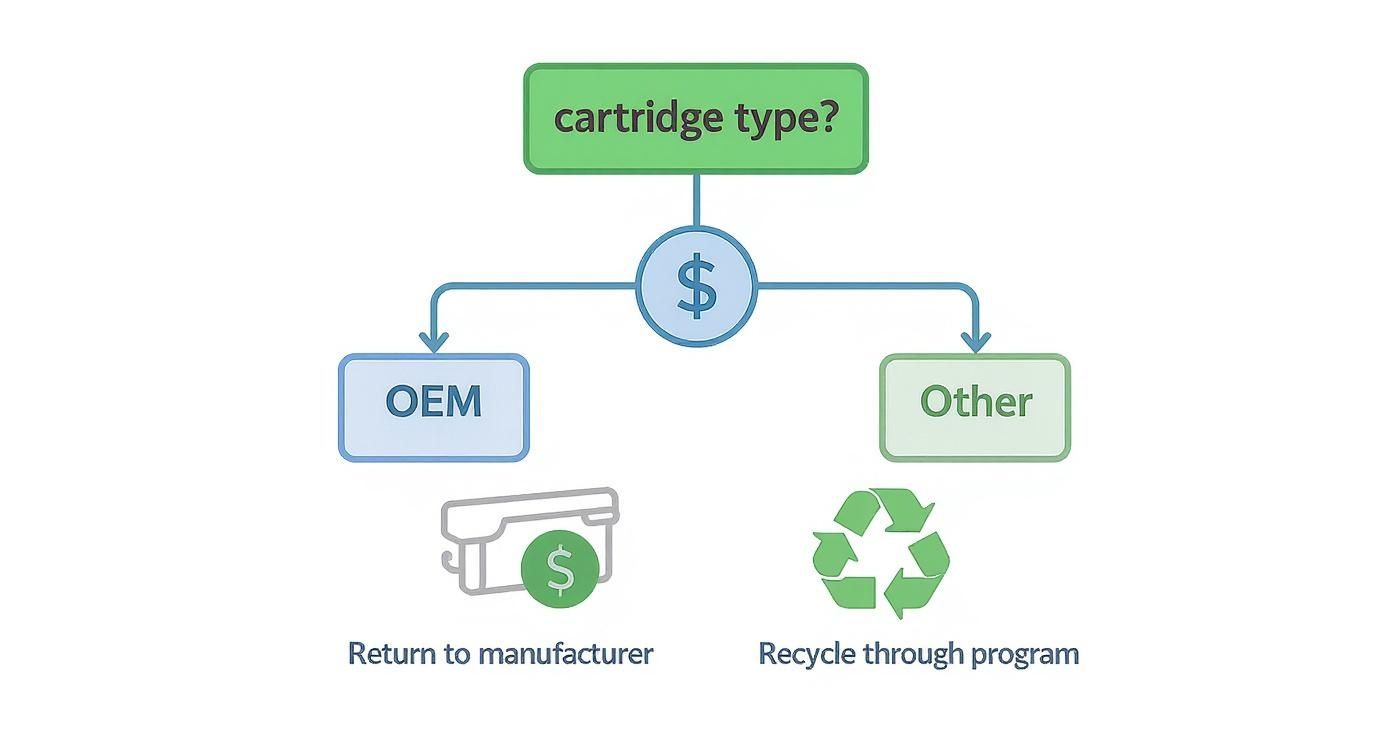
As you can see, genuine OEM cartridges often have a second life through resale, while others are better candidates for material recovery through recycling programs.
Just sending in a couple of cartridges from your home office? The process is simple.
By far, the best way to pack a cartridge is in its original box. It was designed to keep it safe. If you tossed the box long ago, no problem. A great alternative is to wrap each cartridge in a few layers of newspaper or bubble wrap. Then, seal each one in its own plastic bag (a Ziploc works perfectly) to create a foolproof barrier against leaks.
For larger toner cartridges, the main thing to protect is the shiny photosensitive drum. Try not to touch it with your bare hands, since the oils from your skin can cause damage. If you happen to have the original plastic end caps, pop them back on. If not, a tight wrap in bubble wrap will keep the drum from getting scratched up in transit.
If you're an office manager sending out a box of 20 mixed cartridges, just tossing them all in together is asking for trouble. A little organization goes a long way.
Here’s how we recommend handling larger shipments:
A well-packed box shows you’re a pro and helps ensure a fast, smooth transaction. When a recycler or buyer receives a neat, organized, and leak-free shipment, they can process it quickly and without any hiccups.
Taking these simple precautions ensures your cartridges arrive in the same condition they left, ready for their next chapter.
Alright, you've got your cartridges sorted and boxed up. Now for the final step: getting them where they need to go. If you're managing this for a business, the logistics can seem like a headache, but it’s usually much simpler than it looks.
The best part? Most reputable recycling and buyback programs take the biggest pain point—cost—right out of the equation by providing prepaid shipping labels.
It's a small thing that makes a huge difference. Whether you're shipping one small box or an entire pallet, having the label ready and paid for streamlines everything. If you're looking for a bit more detail on carriers, our guide to trusted carriers and shipping options is a great resource.
For any business, recycling ink cartridges is more than just a feel-good action; it’s a tangible asset. Keeping proper records of your recycling efforts gives you hard proof of your company’s commitment to sustainability. This kind of documentation is gold for corporate social responsibility (CSR) reports and genuinely boosts your brand's green image.
Think about it from an office manager's perspective. With these records, they can:
Keeping good records isn't complicated. A simple spreadsheet is all you need to log each shipment and maintain a clear history of your recycling activity.
A good log includes the shipment date, the carrier you used, the tracking number, and a quick inventory of what you sent. This creates an easy-to-follow paper trail that proves your company's recycling volume and consistency over time.
This isn't just busywork—it's becoming a crucial business practice. North America is a major player in cartridge recycling, with the market valued at around $780 million in 2024 and expected to jump to $1.5 billion by 2035. This boom is driven by tougher environmental regulations and customers who demand eco-friendly practices from the companies they support.
For anyone managing the logistics of cartridge returns, knowing the rules is key. That includes understanding things like managing hazmat shipping restrictions to avoid fines. By documenting your efforts and staying on top of the regulations, you turn a simple recycling task into a powerful tool for both compliance and genuine environmental stewardship.
Even after you've decided to start recycling your ink cartridges, a few questions can pop up. It's completely normal. Let's walk through some of the most common ones I hear so you can move forward with confidence.
This is a fantastic question, and the short answer is: it depends entirely on where you're taking them. The path you choose often dictates what they’ll accept.
It's always a good idea to check the specific program's website before making a trip. A quick search can save you a lot of hassle.
When you're weighing refilling against recycling, think about getting the most life out of the product first. From a purely environmental perspective, refilling is always the better initial option. It's direct reuse, which beats breaking something down for recycling every time.
But there’s a catch. Most cartridges can only be refilled a handful of times—maybe two or three—before the print quality starts to suffer. Once you notice streaking or fading even with fresh ink, its useful life is pretty much over. That’s your cue to recycle it.
My rule of thumb is "reuse, then recycle." Squeeze every last drop of value out of that cartridge by refilling it, and once it’s truly spent, send it off to be properly recycled.
Yes, you definitely can! But it’s crucial to manage your expectations. What you earn is tied directly to the cartridge's model, brand, and its history.
Let's be real: you’re not going to fund your retirement by recycling a couple of inkjet cartridges from your home office. The real financial benefit is for businesses.
Think about an office that burns through dozens of cartridges every month. Those small payments can easily add up to hundreds of dollars a year. It’s a smart way to offset printing costs while doing the right thing, turning something you once saw as trash into a genuine asset.
Ready to turn your surplus ink and toner into cash? At Toner Connect LLC, we make it easy for businesses to get paid for their unused OEM cartridges. We offer competitive quotes, provide free prepaid shipping, and issue fast payments, helping you clear out clutter and recover value. Get your free quote today at https://tonerconnect.net.
