
You can absolutely get cash for recycled ink cartridges, but it's not about your used empties. The real value is in selling your new, unused, and genuine OEM (Original Equipment Manufacturer) supplies to specialized buyback companies.
These programs are a fantastic way to turn your office's surplus or liquidation stock—like that forgotten closet full of extra toner—into working capital. For example, if your company upgrades its printer fleet, you can sell the old, unused cartridges for the phased-out models instead of just writing them off as a loss. It's a simple, effective method to boost your bottom line and support sustainability at the same time.

That supply closet crammed with unused ink and toner? It’s more than just clutter; it’s an untapped financial asset. For office managers and businesses, those surplus items are dormant cash just waiting to be converted into active funds for your operations.
Think of it as a strategic cleanup with a direct financial payoff. Imagine you find five boxes of genuine HP 952XL ink cartridges during a quarterly inventory check. Instead of letting them take up space, you sell them to a buyback company and receive a check for $150 that can be used for new office supplies.
Instead of letting these assets depreciate on a shelf or expire completely, a buyback program offers a straightforward path to getting your money back. The process is designed to be painless: you inventory your items, get a quote, ship them for free, and get paid. It transforms a tedious cleanup project into a smart financial decision.
To really see the benefit, it helps to grasp the hidden expenses of holding onto old stock. Digging into resources on understanding inventory carrying costs can shed light on how liquidating surplus supplies directly improves your company's financial health.
Not all cartridges are created equal in the eyes of a buyback company. The items that command the best prices are always genuine OEM products in their original, factory-sealed packaging.
Here’s a quick rundown of what buyers are looking for:
This focus on new, resellable stock is what separates a buyback program from a standard recycling drop-off, which typically only deals with empty, used cartridges for remanufacturing.
The idea of getting cash for surplus ink cartridges isn't just a niche hack; it's part of a massive, rapidly expanding market. The global ink cartridge recycling sector is on track to hit an estimated $2.5 billion by 2028.
This growth is fueled by a dual demand for both environmental responsibility and cost-effective printing solutions. With some programs collecting over 100 million cartridges every year, it’s clear that businesses everywhere are catching on. This isn't just about cleaning out a closet—it's a smart, sustainable business practice.
So, you’ve rounded up your surplus cartridges. Now comes the most important part: picking the right company to buy them. Who you partner with can make the difference between a quick, profitable transaction and a drawn-out headache filled with surprise fees.
A simple search for "cash for recycled ink cartridges" will bring up a ton of options, from huge recycling operations to smaller, specialized online buyers. Don't just click the first result. You're looking for a partner who is transparent, responsive, and, above all, reliable. A slick website is a good start, but that's just scratching the surface.
The best buyback companies lay all their cards on the table from the very beginning. They'll tell you exactly what they buy, how they calculate their offers, and when you can expect to get paid. If you have to dig for this information or run into vague terms and conditions, that's a major red flag.
Here’s what you should be looking for:
For a deeper look into what makes a great partner, our guide on working with toner distributors and resellers is packed with industry insights. It’s especially helpful if you’re managing a large volume of surplus supplies.
Pro Tip: Don't send your entire stock at once. Start with a small test batch. For example, if you have 50 cartridges, send just five on the first go. It's the best way to see how a company really operates—how they communicate, how fairly they inspect items, and how quickly they pay—without putting your whole inventory on the line.
Unfortunately, the industry has its share of shady operators. A common tactic is to give you an amazing initial quote, only to slash it after their "inspection," claiming your boxes were in worse shape than you described. For example, they might quote you $50 for a toner cartridge, but after receiving it, they claim there's a small dent and reduce the offer to $15. This is where a detailed inventory list with photos, which we'll get into next, becomes your best defense.
Slow payment is another classic problem. A good partner will have a clear payment schedule, whether that's an instant PayPal transfer or a check cut the day your shipment is verified. If their payment terms are fuzzy or feel like they stretch on forever, walk away. Finding a partner who respects your time is key to getting your cash for recycled ink cartridges without any fuss.
If you want the best possible cash offer for your surplus ink and toner, you need to show buyers exactly what you have. Sending an email that just says "I have a box of old toner" is a surefire way to get a lowball offer or, more likely, no response at all.
Think of it this way: you wouldn't sell a car by just saying "it's a blue Ford," right? You'd list the make, model, year, and condition. The same logic applies here. A detailed, accurate inventory list is your ticket to a fast, precise quote that maximizes your payout from day one. Taking a few minutes to get organized signals that you're a serious seller, which encourages buyers to put their best foot forward immediately.
The easiest way to get started is by opening a simple spreadsheet in a program like Microsoft Excel or Google Sheets. This will become your master list, capturing all the essential details that determine the value of each cartridge.
Your spreadsheet should have four critical columns:
A perfect line item would look something like this: HP | 902XL Black | 12 | New/Sealed in perfect box. This simple description removes all the guesswork for the buyer. If you already have a big list prepared, you can just submit your inventory file for a fast quote and skip the manual data entry.
Along with your spreadsheet, clear photos are non-negotiable. They serve as visual proof of your inventory's condition and can head off any potential disputes later on. From a buyer's perspective, good photos speed everything up because we can instantly confirm the quality you've described. For instance, if you list a box as having "minor damage," a photo showing a slightly crushed corner allows the buyer to provide an accurate quote immediately.
Pro Tip: Take close-up shots of the security seals on the boxes. A crisp photo of an unbroken HP or Canon holographic seal is undeniable proof that the cartridge is genuine and factory-sealed, which makes a huge difference in its value.
This practice of getting cash for recycled ink cartridges isn't just a local thing. The European printer cartridge recycling market is expected to grow to about $1.1 billion by 2032. This boom is fueled by initiatives in places like the UK, where over 65 million cartridges are sold annually, but only about 15% currently get recycled. Cash-back programs offering £1 to £3 per cartridge are making a real dent. You can find more details on the European recycling market on dataintelo.com. This global demand is exactly why a well-documented inventory can attract top-dollar offers.
So you've cataloged your inventory and have a quote in hand. The next step is a big one: getting those cartridges to the buyback company in one piece. Your final payout literally depends on the condition of your items when they arrive. A crushed box or a broken seal can turn a valuable cartridge into a worthless one, so a little care here pays off.
Think about it—the original packaging for ink and toner is pretty flimsy. It's designed for a retail shelf, not for the rough and tumble world of shipping. A bit of jostling can easily damage the thin cardboard, which is why packing them correctly is so important.
First things first, find a solid box. A sturdy, corrugated cardboard box that gives your items a little breathing room without being massive is perfect. It's totally fine to reuse an old shipping box, just give it a quick once-over to make sure it's not weak or torn. Whatever you do, avoid overfilling the box. A bulging box is a recipe for disaster and is far more likely to burst open in transit.
Next, you'll need some packing materials. Bubble wrap is your best friend here, especially for protecting the individual cartridge boxes.
Before you tape it up, give it the old "shake test." Seal the box and give it a gentle shake. If you hear or feel anything sliding around inside, open it back up and add more packing material until everything is completely immobile.
Getting your items inventoried and photographed for a quote is the first half of the battle. The image below shows that simple process.
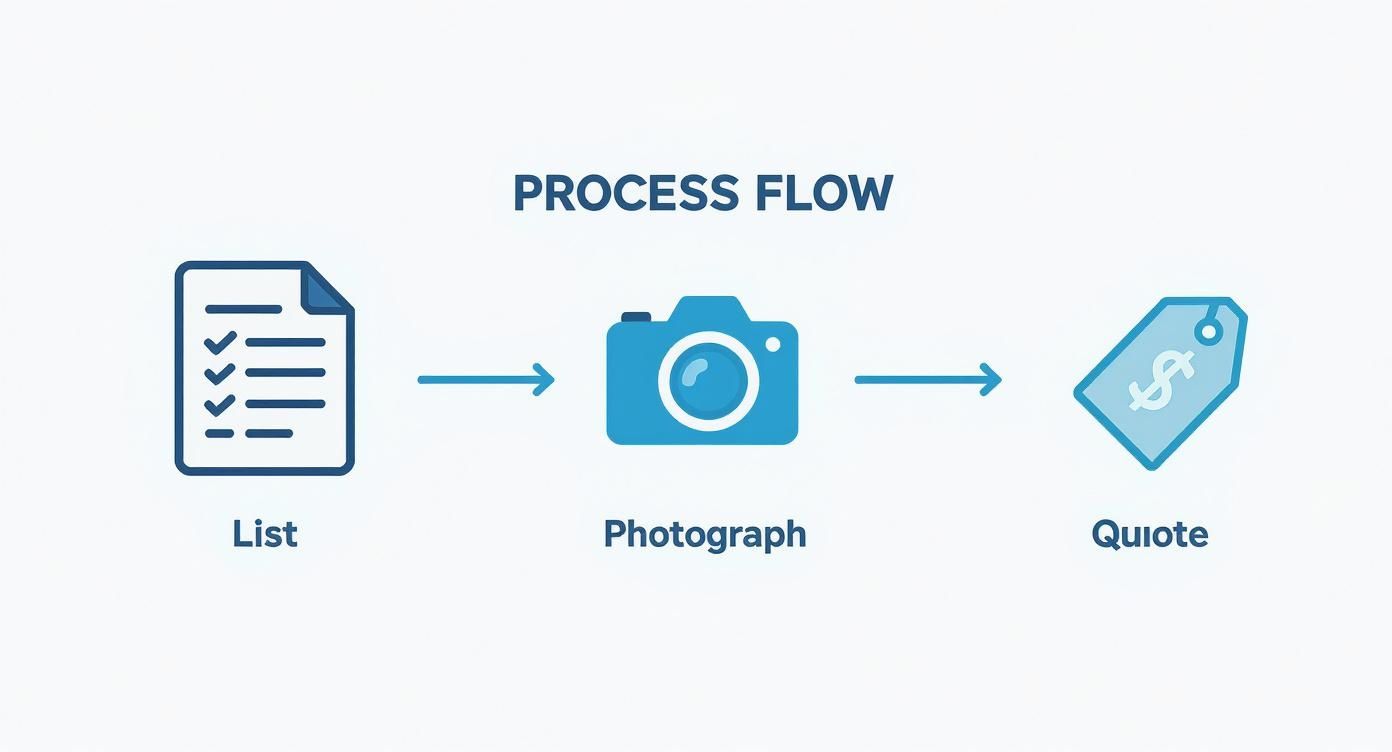
Nailing these initial steps—listing, photographing, and getting a clear quote—ensures there are no surprises when it comes time to ship and get paid.
Here’s a major plus of working with a legitimate company offering cash for recycled ink cartridges: you should never have to pay for shipping. A reputable buyer will always cover the cost by providing a prepaid and insured shipping label.
Once your box is securely packed and sealed with strong packing tape, all you have to do is print the label they email you and attach it. Most companies use major carriers like FedEx or UPS, which makes it easy to either schedule a pickup from your office or drop the box off at a nearby location.
Always, always get a receipt with a tracking number. This is your proof of shipment and lets you keep an eye on your package until it's delivered. For a closer look at what buyers need to see, check out these helpful instructions on how to submit images of your toner. This will help you document everything properly before it leaves your hands.
So, your carefully packed boxes have arrived at the buyback company. What happens next? This is where your upfront work—the detailed inventory list and clear photos—really proves its worth.
The buyer will immediately start their inspection, methodically checking each item against the list you provided. They'll be verifying model numbers, scrutinizing box conditions, and double-checking every expiration date.
If they find any discrepancies, like a small tear you might have missed or a misidentified model, a transparent partner will let you know right away. For instance, they might send an email saying, "One of the Canon 137 boxes has a tear on the top flap. Our offer for this item will be adjusted from $25 to $18. Please let us know if you'd like to proceed." They should clearly explain how these findings affect the final quote before they process a single dollar of your payment.
A good buyback partner understands that you want your money fast and without hassle. You shouldn't have to wait weeks for a check to arrive and clear.
Most reputable companies offering cash for recycled ink cartridges give you flexible payment options:
You can usually expect payment to be processed within 24-48 hours after your shipment is received and inspected. This quick turnaround means your unused supplies become working capital right when you need it.
Getting top dollar for your cartridges isn't just about sending in what you have—it's about thinking strategically. The real secret is to understand what makes a cartridge valuable to a buyer in the first place.
A huge factor is the expiration date. Inkjet cartridges with at least six months of shelf life left are gold. They fetch much higher prices. Once a cartridge gets close to its expiration date (or passes it), its value drops off a cliff.
If there's one piece of advice I can give, it's this: sell sooner rather than later. Don't let perfectly good cartridges sit on a shelf, losing value every single month as their expiration date ticks closer. Managing your surplus actively is the key to getting the best return.
Another smart move is to sell in bulk whenever you can. While sending in a few cartridges is perfectly fine, you'll often get better per-item pricing on larger shipments. Plus, big orders can sometimes make you eligible for special bonuses. For example, a company might offer a 5% bonus on any order over $500. Think about consolidating inventory from multiple office locations or just waiting until you have a more substantial amount to send.
Ever wonder why one cartridge gets a great offer while another gets a low one? The table below breaks down the key factors that buyback companies look for. Understanding these will help you know what's worth your time to pack up and send.
| Factor | High Value | Low or No Value | Pro Tip |
|---|---|---|---|
| Box Condition | Pristine, factory-sealed boxes with no damage, writing, or extra labels. | Opened, torn, crushed, or water-damaged boxes. | Gently remove any shipping labels you've added, but never try to peel off original manufacturer labels. |
| Authenticity | Genuine OEM (Original Equipment Manufacturer) cartridges like HP, Canon, Epson. | Remanufactured, compatible, or "clone" cartridges. | Stick to the name brands. Most buyback programs only accept OEM products. |
| Expiration Date | At least 6+ months of shelf life remaining. | Expired, or expiring within a few months. | Create a "sell by" date for your surplus inventory that is well before the actual expiration. |
| Model Popularity | Cartridges for popular, current-generation printers that are in high demand. | Cartridges for old, obscure, or discontinued printer models. | A quick search for the printer model online can tell you if it's still widely used. |
| Ink vs. Toner | Generally, high-yield toner cartridges for laser printers have higher values. | Standard-yield or older inkjet cartridges often have lower values. | Toner is less sensitive to expiration and typically has a higher page yield, making it more valuable. |
At the end of the day, a mint-condition, in-demand toner cartridge with a far-off expiration date is your golden ticket. Damaged, expired, or third-party cartridges are almost always a pass for buyers.
The potential here is bigger than you might think. The printer cartridge recycling market in North America is on track to hit $1.1 billion by 2033. Incentives from major retailers and specialized buyback companies often fall between $2 to $5 per cartridge, driving this growth and making it easier than ever to turn your office surplus into cash. To get a deeper dive, you can read the full research about the printer cartridge recycling market on archivemarketresearch.com.
When you're looking to sell surplus ink and toner, a few questions always pop up. It's completely normal. Let’s walk through the most common ones we hear from businesses, so you can turn that extra inventory into cash with total confidence.
The goal here is to make this whole process straightforward and, most importantly, profitable for you.
The big money is always in genuine OEM (Original Equipment Manufacturer) cartridges that are still in their new, sealed, and undamaged retail boxes. Think brands like HP, Brother, and Canon—they're always in demand and command the highest prices.
A few things really drive up the value:
Your golden ticket is a pristine, factory-sealed box with a popular model number. For instance, a brand-new HP 952XL in a perfect box will always get a much better offer than one that's been opened or has a crushed corner.
A reputable buyback partner will be completely transparent. Look for a professional website with clear contact details, easy-to-understand terms, and a track record of positive reviews on places like Google or the Better Business Bureau (BBB).
Another huge sign of a trustworthy buyer? They will always provide free, prepaid shipping labels. You should never, ever have to pay for shipping or any other hidden fees.
Here's a pro tip from my experience: If you're unsure, send a small, low-risk test shipment first. It’s a great way to see how they communicate, how their inspection works, and how quickly they pay. This little test run can save you a world of headaches down the road.
Any trustworthy company will have a clear, upfront policy for rejected items. If a cartridge shows up damaged or doesn't meet their guidelines, they should contact you right away to explain what's wrong.
You’ll usually be given two choices:
Make sure to ask about this policy before you ship anything. This is exactly why keeping that detailed inventory list with photos is so critical—it protects you and helps prevent rejections from happening in the first place.
Often, yes you can! Just be prepared for a lower payout. Not all buyback programs will take them, but some specialize in recently expired cartridges since they often work just fine. For example, a cartridge that expired last month might still be worth 25% of its original buyback value. Cartridges that are way past their expiration date, however, are typically only good for free recycling.
The best approach is to be completely honest about any expiration dates when you ask for a quote. It ensures you get an accurate price from the start and avoids any unwelcome surprises later on.
Ready to turn that pile of surplus ink and toner into cash? At Toner Connect LLC, we've built our business on making this process simple, fast, and profitable for you. We offer free prepaid shipping, quick inspections, and same-day payments to help businesses like yours get paid for their unused supplies.
