
So, you've got an empty ink cartridge. What now? The easiest thing is to just toss it in the bin, right? But before you do, it's worth knowing that the best way to handle it is to recycle it through retail drop-off points, manufacturer mail-in programs, or specialized recycling services.
Tossing it in the regular trash might seem harmless, but it adds to a huge environmental problem. For example, a single discarded cartridge contributes to the mountain of plastic that can stick around in a landfill for centuries, and the leftover ink often contains chemicals like volatile organic compounds (VOCs) you don't want seeping into the ground.
That little empty cartridge sitting on your desk is a piece of electronic waste, or e-waste. It might not look like much, but when you think about the millions of offices and homes using printers, it adds up fast. Learning how to dispose of them the right way is a small change that makes a big difference.
The sheer scale of the problem is pretty staggering. Globally, people throw away about one million printer cartridges every single day. That's a mountain of plastic and electronics piling up in our landfills.
Thankfully, people are catching on. The global printer cartridge recycling market was valued at around $2.5 billion in 2023, and it's on track to nearly double to an estimated $4.8 billion by 2032. As recycling gets better and environmental rules get stricter, these numbers will only grow. If you're interested in the data, Toner Connect has a great market breakdown.
To make it simple, here are the most common and effective ways to get rid of your used cartridges.
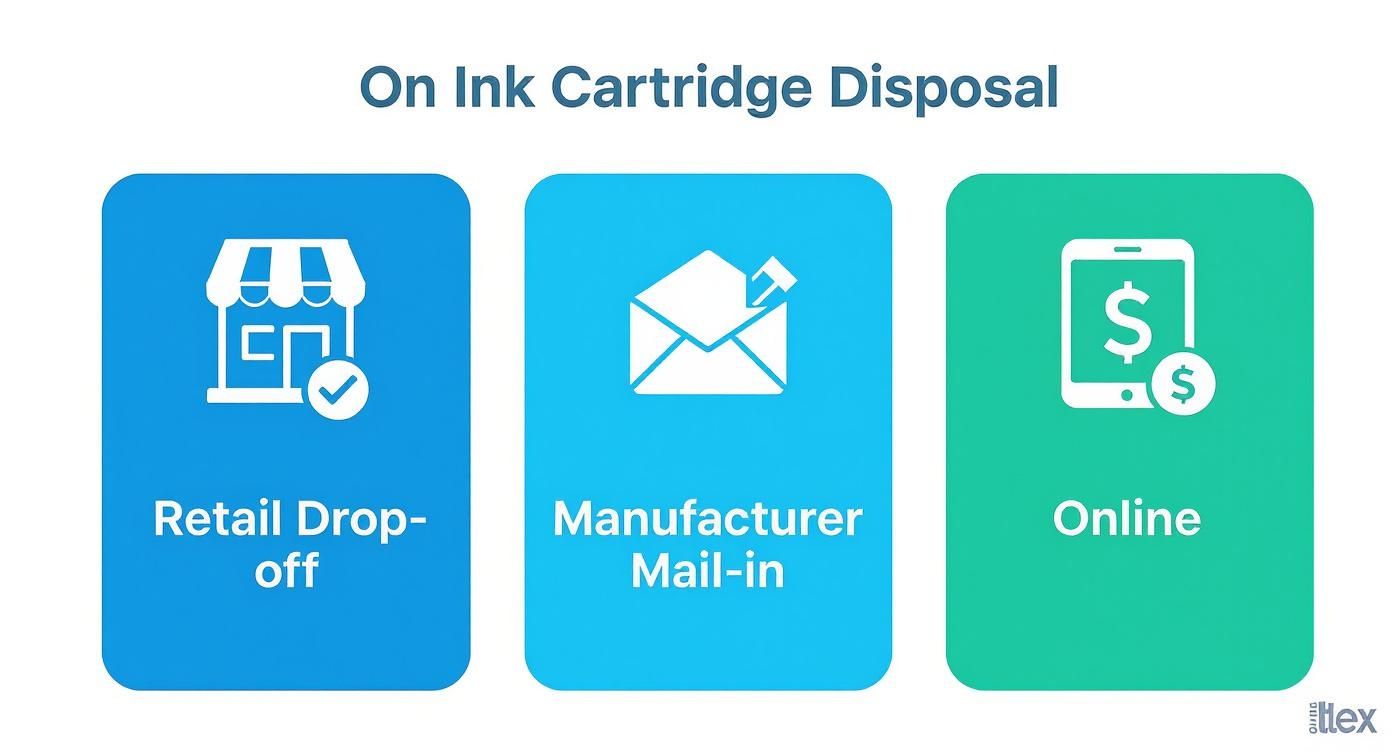
As you can see, you have plenty of good options. You can drop them off while running errands, mail them back for free, or even sell them if they're unopened.
When a cartridge ends up in a landfill, its story doesn't end there. Most of them are made from tough, industrial-grade plastic that can take anywhere from 450 to 1,000 years to break down. All that time, it's just another piece of plastic pollution.
And it’s not just the plastic. Even an "empty" cartridge still has some ink left in it, which is a cocktail of different chemicals and colorants. For instance, black inks often contain carbon black, a potential carcinogen, while colored inks use various heavy metal-based pigments. If those chemicals leak out and get into the soil, they can contaminate groundwater and harm local ecosystems.
Here's the bottom line: Recycling isn't just about keeping plastic out of the dump. It's about stopping harmful chemicals from polluting our environment and saving the resources it takes to make new products from scratch.
This is where the idea of a circular economy comes in. Instead of a "make, use, dispose" model, it’s all about reusing and recycling materials to keep them in circulation for as long as possible. When you recycle an ink cartridge, you’re doing more than just keeping it out of the trash.
Think about it this way: a small business that uses 20 cartridges a year can keep over 25 pounds of plastic and metal out of the landfill just by using a free take-back program at their local office supply store. It’s a simple habit that plugs directly into a more sustainable way of doing things.
To help you figure out the best route, here’s a quick comparison of the most popular disposal methods.
| Disposal Method | Best For | Convenience Level | Environmental Impact |
|---|---|---|---|
| Retail Drop-off | Individuals and small offices needing a quick, local solution. | High | Excellent. Cartridges are collected in bulk for recycling. |
| Manufacturer Mail-in | Anyone using OEM cartridges with easy access to a printer for labels. | Medium | Excellent. Directly supports the brand's own recycling efforts. |
| Selling Surplus | Businesses with new, unopened OEM cartridges they no longer need. | Medium | Excellent. Puts usable products back into circulation. |
At the end of the day, choosing any of these options over the trash bin is a win. You’re making sure your used cartridges are handled responsibly, which contributes to a healthier planet and a smarter use of our resources.
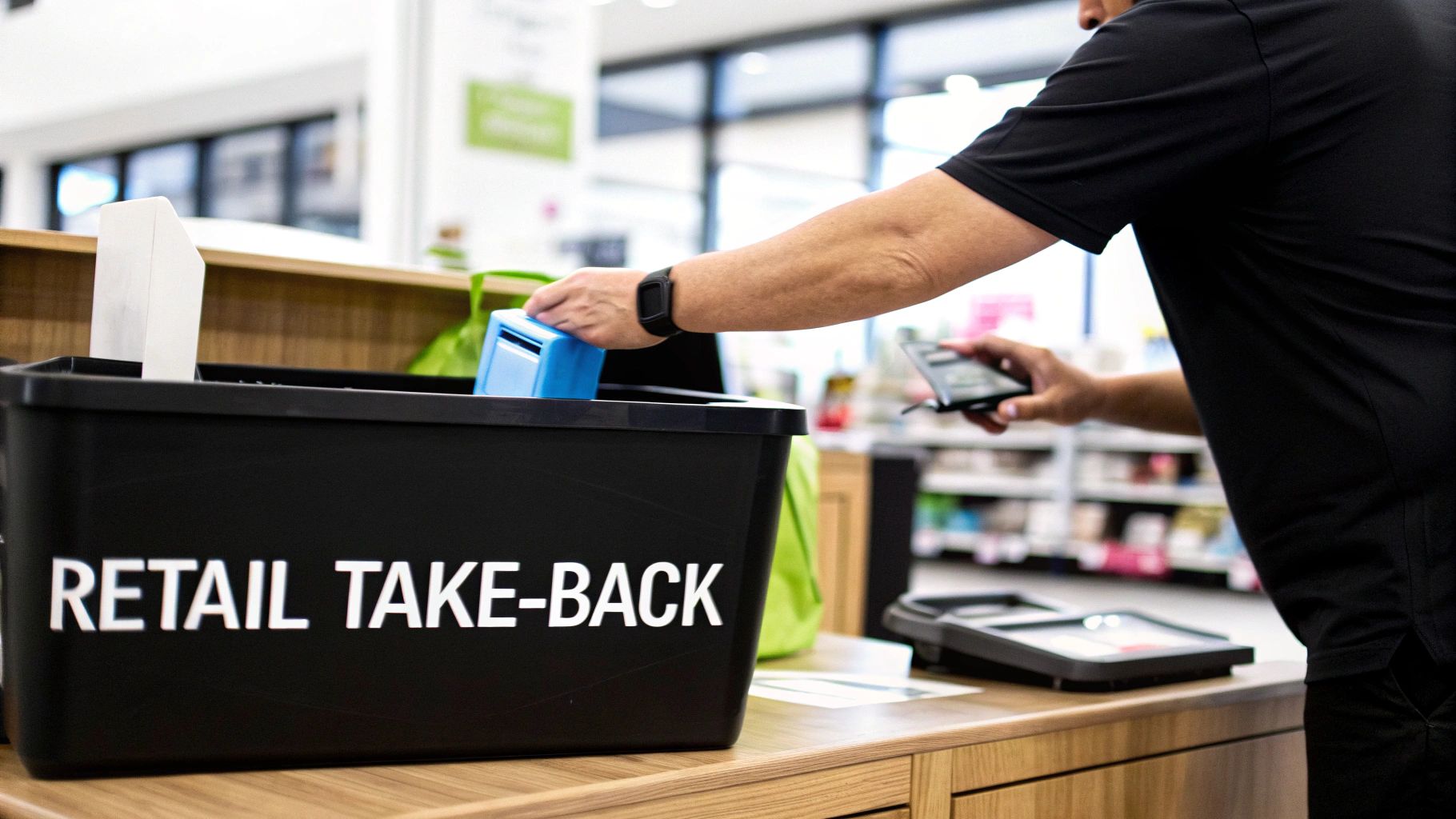
Chances are, your next shopping trip is the easiest way to recycle those empty ink cartridges. Many of the country's biggest retailers have made it incredibly simple to do the right thing. These take-back programs are designed to be hassle-free, turning a regular errand into a small win for the environment.
Instead of letting used cartridges pile up in a desk drawer, just build recycling into your routine. For example, if you know you buy paper towels at Target once a month, make that your designated "cartridge drop-off day." It's a tiny change that keeps a surprising amount of plastic and residual ink out of our landfills.
Office supply giants are leading the pack here, with programs that are not only free but can actually put a little money back in your pocket. They've figured out that a good incentive makes all the difference.
Take Staples, for instance. Their rewards program is a fan favorite for a reason. Bring in your used ink or toner cartridges, and you can get $2 back in Staples Rewards for each one, up to 20 cartridges per month. The only catch is you need to have spent at least $50 on ink or toner there in the last 180 days. Just hand your empties to an employee at checkout. It’s that easy.
Office Depot and OfficeMax have a nearly identical deal. Their rewards members also get $2 back per cartridge (up to 10 per month), as long as they make a qualifying $10 purchase that same month. It’s a smart system—you get a discount on future supplies just for being responsible.
Pro Tip: I keep a small box right next to my printer just for empties. When it's full, I take the whole lot on my next store run. This way, I never forget them, and I can cash in on the rewards all at once.
Beyond the office specialists, other big-box stores have also stepped up. They might not offer rewards, but you can't beat the convenience.
Best Buy has become a go-to for all kinds of electronics recycling, and ink cartridges are definitely on their list. Most stores have a big recycling kiosk right inside the front door. You can drop off up to three items per household per day, which easily covers your used ink and toner, no matter the brand.
And don't forget Target. Through their partnership with Waste Management, most locations have a recycling station at the front of the store for small electronics, and that includes ink cartridges. It's the perfect setup—you can toss your e-waste while grabbing milk and bread.
A quick recap on where to go:
What if you don't live near any of these stores? No problem. The printer manufacturers themselves have excellent, free mail-back programs. They do this as part of their own sustainability goals, ensuring the materials from their old products get reclaimed and used to make new ones. It’s the most direct route to responsible recycling.
HP's Planet Partners Program is probably the most well-known. You just hop on their website, find the right cartridges, and print a free, postage-paid shipping label. Pack the empties into any old box (the box your new ink came in works perfectly), stick on the label, and mail it out.
Canon runs a similar mail-in service. Their site lets you print a prepaid UPS shipping label. They actually encourage you to collect a few cartridges before sending them in, which cuts down on the environmental impact from shipping. This is perfect for a home office or small business.
Epson also has a robust recycling program. While the specifics might differ slightly, they provide all the resources you need for mail-back options to keep their products out of the trash.
The process for these manufacturer programs is pretty standard:
By taking advantage of these programs, you're doing more than just tossing out old plastic. You're actively participating in a global effort to reduce e-waste and conserve resources—and it usually only takes a few minutes of your time.
Recycling used cartridges is a great habit, but what do you do with the brand-new ones you never got around to using? Maybe you upgraded your printer and now have a stash of perfectly good, unopened cartridges that are completely useless to you. Don't let them gather dust or end up in a landfill.
Those forgotten office supplies are a hidden asset. If you have genuine, unopened Original Equipment Manufacturer (OEM) cartridges, there are companies out there that will buy them from you. This is a fantastic way to recover some of your initial cost and make sure those valuable products find a new home.
Before you start digging through the supply closet, it helps to know what buyback companies are actually looking for. They have to guarantee the quality of the products they resell, so their criteria are pretty specific.
Here’s a quick rundown of what makes a cartridge a good candidate for resale:
The condition of the box is almost as important as the cartridge inside. Resellers need packaging that looks new and trustworthy so they can offer the product to a new buyer with confidence.
Picture this: a small marketing agency just leased a new fleet of office printers. Tucked away in a cabinet, they find a dozen assorted, unopened HP and Brother ink cartridges that don't fit the new machines. Instead of writing them off as a loss, the office manager decides to sell them.
First, they take inventory and inspect each box. One of the HP boxes is slightly creased at the corner, but the seal is intact. Another has a shipping label stuck to it. They make a note of these details, knowing it might affect the price.
Next, they search online for a reputable buyback company. A good service will have clear guidelines and a simple process for getting a quote. The manager submits a list of the cartridge model numbers along with a quick description of the box conditions. Within a few hours, they receive an offer.
If you're in a similar spot, you can easily submit your list of unused cartridges for a quick quote and see what your surplus supplies are actually worth: https://tonerconnect.net/sell-unused-toners/submit-form
Getting the best possible price for your cartridges often comes down to a few simple things. The easier you make it for the reseller, the more they can offer.
A huge factor is the expiration date, which is especially critical for inkjet cartridges. Most buyback programs need at least a year of shelf life remaining. For example, a cartridge expiring in 2026 will be worth significantly more than one expiring in late 2024. Check the date printed on the box—fresher cartridges will always command a higher price.
This is a good example of what to look for when inspecting your cartridges before you try to sell them.
The image drives home the importance of checking for intact factory seals and assessing box damage, both of which directly impact resale value.
This whole process is part of a much bigger trend. The global market for recycled and resold cartridges is booming, projected to grow from about $2.16 billion in 2025 to $4 billion by 2035. This push is fueled by tougher environmental regulations and more eco-conscious consumers, making the resale of unused cartridges a valuable piece of the circular economy.
https://www.youtube.com/embed/lSZ16tFAngw
Whether you’re sending in old cartridges for recycling or selling your surplus stock, how you pack them is crucial. A little bit of prep work ensures they get where they're going in one piece and without creating a huge mess. Think of it as the final, critical step in getting rid of your old ink and toner the right way.
Taking a few minutes to pack correctly prevents damage, stops ink from leaking everywhere, and makes sure your shipment won't be rejected by a recycler or a buyer.
The number one enemy when shipping used cartridges is leftover ink. Even when your printer says a cartridge is empty, there’s always a little bit of ink left inside. Changes in air pressure and temperature during shipping can easily cause that residue to leak.
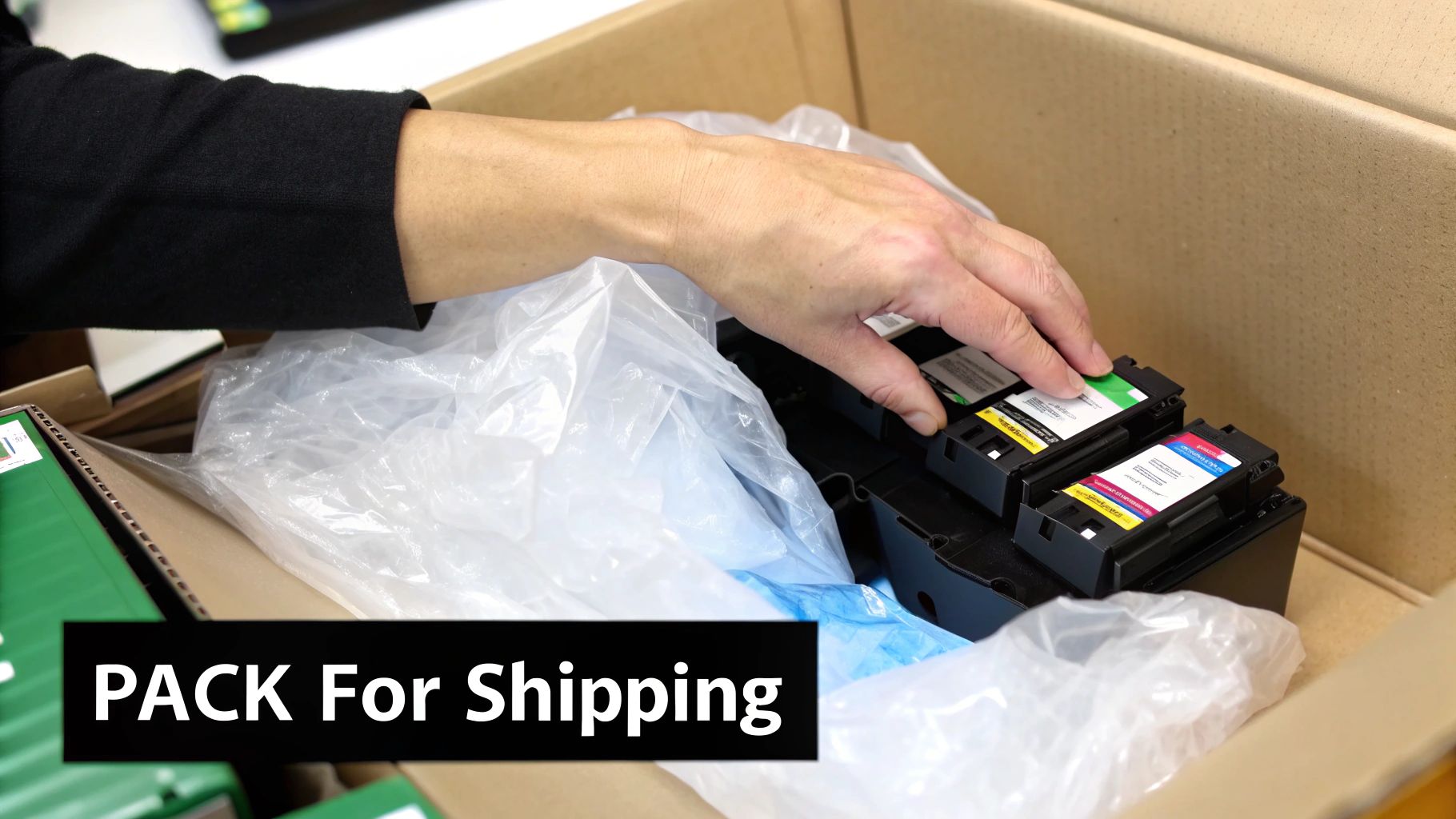
The best way to prevent a mess is incredibly simple: seal each cartridge in its own plastic bag. A Ziploc-style sandwich bag works perfectly. This one small action keeps any spills contained and saves the rest of the cartridges in your box from getting ruined.
Pro Tip: Be careful not to touch the gold or copper-colored electronic strips or the print head nozzle. The oils on your fingers can damage these sensitive components, which can make it impossible for the cartridge to be remanufactured.
After bagging them up, find a sturdy cardboard box. For example, an old shoebox or a small Amazon box works perfectly. Pack the cartridges inside and then stuff any extra space with filler like crumpled newspaper or bubble wrap. You want to make sure they can't bounce around and crack against each other in transit.
When you're selling surplus, unopened cartridges, the game changes. Here, the goal is to protect the original retail box and keep it looking brand new. Any dings, dents, or scuffs on the packaging will tank its resale value. The box itself is part of what you're selling.
Your first move is to find a shipping box that’s just the right size. You're looking for a snug fit—not so tight that it crushes the contents, but not so loose that things can slide around.
Here are a few pointers that have always worked for me:
This level of care ensures your cartridges show up at their destination looking just as professional as when they left your shelf. For a deeper dive, check out this excellent guidance on preparing and packing items for shipment. It's written for e-commerce pros, but the advice on protecting products is spot-on for anyone shipping valuable goods.
A securely packed box not only protects your investment but also shows you mean business. If you're a company that does this regularly, it's also smart to learn more about selecting the right shippers who will handle your inventory with care. The combination of great packing and a trustworthy carrier is unbeatable.
It’s easy to think of an empty ink cartridge as just another piece of office clutter. But when you multiply that single cartridge by millions of homes and businesses, its disposal becomes a critical piece of the global electronic waste puzzle. Thinking about it this way changes the task from a simple chore to a meaningful action.
An ink cartridge isn't just a plastic shell filled with ink. It’s a surprisingly complex piece of tech, often containing microchips, metal contacts, and various engineered plastics. That’s exactly why it falls under the category of e-waste, and tossing it in the trash can have real environmental consequences.
The rise of remote and hybrid work has been great for flexibility, but it came with an unexpected side effect: a huge spike in personal printer use. More home printing means more empty cartridges piling up.
The numbers tell the story. The ink cartridge printer market was valued at around USD 21.8 billion globally in 2025 and is on track to hit nearly USD 39 billion by 2035. This isn't just abstract growth; it's fueled by real-world behavior, like the 19% jump in printer sales in key markets as people set up their home offices.
With this boom in home printing, what you do with your old cartridges matters more than ever. Each one you recycle is one less item adding to the millions that are thrown away, keeping plastic and residual chemicals out of our landfills.
Governments around the world are finally getting serious about the e-waste problem. In Europe, for instance, the Waste Electrical and Electronic Equipment (WEEE) Directive mandates collection and recycling targets for all kinds of electrical goods, including printer cartridges. It’s all about making manufacturers accountable for what they produce.
You don't need to be a policy wonk to see the logic. These regulations are designed to make recycling the default, not the exception. They are the driving force behind the very retailer take-back and manufacturer mail-in programs that make responsible disposal so much easier for all of us.
The Big Picture: Dropping a cartridge in a store's collection bin or mailing it back isn't just a personal choice. You're participating in a global movement to manage e-waste, cut down on pollution, and conserve our planet's resources.
Figuring out how to properly dispose of ink cartridges is about more than just tidying your desk. It’s about being part of a necessary global effort. That plastic casing can take centuries to break down in a landfill, and the electronics industry as a whole is a massive consumer of finite resources.
To see how your ink cartridges fit into the larger environmental picture, check out a comprehensive guide on how to reduce electronic waste. It does a great job of showing how small, consistent habits can add up to make a huge difference.
Here's what your choice to recycle really accomplishes:
At the end of the day, every cartridge you choose to recycle sends a message. It signals a demand for more sustainable practices and proves that consumers are ready to be active partners in solving the e-waste problem.
Even when you’re trying to do the right thing, figuring out the rules for e-waste can be confusing. When it comes to disposing of ink cartridges, a few questions seem to pop up again and again. Let's clear the air and tackle those common uncertainties head-on.
Knowing the answers helps you move forward with confidence, making the most responsible choice for your empty cartridges.
Let's get straight to it: the answer is a hard no. It might feel like the simplest solution, but throwing an ink cartridge in your regular garbage bin is a huge environmental mistake. There's a reason these items are considered electronic waste.
That tough plastic shell can sit in a landfill for up to 1,000 years before it even starts to break down. While it’s sitting there, the leftover ink—which is often full of volatile organic compounds (VOCs) and heavy metals—can seep into the soil and contaminate our groundwater. Plus, in many areas, it's actually illegal to mix e-waste with your regular household trash.
Using a recycling or take-back program isn't just a nice idea. It's a critical step to prevent long-term pollution and keep hazardous materials out of our ecosystem.
You'll hear these two terms thrown around a lot, sometimes as if they mean the same thing. They don’t. Understanding what each one means gives you a better picture of where your cartridges go after you drop them off.
Both options are great for the environment, but remanufacturing is often seen as the greener choice. It conserves more of the energy and resources that were used to create the cartridge in the first place.
This is a really common point of confusion, and unfortunately, the answer is no. Not all recycling programs are built the same, and what they accept can vary a lot. You’ll especially run into this with third-party or "compatible" cartridges.
For instance, a manufacturer’s program like HP Planet Partners is designed specifically for genuine HP cartridges. They won't accept a generic compatible cartridge you bought on Amazon. Retailers like Staples or Best Buy tend to be more flexible and will usually take most brands, but it’s always smart to check their website for the fine print before you head to the store. The most accommodating programs are often specialized e-waste recycling centers.
A quick search for "[Retailer Name] ink recycling" will save you a wasted trip. For more general guidance, feel free to check out our own Frequently Asked Questions page for more tips on cartridge disposal and resale.
A few minutes of prep work ensures your cartridges end up in the right hands, making your eco-friendly efforts count.
Ready to turn your surplus office supplies into cash? Toner Connect LLC buys unopened, genuine OEM ink and toner cartridges, offering competitive prices and a hassle-free process. We provide free prepaid shipping and fast, reliable payment, helping you clear out clutter and recover value from unused inventory. Get your free quote today at https://tonerconnect.net.
