
At its most basic, pigment printer ink is made of microscopic, solid color particles floating in a liquid carrier. It's a completely different animal from the dye-based inks you might be used to.
Instead of soaking into the paper like a dye, these tiny pigment particles bond to the paper's surface. This simple difference is what makes pigment ink incredibly durable, long-lasting, and resistant to fading and water damage. For instance, if you print a shipping label with pigment ink, it won't run or become unreadable if it gets caught in a rain shower.
To really get a feel for how pigment ink works, think of it like an incredibly fine, liquid paint. The solid color particles settle on top of the paper fibers, creating a distinct, resilient layer of color.
Dye-based ink, on the other hand, acts more like food coloring dropped into water—it dissolves completely and gets absorbed into the paper fibers. This fundamental distinction is why pigment ink is the go-to choice for any print that needs to survive for the long haul. Because the color sits on the surface, it’s far less vulnerable to the elements.
To quickly see the main differences, here's a simple breakdown:
| Characteristic | Pigment Ink | Dye Ink |
|---|---|---|
| Composition | Solid particles suspended in liquid | Colorant dissolved in liquid |
| Paper Interaction | Sits on top of the paper | Absorbs into the paper fibers |
| Light Resistance | Excellent (Archival) | Good to Poor (Fades over time) |
| Water Resistance | Excellent (Waterproof when dry) | Poor (Smudges easily) |
| Color Vibrancy | Good, but can be less vibrant | Excellent, very vibrant colors |
| Best For | Photos, art prints, important documents | Everyday documents, graphics, color photos |
This table gives you a solid starting point, but the unique makeup of pigment ink gives it a few standout features that are mission-critical for professionals.
The way pigment ink is built gives it several defining traits that directly impact print quality, longevity, and durability. These are the qualities that really matter for professional and archival printing.
This infographic helps visualize these core ideas.
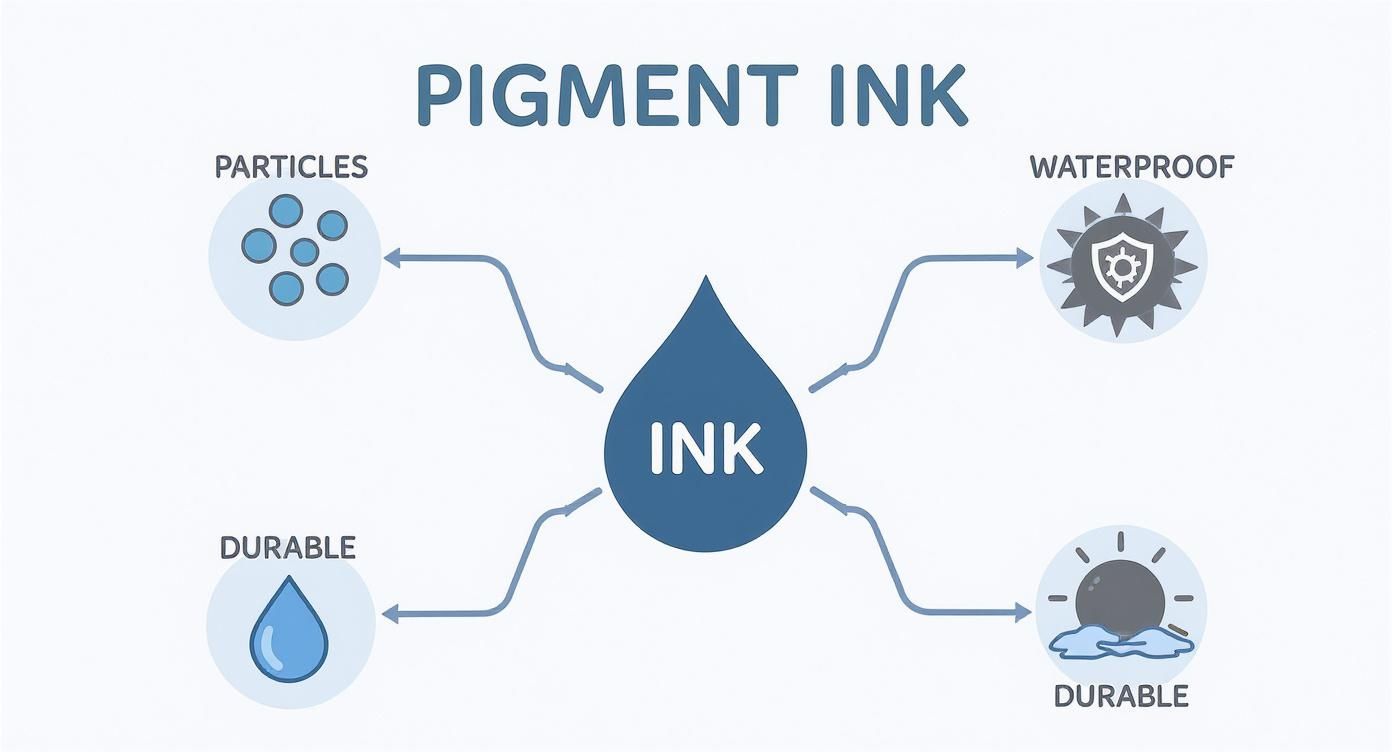
As you can see, the combination of solid particles, water resistance, and sheer durability makes pigment ink a specialized tool for high-value print jobs. Its ability to produce professional-grade output that lasts is exactly why it’s trusted for fine art, photography, and critical business documents.
The secret to why pigment printer ink lasts so long isn't some complex chemical magic—it's actually pretty simple. It all comes down to its physical structure. While dye-based inks act like a stain, soaking deep into the paper's fibers, pigment ink does the opposite. Its tiny, solid particles of color sit right on top of the paper, bonding to the surface.
This creates a distinct, protective layer of color that rests on the page rather than becoming part of it. Think of it like a coat of high-quality paint on a wall versus a wood stain that soaks in. That surface layer is the key to its incredible staying power against all the things that typically ruin a print, like moisture, humidity, and sunlight.
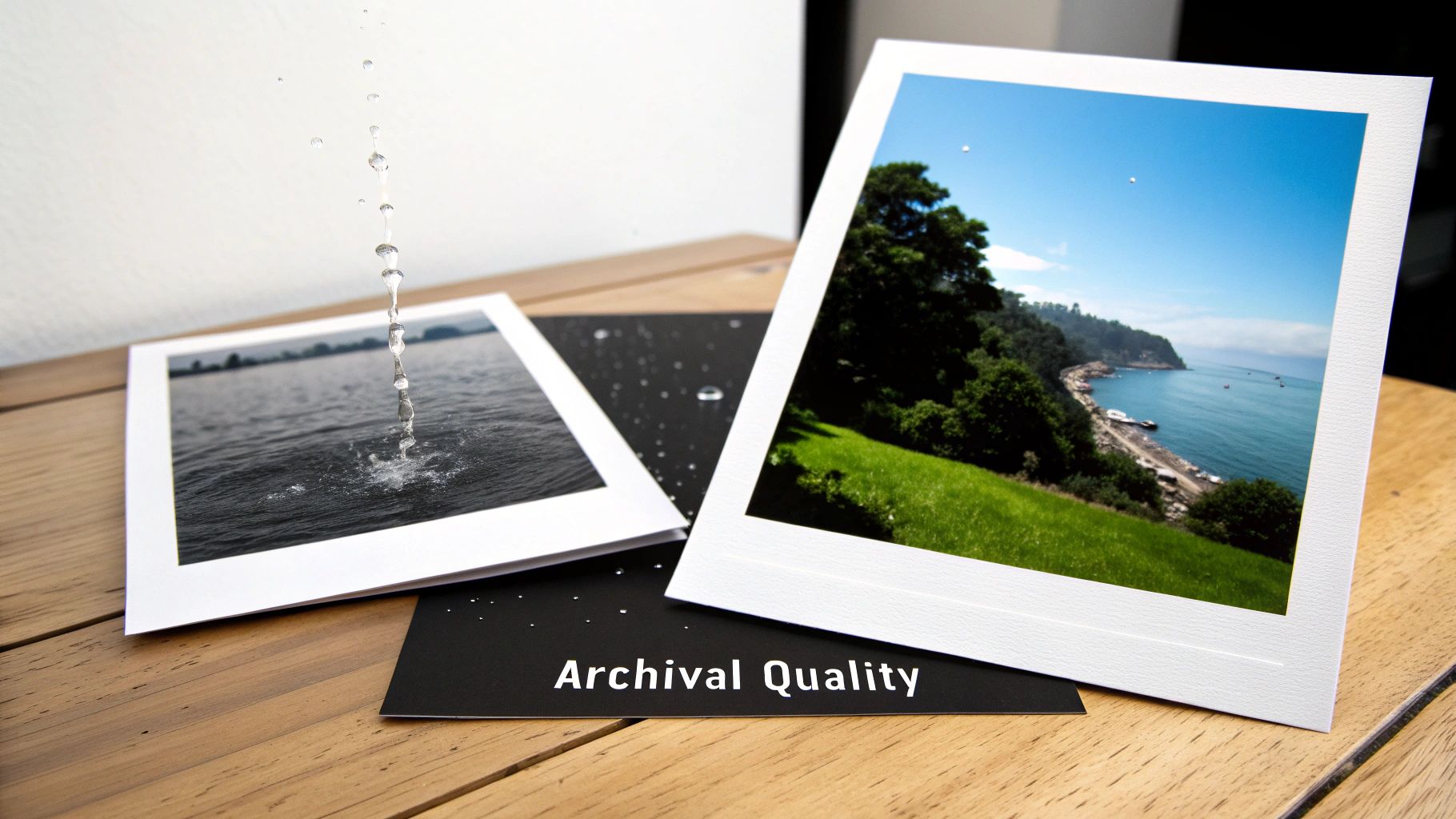
Here’s a real-world example that makes the difference obvious. Imagine you accidentally spill a few drops of water on two photos—one printed with dye ink, the other with pigment ink.
The dye-based print would be in big trouble. The water would quickly dissolve the ink that has soaked into the paper, causing it to bleed and smudge almost instantly. But the pigment ink print? Since its color particles are just sitting on the surface, the water would mostly bead up on top. A quick, gentle blot with a paper towel and the image would likely look as good as new. This built-in water resistance is a lifesaver for important documents and priceless artwork.
Water is one thing, but the biggest enemy of any print is light. Over time, UV rays from the sun or even indoor lighting can break down ink molecules and cause colors to fade. Lightfastness is the technical term for how well an ink can stand up to this assault.
This is where pigment ink truly shines. The molecular structure of its solid particles is incredibly robust and stable. It’s simply much harder for UV radiation to break them down compared to the much simpler molecules in dye inks. As a practical example, a poster printed with dye ink and placed in a sunny shop window might fade noticeably in a few months, whereas a pigment-based print would resist fading for years under the same conditions. This is why a professionally made pigment print can last for generations, with many rated to last from 50 to over 200 years if stored properly.
Key Takeaway: The archival quality of pigment printer ink isn't just a marketing term; it’s a direct result of its physical design. By forming a durable layer on the paper’s surface, it creates a physical shield that protects the image from both water damage and the relentless fading effects of UV light.
This exceptional durability is fueling major growth in the commercial printing world. The global printing inks market is expected to jump from USD 22.17 billion in 2025 to nearly USD 28.89 billion by 2034. A huge part of that growth comes from industries like packaging, which need the kind of color stability and resilience that only pigment inks can offer on all sorts of materials. This quality makes it invaluable for everything from fine art reproductions to critical business documents. For more insights on printing supplies, feel free to explore the resources on our blog.
Understanding the science behind pigment printer ink is one thing, but knowing when to actually use it is what really matters. Opting for pigment ink isn't just a random choice; it's a strategic decision for any project where quality, durability, and a long life are absolute must-haves. It shines in situations where your standard dye-based inks would simply give up.
For professional photographers and fine artists, it's not even a debate. Pigment ink is the industry standard for creating prints destined for galleries, client sales, or museum walls. Its archival qualities mean the artwork will fight off fading for decades, protecting the artist's vision and the buyer's investment.
Ever heard of a giclée print? That's the gold standard for fine art reproduction, and it's defined by using high-resolution inkjet printers with pigment-based inks on archival-quality paper. This combination is what gives a print a lifespan that can stretch from 50 to over 200 years, depending on how it's displayed.
The advantages of pigment ink reach far beyond the art studio. Businesses and professionals depend on it for documents that absolutely must stand up to handling and the test of time.
Pigment ink’s tough-as-nails nature makes it the go-to choice for materials that have to live outdoors. The solid particles in the ink are naturally resistant to UV light and moisture—two things that will ruin a dye-based print in no time.
Picture this: you need a banner for an outdoor market. If you print it with dye ink, it will probably look faded after just a few weeks in the sun and turn into a blurry mess the first time it rains. But a banner printed with pigment printer ink? It will keep its bold colors and sharp text through sun, wind, and rain, giving you a much better return on your investment. From real estate signs to event banners, pigment ink delivers the durability you need to look professional, no matter the weather.
You’ve invested in high-quality pigment printer ink to create sharp, long-lasting prints. That's a great first step, but now you need to protect that investment. Mishandling your cartridges can quickly turn a valuable asset into a costly headache, leading to wasted ink, clogged printheads, and subpar results that can damage your reputation and your bottom line.
Think of it this way: you wouldn't store a fine wine next to a furnace. The same principle applies here. Pigment ink is made of microscopic solid particles suspended in a liquid carrier. When exposed to extreme temperatures, this delicate balance gets thrown off. Heat can cause the liquid to evaporate, making the pigment particles clump together into a thick sludge that will absolutely wreck your printer's sensitive nozzles.
Thankfully, avoiding these costly problems is pretty simple. A little bit of care goes a long way in ensuring every drop of ink works perfectly when you need it.
We’ve all been there—you find a cartridge tucked away in the back of a drawer, only to see it's a few months past its expiration date. While it's tempting to pop it in and hope for the best, expired ink is a gamble. Over time, the chemical stabilizers that keep the pigments suspended can break down. This can lead to noticeable color shifts or, even worse, settled pigment particles that form stubborn clogs.
Practical Advice: If a cartridge is just a little past its date and you know it was stored properly, you might get away with using it for internal drafts or non-critical prints. But for important client projects or anything you need to last, it's just not worth the risk of poor quality or potential printer damage.
Instead of tossing that expired ink or risking your equipment, why not sell it? Many buyback programs are happy to purchase factory-sealed cartridges that are recently expired, though at a lower price. It's a smart way to recoup some of your initial cost and keep perfectly good supplies out of the landfill. You can turn a potential loss into a win.
Got a stash of pigment printer ink cartridges gathering dust on a shelf? If your business recently upgraded printers or you simply bought more than you needed, that surplus inventory is a hidden asset. Instead of letting those cartridges expire and become worthless, you can sell them and recoup a good chunk of what you originally spent.
The trick to getting the best price is knowing what buyers—especially professional buyback companies—are looking for. The market heavily favors genuine, factory-sealed cartridges from the Original Equipment Manufacturers (OEMs). That means ink from brands like HP, Canon, or Epson will always be worth more than any third-party or refilled knock-offs.
Before you list your ink for sale, you need to be sure it's the real deal. OEM cartridges are engineered to work perfectly with their specific printers, which is why they command a higher price and are in greater demand.
Here’s a quick guide to verifying authenticity:
Ink buyback companies will put your cartridges through a detailed inspection before they send you an offer. Knowing their criteria ahead of time helps you get a realistic idea of what your inventory is worth. At the end of the day, they're checking for anything that could affect the ink's quality.
A cartridge’s condition is the single biggest factor that determines its value. Here are the three main things a buyer will look at:
Taking a few minutes to inspect your inventory against these standards gives you a clear picture of its resale potential. It’s a simple step that helps you know exactly what you have before you even ask for a quote.
The market for printing supplies is massive. In the United States alone, the ink manufacturing industry is worth around USD 4.3 billion, and the entire North American market is expected to hit USD 10.18 billion by 2033. This growth is driven by the demand for high-quality pigment inks used in everything from digital printing to e-commerce packaging.
If you're ready to see what your unused supplies are worth, you can easily submit your inventory list for a fast quote. On the other hand, if you're thinking about selling them yourself on a major platform, these general strategies to increase sales on Amazon might give you a helpful starting point.
Even after getting the hang of what pigment printer ink is all about, a few practical questions always seem to pop up. Here are some straight-to-the-point answers to the most common queries we hear, designed to help you make smarter decisions and sidestep any expensive mistakes with your printing supplies.
Absolutely not. Mixing pigment and dye-based inks is a guaranteed recipe for a printing disaster. They might look like simple colored liquids, but their chemical makeup is completely different.
When you combine them, a chemical reaction can occur, creating a thick, sludge-like gel inside your printer. This gunk is the mortal enemy of a printhead, leading to stubborn clogs that are next to impossible to fix. For example, if your printer uses a black pigment ink and you refill a color cartridge with the wrong type, that mix can clog the printhead permanently the first time the colors blend on a page. Always stick with the ink type specified for your machine.
It’s actually a mix-and-match situation. Most inkjet printers you’d find in a home or small office use a pigment-based ink for the black cartridge. This is what gives you that crisp, long-lasting text on documents.
For the color cartridges, however, these same printers usually switch to dye-based inks to get those bright, punchy colors perfect for photos and graphics. It’s a hybrid approach. On the other hand, printers built for professional photography, archival art (like giclée prints), and large-format printing almost always use a full set of pigment inks. This ensures that every color offers the same top-tier fade resistance, water durability, and longevity that creative professionals rely on.
Not always, but its value definitely takes a hit. While putting expired ink in your own printer is a gamble, factory-sealed cartridges that are only a little past their date can often be resold.
It all comes down to managing expectations. For instance, if you have a sealed cartridge that expired last month, a buyback company might offer you 25% of its original value, which is much better than the 0% you get from throwing it away. You won't get top dollar, but selling recently expired, sealed cartridges is a great way to recoup some of your cost.
This strategy is far smarter than risking damage to your own equipment. If you're curious about what makes different supplies valuable, you can explore our comprehensive FAQ page for answers to common questions about selling various cartridges.
The premium price of pigment printer ink boils down to a much more involved and expensive manufacturing process. It’s not just colored water. The process involves taking solid colorants and grinding them down into incredibly small, consistent particles.
These microscopic particles are then suspended in a sophisticated liquid carrier engineered to keep them from clumping together. This advanced formulation is what delivers the ink's exceptional durability, lightfastness, and professional-level performance. That quality is essential in commercial fields like packaging and labeling, which account for more than half of all ink consumption worldwide. The demand is huge, with global consumption projected to climb from 6.3 million metric tons in 2024 to over 8.5 million by 2030, underscoring its commercial value. You can dig deeper into the printing ink market trends and statistics that influence these costs.
At Toner Connect LLC, we specialize in helping businesses turn their surplus, genuine pigment printer ink cartridges into cash. If you have unused, factory-sealed supplies, get a fast and competitive quote today by visiting us at https://tonerconnect.net.
