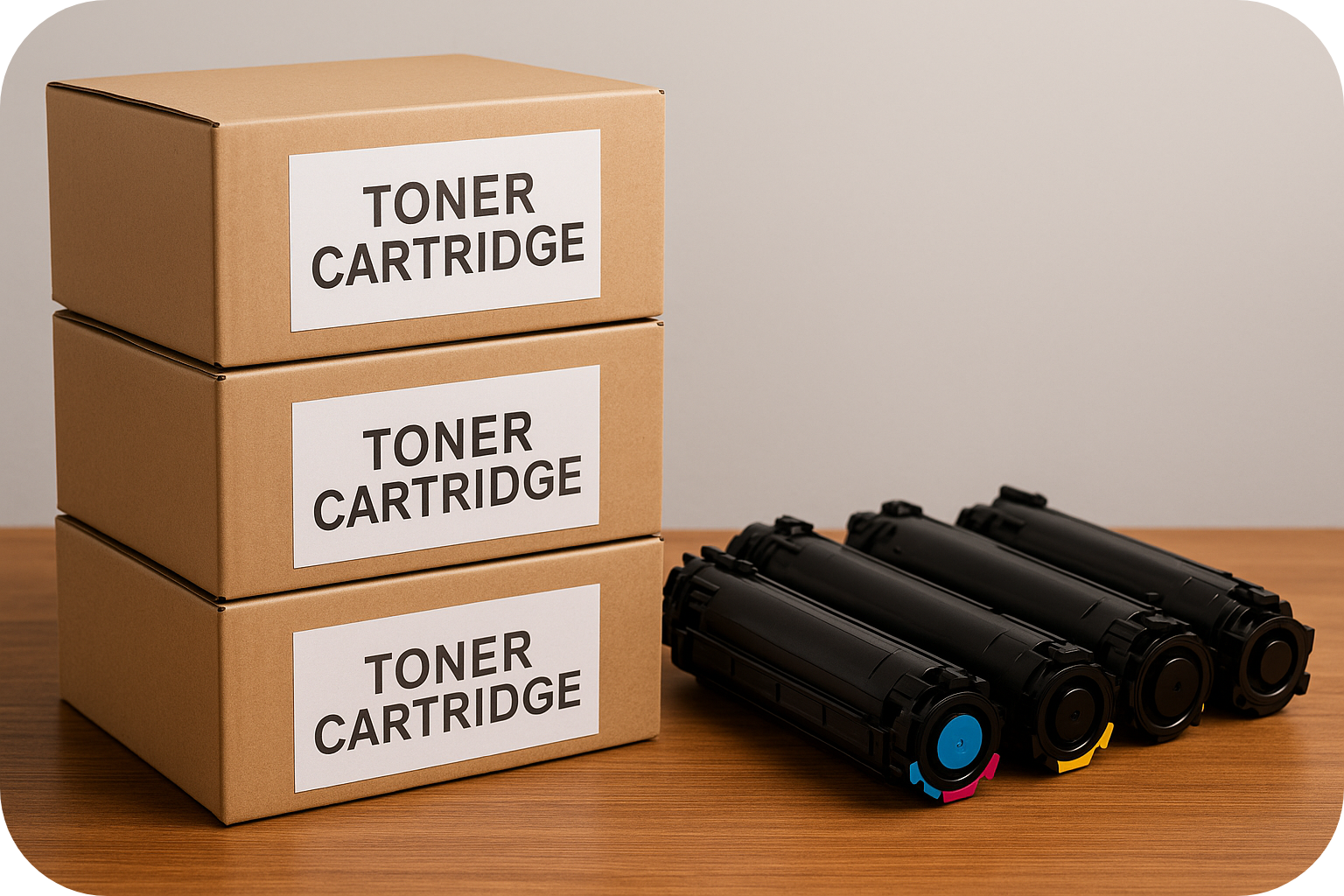
If you’ve ever opened a storage closet and found shelves of unused toner and ink, you’re not alone. The good news? You don’t have to write that money off. When you use a printer cartridge recycle into cash program, you can turn new, surplus OEM cartridges into real dollars for your business instead of letting them expire in the dark.
The key is understanding what has value, how the process works, and how to present your inventory so buyers can make you a strong offer.
Turn Your Printer Cartridge Recycle Into Cash
Not every cartridge can be sold. Buyback companies are specifically interested in:
-
New, unused cartridges
-
Genuine OEM brands (HP, Brother, Canon, Epson, Xerox, etc.)
-
Factory-sealed boxes with intact original seals
If your supplies are new and still in their original, unopened OEM boxes, you’re in a great position to printer cartridge recycle into cash. On the other hand, these items typically have little to no resale value:
-
Third-party compatibles or remanufactured cartridges
-
Used or empty cartridges
-
Expired inkjet cartridges
A simple rule of thumb: if the brand name on the box matches the printer manufacturer and the seal is unbroken, it’s likely worth money. If it’s a generic brand or has already been installed in a printer, it’s best routed to recycling instead of resale.
Quick Guide to Cartridge Resale Value
-
New OEM – Highest resale value.
-
New Open-Box – Unused cartridge but box opened or damaged. Still sellable at a slightly lower price.
-
Remanufactured – Refilled or rebuilt by a third party. Minimal or no cash value.
-
Used/Empty – No resale value. Recycle locally.
What’s driving this growth? A huge push from both businesses and consumers for more sustainable practices and a growing awareness of the value locked away in “used” goods. For an idea of just how big this industry is, you can explore detailed market insights on geldfuermuell.de. This strong, consistent demand for high-quality OEM products means you have a reliable way to liquidate that excess stock.
Step 1: Sort and Identify Your OEM Cartridges
Before you can printer cartridge recycle into cash, you need to know exactly what you have. Start by separating OEM from compatible/remanufactured, and sealed from opened or used.
Focus on the genuine OEM, factory-sealed items. For each one, locate:
-
Brand (HP, Canon, Brother, etc.)
-
Model or part number (e.g., CF287A, TN850, 128)
-
Expiration date (for inkjets)
Most ink cartridges need at least a year of shelf life remaining for buyers to pay full value. Toner typically doesn’t expire, which makes it easier to sell as long as the box is in good condition.
Getting started is as simple as making a list of what you have. If you’ve already got an inventory of your cartridges, you can submit your list for a fast quote right now and find out exactly what they’re worth. The rest of this guide will walk you through everything else you need to know, from identifying your most valuable items to packing your shipment and getting paid.
Step 2: Check Box Condition
Box condition plays a huge role in pricing. Buyers usually grade cartridges like this:
-
Mint (A): Looks brand new. No dents, tears, stickers, or writing. Seal perfect.
-
Good (B): Light shelf wear, maybe a small scuff or clean label removal, but still presentable. Seal intact.
-
Damaged (C): Crushed corners, tears, heavy sticker residue, or writing on the box, but the internal factory seal is still intact.
A common mistake is throwing away cartridges just because the box is dented. As long as the internal seal hasn’t been broken, it still holds value—just at a slightly lower grade.
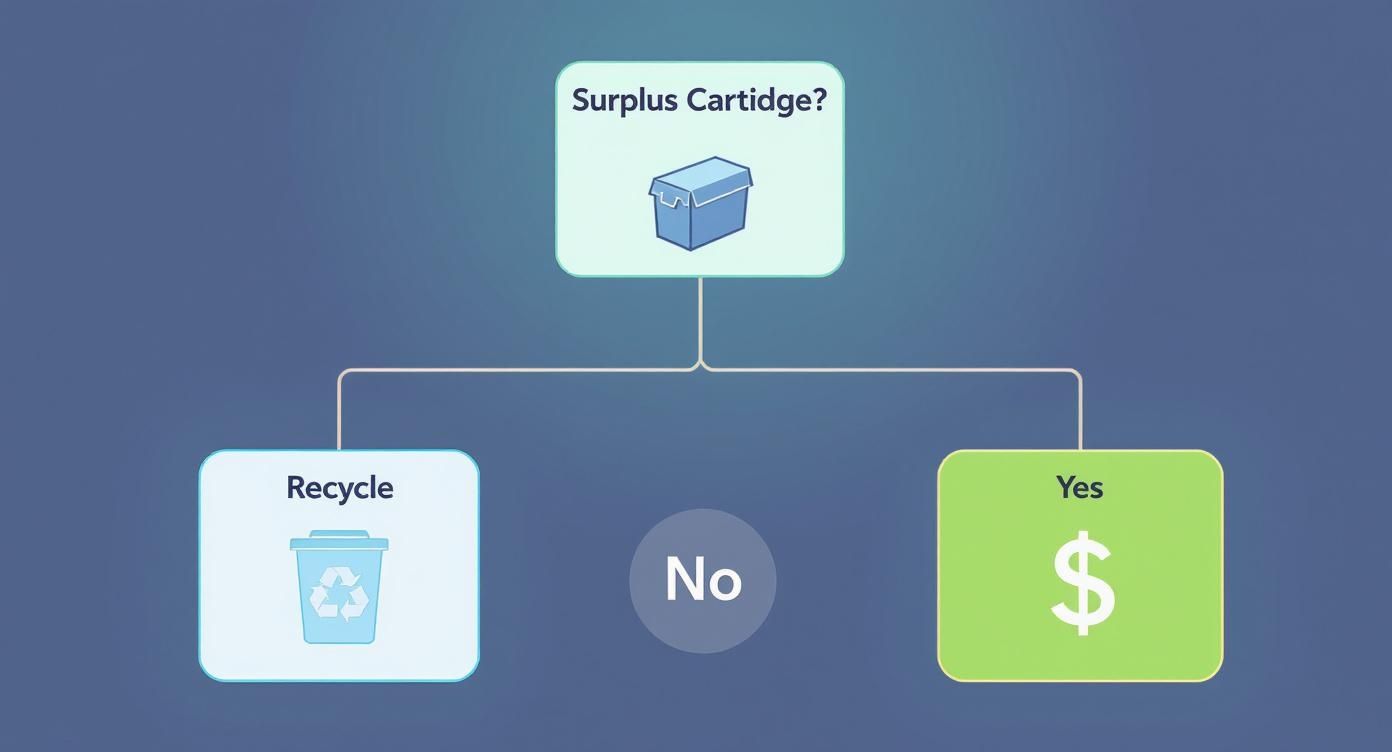
This simple flowchart breaks down the decision-making process perfectly.
Step 3: Build a Simple Inventory List
The more organized your list, the faster and more accurate your quote will be. A basic spreadsheet is enough. Include:
-
Brand
-
Model/part number
-
Quantity
-
Box condition (Mint/Good/Damaged)
For example:
-
HP – CF287A (87A) – 12 – Mint
-
Brother – TN850 – 8 – Good
-
Canon – 128 – 5 – Damaged
This is the kind of information a printer cartridge recycle into cash program needs to turn your list into a firm offer.
Step 4: Get a Quote From a Reputable Buyer
Once your list is ready, it’s time to see what it’s worth. Most buyback companies offer online quote forms, file upload options for spreadsheets, or email quotes with your list and photos attached.
Photos help buyers confirm model numbers, quantities, and condition. One clear photo of each stack of boxes (grouped by model) is usually enough.
A serious buyer should explain how they price cartridges, respond quickly, and provide a written quote you can review before shipping anything.
Step 5: Pack and Ship Your Cartridges Safely
Good packing protects your payout. Even perfectly good toner loses value if the box is crushed in transit. Follow these basics:
-
Use strong, corrugated shipping boxes.
-
Put a cushioning layer of packing paper or bubble wrap on the bottom.
-
Stack cartridges snugly, heaviest on the bottom, and fill all gaps.
-
Add a top layer of padding before sealing the box.
One crucial rule: never put tape directly on the product boxes. That instantly downgrades them from “new” to “damaged” in a buyer’s grading system.
Most reputable printer cartridge recycle into cash programs provide prepaid, insured shipping labels, so you don’t pay anything out of pocket to send your items. For large lots, many will even arrange freight pickup from your office or warehouse.
Step 6: Inspection and Payment
When your shipment arrives, the buyer checks each item against your list:
-
Is the model and quantity correct?
-
Does the box condition match the grade you reported?
-
Are ink expiration dates still valid?
If everything matches, you’re paid according to the quote—often by ACH, PayPal, or company check. If something is off, they’ll regrade that item and adjust the price, explaining the change.
Get Your Inventory List Ready for a Quick Quote
With all the details gathered, the last step is to get organized. A basic spreadsheet is your best friend here. If you want to get serious about it, looking into best practices for small business inventory management can be a game-changer.
All you need is a simple list with four columns:
- Brand: Who made it? (e.g., HP, Canon, Xerox).
- Model Number: The specific part number (e.g., CF287A, 006R01175).
- Quantity: How many of that exact item do you have?
- Box Condition: Your honest grade for each one (Mint, Good, or Damaged).
Your final list should look something like this:
| Brand | Model Number | Quantity | Box Condition |
|---|---|---|---|
| HP | CF287A (87A) | 12 | Mint |
| Brother | TN850 | 8 | Good |
| Canon | 128 | 5 | Damaged |
An organized list like this gives a buyback company everything they need to give you a solid quote without any back-and-forth. It cuts out the guesswork and speeds up the entire process, getting you from clutter to cash in no time.
Tips to Maximize Your Return
To get the most from any printer cartridge recycle into cash program:
-
Act quickly – Supplies lose value as printer models age.
-
Store smart – Keep boxes dry, clean, and uncrushed.
-
Sell in bulk – Larger shipments often earn better pricing and free freight pickup.
-
Work with one reliable partner – Long-term relationships can mean faster quotes and smoother repeat transactions.
Turn Clutter Into Cash
Unused OEM printer cartridges are more than just leftover office supplies—they’re recoverable value. By sorting, listing, and shipping them through a trusted printer cartridge recycle into cash program, you free up storage, support sustainability, and put money back into your budget with very little extra work.
Getting Your Cartridges Packed and Shipped Securely
Once you’ve accepted a quote, the final step is getting your cartridges to us. How you pack everything is more than just a logistical detail—it’s what protects your payout. A toner cartridge that shows up damaged because it was rattling around in a box won’t get you the price you were quoted, so a few minutes of care here makes a real difference.
The main goal is simple: keep the original product boxes from getting damaged in transit. Even if the cartridge inside is perfectly fine, a crushed, torn, or taped-up box tanks its resale value. The good news is that packing them correctly is actually pretty easy.
The Right Way to Pack Your Toner
First things first, grab the right materials. You’ll need a sturdy, corrugated cardboard shipping box that’s just a bit bigger than what you’re sending. Don’t reuse that old, flimsy box from your last online order; they lose their strength and can easily get crushed.
Next, you’ll need some cushioning. Your best bets are:
- Bubble wrap: Perfect for wrapping individual high-value items or for lining the box.
- Packing paper: The go-to for crumpling up and filling every last bit of empty space.
Here’s a critical tip from years of seeing this go wrong: never, ever put tape directly on the product boxes. It instantly downgrades the box condition from “new” to “damaged” and will absolutely lower your payment. The original factory seal is all that’s needed.
A Quick Packing Walkthrough
Let’s say you’re shipping five toner cartridges of different sizes. Here’s how to pack them like a pro so they arrive looking pristine:
- Build a Base: Start by putting a soft layer of crumpled packing paper or bubble wrap at the bottom of your shipping box. This creates a shock-absorbing foundation.
- Arrange Smartly: Place the largest and heaviest toner boxes flat on the bottom. Fit them together snugly to prevent them from sliding around. It’s kind of like a game of Tetris—you want a solid, stable base.
- Fill Every Gap: This is key. Shove crumpled paper or smaller pieces of bubble wrap into all the empty spaces around and between the cartridges. Nothing should be able to move.
- Add a Top Layer: Before you close the box, put one more layer of cushioning on top of the cartridges.
Once you’ve taped it up, give the box a gentle shake. Can you feel or hear anything shifting inside? If so, open it back up and add more packing material. A well-packed box feels dense and solid. If you’re new to this, checking out some general super easy packing tips can give you a great foundation for getting items ready for shipment.
Shipping Is on Us
Here’s one of the best parts about working with a reputable buyback company: you should never have to pay for shipping. The logistics are handled for you.
As soon as you accept our offer, we’ll send you prepaid, insured shipping labels from carriers like UPS or FedEx. This means there’s zero cost and zero risk for you. All you have to do is print the label, stick it on your box, and drop it off. It’s that simple. For more detail on how this keeps your items covered, you can learn more about how to protect your shipment with insured labels.
Have a much larger quantity of surplus supplies? For big lots—usually 50 items or more—it gets even easier. We’ll arrange and pay for a freight pickup right from your office or warehouse. A truck shows up, you have the pallet ready, and they handle the rest. It makes liquidating bulk inventory completely hassle-free.
Insider Tips for Getting the Most Cash Back
Once you’ve got the basics down, you can start using a few pro strategies to really boost the cash you get for your surplus printer cartridges. It’s all about thinking ahead—focusing on timing, proper storage, and smart selling to make sure every single cartridge brings in its maximum value.
If there’s one thing to remember, it’s that speed is everything. Printer tech evolves quickly. What’s a hot-selling cartridge today could be obsolete stock tomorrow. For example, the toner for a 2018 model printer will be worth much less than the toner for a model released last year. Acting fast on any new surplus you get your hands on means you’re selling when demand and prices are at their absolute peak.
Another easy win is proper storage. It sounds simple, but it’s critical for protecting your investment. The boxes these cartridges come in are more delicate than you’d think, and their condition has a direct impact on your final payout.
- Dodge the Dampness: Always store boxes in a dry, climate-controlled area. A damp basement could cause mildew spots on the box, downgrading its value.
- Prevent Crushing: This is a big one. Never stack heavy objects on top of your cartridge boxes. A box of printer paper placed on top of a toner box for a week will leave a permanent indentation.
Just think of the original packaging as part of the product’s value. Keeping it in mint condition is one of the easiest ways to protect your return.
Sell Smarter, Not Harder
How you sell can be just as important as what you sell. One of the best tactics I’ve learned is to consolidate your items into a single, larger shipment. Don’t just sell five cartridges this month and another five next month. If you can, wait and sell all ten at once.
Selling in bulk usually gets you a better price per item. Even better, larger shipments—we’re typically talking 50 items or more—often qualify for free freight pickup. That saves you a ton of hassle and expense from packing and shipping multiple small boxes.
Finally, don’t underestimate the power of a good relationship with a buyback partner. Once you find a company that gives you fair prices and makes the process easy, they’re worth sticking with. Over time, repeat business creates a smoother experience for everyone. They’ll get to know your inventory, leading to faster quotes, quicker payments, and a reliable outlet for all your future surplus.
A trusted partner turns the whole printer cartridges recycle for cash process from a one-off task into a predictable and profitable part of your business.
Common Questions About Selling Your Surplus Cartridges
If you’re new to selling surplus printer supplies, you probably have a few questions. We get it. It’s a niche market, and knowing the ins and outs can make a real difference to your bottom line. Here are some straightforward answers to the questions we hear most often.
Can I Sell Cartridges That Have Been Opened or Used?
The short answer is no. Buyback companies are looking for new, unused, and factory-sealed OEM cartridges. Think of it this way: the goal is to get surplus inventory back into the retail channel, so the products need to be in the same condition a customer would expect to find on a store shelf.
How Do You Decide What My Cartridges Are Worth?
It really comes down to supply and demand, just like any other market. We don’t just pull numbers out of thin air; the price we offer is a reflection of what that specific cartridge is worth at that exact moment.
Several factors have a big impact on the final quote:
- The Model: Newer, high-demand models for popular printers will always fetch a better price. A toner for a brand new office-grade laser printer will be worth more than ink for a 10-year-old home photo printer.
- Expiration Date: This is a huge deal for inkjets. Once they’re past their date, they unfortunately have no resale value.
- Box Condition: A pristine, mint-condition box is worth way more than one that’s been crushed, written on, or has shipping labels torn off.
What’s the Deal with OEM vs. Compatible Cartridges?
This is a critical distinction. OEM (Original Equipment Manufacturer) cartridges are the real deal—made by the same company that made your printer (HP, Canon, Brother, etc.). These are the only ones that have any real cash value in the buyback world.
Compatible or remanufactured cartridges, on the other hand, are made by third-party companies. While they might save you money on printing, they aren’t accepted for cash buyback programs.
Here’s a simple gut check: If the brand name on the box doesn’t match the brand of your printer, it’s a compatible and has no resale value. For instance, if you have a Brother printer but the cartridge box says “E-Z Ink,” it is not an OEM product. Only genuine OEM products will get you paid.
Is Shipping Really Free?
Absolutely, as long as your order meets the minimum qualification. We’re not going to ask you to pay to ship us your inventory. A reputable buyback partner will always provide prepaid shipping labels from a major carrier like UPS or FedEx.
And if you have a large lot of surplus supplies? We’ll often arrange for a freight truck to come directly to your warehouse or office for a pallet pickup, all on our dime. The goal is to make it as painless as possible for you.
Ready to see what your unused toner and ink are worth? At Toner Connect LLC, we provide top-tier pricing, quick payments, and fully insured, free shipping to make selling your surplus simple and profitable. Get Your Free Quote Today!