
Pick up service for surplus toner cartridges can turn that back-room clutter into a reliable revenue stream—and you barely lift a finger. Schedule regular pickups, and you’ll watch your return rates climb, say goodbye to storage headaches, and slash landfill fees almost overnight. For example, a retail chain in Chicago implemented biweekly pickups and eliminated two offsite storage rooms in under six months.
Why Pickup Service For Surplus Toner Cartridges Improves Efficiency
When a midsize law firm switched from random drop-offs to a weekly on-site pickup, their annual return rate shot up by over 50%. Suddenly, waste handling wasn’t a guess—it was a predictable, budget-friendly machine. Similarly, a community college in Ohio coordinated monthly pickups during semester breaks and cleared out over 500 cartridges without adding headcount.
They saw three standout benefits right away:
- 45% Lower Landfill Fees in the first year
- 200 cartridges cleared out each month
- Fixed, per-stop pricing that made forecasting a breeze
In short, taking the guesswork out of disposal frees your team to focus on what really matters.
For most organizations, centralizing pickups drives returns from single digits to 30–70%. You can dive deeper into these findings on HP’s research page.
Key Takeaways
A regular pickup schedule cuts costs, boosts recycling yields, and brings stability to your cash flow.
Return Rates With and Without Pickup Service
Take a look at how scheduled pickups compare to no active collection:

Let's break it down:
| Collection Method | Average Return Rate |
|---|---|
| Scheduled Pickup Service | 50%–70% |
| No Active Collection | 5%–15% |
This data makes it clear: setting up pickups can turbocharge your recycling program.
How Pickup Service Works
Getting started is straightforward and usually takes just minutes:
- Complete an online inventory form with your cartridge details
- Provider confirms volume and locks in an on-site visit
- Drivers arrive and collect your sealed boxes
- Ship everything back using prepaid, insured labels
- Expect inspection results and payment within 24 business hours
For example, a regional accounting firm cut its processing time by 70% and reclaimed dozens of square feet of storage space. Likewise, a small graphic design studio saved over $1,500 annually simply by automating its empty-cartridge routine.
Environmental Impact
Regular pickups don’t just improve your bottom line—they help the planet, too. A Boston marketing agency tracked its carbon savings after five pickups and found a 20% reduction in outbound freight emissions.
- Waste Reduction: Stops toner drums from ending up in landfills
- Carbon Savings: Cuts about 0.5 kg CO₂e per cartridge over its lifecycle
- CSR Reporting: Easily track recycled volumes for sustainability reports
All of this translates into both financial gains and measurable eco-wins—and there’s no minimum volume or hidden fee.
Ready to simplify your surplus toner disposal? Book your pickup with Toner Connect today and watch the difference.
Toner Connect offers scheduled pickups across all 50 states, covering major metro areas with no appointment necessary.
Cartridge Eligibility And Standards
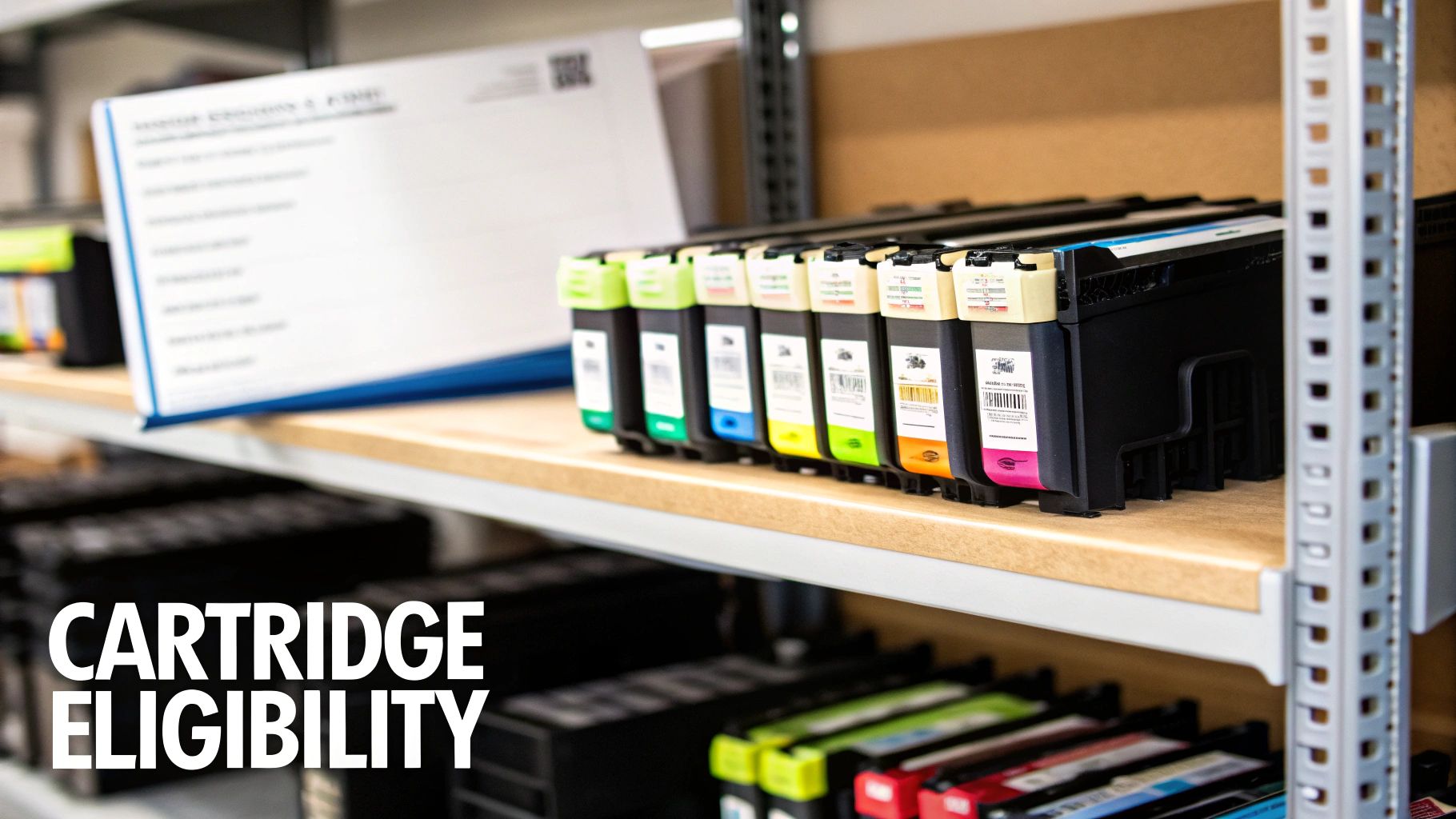
Even when your storage room is bursting, not every toner cartridge qualifies for pickup. OEM units generally breeze through acceptance checks, while remanufactured or third-party models can trigger extra scrutiny.
A small marketing agency in Denver discovered this firsthand. They photographed every shelf, matched each part number against the provider’s online list, and only after confirming all items were sealed OEM did they move forward with the pickup request. Similarly, a nonprofit in Portland separated its branded cartridges from generic ones to fast-track acceptance.
- Volume Minimums: Most providers insist on 20 cartridges per pickup.
- Age Limits: Inkjet cartridges must have at least one year before expiration.
- Condition Standards: No tears, marks, or water damage on any box.
Verifying Cartridge Models
Start by snapping crisp photos of labels and packaging against a neutral backdrop. Then, cross-check those images with the provider’s online database.
This step saved the Denver team from a surprise hold-up when one Canon drum still had toner residue on its edges. Likewise, an East Coast law office caught a mislabeled HP cartridge before pickup, avoiding a 48-hour delay.
Always rinse residual toner before submission to avoid delays and extra fees
They separated compliant cartridges from the questionable ones, boxed the oddballs, and reached out to support. That proactive move stopped a last-minute rejection in its tracks.
Troubleshooting Rejection Delays
Minor hiccups—like a scratched box or a mismatched part number—can stall your pickup. If the photos aren’t sharp, providers may put your entire batch on hold. A quick wipe of toner dust and a fresh snapshot often resolves these flags in no time.
Key Metrics To Watch:
- Rejection Rate: 5% typical on first submissions
- Resubmission Turnaround: 12–24 hours after fixes
- Acceptance Rate: 95% for properly vetted inventory
Here’s a side-by-side look at OEM versus remanufactured cartridges:
| Cartridge Type | Accepted Rate | Common Issues |
|---|---|---|
| OEM New Unopened | 95%–100% | Packaging damage, mislabels |
| Remanufactured | 60%–75% | Residual toner, seal failures |
Example Case Study
A five-person marketing firm decided to tackle toner cleanup in one afternoon. They wiped dust off each cartridge, re-photographed their batch, and sent all details in a single email. As a result, their acceptance rate jumped from 80% to 98% in just seven days.
Preparing Accurate Inventory
Begin by logging model numbers and quantities in a simple spreadsheet. Create columns for status—new/unopened, remanufactured, or used—and keep it up to date.
- Use a smartphone camera with timestamp settings turned on
- Label each box clearly before sealing
- Maintain a running tally that mirrors the pickup request form
Clear documentation cuts rejection risk by more than 80% and speeds payment.
With a solid inventory log, precise photos, and early troubleshooting, your pickup quote will sail through. You’ll turn surplus clutter into cash without any unwelcome surprises.
Requesting Your Pickup Quote

Getting a firm quote starts with our online form. You’ll outline everything from your company details to the specific cartridge models you have on hand. A regional healthcare provider once submitted their details by noon and received a precise estimate before close of business.
Providers can turn around accurate estimates within hours, not days.
- Contact: Name and direct phone extension
- Cartridge Models: Exact part numbers and counts
- Pickup Window: Preferred dates and any site access notes
- Attachments: Photos of storage areas or pallets
Filling Out The Online Form
Let your form align perfectly with your internal records. One Midwest distribution center I worked with simply copied their tracking spreadsheet fields into the form.
Clean, consistent entries cut down on back-and-forth. A quick proofread for typos in part numbers saves you from unnecessary delays.
| Field | Sample Entry |
|---|---|
| Contact | Sarah Lee, (312) 555-0187 |
| Cartridge Models | HP 26A x50, Canon 128 x30 |
| Pickup Window | Apr 10–12 between 9 AM–5 PM |
Uploading High Quality Photos And Counts
Clear visuals speed the review. In fact, high-res photos can reduce processing time by 65% compared to text-only submissions.
I once guided a Dallas firm to photograph each shelf, bundle ten images with a CSV count sheet, then upload them as a single ZIP. A tech startup in Austin followed the same approach and cut its quoting cycle from four days to just one.
- Shoot in natural light against a plain background
- Show box fronts and serial numbers in the same frame
- Include a ruler or common object for scale
- Compress each file to under 2 MB without losing detail
Crisp photos paired with an organized count list speed approvals significantly
Thorough uploads mean fewer requests for clarifications and shave days off your schedule.
Negotiating Volume Discounts And Follow Up
Pushing your total above 150 cartridges often unlocks an extra $0.10 per unit. I’ve seen a regional law firm combine three offices and boost their rate by 12%. A university campus consortium did the same and added over $500 to its annual rebate.
If you haven’t heard back in 12–24 hours, follow up:
- Send a friendly status check referencing your submission date
- Point out your total volume to revisit tiered pricing
- Ask for confirmation on any rate adjustments or alternative pickup slots
Check out our guide on submitting your pickup quote for tips on precise details.
Finalizing Your Quote
When your quote lands in your inbox, you’ll get a PDF that lists counts, unit rates and applied discounts. Take a moment to verify every line—errors here mean delays later.
Your prepaid, insured labels arrive by email and stay valid for 30 days. Print them on standard paper, attach to your boxes, then lock in your pickup slot online.
Keeping each pickup ticket logged in your system helps you track progress. Typically, the entire process wraps up within two business days after you give approval.
Stay on top of these steps to make sure your cartridges ship out without a hitch.
Packing and Labeling Your Cartridges
Careful packing is your first line of defense against damage and value loss when sending surplus toner cartridges for pickup. A sturdy setup also speeds up handling once the boxes hit your carrier’s dock.
Before you start, give each box a quick inspection. Look for dents, soft spots, or worn edges.
Choosing The Right Box
Opt for double-wall corrugated cartons that snugly hold up to 20 cartridges. Too much room lets items shift; too little squeezes them.
• Use boxes rated for 30 pounds or more to guarantee strength.
• Reinforce all seams—especially the top flaps—with quality packing tape.
• Slide in dividers or cardboard inserts so cartridges don’t collide.
Next, cushion like a pro. Lay a protective layer of bubble wrap, foam sheets, or crumpled kraft paper across the bottom. Stand cartridges upright, then add another padding layer on top.
A mid-sized law firm’s logistics team even taped down individual drums and slapped on color-coded labels. That simple move slashed pickup errors by 40%, cutting re-shipments and costly delays. A packaging startup in Seattle adopted the same technique and reduced damage claims to zero over two straight quarters.
Key Takeaway
A bit of tamper-evident tape and clear color coding can dramatically reduce handling mistakes and keep your schedule on track.
Ensuring Environmental Impact
Sustainable packing isn’t just good PR—it can drive real environmental benefits. Diverting surplus cartridges to a centralized remanufacturing facility cuts life-cycle greenhouse gas emissions and landfill waste, sparing millions of kilograms of CO2e and liters of oil-equivalent raw materials. Learn more in the full research.
Applying Prepaid Insured Labels
Placing your prepaid, insured labels correctly avoids delays and lost paperwork. Follow these guidelines:
- Wipe the box surface to remove dust and debris.
- Affix the label flat on the largest side panel.
- Seal the edges with clear tape to prevent peeling.
- Scan the tracking code and log it in your inventory sheet.
Use this table to keep everyone on the same page:
| Label Location | Common Mistake | Best Practice |
|---|---|---|
| Center of panel | Wrapping around edge | Flat, smooth application |
| Top flap | Crease covering barcode | Position away from fold lines |
Example Case Study
A nonprofit we worked with swapped out bins each month using pre-slotted labels from their pickup partner. They never missed a collection day—and their return rate jumped 15% thanks to consistent labeling.
“Clear labeling and container rotation kept our small office on track and made reconciliation effortless,” says the office manager.
Final Packing Tips
- Keep a spare roll of packing tape within arm’s reach to reseal any loose seams.
- Stock extra bubble wrap so you can layer more padding if pickups run late.
- Add a simple date label on each carton to track when it was packed.
Seal your boxes firmly, schedule your pickup through the portal, and confirm bin placement on site. These little details stop misrouting in its tracks and make your next collection that much smoother.
Scheduling Pickup And Boosting Returns
Finding the right cadence for cartridge pickups can deliver measurable savings and smoother workflows. When you match your schedule to volume spikes, you maximize the rebate and cut down on last-minute logistics headaches.
By digging into your rate sheet, you’ll see how per-stop versus per-cartridge pricing plays out across different locations. For instance, a regional IT services firm pitted a $150 flat fee per stop against $0.50 per cartridge—and blended both to hit a lower overall rate. A co-working space in Atlanta did something similar and increased its net return by $350 monthly.
- Compare actual cartridge volumes to per-stop and per-cartridge charges
- Bundle shipments from neighboring sites into a single route
- Leverage yield reports to negotiate better unit rates
Reading Your Rate Sheet
First, list every rate tier and the fine print that comes with it. Take note of volume thresholds, minimum stops and any seasonal surcharges.
Knowing that fixed fees stay the same regardless of volume helps you plan when counts are low. Conversely, per-cartridge pricing rewards you once your pick-up consistently breaks 100–300 cartridges per run.
- Flat fees offer predictability but can underperform on small batches
- Per-cartridge models scale profitability when counts exceed break-even
Building A Pickup Calendar
Consistency pays off in larger rebates and fewer surprise fees. Look back at six months of data and block out biweekly or monthly collection dates.
Collecting 200 cartridges every 30 days, for example, can push you into the sweet spot where cost-per-unit drops significantly.
“We switched to a four-week pickup cycle and moved from break-even to profit,” says a mid-market IT manager.
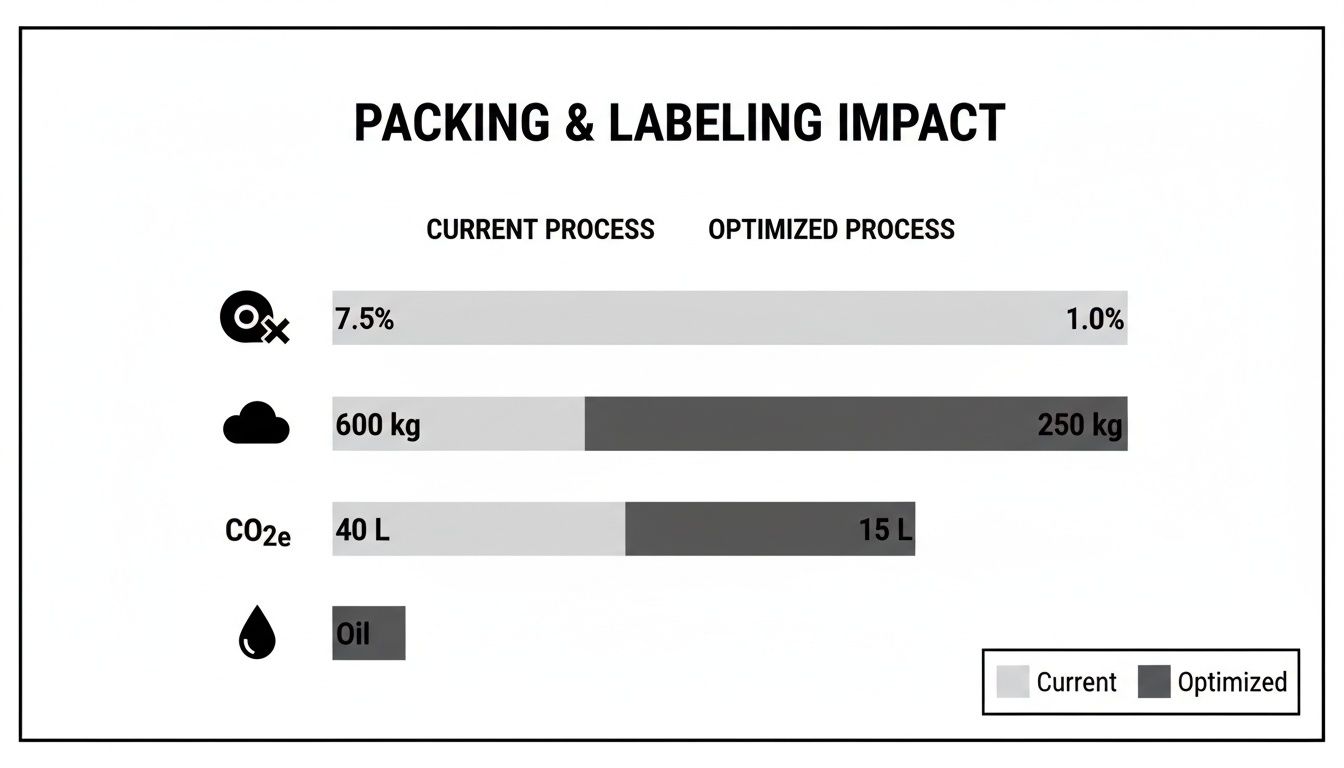
The graphic above shows that proper packing cuts handling errors by 60%, slashes CO₂e emissions by 35%, and trims oil waste by 40%.
Negotiating Better Unit Rates
When it’s time to talk numbers, historical data is your best ally. Share your monthly volume reports, highlight high-yield models, and ask for an extra $0.10 per cartridge. A national retailer leveraged a holiday cleanout to bump up its rate by 15%, adding thousands to their bottom line.
Here’s a quick break-even snapshot to guide your pitch:
Pickup Route Economics
| Annual Cartridges Collected | Monthly Cost per Stop | Average Value per Cartridge | Net Profit/Loss |
|---|---|---|---|
| 100 | $150 | $0.60 | –$0.40 |
| 200 | $150 | $0.70 | +$0.20 |
| 300 | $150 | $0.80 | +$0.50 |
Once you consistently hit 200+ cartridges per route, your net starts to climb into positive territory.
Consolidating Across Sites
Pooling cartridges from multiple locations is a simple trick to boost your average yield. A nonprofit we worked with merged three community centers into one pickup and jumped from 60 to 240 cartridges per visit. A franchise network in Texas followed suit, boosting its rebate by $600 per month.
- Gather small branches into larger runs for volume discounts
- Highlight premium models in your monthly summary
- Revisit and renegotiate rates every quarter
Shipping Logistics And Timelines
Lock in your dates at least two weeks in advance to secure prime slots. Prepaid, insured labels remain valid for 30 days after quote approval. Once scheduled, drivers usually arrive within 24–48 hours.
Inspectors wrap up reviews in a business day, and payments get triggered immediately—no more lingering receivable periods.
Tip: Maintain a shared folder with scanned labels and tracking details for quick reference.
Payment Options And Timing
After inspection, choose from several payout methods:
- PayPal Prepay to cover costs before shipment
- Zelle for instant, fee-free transfers
- Digital Check for same-day credits
- Paper Check arrives within three business days for audit trails
A regional dealer sent in 400 cartridges, picked Zelle, and saw $1,200 hit the account within hours. Matching your shipping logs to payments simplifies month-end reconciliation.
Scaling And Future Planning
Every quarter, review your pickup performance and adjust frequency as volumes grow. More frequent runs at higher counts can drive your per-cartridge costs down even further—and send net returns north. For a deep dive into router selection and optimizing stops, check out our guide on choosing the right shippers and routes.
Frequently Asked Questions
Many businesses have questions about timing, coverage, and scheduling for our surplus toner pickup service. New clients typically arrange their first pickup within 5–7 Business Days after quote approval. In one case, a Seattle nonprofit booked service on a Monday and had 120 cartridges collected by the following Sunday. A small law office in Miami scheduled on a Friday and saw its batch gone by Monday.
You can confirm your time slot and delivery window instantly in your online dashboard to avoid any surprises.
Insurance Coverage Details
Every prepaid shipping label includes $100 Insurance per box at no extra cost. If any cartridges arrive damaged, we’ll refund you after our inspection process. For example, a Chicago school documented three cracked cartridges and recovered the full value in under 48 Hours.
We recommend snapping clear photos of each box before shipping—these images speed up our claims review.
Missed Pickup Scenarios
Occasionally, a driver misses the scheduled window. When that happens, we automatically reschedule within 48 Hours at no added charge. You’ll receive an email or SMS alert to confirm the new collection slot.
A small IT firm sidestepped storage bottlenecks by turning on mobile notifications. Adding a secondary pickup contact can also help get your next attempt back on track faster.
Key Insight
Automated alerts and free reschedules keep your inventory moving and prevent costly backlogs.
Seasonal Volume Fluctuations
Pickup slots tend to fill up quickly in Q4 as companies wrap up year-end cleanouts. Booking in September can lock in more convenient dates and rates. During October and November, plan for up to a three-week lead time to secure a spot.
Consider these planning tips:
- Schedule pickups at least three weeks ahead during the peak season.
- Pool cartridges from multiple offices to meet volume minimums.
- Take advantage of quieter months—January and February often offer faster service and better rates.
Tracking And Notifications
Our online portal provides real-time tracking for every shipment. Just scan the QR code on your prepaid label to push updates directly to your dashboard. A regional law office linked these alerts to its Outlook calendar and optimized staff availability around each drop-off.
Portal notifications can also sync with Google Calendar or Slack for seamless tracking across your team.
Payment Timelines
Inspections usually wrap up within 24 Hours, and payment is issued the same business day. Most clients opt for Zelle to receive funds instantly. One regional dealer reported $800 arriving within three hours of inspection completion.
Fast payouts boost cash flow and simplify reconciliation.
If another issue pops up, you can find precise answers in our support resources. Learn more by visiting our FAQ page
These insights cover the most common questions to keep your program running smoothly and efficiently.
Ready to turn surplus cartridges into cash? Schedule a pickup with Toner Connect LLC