
Ink or toner cartridge—choosing the right one can have a big impact on your printing costs, performance, and long-term value. Whether you’re a home user, business owner, or someone looking to sell unused printer supplies, understanding the difference between ink and toner cartridges helps you make a smarter decision from the start.
Ink or Toner Cartridges: Which Is Better?
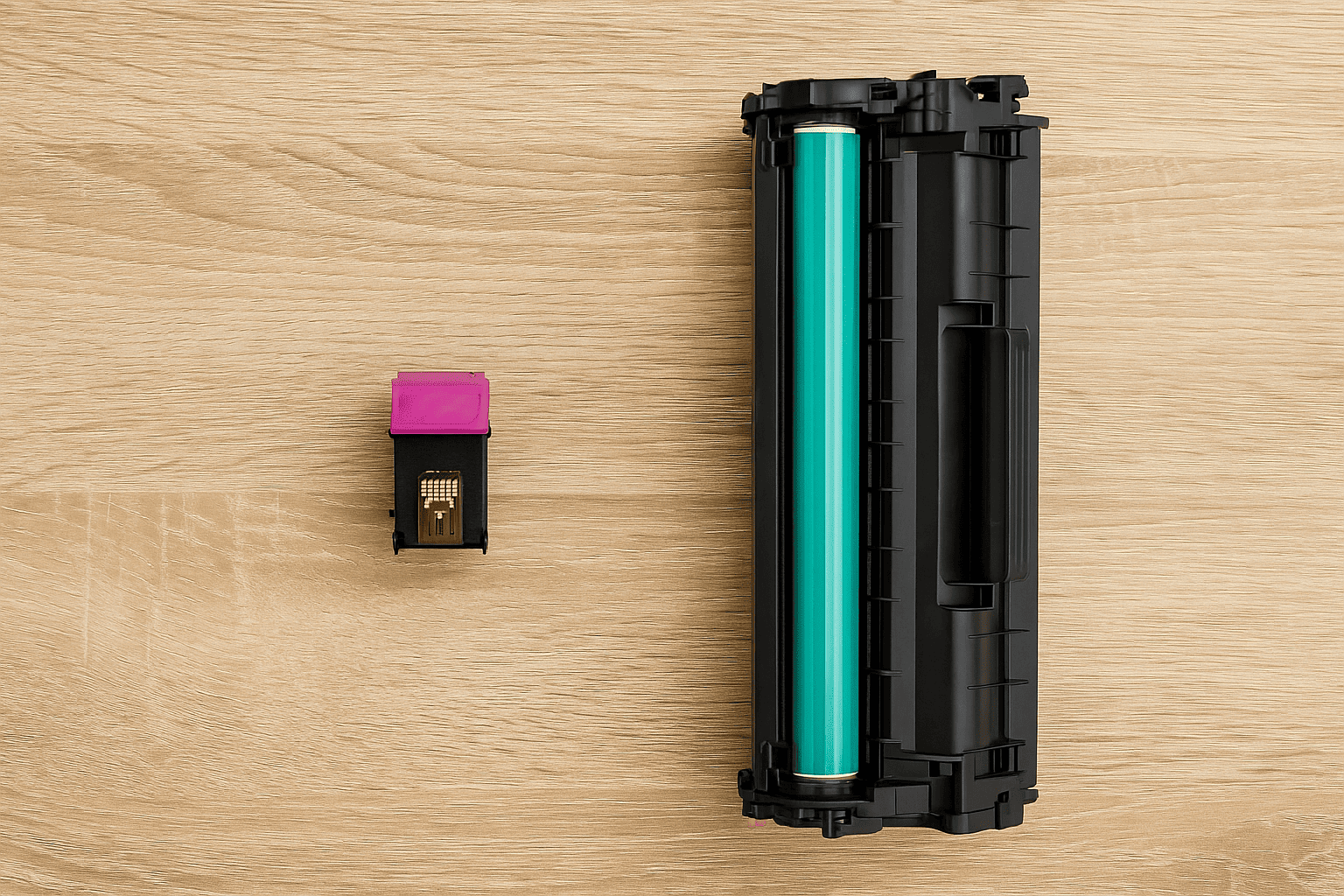
Ink cartridges contain liquid ink and are used in inkjet printers. The printer sprays tiny droplets of ink onto the paper through microscopic nozzles. This allows for rich colors and detailed images, which is why inkjets are often favored for tasks like photo printing. Ink is typically dye or pigment-based and needs to soak into the paper to dry. A common example is the Canon PIXMA or HP DeskJet series, which use ink cartridges to produce vivid photos and graphics.
Toner cartridges, on the other hand, are filled with a fine, dry powder (toner) made mostly of plastic particles. Toner is used in laser printers and copiers; the printer uses a laser to fuse this powder onto paper with heat, effectively baking the text or image in place. This process is very fast and precision-oriented, yielding sharp text output. For instance, an HP LaserJet or Canon image CLASS printer uses toner cartridges. Toner-based printing is generally dry vs. wet – meaning toner doesn’t make the paper damp and is less prone to smearing once fused.
Summary: Inkjet = liquid ink, great for color depth and photos; Laser = powder toner, great for crisp text and high-speed output. Now, let’s break down which one is “better” across key factors.
Ink or Toner Cartridge Cost Comparison
Cost is one of the biggest factors when choosing an ink or toner cartridge.
Upfront Cost of an Ink or Toner Cartridge
Ink cartridges usually cost less at checkout. Inkjet printers are also cheaper to buy. This makes ink appealing for light users.
Toner cartridges cost more upfront. Laser printers also have a higher initial price.
Cost Per Page: Ink or Toner Cartridge
Despite the lower purchase price, ink cartridges print fewer pages. Many ink cartridges produce only a few hundred pages.
Toner cartridges often print thousands of pages. This results in a much lower cost per page. Over time, toner is usually the more affordable option.
Long-Term Savings With a Toner Cartridge
Frequent ink replacement increases long-term costs. Cleaning cycles also waste ink.
Toner cartridges last longer. They require fewer replacements. For regular printing, toner delivers better long-term savings.
Print Quality: Ink or Toner Cartridge for Better Results?
Print quality can be subjective – do you prioritize vibrant color photographs, or crisp text documents? Here’s how ink and toner stack up:
Color and Images
Ink cartridges excel at photo printing. Liquid ink creates smooth color transitions. This makes inkjets ideal for photos and design work.
Toner printers handle color documents well. Charts, graphics, and presentations print cleanly. However, toner is less suited for high-end photo printing.
Text and Sharpness
Toner cartridges produce crisp text. Letters appear sharp and professional. This makes toner ideal for reports, invoices, and office documents.
Ink can produce good text. However, it may bleed slightly on plain paper.
Ink or Toner Cartridge Speed and Efficiency
Printing speed matters in busy environments.
Laser printers using toner are much faster. Many models print over 20 pages per minute. This saves time during large print jobs.
Inkjet printers are slower. They work well for occasional use but struggle with high volumes.
Ink or Toner Cartridge Lifespan and Reliability
Reliability is another key difference.
Ink Cartridge Lifespan
Ink can dry out. This happens when printers sit unused. Dried ink leads to clogs and wasted cartridges.
Ink cartridges also have expiration dates. Unused ink may lose quality over time.
Toner Cartridge Lifespan
Toner does not dry out. It can sit unused for long periods and still work.
This makes toner cartridges more reliable. They are ideal for offices and infrequent users alike.
In summary, ink or toner cartridge comparison. Toner delivers crisp, fast, and smudge-proof output, especially great for text-heavy printing. Ink delivers vibrant color depth, great for photos or designs, but needs a bit more care (dry time, proper paper) to avoid smears.
Environmental Impact of an Ink or Toner Cartridge
Printing has environmental considerations, and here the choice of toner vs ink can play a role in waste and energy usage:
-
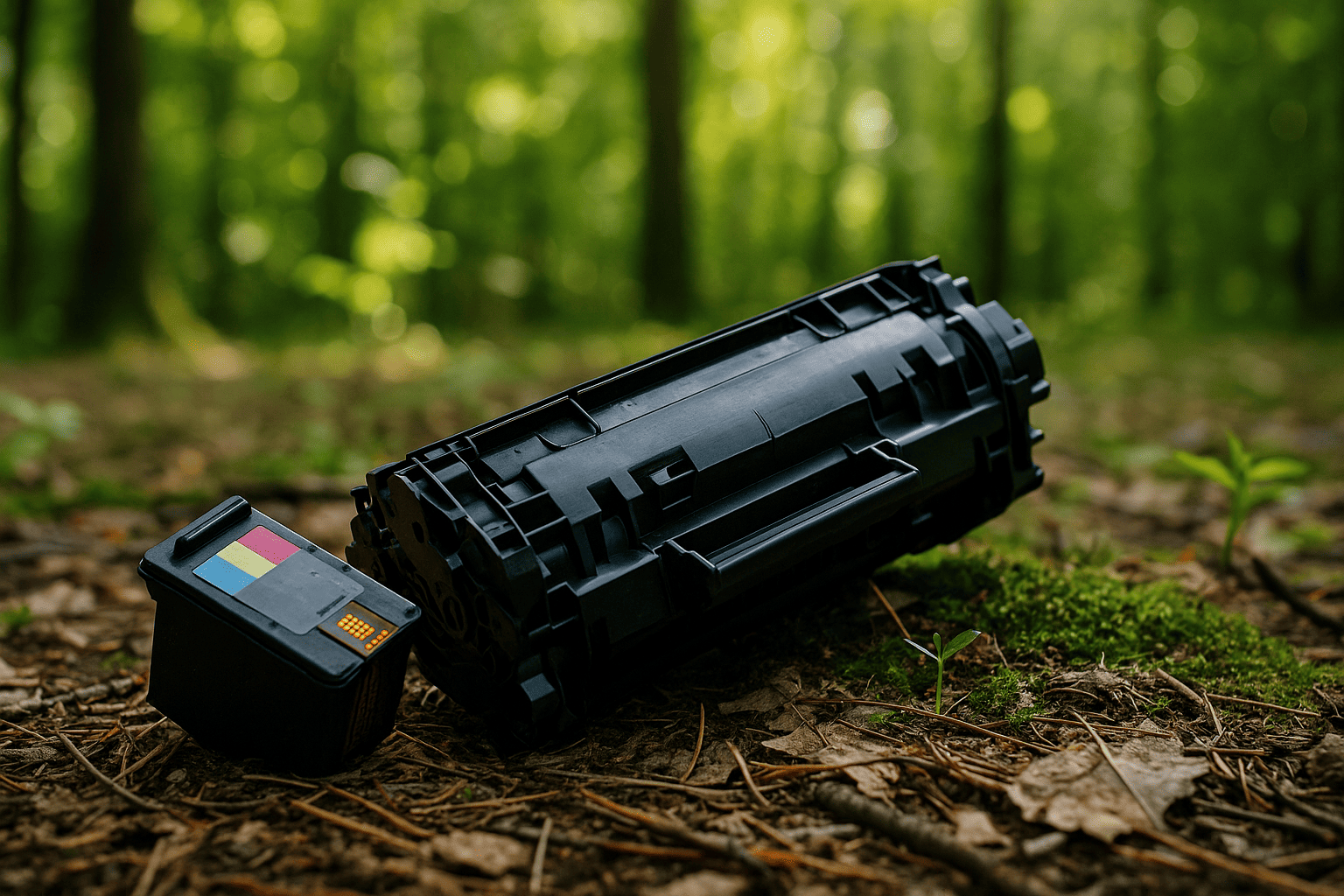
Cartridge Waste: Ink cartridges are usually small and need frequent replacement, which means more plastic cartridges used over time. If you print a lot with an inkjet, you might accumulate a pile of spent cartridges each year. Toner cartridges are larger but you use far fewer of them for the same number of pages. Over the long run, toner’s longevity means less waste – you’re not tossing out as many units. In addition, toner cartridges (and ink cartridges too) can often be recycled. Many manufacturers and programs will take back empties. But simply by needing, say, one toner cartridge for what might equal 5 or 10 ink cartridges’ output, toner can reduce the amount of plastic waste.
-
Energy Use: Laser printers do use more electricity when printing, because they need to heat the fuser to fuse the toner. So a single page on a laser might consume more energy than a single page on an inkjet. However, laser printers are faster, so for large jobs the laser spends less total time running. One source points out that the slightly higher energy draw is often offset by the speed – the job finishes quicker. If you’re printing just occasionally, an inkjet will use less power (since it has no fuser heater). But if you’re printing in large batches, a laser’s efficiency and reduced warm-up time per page can balance things out. Modern lasers also have power-saving modes and heat more efficiently than older models.
-
Ink/Toner Production: There’s also the fact that ink production is resource-intensive (hence the high cost). Toner production isn’t trivial either (it’s a manufactured plastic powder). From an environmental perspective, neither option is perfectly green, but using fewer cartridges (toner) and recycling them is a plus. Also, consider that throwing out unused ink cartridges (because they expired or dried up) is pure waste – unfortunately, that often happens with home inkjet users. Using all of a toner cartridge is easier since it won’t dry out on you.
Tip: No matter which you use, always try to recycle spent cartridges. And if you have unused, still-good cartridges you don’t need, you can even sell them instead of trashing them – more on that in a moment.
Which Should You Choose?
Given all these differences between ink or toner cartridges, when is ink better, and when is toner better? It really depends on your printing habits and needs:

Choose ink cartridges (inkjet printer) if you:
-
Print only occasionally (say a few pages a month). Inkjets have a low upfront cost, so if you hardly print, it might be more economical to buy a cheap inkjet and accept the higher per-page cost. Just remember to print something regularly to avoid drying! Also, inkjets themselves are often smaller and more compact, good for tight spaces like dorms or small home offices.
-
Need high-quality photo or color image printing on special media. If your primary use is printing photographs, art prints, or graphic designs where color accuracy and gradient blending are critical, a dedicated photo inkjet is usually the best choice. Ink can produce a wider color gamut and better subtle shading on photo paper. For example, professional photographers often use high-end inkjet printers for gallery-quality prints.
Choose toner cartridges (laser printer) if you:
-
Print frequently or in high volumes. If you’re printing dozens or hundreds of pages a week (e.g., in a small business, busy home office, or school environment), a laser printer with toner is ideal. It will handle the workload with lower running costs and fewer interruptions for cartridge changes.
-
Primarily print text documents, forms, or reports, especially in black and white. Toner is optimized for clear text and it’s more economical for lots of B&W printing (many laser printers are monochrome-only and very cost-efficient). Even for color documents with graphs or letterhead, a color laser can be very efficient if photo-realism isn’t required.
-
Care about long-term value and reliability. You’re willing to invest a bit more upfront for a printer that will last and won’t give you hassles. Over time, the savings on toner vs ink and the time saved by faster printing and less maintenance is worth it. This often appeals to office managers and anyone who prints as a daily routine.
-
Might have surplus supplies or want to maximize value: Interestingly, toner can even retain resale value. Unopened toner cartridges don’t “go bad” quickly, so if you ever switch printers or have extra, you can often resell unused toner to recoup money. (Unused ink cartridges, by contrast, might become worthless if they expire or dry out.) In fact, there are services like Toner Connect that specialize in buying back unused OEM toner – a nice perk for those who choose toner.
Most people will find that for general office or home office needs (printing lots of essays, invoices, recipes, etc.), laser/toner is the more hassle-free and cost-effective choice. On the other hand, a student who prints a few assignments a month and wants to occasionally print photos might lean toward a basic inkjet for the upfront affordability. It comes down to use case: if you print a lot of pages or need absolute dependability, go toner; if you print rarely and care more about color photo output or device cost, ink could suffice.
Conclusion: Which Ink or Toner Cartridge Is Better Overall?
After weighing ink or toner cartridge pros and cons, toner cartridges are generally “better” for most users who value efficiency, longevity, and overall cost savings. Toner-based laser printers offer faster speeds, significantly more prints per cartridge, and crisp, smudge-resistant output – all of which make them well-suited to both business and everyday printing needs. Ink cartridges and inkjet printers do have their place, particularly for high-quality photo printing and low-volume use, but they tend to be more expensive and finicky when used heavily.
In a world where everyone from home users to small businesses is conscious of both budget and quality, toner provides long-term value. You’ll spend less time buying and replacing cartridges, less money per printed page, and you won’t have the frustration of finding your printer dried up right when you need it. Furthermore, choosing toner can even give you a little bonus: if you ever have extra unused cartridges, they hold value – you can turn those unused toners into cash by selling them (for example, through a buyback service like Toner Connect. This not only puts money back in your pocket but also helps reduce waste.
In summary, choosing an ink or toner cartridge will get your documents printed, toner is the champion for high-volume, high-efficiency printing. It might not be as flashy as ink for photos, but it excels in reliability and cost-effectiveness. For anyone tired of constantly replacing ink cartridges or dealing with smudged prints, it may be time to make the switch to a toner-based printer. Your wallet – and your sanity – will thank you in the long run.
Ready to turn your surplus ink and toner into cash? At Toner Connect LLC, we make it easy for businesses to get paid for their unused OEM cartridges. We offer competitive quotes, provide free prepaid shipping, and issue fast payments, helping you clear out clutter and recover value. Get your free quote today at https://tonerconnect.net.