That forgotten stack of toner cartridges in your supply closet is more than just clutter—it's a cash asset waiting to be claimed. You can sell your surplus Original Equipment Manufacturer (OEM) supplies to specialized buyback companies, turning what seems like office waste into a welcome new revenue stream.
Your Surplus Toner Is a Hidden Asset
If your business is like most, you probably have a "technology graveyard" tucked away in a supply closet. It's the place where old keyboards, forgotten cables, and, most often, stacks of unused toner and ink cartridges go to die. This usually happens after a printer fleet upgrade or an accidental over-order, and these items sit there silently losing value.
But those pristine, factory-sealed boxes are a real financial resource. A surprisingly active secondary market exists specifically for these surplus supplies. Companies are constantly on the lookout for new, unopened OEM cartridges to support the remanufacturing industry and provide discounted alternatives to other businesses.
This presents a great opportunity for you to:
- Generate Unexpected Revenue: Convert that idle inventory directly into cash.
- Reclaim Valuable Space: Clear out cluttered storage areas for something more productive.
- Boost Your Green Credentials: Keep perfectly good products from ending up in landfills.
Why Your Surplus Toner Has Value
The real demand is for Original Equipment Manufacturer (OEM) cartridges—the ones made by the same company as the printer, like HP, Canon, or Brother. These are prized for their quality and reliability, which makes them perfect for remanufacturers to refurbish and resell. Think about it: a company that just upgraded its printers might have thousands of dollars worth of toner that's now useless to them but in high demand elsewhere. For instance, a law firm that replaces its fleet of HP LaserJet printers could be sitting on five boxes of HP 87X toner, worth over $100 each on the buyback market.
The environmental angle is huge, too. Did you know that globally, around one million printer cartridges are thrown away every single day? In the UK alone, a shocking 85% of the 65 million cartridges sold each year end up in landfills. Their plastic components can take up to 1,000 years to decompose. You can find out more about the impact of toner waste and how selling yours makes a difference.
When you sell your unused toner, you're not just making a smart financial move. You're actively participating in a circular economy that cuts down on e-waste and conserves resources. It’s a simple action with a powerful dual benefit.
The entire process is far more straightforward than most people realize. This quick table breaks down the core phases of a typical toner buyback.
Quick Guide to Turning Toner into Cash
| Phase | Key Action | Why It Matters |
|---|---|---|
| 1. Inventory & List | Take stock of all your unused OEM cartridges, noting model numbers and box conditions. | An accurate list is crucial for getting a precise and fast quote. Details prevent back-and-forth later. |
| 2. Get a Quote | Submit your list to a reputable buyback company for a valuation. | This tells you exactly what your surplus is worth and locks in the price before you ship anything. |
| 3. Ship Securely | Pack the items carefully and send them using the buyer's prepaid, insured shipping labels. | Proper packing prevents damage in transit, ensuring you get the full quoted value for your items. |
| 4. Get Paid | Once the buyer receives and verifies your shipment, they process your payment. | This is the final step where you turn that old clutter into cash for your business. |
As you can see, the journey from dusty box to cash in hand is designed to be as simple as possible.
From listing your inventory to getting paid, the process is built for efficiency. It’s a simple, hassle-free way to clear out your closet and add to your bottom line.
Getting Your Toner Ready to Sell
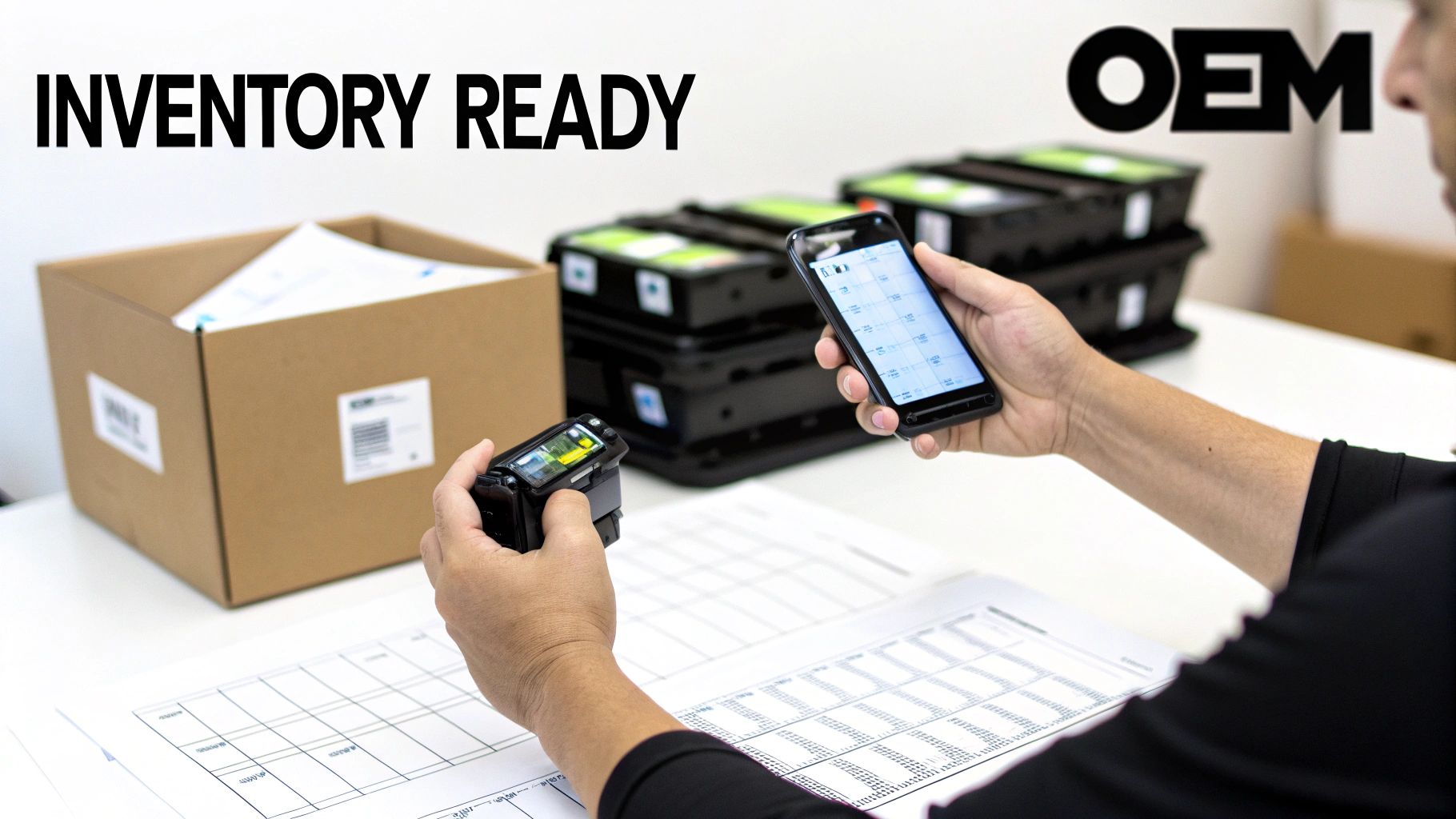
Before you can turn those unused toner cartridges into cash, a little bit of prep work goes a long way. In fact, it can make a huge difference in your final offer. Buyers pay top dollar for inventory they can quickly and easily assess, so presenting what you have in a professional way is key. The first step is to transform that disorganized pile of boxes into a clear, itemized list.
Honestly, this whole process rides on accuracy. A small mistake here can cause a real headache later—think incorrect quotes, rejected shipments, or surprise payment adjustments. Taking a few extra minutes to get it right from the start will save you a lot of trouble and ensure you get paid what you’re expecting.
Take a Detailed Inventory
First things first: you need to know exactly what you’ve got. Go through your stock and start sorting the cartridges into piles by brand and model. This makes cataloging much simpler. Your goal is to create a basic spreadsheet or list detailing the brand, model number, and how many of each you have.
As you sort, keep an eye out for a few crucial details:
- OEM vs. Compatible: Make sure your cartridges are genuine Original Equipment Manufacturer (OEM) products. We're talking about the big names like HP, Brother, and Canon. Most buyback companies simply won't purchase compatible or remanufactured cartridges because they have little to no resale value. For example, an authentic "HP 952XL" box is valuable, while a "Compatible with HP 952XL" box from a third-party brand is not.
- Expiration Dates: This is a big one for ink cartridges. Check the box for an expiration date. As a general rule, cartridges with at least one year of shelf life left will fetch the best prices. The good news? Toner cartridges usually don't expire, which is a huge plus.
- Box Condition: Now’s the time to be brutally honest about the shape of the packaging. A buyer is going to grade your items based on their condition, so you might as well do it first.
A pristine, factory-sealed box is obviously the gold standard. But don't toss the ones with dings and dents! Items in damaged packaging can often still be sold, just for a bit less. The most important thing is to document everything accurately so you get a quote you can count on.
Take Clear Photos to Document Everything
A picture really is worth a thousand words—or in this case, a much better quote. Taking clear, well-lit photos of your inventory is non-negotiable if you want a smooth sale. This visual proof lets buyers see the exact condition of the boxes and price your items fairly right from the start.
Think about it: a photo that clearly shows a small tear on the corner of an otherwise perfect box allows a buyer to quote you with precision. This kind of transparency eliminates any "gotchas" when they receive and inspect your shipment. Vague descriptions or blurry photos just slow everything down. For a better idea of what buyers are looking for, check out these helpful instructions for submitting toner photos.
Look for Potential Problems
While you're inspecting each box, jot down any imperfections you see. This detailed assessment helps you categorize your inventory properly and sets realistic expectations for your payout.
Keep an eye out for these common issues:
- Physical Damage: Dents, crushed corners, rips, or any punctures in the box.
- Cosmetic Flaws: Fading from sitting in the sun, water stains, or peeling cardboard layers.
- Writing and Labels: Old shipping labels, inventory notes scrawled in marker, or any other markings. For example, if "STORAGE CLOSET B" is written in Sharpie, that counts.
- Open Boxes: Even if the foil bag inside is still sealed, an opened outer box will lower the value.
By meticulously cataloging your cartridges and documenting their condition, you’re no longer dealing with a pile of clutter. You have a professional, sellable inventory. This groundwork makes the next steps—finding a buyer and getting your quote—faster, easier, and ultimately, much more profitable.
Finding the Right Buyer and Cashing In On Your Toner
So, you've taken stock of your unused toner and have a clear picture of what you're sitting on. Now for the most important part: finding the right buyer to turn that clutter into cash. This is where a little strategy goes a long way. Who you sell to will have the biggest impact on how much money you make and how much work you have to do.
The market for surplus toner is bigger than most people realize. Think of it like any other business asset. The same logic that applies to profitable asset sales for things like office furniture also applies here. You need to understand the value of what you have and find the right channel to sell it through.
This isn't just about a few spare cartridges, either. The global market for printer cartridge recycling and resale is massive—it hit USD 2.5 billion in 2023 and is expected to reach a staggering USD 4.8 billion by 2032. That growth is a clear signal that there's real, tangible value locked away in those unopened boxes.
Comparing Your Toner Buyer Options
Let's look at the main players in the toner buyback world. Each option caters to a different type of seller, whether you're looking for top dollar, sheer convenience, or something in between.
| Buyer Type | Best For | Typical Payout | Effort Level |
|---|---|---|---|
| Specialized Toner Buyers | Businesses with multiple cartridges looking for a fast, streamlined process. | High | Low |
| Online Marketplaces (eBay) | Individuals with 1-2 popular, high-demand cartridges. | Highest | High |
| General Electronics Recyclers | Expired, damaged, or very old cartridges with little to no resale value. | Very Low | Medium |
As you can see, if you have more than a handful of cartridges, a specialized buyback company is almost always the most efficient path. Marketplaces like eBay might get you a slightly higher price per item, but the time spent listing, packing, and shipping each one individually adds up fast. For example, selling 10 different toner models on eBay means creating 10 separate listings, managing 10 different sales, and packing 10 different boxes. A buyback company handles it all in one transaction.
Insider Tips to Get the Best Payout
After you've picked a direction, there are a few things I've learned over the years that can squeeze a bit more value out of your toner.
It's all about making your inventory as appealing and easy to process as possible for the buyer.
-
Group your winners. When you submit your list for a quote, put your most popular models right at the top. If you have several high-demand HP LaserJet or Brother TN-series toners, grouping them shows the buyer you have quality stock, which can sometimes lead to a better bulk offer. For instance, list your five HP 87A cartridges before your single, less common Xerox toner.
-
Box condition is king. I can't stress this enough: the box matters. A brand-new, factory-sealed cartridge in a beat-up box will fetch a lower price. Buyers know that their customers want pristine packaging. Even minor dents or writing can knock the value down by 15-30%, so handle them with care.
A good buyer will be completely transparent about this and explain any deductions.
A Quick Red Flag Check: If a buyer asks you to pay for shipping, walk away. Period. The industry standard is for the buyer to provide a prepaid, insured shipping label. It protects them, and more importantly, it protects you. Vague payment terms or a "we'll pay you when we get to it" attitude is another major warning sign.
By doing a little homework and presenting your inventory well, you put yourself in the driver's seat. The easiest way to find out what your toner is really worth is to simply ask the experts. Take a minute to get a fast, no-obligation quote and see for yourself.
How to Package and Ship Your Cartridges Securely
Alright, you've got a deal. Now for the last and arguably most important step: getting your toner and ink to the buyer in one piece.
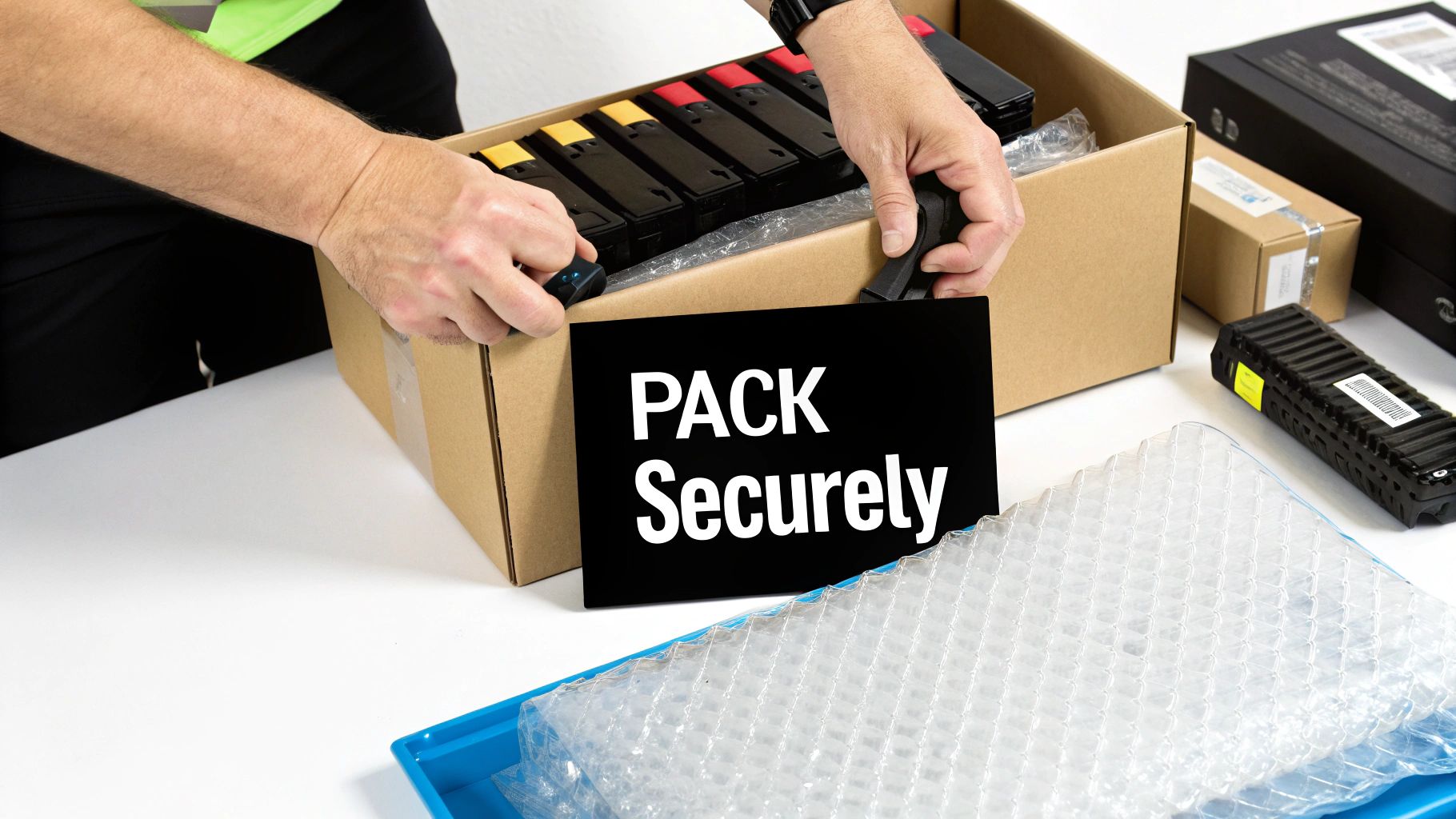
Don’t just toss everything in a box and call it a day. I've seen it happen, and it almost always ends with a reduced payout. Proper packing is what locks in the full value of your quote. Remember, the buyer's offer assumes the items will arrive in the exact condition you described. Your mission is to make sure they do.
Choosing the Right Box and Packing Materials
First things first, grab a solid, corrugated cardboard box. Skip the flimsy ones from the back of the closet or any that look like they’ve been through a war. You need something that won’t fall apart in transit.
The perfect box is just a bit larger than your items, leaving enough room for a couple of inches of padding on all sides. A common rookie mistake is using a box that's way too big. Not only does this sometimes cost more to ship, but it gives your cartridges room to slide around and bash into each other. If you’re left with a lot of empty space, your job is to fill it.
Here’s what you should have on hand:
- Bubble Wrap: This is your best friend, especially for wrapping individual, high-value cartridges. It's unbeatable for protecting those delicate corners.
- Crumpled Packing Paper: Perfect for filling in the gaps and creating a nice buffer zone between items.
- Packing Peanuts: These work well for filling big voids, but be careful. If you don't use enough, cartridges can sink to the bottom and still get damaged.
One thing to avoid? Newspaper. The ink can easily rub off onto the product boxes, damaging their appearance and dropping their value.
Smart Packing Strategies for Maximum Protection
The way you arrange items inside the box matters just as much as the padding. A perfectly packed box is a dense box—if you give it a gentle shake, nothing should move.
A little bit of strategy goes a long way. I always place the heavier, larger toner cartridges at the bottom to build a stable foundation. Then, the lighter and smaller ink cartridges can go on top. For a deeper dive into making your shipments bomb-proof, it's worth checking out general best practices like these air freight packaging requirements.
Pro Tip: Whatever you do, don't tape the individual product boxes shut. For instance, don't put Scotch tape on the flaps of the original HP or Canon box. The buyer needs to inspect them, and peeling or cutting tape will almost certainly tear the original packaging, which tank's the item's value.
Now, let's talk about shipping labels. Any legitimate buyback company will provide you with a free, insured shipping label. This is a non-negotiable standard. That insurance is your safety net—it protects you financially if the carrier loses or damages the shipment, so all the risk is off your plate. You can see why this is standard practice and learn how different shipping options work for toner sellers.
Before you tape it all up, do a quick final check:
- Did you put the packing slip inside? Without it, the buyer won't know the shipment is yours.
- Is everything snug? Give it one last gentle shake. No rattling!
- Is the shipping label on straight and secure? Double-check the address and make sure that label is taped down flat on top of the box.
Getting Paid: The Final Step
You’ve done the hard work of finding, listing, and shipping your surplus cartridges. Now comes the best part: getting paid. Knowing how the payment cycle works from start to finish will give you peace of mind and help you manage expectations.
Once your box lands at the buyer's warehouse, their team takes over. They'll carefully unbox everything and kick off a detailed inspection. This isn't just a quick count; they're meticulously checking the model numbers, quantities, and box conditions against your original quote. This verification is crucial and usually takes about 1 to 3 business days.
Payment Options and How Long They Take
After your shipment passes inspection, the buyer will process your payment. A good buyback partner will offer a few different ways to get your money, and it’s smart to know the timelines for each.
Here are the most common ways you’ll get paid:
- PayPal: This is almost always the fastest option. Funds can hit your account the same day your items are verified. A few companies might even offer it as a prepayment before you even ship.
- Zelle or Digital Check: Just as quick as PayPal, these electronic transfers deliver funds directly to your bank, often within hours of final approval.
- Company Check: The classic paper check mailed to your office. It's reliable, but definitely the slowest route once you factor in printing and snail mail delivery.
Choosing your payment method is the last decision in the process. Digital is king for speed, but a mailed check is still a great option if you need a physical paper trail for your accounting team.
What Happens If There’s a Problem?
It happens. Maybe a box got a dent during shipping that wasn't there before, or you accidentally sent an HP 952 instead of the HP 950 you listed. A reputable buyer won't just dock your pay and leave you in the dark.
Instead, they'll reach out to you directly to explain the situation. The best companies provide photos of the issue—like a crushed corner or a broken seal—and propose a fair price adjustment based on the new condition. For example, they might say, "Your quote was for $50 on this HP 87X toner, but it arrived with a puncture in the box. Our revised offer is $35. Please see attached photo." This level of transparency is what separates the pros from the rest. You should always get a clear explanation for any change to your quote, ensuring you can confidently get rid of unused toner cartridges for cash with no surprises.
Answering Your Top Questions About Selling Toner
Even after mapping out the process, it's natural to have a few more questions pop up. We get it. You want to be sure you're getting a fair deal and not missing any important details.
Let's walk through some of the most common questions we hear from businesses just like yours. This will help clear up those last few uncertainties and give you the confidence to move forward.
What Types of Toner Cartridges Are Worth the Most Money?
Hands down, the most valuable items are new, factory-sealed Original Equipment Manufacturer (OEM) cartridges. Think brands like HP, Brother, Canon, and Xerox. The absolute sweet spot is a cartridge for a popular, relatively current printer model, still in a pristine, retail-ready box.
For instance, a perfect HP 952XL in a flawless box is a guaranteed top-dollar item. The same goes for high-yield toners like the Brother TN850 or Canon 055H.
While some buyers might take cartridges in damaged boxes or even compatible (non-OEM) versions, the payout drops off pretty steeply. If you have a mix of inventory, always focus on selling your sealed, name-brand stock first—that’s where your best return is.
The golden rule is simple: the closer your cartridge is to "brand new on a retail shelf," the more money it's worth. Every little imperfection, from a dented corner to a torn seal, will chip away at its value.
Can I Still Sell Cartridges If the Box Is Damaged?
Yes, you almost certainly can, but you have to set your price expectations accordingly. Many toner buyback companies will gladly purchase cartridges even if the outer box has been opened, provided the internal factory seal on the cartridge itself is still perfectly intact. That inner seal is the key.
Cartridges with cosmetic box damage—like dings, tears, faded ink, or old shipping labels—are also sellable, just at a lower price.
Here’s a real-world example of how that plays out:
- A perfect HP 902XL cartridge might fetch a $25 offer.
- The same cartridge, but with a heavily damaged box (though the inner seal is fine), might only get a $15 offer.
The most important thing is to be upfront. When you request a quote, send clear photos showing any and all damage. Full transparency from the start ensures you get an accurate price and avoids any surprises or disputes when your shipment is inspected.
What Should I Do with Expired or Worthless Cartridges?
You'll inevitably find some cartridges that have no resale value. Maybe they're past their expiration date, are for a printer that went out of production a decade ago, or are simply damaged beyond repair. A practical example would be a toner for an HP LaserJet 4, a printer from the 1990s.
Whatever you do, never just toss them in the trash.
The best and most responsible move is recycling. You have a couple of great, no-cost options:
- Retail Programs: Big box office supply stores like Staples and Office Depot have free take-back programs right in their stores.
- Manufacturer Programs: Brands run their own mail-in recycling initiatives. HP's Planet Partners is a perfect example.
You won't get any cash, but you'll be doing the right thing by keeping e-waste out of landfills. That's a win for everyone.
How Long Does It Actually Take to Get Paid?
This is a big one. From the moment you ship your box to the moment you see the money, the entire process typically takes 1 to 3 weeks. The timeline depends on a few different steps.
Here’s a realistic breakdown of what to expect:
- Shipping: Your package will take about 2-7 business days to get to the buyer’s warehouse.
- Inspection: Once it arrives, their team needs to unbox and verify everything. This usually takes another 1-3 business days.
- Payment: As soon as they confirm the contents match your quote, they issue payment. If you choose PayPal, the money often arrives instantly. If you opt for a paper check, you'll need to add another 3-7 business days for postal delivery.
Ready to turn that closet clutter into real cash? At Toner Connect LLC, we make the process simple, fast, and profitable. With free prepaid shipping, same-day payment options, and thousands of satisfied customers, you can get a great offer for your surplus toner and ink in just a few clicks. Don't let those assets lose value—get your free, no-obligation quote today.