That pile of empty Brother ink cartridges taking up space in your supply closet? It’s not just trash waiting to happen—it's cash. While everyone talks about the environmental perks of recycling, let's focus on what it really means for your business's bottom line. Think of this as your guide to turning that used OEM plastic into a real revenue stream.
Why Your Empty Brother Cartridges Are Worth Money
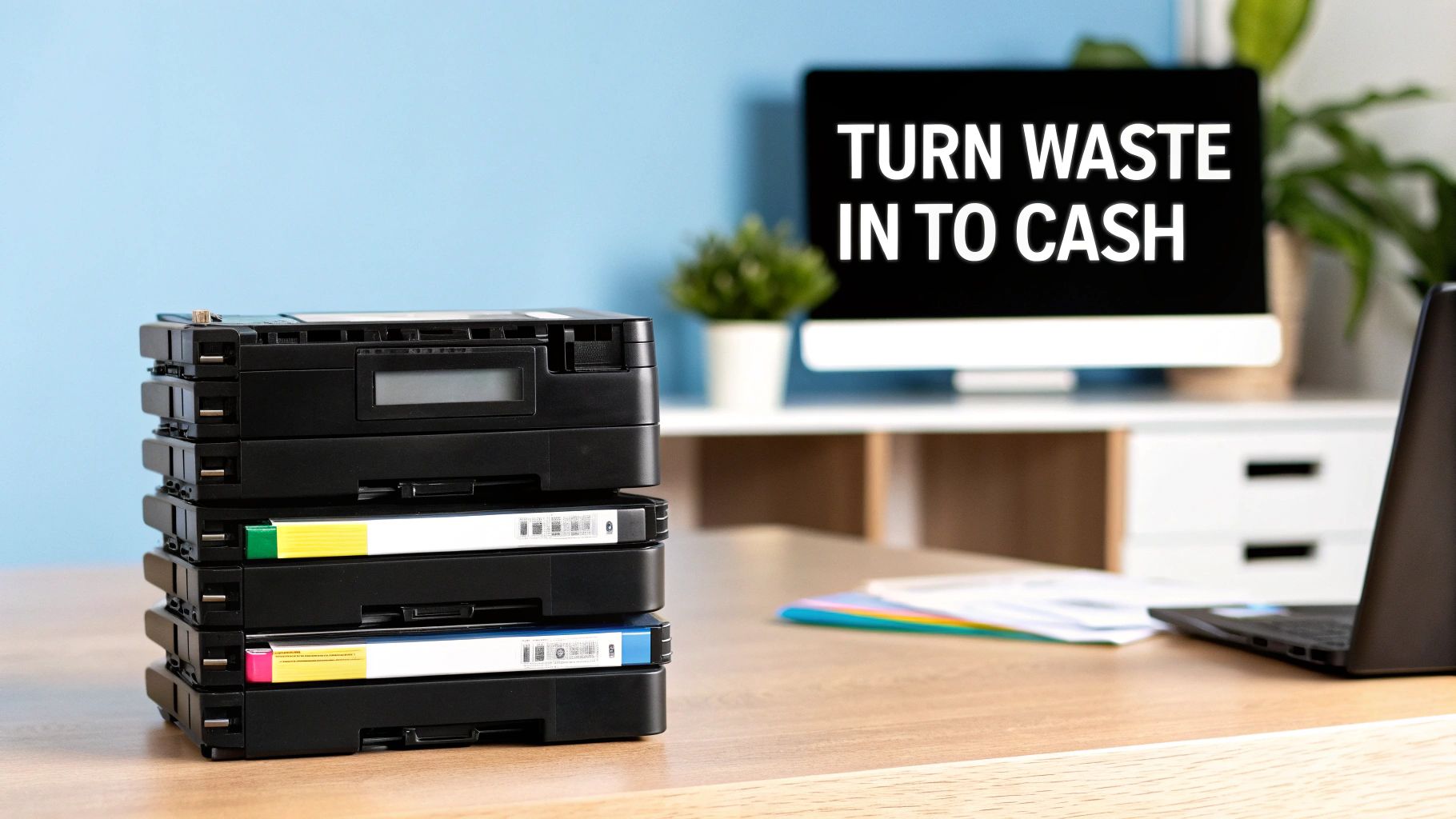
It's easy to see empty cartridges as a disposal chore, but you'd be missing the bigger picture. Remanufacturing companies are actively looking for these exact units. They aren't just melting them down; they're professionally refurbishing the high-quality, genuine components for resale.
This creates a steady demand, especially for "virgin" OEM (Original Equipment Manufacturer) cartridges—the ones that have never been refilled before. The core principles are a lot like learning how to sell household items online; it's all about recognizing value in something you no longer need and preparing it for someone who does. For example, just as you'd photograph a used coffee table from all angles to highlight its condition, you'll need to present your cartridges clearly to show their value.
The Booming Market for Recycled Cartridges
This isn't some small, niche industry. We're talking about a rapidly growing global market driven by both economic and environmental pressures. The ink and toner cartridge recycling market, valued at over $2 billion USD in 2025, is on track to nearly double by 2035.
What does that mean for you? It means consistent demand and real money. Let's say your marketing agency burns through 20 Brother LC3013 cartridges a month. By setting up a simple collection system and selling them to a buyback program, you could easily create a reliable side income stream from something you used to just throw away.
Key Takeaway: Every empty OEM Brother cartridge has a potential payout attached to it. Stop seeing them as waste and start treating them like inventory ready to be sold.
Making this mental switch is the first step. It’s a smart business move that pays you for being sustainable—a true win-win.
Getting Your Cartridges Ready to Maximize Payouts
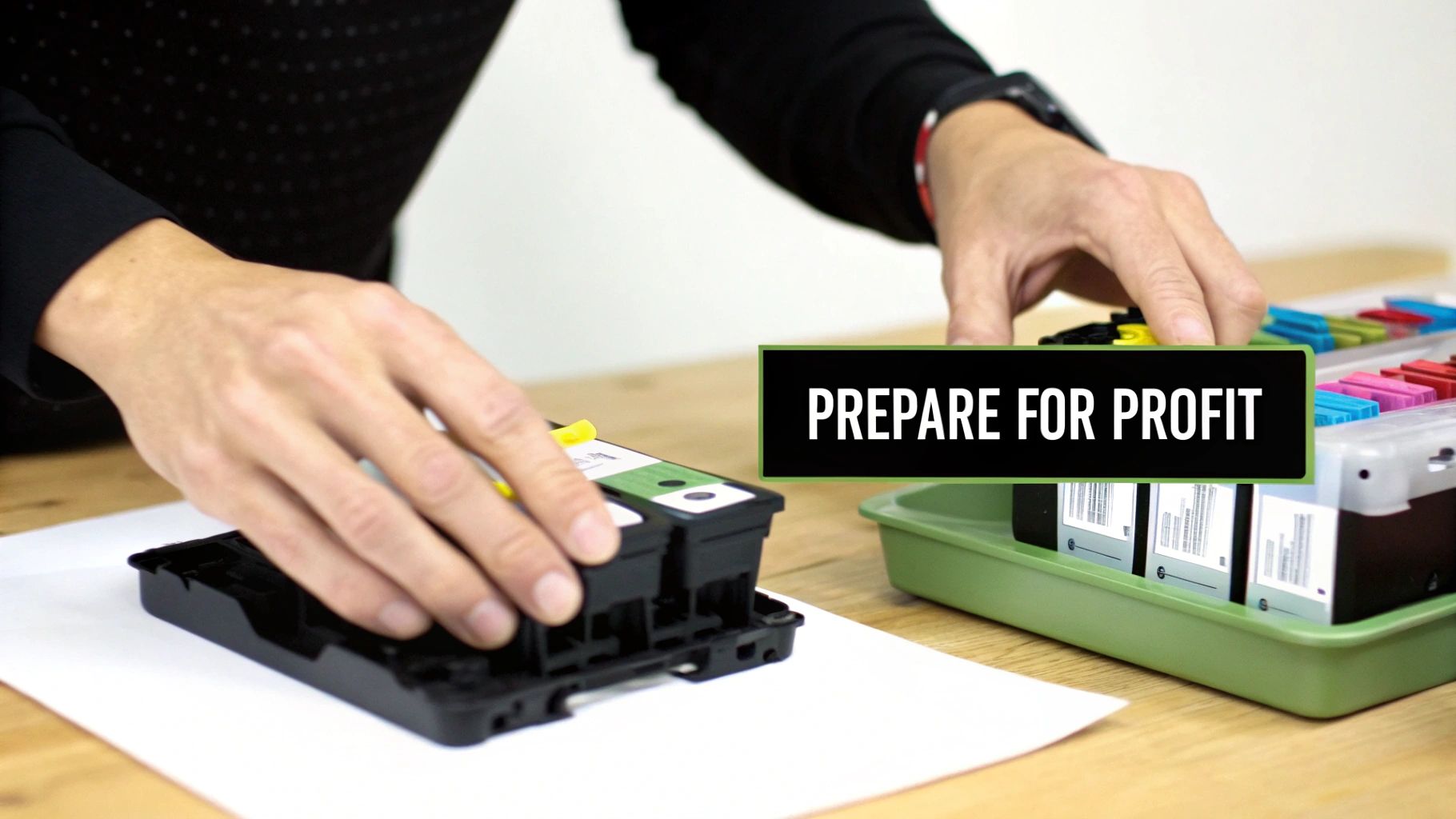
Proper preparation isn’t just a good idea—it's the single most important thing you can do to get the best possible price for your surplus Brother cartridges. Skipping this part is like trying to sell a car without washing it first. You're just leaving money on the table. The whole point is to present your cartridges in a way that makes them instantly valuable to a buyback company.
It all begins with a simple but critical task: sorting. Buyback programs almost always pay only for genuine OEM (Original Equipment Manufacturer) cartridges. Those generic or third-party cartridges might work in your printer, but they don't have the high-quality components and electronics needed for successful remanufacturing. For instance, if your office manager accidentally orders a case of generic cartridges, make sure those go into a separate bin for municipal recycling, not the one you're saving for a buyback program.
How to Spot Genuine Brother Cartridges
At a quick glance, a generic cartridge can easily be mistaken for the real deal. But if you look closer, the differences become obvious. It's worth training your team to spot these tell-tale signs to avoid sending in items you won't get paid for.
Here’s what to look for:
- Branding and Logos: A genuine Brother cartridge will always have the "Brother" logo clearly molded or printed on the casing itself. Generic versions often have no branding at all or use a different name like "InkGenix" or "ProPrint."
- Model Number Font: The model number, like "LC3013," will be printed in Brother's specific, professional font. Off-brand cartridges often use a slightly different, sometimes cheaper-looking, font style.
- Electronic Chip Design: The small circuit chip on the cartridge is a dead giveaway. OEM chips have a very distinct and consistent design, while generic ones often look simpler or have irregularly shaped chips.
A great tip is to take a cartridge you know is genuine and line it up next to a suspected generic. The difference in the plastic texture, the logo placement, and the chip layout will jump right out at you.
Key Takeaway: Clear photos are non-negotiable for getting an accurate quote, and proper identification is the foundation. For a detailed walkthrough on taking the right pictures, you can follow these expert tips on how to best submit images of your toner.
Protecting Your Cartridges for Shipping
Once you've separated your genuine OEM cartridges, how you handle them is just as important as identifying them. The electronic chip and the printhead are the most valuable—and most fragile—parts. Even a tiny scratch can make a cartridge worthless.
A few simple precautions can protect their value. Keep the cartridges in their original sealed bag if you have it. If not, a Ziploc bag or a small box works wonders to keep dust off the chip. Most importantly, avoid touching the metallic contacts or the printhead with your fingers, as the oils from your skin can cause problems.
Think of it like this: a cartridge with a year left on its expiration date is a prime candidate for a top-dollar payout. But if that same cartridge gets dropped and the chip cracks, its value instantly drops to zero. A practical example would be storing collected cartridges in an empty copy paper box with the lid on, rather than letting them roll around loose in a deep drawer where they can collide with staples and paper clips.
Proper storage is your insurance policy. Keeping them in a cool, dry desk drawer or a dedicated collection bin is far better than just tossing them into a big box where they can get knocked around. This tiny bit of effort is what ensures your Brother ink cartridges recycling efforts actually pay off.
Creating an Inventory List That Gets Fast Quotes
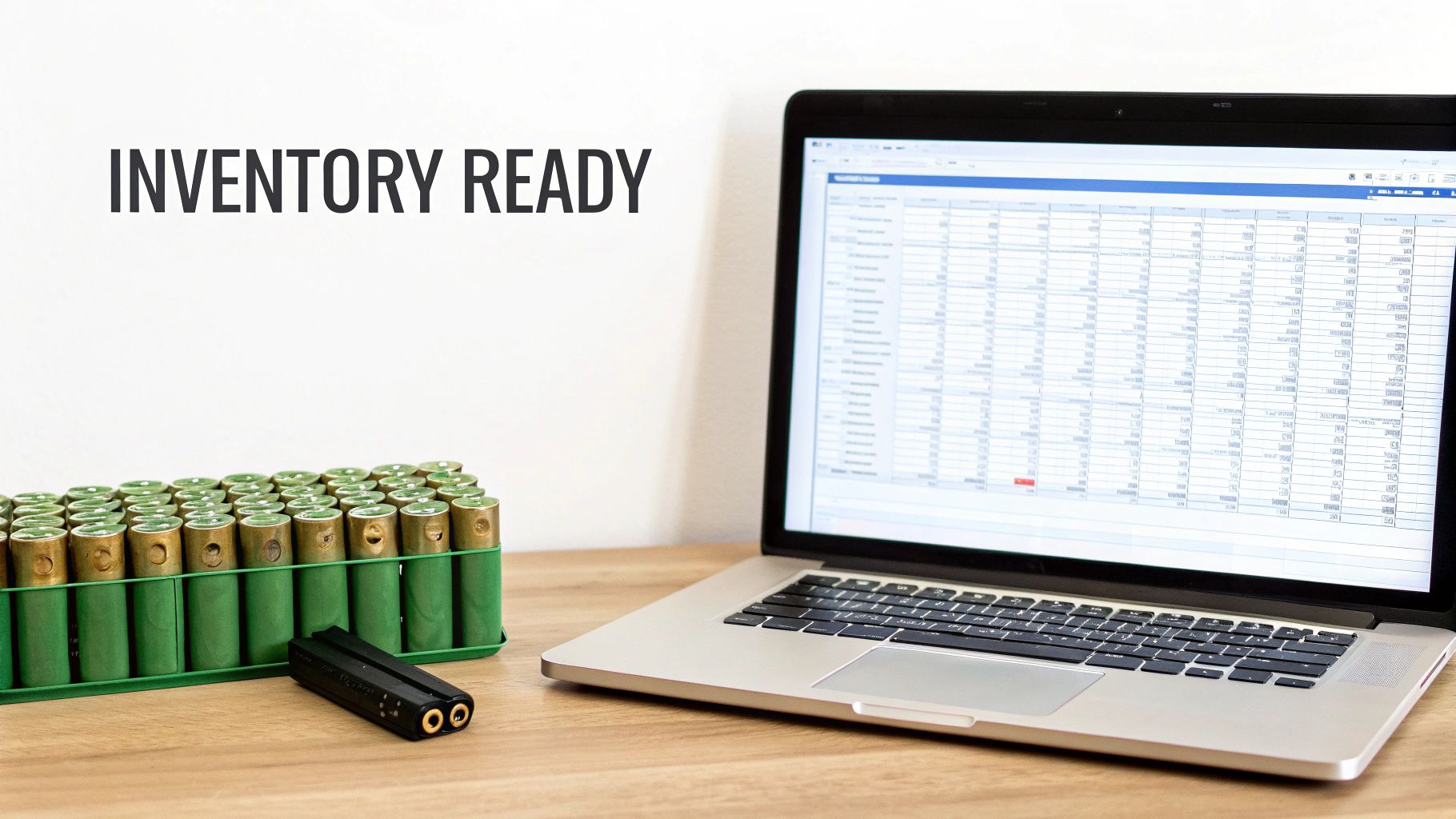
When you're ready to get a quote for your surplus ink, think of your inventory list as your opening pitch. A messy, incomplete list just slows everything down. It causes delays, forces endless back-and-forth emails, and can even lead to lower offers. A vague email saying "I have some Brother ink" is guaranteed to get a response asking for specifics.
On the other hand, a clean, accurate list makes it dead simple for a buyback company to see what you have. This means they can give you a fast, competitive quote right away. Your goal is to give them all the crucial info upfront, showing you’re a professional and making them confident in what you're selling. A basic spreadsheet is your best friend here.
Building Your Essential Spreadsheet
You don’t need anything fancy. A simple spreadsheet with just three columns will do the trick perfectly. This setup gives recycling buyers the exact information they need to figure out the value of your cartridges without any guesswork.
Here’s how to structure it:
- Column 1: Cartridge Model – Be precise. List the exact model number, like LC3035BK or LC3013M. Double-check this for accuracy.
- Column 2: Quantity – Put the total count you have for each model number.
- Column 3: Condition – Describe the state of the cartridges. Are they "Virgin OEM" (meaning they've only been used once and never refilled)? Or are they "New OEM in Box" (sealed and unused)?
A few rows of your list might look something like this:LC3013BK, 14, Virgin OEMLC3013C, 8, Virgin OEMLC3011BK, 22, Virgin OEM
This straightforward format eliminates any confusion. The buyer instantly knows what you have, how many, and that they're the high-value OEM cartridges they're looking for.
Pro Tip: Avoid lumping different models together. Sending a line item like "30 mixed Brother cartridges" is a surefire way to get an email back asking for a detailed breakdown, which just delays your quote. Be specific from the get-go.
To make things even easier, here's a quick reference table outlining what you need to pull together for a fast and accurate quote. Getting this organized before you even send that first email is the key to a smooth process.
Essential Inventory Checklist for a Quick Quote
| Checklist Item | Why It's Important | Example |
|---|---|---|
| Spreadsheet List | Provides a clear, organized count for quick valuation. | A file named "Brother_Ink_Inventory_[Your Name].xlsx" |
| Cartridge Model Numbers | Ensures accurate pricing, as different models have different values. | LC3035BK, LC406M |
| Exact Quantities | Allows the buyer to calculate the total offer value precisely. | 15 units of LC3035BK, 8 units of LC406M |
| Condition Notes | Differentiates between new, used (virgin), or refilled cartridges. | "New OEM in Box" or "Virgin OEM" |
| Clear Photos | Visually confirms your inventory, builds trust, and speeds up verification. | A well-lit photo showing all cartridges with labels visible. |
Having these five things ready to go is the secret to getting a great offer without any unnecessary hassle.
The Power of a Good Photo
Beyond the spreadsheet, a picture is truly worth a thousand words—and in this business, it can be worth a few hundred dollars, too. A couple of clear photos will dramatically speed up the quoting process and build instant trust with the buyer. You don't need to be a professional photographer; your smartphone is more than capable.
Just lay all your cartridges out on a flat, well-lit surface like a table or even a clean spot on the floor. Make sure the model numbers are facing up so they’re easy to read. Then, snap one or two wide shots that capture the entire collection. For example, arrange 20 cartridges in four rows of five on your desk, then take a photo from directly above. This allows the buyer to do a quick visual check against the quantities on your spreadsheet.
This simple step proves you physically have the items and that they appear to be in good shape. It erases any doubt and helps lock in a top-dollar offer for your Brother ink cartridges recycling efforts. When you pair a tidy spreadsheet with a clear photo, you’re handing the buyer everything they need to give you their best price, no questions asked.
Getting Your Cartridges Shipped and Getting Paid
You’ve sorted your cartridges and have a quote in hand. Now comes the final—and most important—part: turning that box of ink into cash. The shipping and payment part of the process is pretty simple, but how you pack your cartridges can make or break your payout. Your main job here is to get them to their destination in the exact same shape they left your office.
Believe it or not, the single biggest reason a cartridge gets rejected during inspection is damage during shipping. Even a tiny crack in the plastic housing or a scuff on the electronic chip can make it completely unusable. Remember, the buyback company plans to remanufacture these, and a broken cartridge is just a piece of plastic.
How to Pack Your Brother Cartridges Like a Pro
The secret to safe shipping is all about eliminating movement. If your cartridges can slide, rattle, or bump into each other, they will get damaged. The good news is you don’t need a bunch of expensive packing materials—just some common sense and a few things you probably already have.
Here are a few tips I've learned over the years to keep your shipment safe:
- Pick the Right Box. Find a sturdy cardboard box that’s just big enough for your cartridges, without a ton of empty space. For example, if you have 30 cartridges, a small box from a recent office supply order is a much better choice than a huge box that used to hold a computer monitor.
- Fill Every Gap. Use crumpled newspaper, bubble wrap, or any other packing material you have on hand to fill all the voids. You want a snug fit. When you gently shake the box, nothing should move.
- Tape It Up. Don't be shy with the packing tape. Seal all the seams on the top and bottom to make sure the box doesn’t pop open if it gets handled roughly.
If you want to dig a little deeper into this, we have a guide that explains how to learn more about our shipping partners and make sure your package is ready for the journey. A few minutes of careful packing is the best insurance for your payment.
A Quick Tip from Experience: Let's say you're sending in 50 valuable Brother LC3013 cartridges. If you just toss them in a big box, you're asking for trouble. A much better way is to nestle them together in a smaller, sturdier box and then stuff any remaining space with newspaper until it's packed tight. It's a simple move that ensures every single one arrives in perfect condition.
What to Expect: The Inspection and Payment Timeline
So, you've shipped your package. What's next? Any good buyback company will make this part of the process totally transparent. Most will give you a free, prepaid shipping label, so sending them in doesn't cost you a dime.
Once your box arrives at the warehouse, it will go through a quick inspection. Technicians check the model numbers and quantities against your original list and give each cartridge a once-over for any damage. They're also confirming that the cartridges are genuine OEM and haven't been refilled before.
This whole inspection usually happens within one to two business days of arrival. As long as everything checks out and matches your quote, your payment is sent out right away.
You can typically choose how you want to get paid:
- PayPal: This is usually the quickest way to get your money, often showing up in your account the same day.
- Zelle: Another great, fast option for digital payments.
- Company Check: If you prefer the old-school method, a paper check can be mailed to you, though it naturally takes a bit longer to arrive.
The whole process, from the day you ship your box to the moment you get paid, is designed to be fast. By packing your cartridges carefully, you ensure your Brother ink cartridges recycling effort pays off quickly and without any surprises.
The Environmental Impact of Your Recycling Efforts
Getting paid for your old Brother cartridges is obviously a great business decision, but the cash is only part of the picture. When you choose to sell or recycle your cartridges, you're making a real statement about corporate responsibility and turning a simple task into meaningful action. It’s one of the easiest ways to back up your company's sustainability claims with something concrete.
Every cartridge you keep out of the trash is one less piece of plastic and metal sitting in a landfill. It's easy to forget, but those little units are built to last, and they take an incredibly long time to break down. This simple act of recycling makes a direct impact on reducing waste and conserving our limited landfill space. For example, an accounting firm that collects its cartridges for six months prevents a large trash bag full of non-biodegradable plastic from heading to the local dump.
Conserving Resources and Reducing Your Carbon Footprint
The real environmental victory here is in resource conservation. Think about what it takes to make a brand-new ink cartridge from scratch. It’s an energy-hungry process that relies on non-renewable resources, especially petroleum for the plastic casings.
Globally, a staggering 350 million cartridges end up in the trash each year. Their plastic components can take up to 1,000 years to decompose. On top of that, making just one new toner cartridge requires about three pints of oil. You can dig into more of these stats over at The Recycling Factory. By recycling your used cartridges, you’re directly helping to save these resources and stop mountains of plastic from piling up.
When a company remanufactures your used Brother cartridge, they’re giving it a new lease on life. This circular approach doesn't just keep waste out of the ground—it drastically cuts down on the need to produce new ones from raw materials.
Key Takeaway: Recycling isn't just about getting rid of old supplies. It's about actively reducing the demand for new production. Every cartridge you recycle helps lower the entire printing industry's carbon footprint.
Building Your Brand with Sustainable Practices
This commitment to responsible brother ink cartridges recycling is more than just an internal policy. It’s a powerful story you can share with your customers, partners, and employees. In a world where people actively seek out eco-conscious brands, proving you’re committed to sustainability can set you apart.
Start tracking how many cartridges you recycle. This gives you real data for your annual reports or marketing campaigns. For example, if a small design firm recycles 200 cartridges a year, they can proudly state they helped conserve a significant amount of oil and kept a hefty amount of plastic out of the local landfill. They could even add a line like "We proudly recycled over 200 ink cartridges last year" to their email signatures or website footer.
Suddenly, your recycling program becomes a genuine brand asset. It proves your business is thoughtful, forward-thinking, and focused on more than just profits. This kind of environmental stewardship connects with today's consumers and can build serious brand loyalty, showing that doing right by the planet is also great for business.
Answering Your Questions About Selling Brother Ink Cartridges
When you first start selling or recycling Brother ink cartridges, a few questions always pop up. It's smart to get these sorted out early. Clearing up the common uncertainties helps you avoid simple mistakes and ensures you’re getting the best possible return for your empties.
Let’s dive into the questions we hear most often from businesses just like yours.
Can I Get Paid for Refilled or Generic Brother Cartridges?
This is a big one, so let's be crystal clear: buyback programs are looking for "virgin" OEM (Original Equipment Manufacturer) cartridges. That’s industry speak for a genuine Brother cartridge that has only been through its first life cycle and has never been refilled.
The reason is technical. Brother cartridges have sensitive electronics and printheads that are really only designed to work once. The refilling process can damage these components, which means they can't be properly remanufactured to meet high-quality standards.
Key Takeaway: Your local recycling center might take non-genuine cartridges to grind up for raw materials, but they won't pay you for them. A buyback company, on the other hand, pays for cartridges they can remanufacture. Always double-check that you're only sending in genuine, never-refilled cartridges to avoid any surprises.
Imagine you send in a box of 20 cartridges, but 10 of them are third-party knock-offs. You'll only get paid for the 10 genuine ones. It’s a common mix-up that can cut your payout in half.
What’s the Difference Between Recycling and Remanufacturing?
People often use these words interchangeably, but in our world, they mean two very different things. Understanding this difference is key to seeing why a buyback company pays you for used cartridges.
-
Recycling is the most basic form of the process. It involves breaking a cartridge down into its raw materials—plastic, metal, and so on. These materials are then melted down and repurposed into completely new things, like park benches or automotive parts. For instance, a local electronics drop-off event will likely recycle your cartridges this way.
-
Remanufacturing is a far more elegant solution. Here, a used genuine cartridge is professionally cleaned, its components are inspected, any worn-out parts are replaced, and it’s refilled with top-tier ink. The cartridge is essentially rebuilt to perform just as well as—or even better than—it did when it was brand new.
Buyback companies want your empty OEM cartridges for remanufacturing. By selling them, you’re not just recycling; you're actively participating in a circular economy that gives a high-tech product a second life. It’s a much bigger win for the environment.
How Can I Find a Good Buyback Company?
Finding a solid, trustworthy partner is everything. The right company won't just pay you; they'll make the entire process feel effortless.
Your first step is a quick search for terms like “sell Brother ink cartridges” or “ink buyback program.” Look for companies whose websites are professional and, most importantly, transparent. Do they clearly list which models they buy and what they pay? That's a great sign.
Next, look for real-world validation. Check for recent, positive reviews on sites like Google. Are people talking about fast payments and good communication? Does the company provide prepaid shipping labels? That’s the industry standard, so be cautious if a service expects you to pay for shipping. For a deeper dive into what to expect from a reputable partner, you can usually find answers on a comprehensive FAQ page like this one. A practical example of a red flag would be a website with no physical address, no phone number, and only a simple contact form. A trustworthy partner will be easy to contact.
A great buyback partner will always have a straightforward inspection and payment process, so you're never left guessing.